

We have probably seen your problem before. Our smallest client had eight employees. Our largest secures the nuclear power plant of the United Arab Emirates. Whatever shape yours is, tell us about it and we will tell you how we would fix it.
Expert Rankings · Updated October 2026
Top 40 Penetration Testing Companies You Should Know in 2026
A practical guide to choosing a penetration testing partner: the five types of firms, how each one prices, honest pros and cons for 40 of them, and the questions to ask before you sign anything.
Disclosure: Atlant Security publishes this guide and appears in the list below, at the position we think we honestly belong. We say plainly which entries are the better call for situations we do not serve well. Every other company is assessed from its own published material, public pricing where it exists, and the experience of evaluating vendors for clients. No company paid for placement.
A composite of conversations we have every quarter: a company buys a "penetration test" for the price of a scanner licence, receives a sixty-page PDF with fifty-five pages of tool output, and files it. Months later a prospect's security team asks who tested the business logic, who tested the API behind the mobile app, and whether anyone tried to move between customer accounts. There is no answer, the deal stalls, and a second firm is paid to do the work the first one invoiced.
Patterns like that are why this guide exists. The penetration testing market now has five different kinds of business selling under one name, from a two-person boutique to a crowdsourced platform to software that attacks your network on its own. Picking the wrong kind wastes money, and it buys a false sense of security, which is the quieter and more expensive mistake.
So how do you find a firm whose report will stand up to an auditor, a customer and an attacker?
This is a decision guide, built around the questions that decide things: What does each firm cost, and how does it price? Who is it right for? What are the honest trade-offs?
Here are the 40 penetration testing companies we have evaluated for clients, competed against, or recommend when the scope is wrong for us, with the detail you need to shortlist in an afternoon.
Before You Start
The Question Most Buyers Get Wrong
Most companies start their search asking: "Who is the best penetration testing company?"
That is the wrong question. Trail of Bits is superb, and if you need an external network test for a PCI DSS assessor they will send you elsewhere. NCC Group can test a global bank across four continents, and a 60-person SaaS company will pay enterprise overhead for a test a boutique would do in a week. Horizon3.ai can attack your internal network every night, and it will never find the authorisation flaw hidden in your invoicing workflow.
The right question is: "What do we need to prove, to whom, by when, and how often?"
Before Reading Further, Answer These:
- What triggered this? (A customer questionnaire, a PCI DSS or SOC 2 deadline, a new product launch, a breach, or a board question)
- What exactly is in scope? (One web application, an API estate, a cloud account, an internal network and Active Directory, a mobile app, or all of them)
- How often will you test? (Once a year for the auditor, or every release because customers depend on it)
- Who reads the report? (An auditor, a customer's security team, your engineers, or a board)
- What is the realistic budget? (Under $10K per test, $10K to $50K, or a programme above $50K a year)
Keep your answers in mind as you read. Each company below is tagged with who it is right for, based on how it sells and delivers, with its own marketing set aside.
The Real Numbers
Honest Pricing & Fit Matrix
Most penetration testing firms will only price on a call. The table shows how each of the top 20 sells, whether its prices are public, what a typical engagement costs by category, and whether a retest is included, so you know what you are walking into before the demos start.
| Company | Type | Pricing | Typical Engagement* | Retest Included? | Best Fit |
|---|---|---|---|---|---|
| NCC Group | Global consultancy | Quote | Mid five to six figures per programme | Ask | Regulated enterprises, multi-country scopes |
| Bishop Fox | Offensive security specialist | Quote | Mid five figures per engagement; Cosmos priced separately | Ask | Mid-market and enterprise wanting a recognised brand |
| Trail of Bits | Research-led software assurance | Quote | Mid five to six figures per review | Ask | Code, cryptography, blockchain, AI systems |
| Rapid7 | Platform vendor with services | Quote | Low to mid five figures per test | Ask | Existing Rapid7 customers |
| Coalfire | Compliance and testing firm | Quote | Mid five figures per engagement | Ask | US firms selling to government and regulated buyers |
| Atlant Security | Boutique, expert-led | Published | From $4,000 to $6,000 per scope | Yes, one free retest | Companies that want a fixed price and an auditor-ready report |
| Cobalt | PTaaS platform | Quote (credits) | Low to mid five figures a year | In platform | Product teams testing on their release cadence |
| Synack | Crowdsourced PTaaS | Published entry prices, enterprise quoted | From $4,181 for one AI pentest and $27,120 for a Synack14 package; enterprise six figures | Ask | Large external attack surfaces |
| IOActive | Research-led specialist | Quote | Mid five figures and up | Ask | Hardware, embedded, industrial, satellite |
| TrustedSec | Research-active consultancy | Quote | Low to mid five figures per test | Ask | US mid-market and enterprise |
| Black Hills Information Security | Community-minded consultancy | Quote | Low to mid five figures per test | Ask | Teams that want to learn the methodology |
| SpecterOps | Identity attack path specialist | Quote | Mid five figures per engagement | Ask | Active Directory and Entra ID heavy estates |
| Praetorian | Continuous offensive security | Quote | Mid five figures per engagement; platform priced separately | Ask | Enterprises wanting red team plus a platform |
| NetSPI | Enterprise PTaaS | Quote | Six figures per programme | Ask | Large annual testing programmes |
| HackerOne Pentest | Community PTaaS | Quote | Low to mid five figures per test | Yes | Companies already running a HackerOne programme |
| Mandiant (Google Cloud) | Consultancy inside a cloud vendor | Quote | Six figures per programme | Ask | Enterprises wanting testing informed by live breach data |
| Pen Test Partners | Research-active consultancy | Quote | Low to mid five figures per test | Ask | UK and US firms with IoT, maritime or automotive scopes |
| Cure53 | Boutique, publishes reports | Quote | Low to mid five figures per review | Ask | Software whose users expect a public report |
| Rhino Security Labs | Cloud specialist | Quote | Low to mid five figures per test | Ask | AWS, GCP and Azure estates |
| Horizon3.ai | Autonomous platform | Quote (subscription) | Five figures a year and up | Re-run the test | Frequent internal testing between human engagements |
* Typical engagement figures are our estimates by category, from the price lists vendors publish and from quotes buyers typically report. The only exact figures in this guide are the ones a vendor prints on its own website. Scope, seniority and retesting terms move every number, so get it in writing.
Understanding the Landscape
The 5 Types of Penetration Testing Companies
Before you compare individual firms, understand what you are shopping for. These are five different businesses that happen to share a product name:
1. Boutique Manual Consultancies
A small team of senior testers who do the work by hand, usually with the person who scoped the test on the keyboard. Reports are specific, prices are often published, and capacity is limited. You buy attention and depth per scope.
Examples: Atlant Security, Raxis, Packetlabs, Cure53, Compass Security, Secarma, Dionach
2. Research-Led Offensive Security Firms
Larger consultancies whose consultants publish research, maintain open-source tools and run red teams. Expect the hardest findings and the highest day rates. You buy the people who write the techniques everyone else uses.
Examples: Trail of Bits, Bishop Fox, IOActive, SpecterOps, TrustedSec, Black Hills Information Security, Praetorian, Pen Test Partners, SRLabs
3. PTaaS and Crowdsourced Platforms
A platform scopes the test, assigns testers from a vetted community or in-house bench, streams findings into your tools and tracks retests. Fast to start, priced by credits or subscription. You buy throughput and workflow.
Examples: Cobalt, Synack, HackerOne, Bugcrowd, NetSPI
4. Autonomous and Continuous Testing Platforms
Software that attacks your estate on a schedule, proves the path it took and re-runs after you fix. Excellent for internal networks and external hygiene; blind to novel business logic. You buy frequency.
Examples: Horizon3.ai, Pentera, Pentestas, Astra Security, Intruder
5. Compliance Firms and Large Consultancies
Firms whose main business is assessment, advisory or managed services, with a testing practice attached. Reports are built for assessors and procurement departments. You buy a recognised name and evidence that fits an audit file.
Examples: NCC Group, Coalfire, Schellman, A-LIGN, Optiv, GuidePoint Security, Kroll, Mandiant, Rapid7 services
Most companies need two of these: a human-led test once a year for the auditor and the business-logic findings, plus something continuous between tests. The expensive mistakes are paying consultancy rates for scanner work, and trusting scanner output where a human was needed.
Global Technical Assurance
NCC Group
NCC Group is the firm large, regulated organisations call when the test has to satisfy a regulator, a board and an auditor at the same time. Founded in 1999 and headquartered in Manchester, it runs one of the largest technical assurance practices in the world, with research-driven assessments and managed services delivered across the UK, Europe, North America and Asia Pacific.
The reality check: NCC Group is built for enterprise procurement. Expect a formal scoping process, a statement of work that takes weeks to negotiate, and day rates set for banks and governments. A 60-person SaaS company will get a professional test and pay enterprise overhead for it, and the consultant on the engagement may be several layers removed from the person who sold it.
The Good
- Scale and depth across almost every technology
- Strong published research and exploit development
- Experienced with regulator-driven testing programmes
- Global delivery for multi-country estates
The Limitations
- Enterprise pricing and procurement cycle
- Consultant seniority varies by region and team
- Quote-based, no published prices
- Smaller clients get less senior attention
Popular Services: Penetration testing, red teaming, application security, hardware and embedded testing, managed vulnerability scanning
Best For: Regulated enterprises and governments that need a globally recognised name on the report, multi-country scopes, and formal testing schemes.
Offensive Security Specialist
Bishop Fox
Bishop Fox describes itself as the leading authority in offensive security, and the breadth of its practice backs the claim: web, mobile and API testing, cloud testing across AWS, Azure and GCP, internal, external and wireless networks, IoT and product testing, and adversary emulation across technical, physical and social domains. Its Cosmos platform adds continuous attack surface testing between point-in-time engagements.
The reality check: This is a premium, US-centric consultancy. Engagements are sized for mid-market and enterprise budgets, pricing is quote-only, and the continuous platform is priced separately from point-in-time tests. If you need one web application tested for a SOC 2 auditor, you will be paying for a brand you may not need.
The Good
- Deep bench of senior testers
- Red team and adversary emulation strength
- Continuous testing option (Cosmos)
- Open-source tooling and research output
The Limitations
- Quote-only pricing
- Mid-market and enterprise minimums
- US-centric delivery
- Platform priced separately from testing
Popular Services: Application and cloud penetration testing, red teaming, attack surface testing, product and IoT security, third-party testing
Best For: Mid-market and enterprise companies that want a recognised offensive security brand, red team exercises and a continuous testing layer under one contract.
Research-Led Software Assurance
Trail of Bits
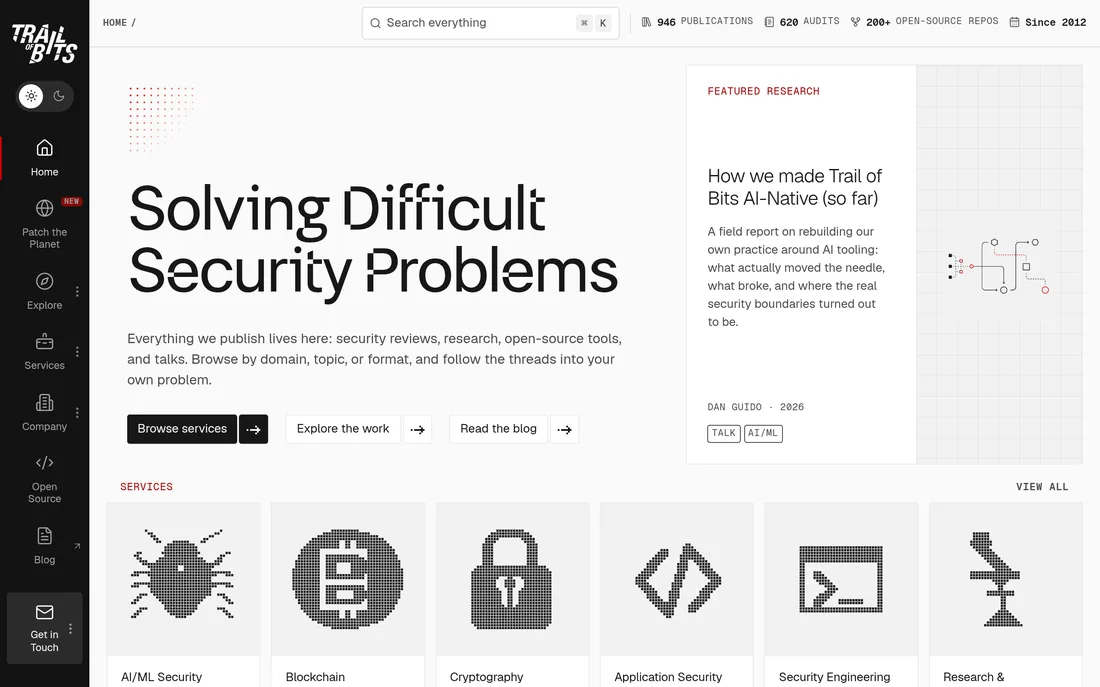
Trail of Bits, founded in 2012 in New York, is the firm engineers respect most. It publishes its work: more than 600 public audit reports, over 200 open-source repositories and a steady stream of research on software, blockchains and AI systems. Its reports read like engineering documents because they are written by engineers who also maintain the tools they test with.
The reality check: Trail of Bits is a software assurance firm first. If your need is a classic network pentest, a phishing campaign or a PCI DSS scope, this is the wrong door. Its sweet spot is code review, cryptography, smart contracts, compilers and AI systems, and it prices for that level of depth.
The Good
- Public reports show exactly what you get
- Exceptional depth in code, cryptography and blockchain
- Open-source tools used across the industry
- AI and machine learning security research capability
The Limitations
- Premium pricing for deep code work
- Limited fit for infrastructure-only scopes
- Waiting lists in busy quarters
- Quote-based engagements
Popular Services: Security reviews of software and smart contracts, cryptography audits, AI and machine learning security assessments, research partnerships
Best For: Companies whose product is code: protocols, wallets, exchanges, developer tools, AI systems, anything where the finding has to survive peer review.
Platform Vendor With a Services Arm
Rapid7
Rapid7 is the company behind Metasploit and the InsightVM vulnerability management platform, and its services team runs penetration tests for the same customers: external and internal network testing, web application testing, IoT and internet-aware device testing, social engineering, wireless testing and red team attack simulation.
The reality check: The services arm lives inside a product company, and the proposals reflect that. Expect the pentest to be positioned alongside InsightVM, managed detection and response and the rest of the platform. The testing itself is competent and well documented; the question is whether you want a vendor relationship or a testing relationship.
The Good
- Mature methodology and reporting
- Breadth from network to IoT to social engineering
- Easy to combine with vulnerability management
- Global delivery capacity
The Limitations
- Testing is a side business for a platform vendor
- Quote-based pricing with bundling pressure
- Tester seniority varies
- Less bespoke than a boutique
Popular Services: Network and web application penetration testing, red team simulation, social engineering, IoT testing, InsightVM, managed detection and response
Best For: Companies already running Rapid7 products that want one vendor for scanning, detection and an annual pentest.
Compliance-Grade Testing
Coalfire
Coalfire is a cybersecurity and compliance services company that works with enterprises and technology businesses on FedRAMP, cloud migration, AI risk and penetration testing. It is one of the best-known FedRAMP third-party assessment organisations, and that shapes how it tests: scopes map to control frameworks, evidence is organised for an assessor, and the report is written to be read by auditors.
The reality check: If compliance is the reason you are buying, Coalfire's structure is an asset. If you want an adversary who ignores the control list and hunts for the one chain that matters, you will find the work thorough and procedural. Pricing and timelines reflect a large US firm.
The Good
- FedRAMP and PCI DSS fluency at scale
- Reports built for assessors
- Advisory, assessment and testing under one roof
- Scale for large programmes
The Limitations
- Procedural style over adversarial creativity
- Enterprise pricing
- US federal focus suits EU buyers less
- Quote-based
Popular Services: Penetration testing, red teaming and social engineering, FedRAMP and PCI DSS assessments, cloud and compliance advisory
Best For: US companies selling to government or regulated enterprises that need testing and compliance evidence from one accredited firm.
Boutique, Expert-led, Fixed Price
Atlant Security
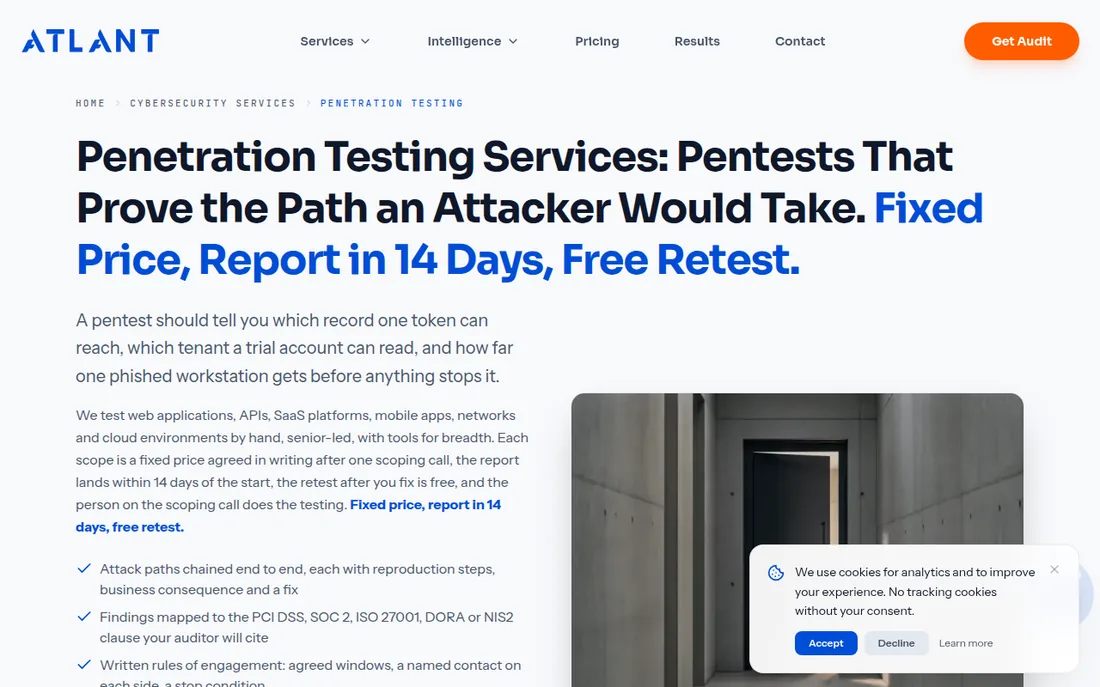
Atlant Security is our own firm, so read this entry with that in mind. The model is a boutique one: the person on the scoping call is the person who tests your systems, runs the remediation workshop and signs the attestation letter. Scopes cover web applications, APIs, SaaS platforms, mobile apps, networks and cloud environments, and the prices are on the website: external network and API tests from $4,000, web application, internal network and single-platform mobile tests from $5,000, cloud and SaaS tests from $6,000. Every scope includes the report in 14 days, a remediation workshop, one free retest and an attestation letter.
The reality check: We are a small team by design, which rules out some work: multi-week red team campaigns against a global bank, a continuous testing platform of our own, delivery teams in 30 countries. What we offer is senior attention, a fixed price in writing and a report your auditor accepts. We are the better call only when those three things are what you need, and several firms above and below us are the better call when they are not.
The Good
- Published fixed prices from $4,000
- The senior consultant tests, briefs and signs
- Report in 14 days, free retest, attestation letter included
- Findings mapped to the PCI DSS, SOC 2, ISO 27001, DORA or NIS2 clause your auditor will cite
The Limitations
- Small team, limited parallel capacity
- No continuous platform of its own between tests
- Large-scale red team operations are out of scope
- Lead times stretch in busy months
Popular Services: Web application, API, SaaS, mobile, network and cloud penetration testing, bank pentests, DORA TLPT
Best For: Companies from a few dozen to a couple of thousand people that need a credible, auditor-ready pentest at a known price, with the tester in the room when the findings are explained. Our penetration testing services site walks through the engagement end to end: the trust boundaries we follow, how a testable question becomes a defensible answer, what the evidence in the report looks like, and how to prepare for the scoping call.
Pentest as a Service
Cobalt
Cobalt pioneered the pentest as a service model: a platform that scopes the test, assigns vetted testers from its community, streams findings into your ticketing and chat tools as they are found and tracks retesting, with human-led, autonomous, continuous and on-demand options. Its annual State of Pentesting report is one of the few public data sets on how pentests are bought and run.
The reality check: The model trades depth of relationship for speed. You get a tester pool, a platform and a credit system, which is excellent for development teams shipping monthly. You get less of the single senior consultant who has watched your architecture evolve over three years, and credits that go unused are still paid for.
The Good
- Fast scheduling, often within days
- Findings flow into Jira, GitHub and Slack
- Retesting built into the workflow
- Options from human-led to autonomous
The Limitations
- Credit-based pricing, quote only
- Tester continuity varies
- Depth depends on the credits bought
- Annual platform subscription
Popular Services: PTaaS for web, API, mobile, cloud and network scopes, continuous and on-demand testing, autonomous testing
Best For: Product companies releasing often that want testing on their release cadence with findings landing in the tools their engineers already use.
Crowdsourced, AI-Assisted PTaaS
Synack
Synack, founded in 2013 by former NSA cybersecurity operators, runs a managed platform that pairs its vetted Synack Red Team with AI-driven testing. Packages are sold by duration (Synack14, Synack90 and Synack365), with starting prices published on its pricing page (from $4,181 for a single AI pentest and $27,120 for a Synack14 package) and the enterprise tier quoted, and its Sara AI agent now runs continuous AI pentesting alongside the human researchers. In 2026 Synack and NetSPI announced plans to merge.
The reality check: Crowdsourced testing is strongest when your attack surface is wide and public. It is weaker for a single internal application with complex business logic, where one tester who understands the workflow beats fifty who each try the login page. The NetSPI merger will take time to settle, so ask what changes for your contract and your researchers.
The Good
- Scale across large external estates
- Vetted researcher community with a triage layer
- Coverage analytics you can show a board
- Continuous AI testing between human cycles
The Limitations
- Enterprise tier quoted, credits expire after a year
- Less suited to deep business-logic testing
- Integration period after the NetSPI merger
- Starting prices sit well above boutique rates
Popular Services: PTaaS packages, on-demand security testing, attack surface discovery and analytics, managed vulnerability disclosure
Best For: Enterprises with large external attack surfaces that want continuous, measurable coverage and a managed researcher crowd.
Rankings 9-20
The Next Tier: Strong Specialists
These firms are excellent in their niches. Choose by the shape of your scope:
9. IOActive Highly Recommended
Independent since 1998 and headquartered in Seattle, IOActive is the research-fuelled firm behind some of the most cited hardware and embedded findings of the last two decades, from vehicles to satellite terminals to traffic-control sensors. Its consultants test the things most pentest firms will not touch: silicon, firmware, industrial systems and the protocols between them.
Best for: Hardware, automotive, medical device, industrial and satellite scopes. Pricing: Quote-based.
10. TrustedSec
Founded by David Kennedy and based in Ohio, TrustedSec organises its work into design, evaluation, hardening and response services, with penetration testing and red teaming at the centre of the evaluation practice. The firm is known for open-source tooling and a research blog that practitioners read.
Best for: US mid-market and enterprise buyers who want a research-active consultancy with incident response on the same bench. Pricing: Quote-based.
11. Black Hills Information Security
Founded in 2008 and based in Sturgis, South Dakota, Black Hills Information Security serves organisations from community banks to the Fortune 100 and is the most generous firm in the industry with its knowledge: pay-what-you-can training through Antisyphon, the Wild West Hackin' Fest conference and a long-running series of free webcasts. Its services span penetration testing, continuous pentesting, web application testing, its ActiveSOC service, incident response and GRC.
Best for: Teams that want a tester whose staff teach the methodology they use. Pricing: Quote-based.
12. SpecterOps Highly Recommended
The creators of BloodHound, SpecterOps built its practice around identity attack paths: how an attacker moves from a phished laptop to domain or tenant admin. Services cover penetration testing, attack path assessments, purple team assessments, AI red teaming and application security, backed by more than 100 open-source tools and the training courses that defined modern adversary tradecraft.
Best for: Active Directory and Entra ID heavy environments, purple teaming, detection engineering validation. Pricing: Quote-based.
13. Praetorian
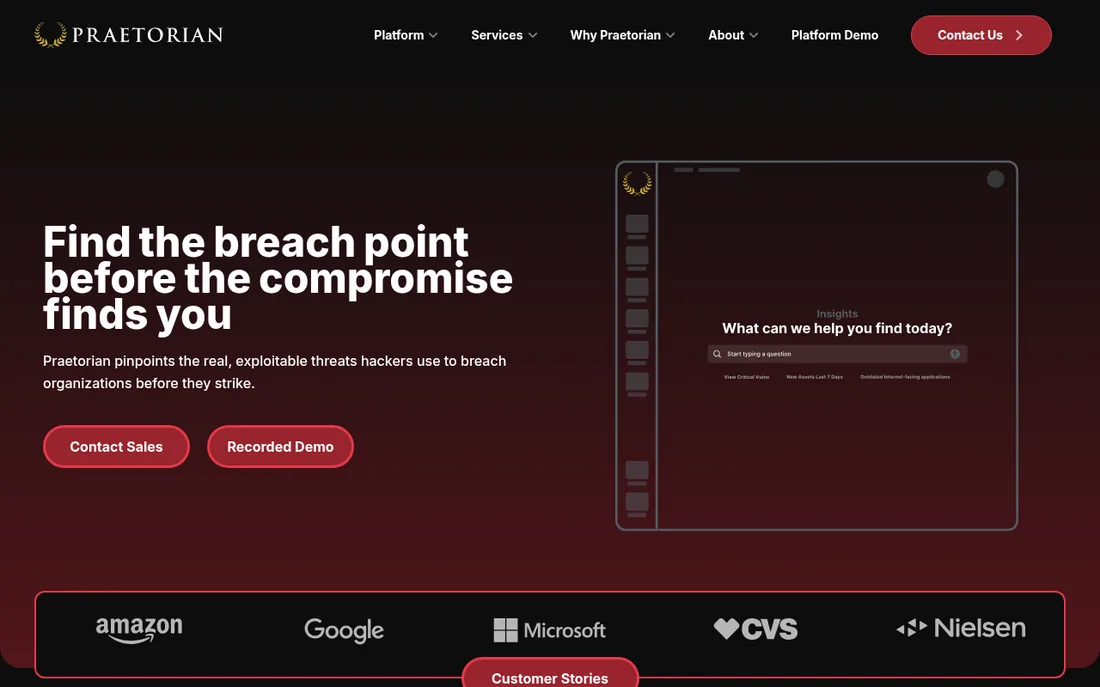
Austin-based Praetorian sells continuous offensive security: red team operations, assumed breach exercises, purple team operations, attack path mapping, CI/CD attack paths and penetration testing, delivered through its Chariot platform. It benchmarks engagements against MITRE ATT&CK and recruits operators with intelligence community backgrounds.
Best for: Enterprises that want red team depth plus a continuous attack surface platform. Pricing: Quote-based; platform priced separately.
14. NetSPI
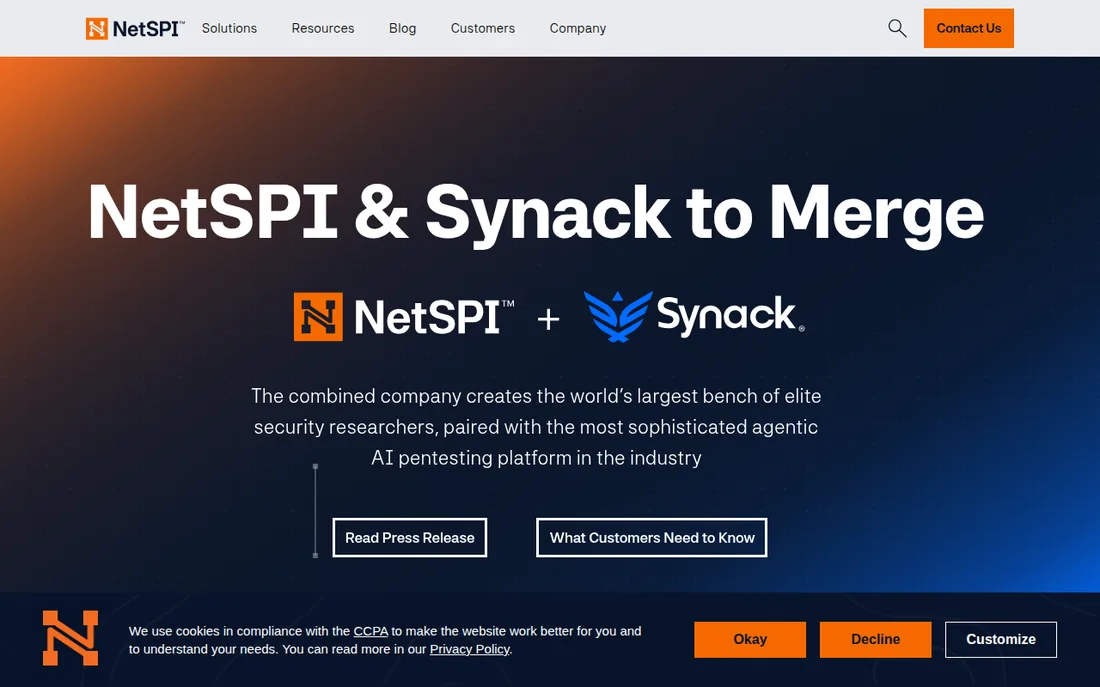
Minneapolis-based NetSPI combines its own testing bench with a PTaaS platform, attack surface management and breach and attack simulation. In 2026 it announced a merger with Synack; the two firms describe the combination as the largest bench of elite security researchers paired with an agentic AI pentesting platform.
Best for: Large enterprises buying a programme of tests per year with platform reporting. Pricing: Quote-based.
15. HackerOne Pentest
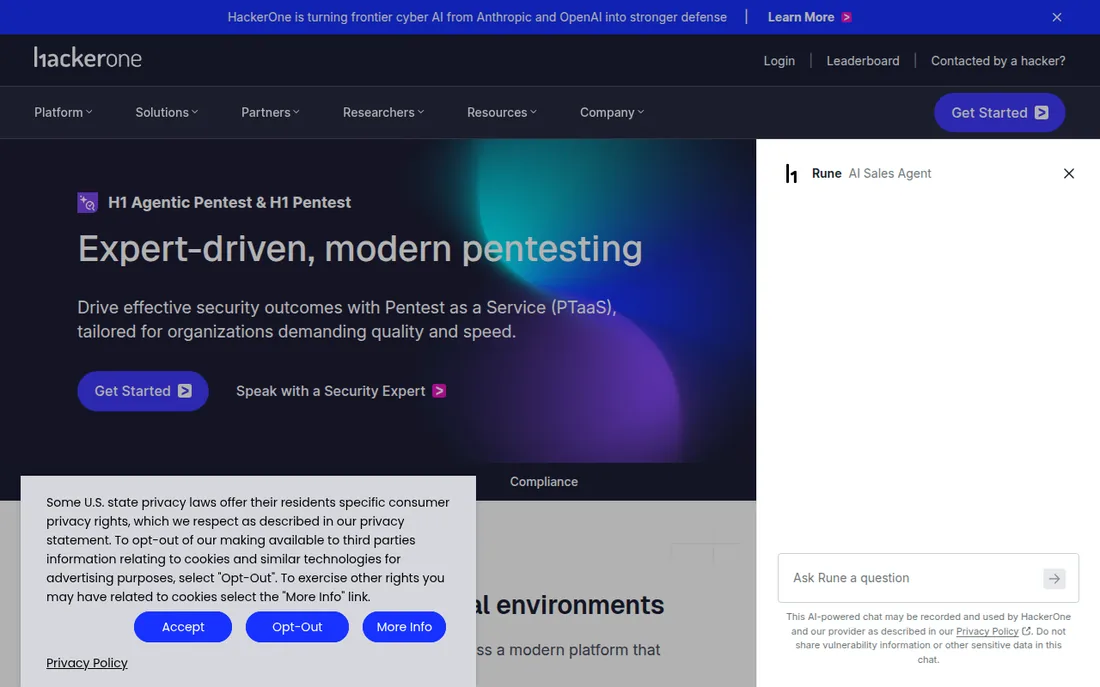
HackerOne Pentest puts vetted researchers from the HackerOne community on scoped engagements with real-time reporting, built-in integrations and validation of fixes with retesting, and now adds an agentic pentest option alongside human-led testing. Coverage spans web, cloud, AI and LLM, mobile, API, network and desktop applications, plus code security audits.
Best for: Companies already running a bug bounty with HackerOne that want compliance-grade pentests on the same platform. Pricing: Quote-based; retest included.
16. Mandiant (Google Cloud)
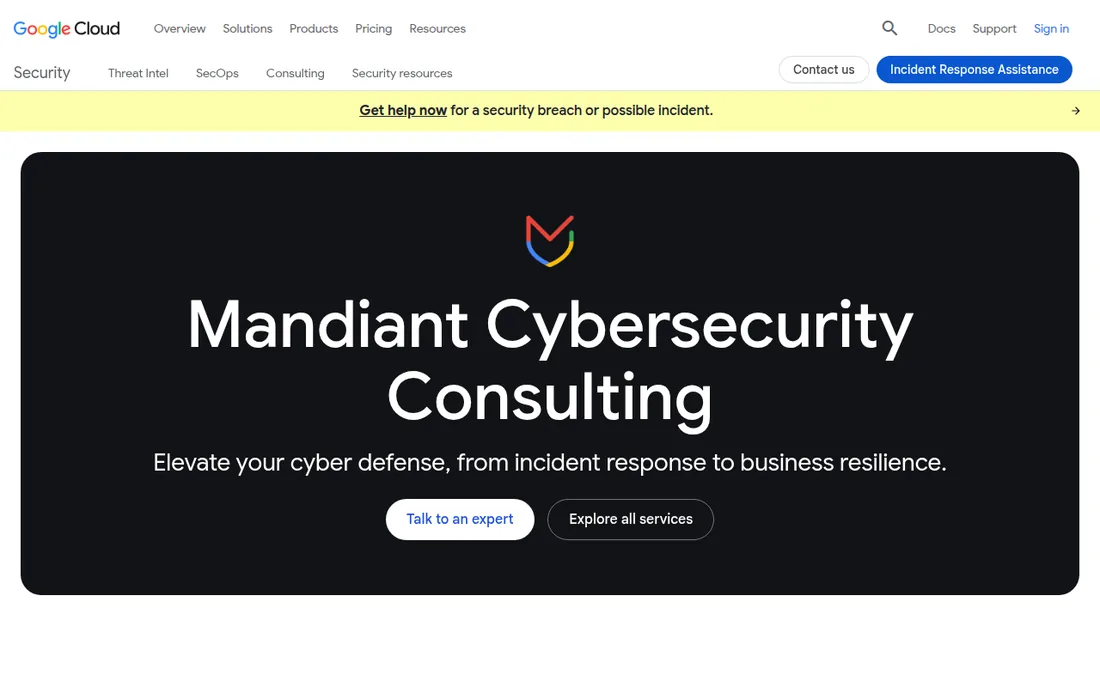
Mandiant (Google Cloud), part of Google Cloud since 2022, brings incident response experience to offensive work: red team exercises and testing programmes shaped by what its responders see on live breaches, plus threat intelligence and AI security services.
Best for: Large enterprises that want testing informed by current intrusion data and a bench that can also respond. Pricing: Quote-based.
17. Pen Test Partners
Working since 2010 from the UK, with a US office, Pen Test Partners has an unusually public research culture: cars, ships, aircraft systems, children's toys and medical devices have all featured in its published findings. Its testing is built around how attackers behave, and its consultants are regular conference speakers.
Best for: UK and US firms with IoT, maritime, aviation or automotive scopes, and anyone who wants a tester who publishes. Pricing: Quote-based.
18. Cure53
Berlin's Cure53, founded in 2007 and led by Dr.-Ing. Mario Heiderich, is the firm you hire when a browser, a messenger, a password manager or a privacy tool needs a review that will be published. Many of its reports are public, which is the strongest sample deliverable a buyer can ask for.
Best for: Software vendors and open-source projects whose users expect transparency. Pricing: Quote-based.
19. Rhino Security Labs
Seattle-based Rhino Security Labs specialises in cloud penetration testing across AWS, GCP and Azure, alongside network and web application testing, and maintains open-source cloud attack tooling such as Pacu. Its research blog documents real cloud attack paths, from credential theft in container tasks to privilege escalation chains.
Best for: Cloud-native companies and AWS-heavy estates. Pricing: Quote-based.
20. Horizon3.ai
The NodeZero platform from Horizon3.ai runs autonomous penetration tests you set up in minutes: internal, external, cloud, Kubernetes and Active Directory, with proof of each attack path and fix guidance you verify by running the test again. It is the strongest option for frequent internal testing at a scale no consultancy can price.
Best for: Companies that want weekly or monthly internal testing between human engagements. Pricing: Subscription, quote-based.
Complete Listings
Companies 21-40: The Full Comparison
Twenty more firms worth a place on a shortlist, by scope and geography. Where a vendor prints its prices we quote them; everywhere else the honest answer is that you will be quoted after a call.
| # | Company | Base | Type | Tests Best | Pricing | Best For / Honest Take |
|---|---|---|---|---|---|---|
| 21 | Pentera | Boston and Tel Aviv | Autonomous validation platform | Internal networks, credentials, cloud | Quote, annual | Enterprise exposure validation since 2015; a platform purchase that needs a team to run it |
| 22 | Astra Security | Platform | PTaaS and scanner | Web, API, cloud | Scanner from $69 a month, autonomous pentest from $199 a month, expert manual pentest from $5,999 a year | Budget continuous scanning for startups, with a published manual pentest tier when a customer asks for one |
| 23 | Packetlabs | Toronto | Boutique consultancy | Infrastructure, applications, adversary simulation | Quote | Practitioner-founded manual testing for Canadian and US buyers |
| 24 | Raxis | Atlanta | Boutique consultancy and PTaaS | Networks, applications, Active Directory, cloud, social engineering | Quote; retest standard | Founded 2011; every test done by hand by senior US testers, point-in-time or continuous |
| 25 | Optiv | Leawood, Kansas | Large integrator | Enterprise programmes | Quote | Advise, deploy, operate: penetration testing is one line in a very large catalogue |
| 26 | GuidePoint Security | Reston, Virginia | Large consultancy | Enterprise and federal programmes | Quote | Founded 2011; a broad consulting bench where testing sits inside wider engagements |
| 27 | Schellman | Tampa | Compliance firm | Tests tied to SOC 2, ISO 27001, PCI DSS and FedRAMP | Quote; sample report published | Testing designed to satisfy your assessor, from a firm that is also an assessor |
| 28 | A-LIGN | Tampa | Compliance firm | Tests tied to SOC 2, ISO 27001 and PCI DSS | Quote | Over 6,400 clients; convenient to buy the audit and the pentest together, so ask how independence is kept |
| 29 | SEC Consult | Vienna | European consultancy | Application and infrastructure security | Quote | Deep application security work with a published vulnerability lab |
| 30 | Compass Security | Rapperswil, Switzerland | Boutique consultancy | Penetration testing, red teaming | Quote | Swiss firm working since 1999 with offices in Zurich, Bern and Basel; Pwn2Own entrants |
| 31 | Prism Infosec | United Kingdom | Consultancy | Infrastructure and application testing, GRC | Quote | UK buyers wanting testing, assurance and GRC from one firm |
| 32 | Secarma | Manchester | Boutique consultancy | Penetration testing | Quote | Ethical hacking firm; a solid fit for UK mid-market scopes |
| 33 | Dionach | Oxford | Consultancy | Penetration testing, compliance | Quote | Compliance-adjacent testing with UK and international offices |
| 34 | NVISO | Brussels | European consultancy | Ethical hacking, cloud security | Quote | European firm with security design, monitoring, incident response and testing under one roof |
| 35 | SRLabs | Berlin and Hong Kong | Research think tank | Mobile networks, firmware, blockchain runtimes, AI deployments | Quote | Hacking think tank working since 2010, founded by Karsten Nohl; publishes the research behind its tests |
| 36 | Kroll | New York | Large advisory firm | Testing inside a cyber risk practice | Quote | Global advisory brand; testing bundled with incident response and risk services |
| 37 | LevelBlue | United States | MSSP with consulting | Testing inside consulting services | Quote | Formerly AT&T Cybersecurity; Trustwave is now part of LevelBlue |
| 38 | Intruder | London | Exposure management platform | External scanning plus AI web application pentests | Pentests from $3,500 per test | Scanner first, founded 2015; the pentest add-on is priced on the website |
| 39 | Bugcrowd | San Francisco and Sydney | Crowdsourced PTaaS | Web, API, mobile, network | Quote | Founded 2012; crowd-powered pentests next to bug bounty programmes |
| 40 | Pentestas | Platform | AI penetration testing platform | Web, API, cloud, network, mobile and SaaS | From $79 a month billed annually ($99 monthly) to $499 a month; enterprise quoted | Continuous AI-driven testing with free retesting and results in 5 to 10 days |
Buyer Beware
Red Flags When Choosing a Penetration Testing Company
After years of reading other firms' reports during audits and incident reviews, these are the warning signs that should end the conversation:
- A full web application "pentest" priced like a scan - A few hundred dollars buys an automated scan with a logo on it. Manual testing of every role and workflow takes days of senior time, and the price has to reflect that.
- The sample report is scanner output - Ask for a redacted report before you sign. If it is a tool export with severity colours and no attack narrative, that is what you will receive.
- No named testers - You should know who will test, what they hold (OSCP, OSWE, OSEP, CREST or equivalent) and whether the person who scoped the work is the person who does it.
- No rules of engagement document - A real firm agrees windows, exclusions, emergency contacts and data handling in writing before a single packet is sent.
- "Zero vulnerabilities found" with no narrative - A clean result is possible. A clean result with no description of what was attempted, for how long, and why it failed, is a scan.
- Retesting refused or charged at full price - The retest is where the value is realised. Firms confident in their findings include one or price it modestly.
- Scope defined by the vendor's hours, with your assets left vague - A quote that says "5 days of testing" without naming the applications, roles, IP ranges and accounts in scope lets the vendor stop wherever the budget runs out.
- Guaranteed clean reports for your auditor - A firm that promises the outcome before the test is selling compliance theatre, and a sharp auditor or customer will notice.
Due Diligence
Questions to Ask Before Signing
For Consultancies and Boutiques:
- Who specifically will test our systems, and can we see their backgrounds and certifications?
- How many days of senior time are in this quote, and how is it split between reconnaissance, exploitation and reporting?
- Can we see a redacted report from a similar scope, including the executive summary and one full finding?
- Which standards is the methodology based on (OWASP WSTG, OWASP API Security Top 10, NIST SP 800-115, PTES) and how will findings map to our PCI DSS, SOC 2 or ISO 27001 evidence?
- Is a retest included, how long after delivery can we use it, and will the same tester do it?
- What happens if you find something critical on day two?
For PTaaS, Crowdsourced and Autonomous Platforms:
- How are testers vetted, where are they located, and can we restrict by country or clearance for sensitive scopes?
- How many tester hours does a credit or package buy, and what happens to unused credits at renewal?
- Which findings are human-validated before we see them, and what is the false positive rate on the autonomous side?
- Will the final report carry a named, qualified signatory our auditor or customer can call?
- What exactly is tested for business logic, authorisation between tenants and multi-step workflows, and by whom?
- How is our data handled on the platform, and where is it stored?
Bottom Line
Our Recommended Combinations by Company Size
Most companies need a human-led test plus something continuous. Here is what we typically recommend, with budgets as estimates:
Startup / Small Business (10-50 employees)
- Annual human-led test: one fixed-price web application or API pentest from a boutique (Atlant Security, Raxis, Packetlabs, Secarma)
- Between tests: a continuous scanning or AI testing platform (Intruder, Astra Security, Pentestas)
- When a customer asks for more: add the internal network and Active Directory scope the year you hire your first IT admin
- Budget: $5K-$15K a year
Mid-Market (50-500 employees)
- Annual human-led tests: one per critical application plus an internal network and Active Directory test (Atlant Security, Bishop Fox, TrustedSec, Black Hills Information Security, SpecterOps for identity-heavy estates)
- Release cadence: PTaaS for the product team (Cobalt, HackerOne Pentest)
- Internal frequency: autonomous testing of the internal network (Horizon3.ai)
- Specialist scopes: Rhino Security Labs for cloud, Cure53 for anything your users will read the report of
- Budget: $30K-$120K a year
Enterprise (500+ employees)
- Programme partner: NCC Group, Bishop Fox, Mandiant or the combined NetSPI and Synack bench for the annual programme
- Red team: Praetorian, SpecterOps or TrustedSec for objective-based exercises
- Deep dives: Trail of Bits for code and cryptography, IOActive for hardware, Pen Test Partners for IoT and vehicles
- Platforms: Pentera or Horizon3.ai for continuous internal validation, Synack or Bugcrowd for the external estate
- Regulated scopes: a boutique that signs an attestation for each entity (Atlant Security for banks and fintechs under DORA)
- Budget: $250K-$1M+ a year
The best penetration test is the one whose findings get fixed. Match the firm to the scope, insist on a retest, and treat the report as the start of the work.
Penetration Testing Companies List: All 40 at a Glance
The complete list from this ranking, in order, with the kind of firm each one is. Use it as a shortlist, then read the detailed reviews above for pricing, pros and cons.
- NCC Group Global consultancy
- Bishop Fox Offensive security
- Trail of Bits Software assurance
- Rapid7 Platform vendor, services arm
- Coalfire Compliance and testing
- Atlant Security Boutique, fixed price
- Cobalt PTaaS
- Synack Crowdsourced PTaaS
- IOActive Hardware and embedded
- TrustedSec Research-active consultancy
- Black Hills Information Security Consultancy and training
- SpecterOps Identity attack paths
- Praetorian Continuous offensive security
- NetSPI Enterprise PTaaS
- HackerOne Pentest Community PTaaS
- Mandiant (Google Cloud) Consultancy
- Pen Test Partners Research-active consultancy
- Cure53 Published reviews
- Rhino Security Labs Cloud specialist
- Horizon3.ai Autonomous platform
- Pentera Autonomous validation
- Astra Security PTaaS and scanner
- Packetlabs Boutique consultancy
- Raxis Boutique and PTaaS
- Optiv Integrator
- GuidePoint Security Consultancy
- Schellman Compliance firm
- A-LIGN Compliance firm
- SEC Consult European consultancy
- Compass Security Swiss consultancy
- Prism Infosec UK consultancy
- Secarma UK boutique
- Dionach UK consultancy
- NVISO European consultancy
- SRLabs Research think tank
- Kroll Advisory firm
- LevelBlue MSSP with consulting
- Intruder Exposure management
- Bugcrowd Crowdsourced PTaaS
- Pentestas AI testing platform
Penetration Testing Companies vs PTaaS vs Autonomous Platforms
A traditional penetration testing company sells senior human time against a fixed scope and delivers a signed report. PTaaS platforms (Cobalt, Synack, HackerOne, Bugcrowd, NetSPI) sell access to a tester pool through software, so tests start in days and findings arrive as tickets. Autonomous platforms (Horizon3.ai, Pentera, Pentestas, Astra Security, Intruder) sell frequency: software attacks the estate on a schedule and re-runs after fixes.
The honest comparison is about the kind of finding each one produces. Autonomous tools are excellent at credential reuse, missing patches, exposed services and known attack paths through Active Directory. Crowds are excellent at breadth across a large public estate. A senior human is the only thing that reliably finds the authorisation flaw between two tenants, the race condition in a payment flow, or the chain of four low-severity issues that becomes a critical. Buy the human for the logic and the software for the frequency.
One practical note on cadence: AI penetration testing makes it realistic to test on your release cycle, because the exhaustive parameter work is automated and retesting after remediation is included, while the annual human-led test remains the document your auditor and your largest customer will ask for.
Best Penetration Testing Companies for Small Businesses
A small business needs three things from a penetration testing company: a price it can see before the call, a scope small enough to afford without padding, and a report a customer's security team will accept. That points to boutiques with published prices and to platforms with monthly plans. Atlant Security publishes fixed prices from $4,000 with a free retest; Intruder prints its pentest price on its website; Astra Security and Pentestas sell monthly plans a founder can expense. Raxis, Packetlabs and Secarma quote, but they quote quickly and for small scopes.
What a small business should avoid is paying an enterprise consultancy's minimum for a single application, or accepting a scanner report dressed as a pentest because it was cheap. If a customer questionnaire triggered the purchase, read our guide to hiring penetration testers first; it covers the questions that questionnaire is really asking.
Penetration Testing Companies Near Me: Does Location Matter?
For web applications, APIs, cloud environments and external networks, location is irrelevant: the test is remote, and the best firm for your stack may be on another continent. Location matters in four cases. Internal network tests that need a physical device on site. Regulated scopes where the regulator expects testers in a given jurisdiction, as with some DORA threat-led tests in the EU. Data residency rules that restrict where findings may be stored. And time zones, because a tester who finds something critical at 3 a.m. your time needs someone awake to call.
If a search for penetration testing companies near you returns managed service providers who resell a scanner, widen the search. A remote boutique with the right specialism beats a local generalist every time.
Penetration Testing Companies in the UK and Europe
European buyers have a strong domestic field. In the UK: NCC Group, Pen Test Partners, Secarma, Prism Infosec and Dionach, with CREST membership as the common quality signal and Cyber Essentials Plus often bundled in. In the DACH region: Cure53 and SRLabs in Berlin, SEC Consult in Vienna, Compass Security in Switzerland. In the Benelux: NVISO. Atlant Security works with clients across 14 countries and maps findings to DORA and NIS2 as well as to the US frameworks, which matters for financial entities and essential services providers who need the clause cited in the report.
For a wider view of the European market, including managed detection, identity and advisory firms, see our ranking of the top cybersecurity companies in Europe.
How to Compare Penetration Testing Company Quotes
Quotes rarely describe the same thing, so normalise them before you compare. Write down, for each quote: the assets in scope by name, the roles and accounts to be tested, the number of senior tester days, whether reconnaissance and reporting days are counted separately, what the report contains, whether a retest is included and for how long, who signs the attestation, and the standards the methodology follows. A $6,000 quote for seven senior days with a free retest is cheaper than a $4,500 quote for three days of a junior tester plus a $1,500 retest, and far cheaper than a $900 scan your customer rejects.
Our breakdown of web application penetration testing explains what each of those line items should contain, and the types of penetration testing guide helps you name the scope correctly before you ask anyone to price it.
Common Questions
Frequently Asked Questions
How much does a penetration test cost in 2026?
From about $4,000 for a focused external network or API test to $100,000 and more for enterprise red team programmes. Most web application pentests from boutiques land between $5,000 and $12,000. PTaaS platforms sell annual credits, usually in the low to mid five figures, and autonomous platforms are priced as subscriptions. The firms that publish prices in this guide are Atlant Security (from $4,000), Intruder (pentests from $3,500), Synack (from $4,181 for a single AI pentest), Astra Security (scanner from $69 a month, expert manual pentests from $5,999 a year) and Pentestas (from $79 a month billed annually).
What is the difference between a vulnerability scan and a penetration test?
A vulnerability scan is automated: it compares versions and configurations against a database of known weaknesses and reports possibilities. A penetration test is a human attempt to reach the data or privilege an attacker would want, inside an agreed scope, chaining weaknesses and proving impact. Scans are cheap and frequent; a pentest is the document that proves someone tried and how far they got. PCI DSS v4.0 Requirement 11.4 asks for both.
How often should a company run a penetration test?
At least once every 12 months and after significant changes, which is the cadence PCI DSS v4.0 Requirement 11.4 sets and the one SOC 2 and ISO 27001 auditors expect to see evidence of inside the audit period. Companies that release weekly add continuous testing between annual tests, through a PTaaS or autonomous platform, so that the annual test is confirmation and the platform catches regressions.
Is PTaaS better than hiring a traditional penetration testing company?
Neither is better in general. PTaaS wins on speed to start, workflow integration and testing on a release cadence. A traditional firm wins on depth for complex business logic, on continuity with one senior tester who knows your architecture, and on a signed attestation from a named individual. Many mid-market companies use both.
Can autonomous pentesting platforms replace human penetration testers?
For internal network hygiene, credential reuse, missing patches and known Active Directory attack paths, autonomous platforms find what matters and find it weekly. They do not understand what your application is for, so authorisation flaws between customers, payment logic errors and multi-step workflow abuse remain human work. Use them to raise frequency, and keep a human-led test for the logic and for the auditor.
What certifications should a penetration testing company have?
Look at the individuals first: OSCP as the baseline, OSWE for web applications, OSEP or CRTO for red team work, CREST registrations in the UK, and GIAC certifications such as GPEN and GWAPT. At company level, CREST membership, ISO 27001 certification for the firm itself, and professional indemnity insurance matter. Certifications prove a floor; a redacted sample report proves the ceiling.
What should a penetration test report include?
An executive summary a board can read, the scope and rules of engagement as tested, the methodology and standards followed, each finding with reproduction steps, evidence, severity and business impact, a remediation recommendation with an owner, a section on what was attempted without success, and an attestation letter signed by a qualified individual. Findings mapped to the clause your auditor will cite save weeks later.
How long does a penetration test take?
A focused external network or API test typically takes five to seven working days, a web application test seven to ten, and a multi-tenant SaaS platform ten to fourteen, with the report delivered at the end of that window. Enterprise programmes and red team exercises run for weeks or months. Scheduling lead time at busy firms can exceed the test itself, so book before the audit calendar forces you to.
Do we need a penetration test for SOC 2, ISO 27001 or PCI DSS?
PCI DSS v4.0 requires internal and external penetration testing under Requirement 11.4. SOC 2 and ISO 27001 do not name a penetration test as a mandatory control, but auditors expect a recent report as evidence that vulnerabilities are identified and managed, and most customers' security questionnaires ask for one directly. DORA Article 25 expects testing that includes penetration testing for EU financial entities, and designated entities also face threat-led testing under Article 26.
Which penetration testing company is best for a small business?
The one that publishes a price you can afford for a scope you can name, includes a retest, and produces a report your largest customer accepts. For most small businesses that means a boutique with fixed prices for the annual test and a monthly platform between tests, with an enterprise consultancy added only when a contract demands that specific name.
Need Help Deciding?
Tell us what triggered the purchase and what is in scope. We will say which kind of firm fits, name the ones we would call if it were our estate, and give you our own fixed price in writing if the scope suits us.
Related Reading
- Best Pentest Companies in 2026: 40 Firms Ranked by What You Need Tested
- Penetration Testers: The Brutally Honest Guide to Hiring and Evaluating Them
- Web Application Penetration Testing: What You Must Know Before Choosing a Provider
- Making Sense of All the Penetration Testing Types
- Top 45 Cybersecurity Companies You Should Know in 2026
Published: October 2026 · Author: Alexander Sverdlov, Atlant Security
This guide reflects our honest assessment of each firm from its own published material, public pricing where it exists, and our experience evaluating vendors for clients. Typical engagement figures are estimates by category and will vary with scope. Atlant Security publishes this guide and is ranked in it; we have business relationships with some companies mentioned. No company paid for placement. Conduct your own due diligence and get written quotes before choosing a vendor.
Related services from Atlant Security: Penetration Testing, Web App Pentest, API Pentest, Cloud Pentest. Book a discovery call to discuss your specific situation.
If your requirement is narrower than anything above, the directory of cybersecurity companies lets you filter the whole market by service and country.
Want a fixed price before you talk to anyone?
Our penetration tests are priced on the website: from $4,000 for an external network or API scope, with the report in 14 days, a remediation workshop, one free retest and an attestation letter your auditor can call about. The person who scopes it is the person who tests it.
See the published pentest prices