

Why Web Apps Are the #1 Cybersecurity Risk Today
Web applications are the most targeted entry point in modern cybersecurity. Whether you're running a SaaS platform, ecommerce store, or internal web portal, your application is exposed to the world - and to attackers.
https://youtu.be/X6jp3Q41Duc
The Problem in Numbers
-
86% of web applications tested had at least one exploitable vulnerability (Positive Technologies).
-
70% of successful cyberattacks in 2023 exploited web apps (IBM Cost of a Data Breach Report).
If your business relies on a web-facing application, penetration testing is no longer optional. It's a fundamental requirement - for security, compliance, and client trust.
What Is Web Application Penetration Testing?
Web app penetration testing simulates real-world attacks on your application to identify and safely exploit vulnerabilities before malicious actors do.
Unlike automated scans, this involves:
-
Manual testing
-
Advanced logic-based attacks
-
Context-aware exploitation
-
Business logic abuse
It's not just about finding weak passwords - it's about discovering how an attacker could chain multiple flaws together to compromise your systems and data.
Part 2: The Deep Technical Process
A serious penetration test follows a structured methodology. Here's how professionals do it:
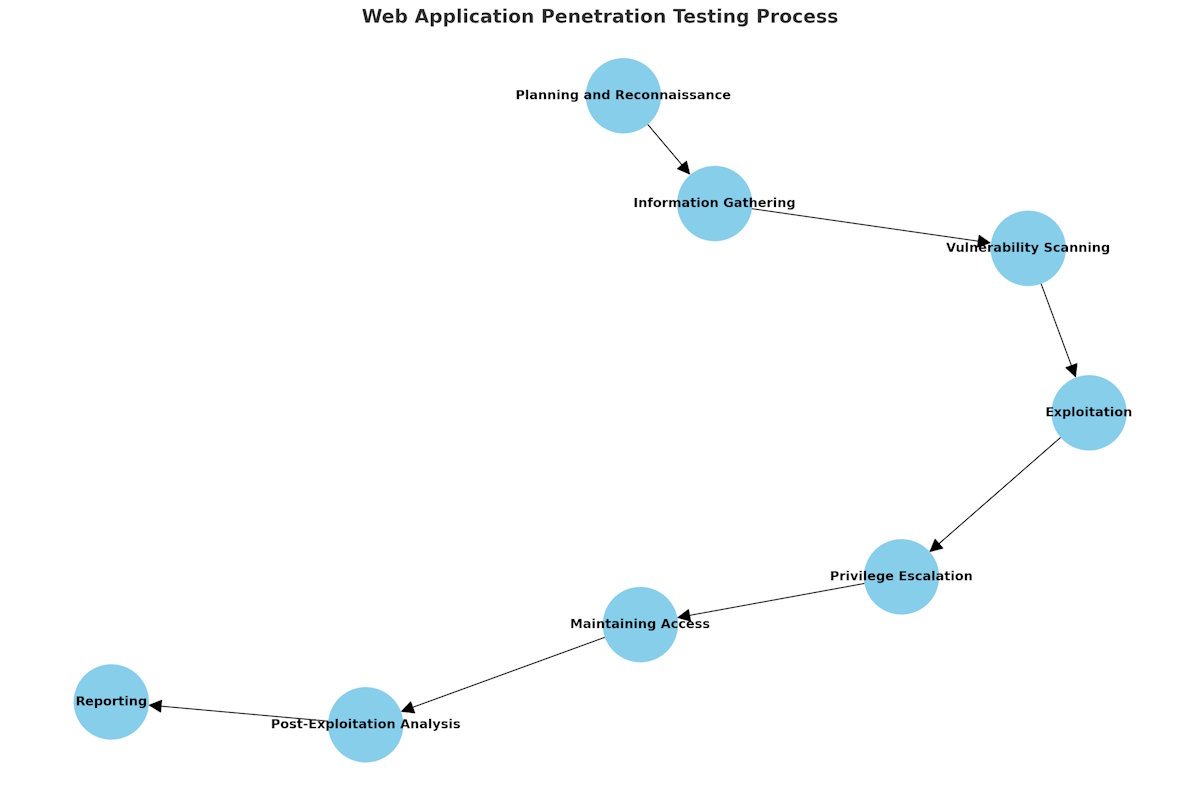
1. Information Gathering (Reconnaissance)
Tools & Methods:
-
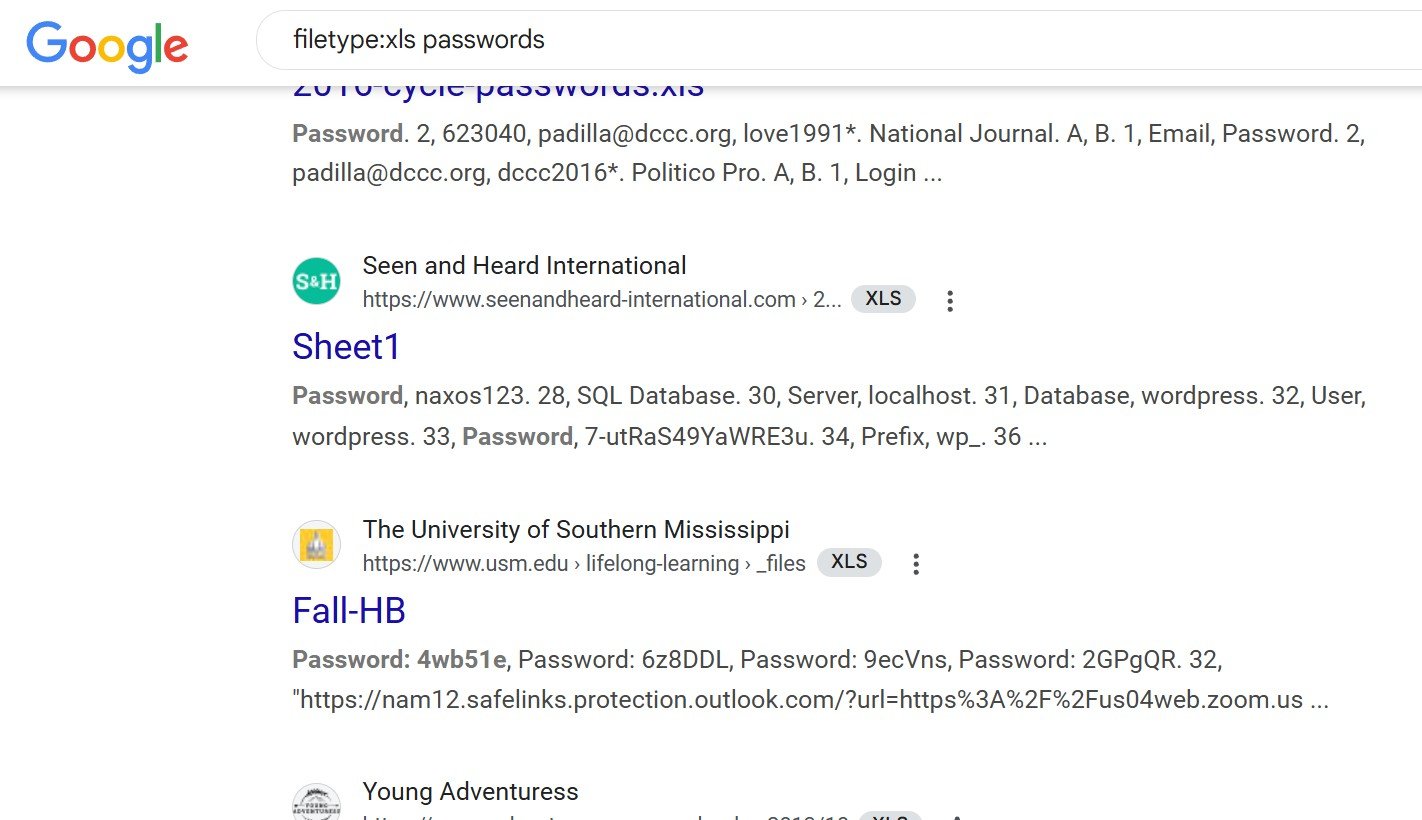
Google Dorking
-
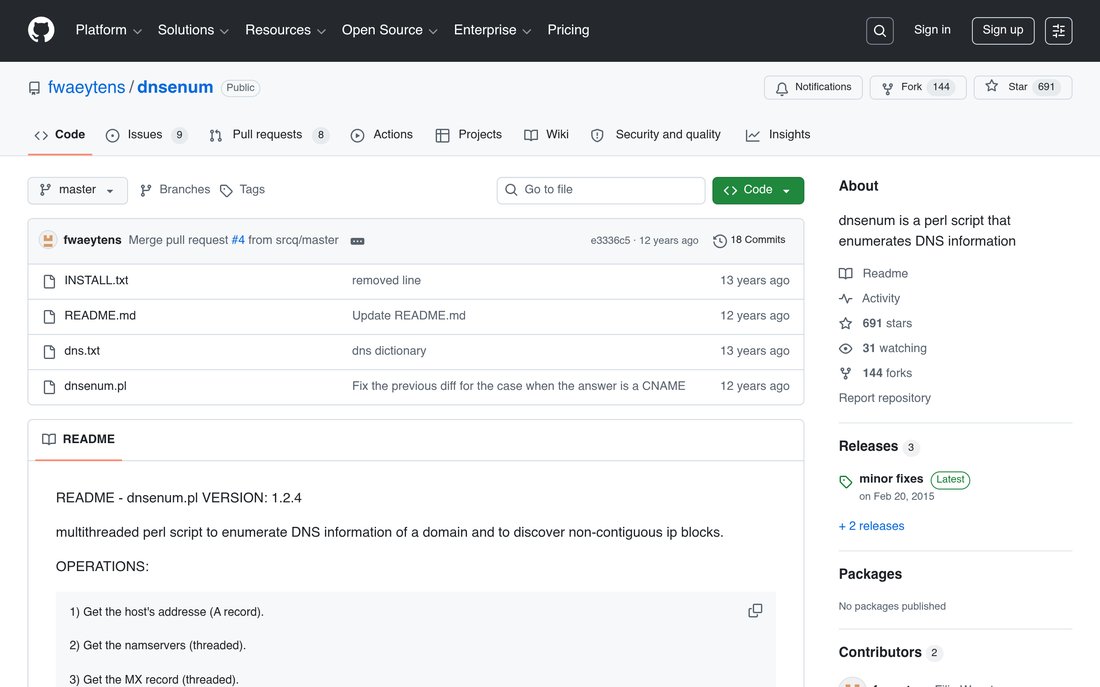
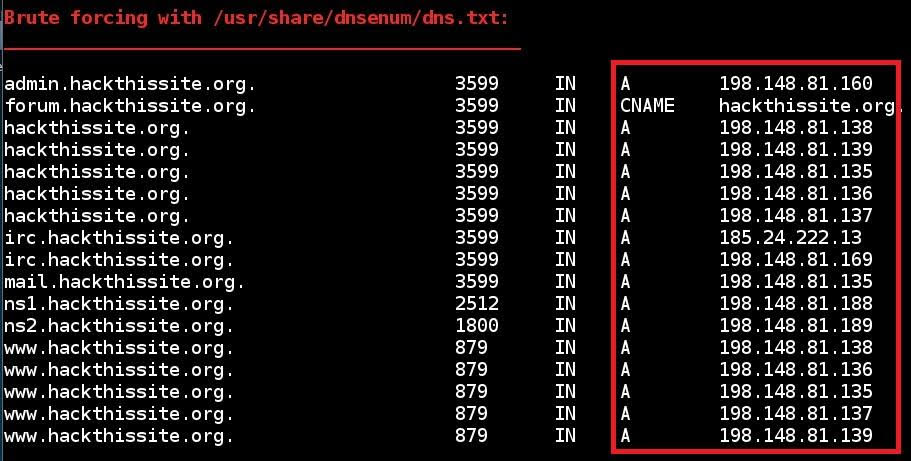
DNS Enumeration:
dnsenum
-
Subdomain Discovery:
Sublist3r,Amass -
WHOIS, Shodan, Certificate Transparency Logs
2. Mapping the Application
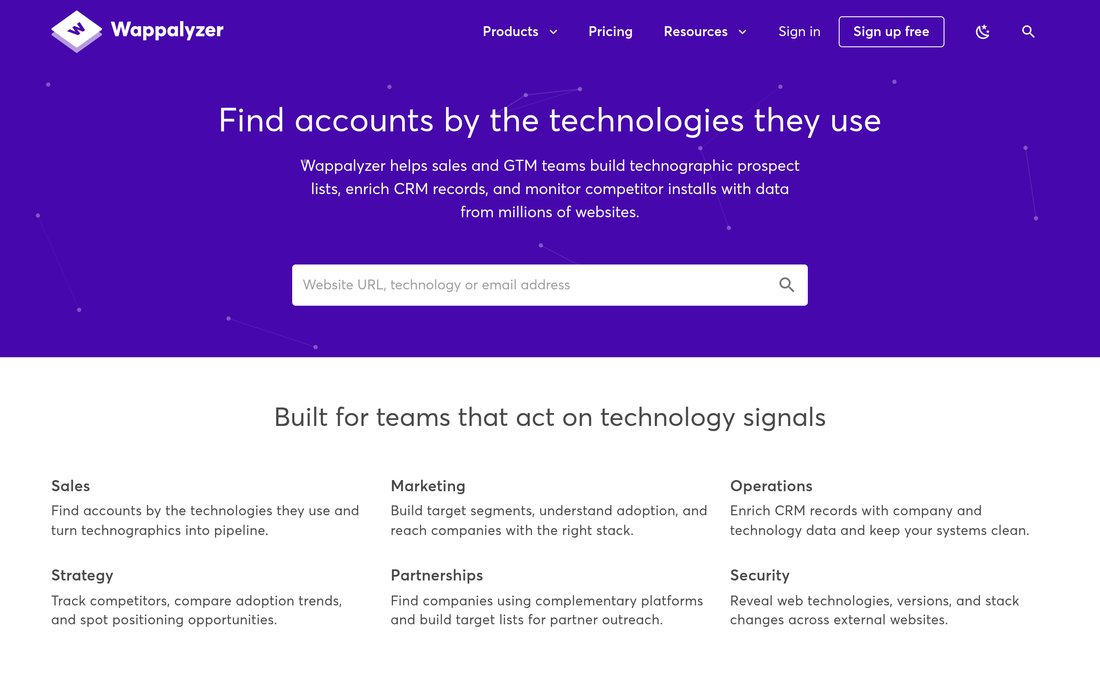
-
Identify endpoints, technologies (e.g., PHP, React, Node.js)
-
Use tools like
WappalyzerandBurp Suite
3. Automated Scanning
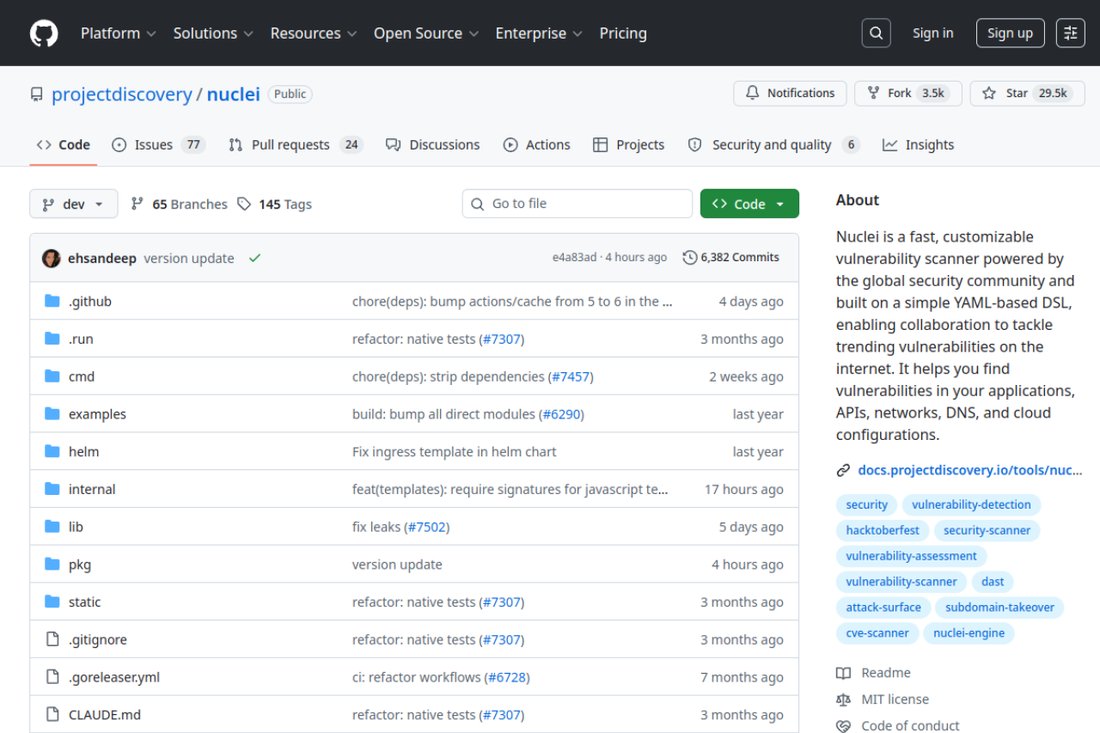
To identify common CVEs:
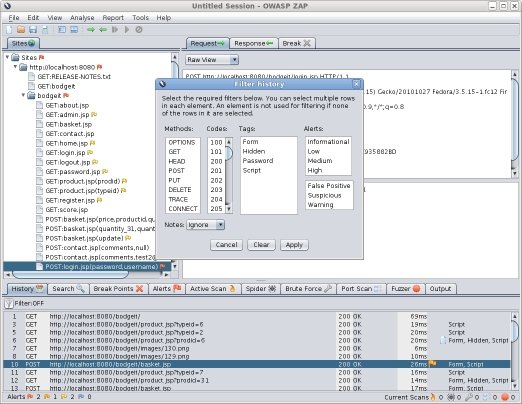
But remember: scanners miss logic flaws.
4. Manual Testing
This is where experienced testers shine:
-
Bypassing authentication mechanisms
-
Testing for parameter tampering
-
Abuse of forgotten endpoints
-
Chained attack scenarios
Focus areas:
| Area | Examples |
|---|---|
| Input Validation | XSS, SQLi, Command Injection |
| Authentication | Broken Auth, 2FA Bypass |
| Authorization | IDOR (Insecure Direct Object References) |
| Session Mgmt | Session Fixation, Token Theft |
| Business Logic | Abusing workflows to gain access, discounts, or elevate permissions |
5. Exploitation
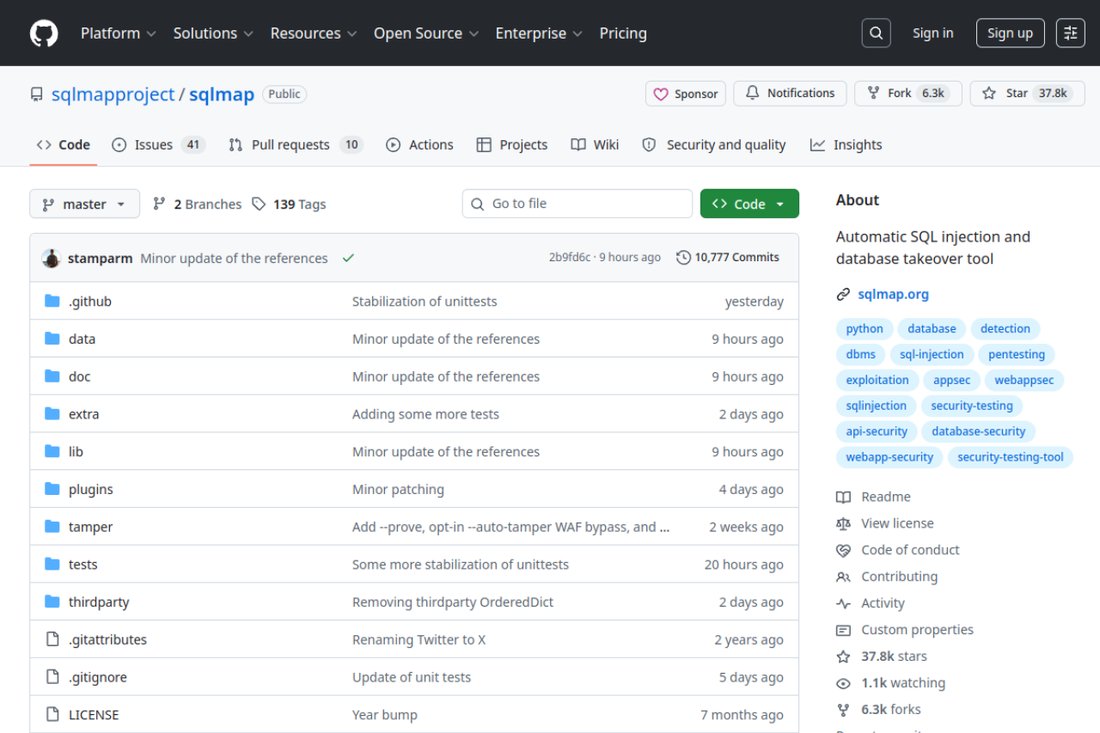
Careful, controlled execution of:
-
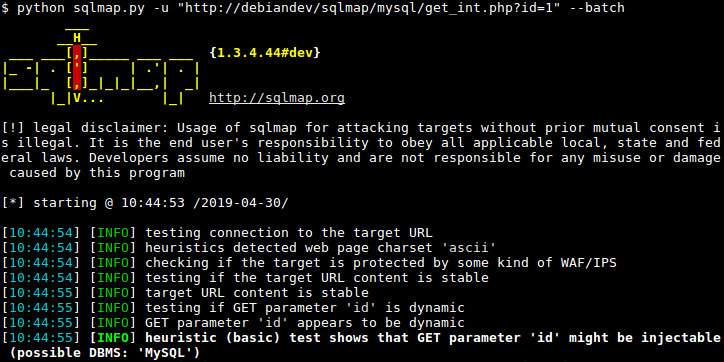
SQL Injection (with tools like
sqlmap)
-
File Upload Bypass
-
XSS to Session Hijacking
-
RCE (Remote Code Execution)
Goal: Simulate what a real attacker would gain - without harming your systems.
6. Post-Exploitation (Optional)
-
Check for lateral movement
-
Privilege escalation
-
Pivoting inside your network if allowed by scope
7. Reporting
Not just a list of CVEs. A good report includes:
-
Risk-ranked vulnerabilities (CVSS + business impact)
-
Screenshots of exploitation
-
Proof-of-Concepts (PoCs)
-
Developer remediation guidance
Why Manual Testing Still Matters
Even the best scanner won't:
-
Understand business logic
-
Chain multiple minor bugs into a critical exploit
-
Spot a cleverly hidden privilege escalation
Manual testing is what separates a $500 scan from a $10,000 professional test - and it's worth every penny if you care about real-world protection.
Part 3: Regulatory and Compliance Requirements

Many industries and standards require regular penetration testing. Here's a breakdown:
| Standard | Penetration Test Requirement | Link |
|---|---|---|
| PCI-DSS | Annual test and after major changes | PCI DSS v4.0 |
| SOC 2 | Required for security principle | AICPA SOC 2 |
| HIPAA | Required for risk analysis (if ePHI is exposed) | HHS HIPAA Guidelines |
| ISO 27001 | Required for Annex A.12 (Operations Security) | ISO |
| NIST SP 800-53 | Requires regular testing in multiple controls | NIST Controls |
| GDPR | "Appropriate technical measures" include testing | GDPR Article 32 |
If your clients ask for SOC 2, PCI, or HIPAA - you'll need evidence of recent and reliable pen testing.
Choosing the Right Penetration Testing Provider
Not all pen tests are created equal.
Some companies run a cheap scanner, slap your logo on a PDF, and call it a day. Others dig deep, simulate real-world attackers, and actually help your team fix what they find.
The difference? Often $500 vs $15,000 - and a mountain of risk in between.
What Makes a Great Penetration Testing Partner
Here's what to look for in a serious web app pentesting vendor. Our own penetration testing services site shows how we handle each of these points, from the trust boundaries we follow to the evidence we put in the report:
| Criteria | Why It Matters |
|---|---|
| Manual Testing | Scanners miss logic flaws and chained exploits. |
| Scoping Expertise | Should help you define test boundaries and prioritize assets. |
| Clear Deliverables | You need a report with PoCs, risk ratings, and remediation steps. |
| Remediation Support | Will they work with your dev team after the report? That's real value. |
| Certifications (OSCP, CREST, etc.) | Shows they know what they're doing, not just pushing buttons. |
| Reputation + References | Ask for testimonials, case studies, or past client results. |
| Business Risk Understanding | Can they speak your language - not just "CVE-2023-XXXX"? |
Red Flags to Watch Out For
-
Automated Scan + Fancy Report = "Pentest"
If they don't mention manual testing or business logic, walk away. -
No Scoping Call
A real test needs a real conversation. No form can capture everything. -
No Post-Test Support
Fixing vulnerabilities takes time. If they ghost you after delivery, it's a bad sign. -
All Talk, No Proof
Anyone can say "we're trusted by enterprises." Ask for real, redacted reports or sample findings.
Part 5: Penetration Testing Costs - What You're Really Paying For
Pricing Breakdown by Test Type
| Test Type | Description | Estimated Cost |
|---|---|---|
| Automated Scan | Simple scan + basic report | $500 - $1,000 |
| Light Manual Test | 1-2 testers for 2-5 days | $3,000 - $6,000 |
| Full Manual Web App Pentest | Deep testing with chained exploit attempts | $7,000 - $20,000 |
| Comprehensive Engagement | Includes retesting, remediation support, compliance mapping | $15,000 - $30,000+ |
Factors that affect price:
-
Number of unique pages or endpoints
-
Complexity (auth, roles, workflows)
-
Scope (prod + staging? multiple apps?)
-
Regulated industry? (HIPAA, PCI, etc.)
-
Is retesting included?
Tip: Always ask, "Is retesting included in your quote?"
Fixing issues and getting a clean report often costs extra if it's not stated upfront.
Should You Choose a Cheap Provider?
If your goal is:
-
Checking a compliance box
-
Getting a low-budget MVP tested quickly
-
Testing a demo with no real users
...then a cheaper scan might make sense.
But if your app:
-
Stores sensitive customer data
-
Powers your revenue (SaaS, eCommerce, CRM)
-
Faces real threat actors
-
Is required to pass audits (SOC 2, ISO, PCI)
...then you need real testing.
Cutting corners here is like buying cheap brakes for a Ferrari.
What a Good Pen Test Proposal Should Include
Before you sign anything, make sure the quote includes:
| Item | Description |
|---|---|
| Scope of Testing | Pages, features, environments, user roles |
| Testing Techniques | Manual vs automated, tools used |
| Duration | Start and end dates, days of actual testing |
| Team Size & Expertise | Who's doing the work? What are their credentials? |
| Reporting | Executive summary + technical deep dive |
| Remediation Support | Time allocated for answering questions post-delivery |
| Retesting | One round included? Timeline for it? |
| Confidentiality | NDA or legal agreements for data handling |
| Methodology | OWASP Top 10, NIST 800-115, or custom methodology |
If they can't show you these details, you're not dealing with professionals.
What Happens If You Skip Penetration Testing
Many small and medium businesses wait until after a security incident to take testing seriously.
Here's what that delay usually costs:
1. Missed Vulnerabilities Become Breaches
Unpatched vulnerabilities (like CVE-2023-34362) were used in real-world attacks months before most companies responded.
We didn't know we were exposed
…is not a defense when your client data leaks.
2. Legal and Regulatory Penalties
If you handle:
-
Credit cards PCI-DSS
-
Healthcare data HIPAA
-
Financial records GLBA, SOX
-
EU citizen data GDPR
...then you're required to prove "appropriate technical controls."
Failure to test could trigger audits, fines, and lawsuits.
Note: Regulators have levied significant fines against organizations that could not demonstrate appropriate technical controls after a breach.
3. Lost Deals and Missed RFPs
Enterprise clients and government contracts often require recent pen test reports in their security questionnaires.
No report = no deal.
4. Public Reputation Damage
The press won't mention that you skipped testing - they'll just report that:
-
You got hacked.
-
Customer data leaked.
-
Your app was insecure.
And you'll be in damage control mode for months.
Executive FAQs: What Your CEO, CISO, or CTO Might Ask
"Why can't we just use a vulnerability scanner?"
Scanners are useful - but limited. They can't detect:
-
Business logic flaws
-
Role abuse
-
Broken access control
-
Session mismanagement
-
Chainable exploits
A good pen test does all that - and more.
"Can we afford this?"
The better question: Can you afford not to?
Average cost of a web app breach = $4.35M (IBM 2023)
Cost of a good pentest = $7K-$20K
That's a 0.5%-1% insurance premium to avoid bankruptcy-level loss.
"Will this disrupt our production systems?"
No - if scoped properly.
Professional testers:
-
Work during low-traffic hours
-
Avoid destructive payloads
-
Test in staging where possible
-
Follow strict engagement rules
"What do we do after the test?"
-
Review the report with your dev team
-
Fix the issues ranked Critical and High
-
Schedule a retest (if not included, budget for it)
-
Share the final report (redacted) with clients or auditors as needed
Final Checklist: Choosing a Web Application Pentest Provider
| Question | Must-Have Criteria |
|---|---|
| Do they offer manual testing? | Yes |
| Do they understand our tech stack? | Yes |
| Can they explain findings in business terms? | Yes |
| Do they include remediation support? | Ideally |
| Is retesting included in the quote? | Preferably |
| Do they have real credentials (OSCP, CREST)? | Strong yes |
| Are reports actionable and developer-friendly? | Must be |
| Are they vendor-agnostic (no upselling tools)? | Yes |
| Do they have references, case studies, or real results? | Always |
| Do they follow a recognized methodology (OWASP/NIST)? | Yes |
Deep Dive Into the Technical Process - What Real Pentesters Actually Do
Most business owners or even CTOs never see what goes on during a manual penetration test. You get a report, maybe a few screenshots, but what happens in the middle?
This section pulls back the curtain. We'll walk you through real-world technical techniques used during a professional, manual web application penetration test - far beyond what scanners can catch.
If you want this more often than once a year without a retainer, continuous AI penetration testing is the route: AI-driven testing across web, API, cloud, network and mobile, with results back in five to ten days.
1. Fuzzing and Input Discovery
Fuzzing is the process of sending malformed, unexpected, or intentionally invalid data to inputs to observe how the application behaves.
Professional testers use:
-
ffuf- For directory/file brute forcing -
Burp Suite Intruder- To inject payloads into parameters -
wfuzz- For URL and parameter fuzzing
Examples:
-
Fuzzing an upload endpoint with different file types to bypass MIME filters
-
Fuzzing GET and POST parameters for blind XSS or error leakage
-
Discovering undocumented API routes (e.g.,
/api/v1/exportAllUsers)
2. Authentication & Session Attacks
Authentication mechanisms are tested for:
-
Weak session tokens (guessable or predictable)
-
Lack of brute-force protection
-
2FA bypasses
-
Account takeover via password reset flaws
Tools and techniques:
-
jwt_tool- JWT tampering, signature bypasses -
Manual cookie poisoning
-
Password spraying using
hydraorburpsuite -
Cookie replay and fixation attacks
Testers look at:
-
Can I log in as someone else without knowing their password?
-
Can I reuse expired or tampered tokens?
-
Can I guess valid session IDs?
Example:
A SaaS app used base64-encoded JSON for sessions. A tester modified their user ID and accessed the CEO's account.
3. Authorization Testing (Access Control Failures)
Once logged in, testers look for privilege escalation and horizontal access flaws.
Manual methods include:
-
Changing numeric IDs in URLs:
/invoice/1001 /invoice/1002 -
Role flipping: modifying JWT claims from
role=viewertorole=admin -
Modifying GraphQL queries to fetch unrelated data
These flaws often bypass even the best WAFs and go undetected by scanners.
Examples:
-
Accessing another user's files via S3 bucket path manipulation
-
Changing
user_idin POST data to retrieve another user's billing history -
Performing admin actions through hidden API routes
4. Advanced Exploitation Techniques
Now we go beyond simple XSS and SQLi. Skilled testers simulate full kill-chain attack scenarios, including:
a. SSRF (Server-Side Request Forgery)
Used to:
-
Access internal-only endpoints
-
Enumerate AWS metadata at
http://169.254.169.254 -
Exploit internal admin panels
Tools: Burp Collaborator, Interactsh, ssrfmap
b. Template Injection
Exploits misconfigured rendering engines like Jinja2 or Freemarker:
-
Payload:
{{7*7}}Should return49if vulnerable -
May lead to RCE (Remote Code Execution)
c. DOM-based XSS
Exploits JavaScript logic flaws on the client side. Tools: XSStrike, browser DevTools, manual analysis
d. Chained Attacks
Example:
-
Discover a path traversal
-
Use it to read
.envfile -
Extract DB creds
-
Dump the database
-
Reset admin password
-
Log into admin panel
5. Testing APIs: REST, GraphQL, and Beyond
APIs are often more vulnerable than front-end interfaces - yet rarely tested properly.
Key risks:
-
Lack of rate limiting
-
Excessive data exposure
-
BOLA/IDOR flaws
-
Improper token validation
Manual testers use:
-
GraphQL Voyagerto map schema -
[
Burp Suite Repeater] to modify and replay GraphQL queries
Checklist:
| API Testing Focus | Details |
|---|---|
| Input validation | SQLi, XSS, CRLF injection |
| Authentication | Token expiration, refresh logic |
| Rate limiting | Account lockout, brute force |
| Filtering bypass | Can users query unauthorized fields? |
| Swagger/OpenAPI | Does the spec expose undocumented endpoints? |
6. Cloud Application and Serverless Security Testing
Cloud-based applications and microservices come with new attack surfaces:
-
Public S3 buckets
-
IAM misconfigurations
-
Secrets in Git repos or CI/CD pipelines
Testers evaluate:
-
Misconfigured permissions (
*:*in IAM) -
API Gateway bypasses
-
Leaked keys in client-side JavaScript
-
Insecure Lambda functions (e.g., Node.js with
eval())
Tools:
-
ScoutSuite- AWS/Azure/GCP security audits -
Pacu- AWS exploitation framework -
TruffleHog- Detects secrets in code
Example scenario:
A frontend exposed an API key in JS. The key had write access to a production S3 bucket. A tester uploaded a malicious JavaScript file, leading to XSS for all visitors.
7. Retesting and Verification
After fixes, testers perform targeted retesting:
-
Re-execute original payloads
-
Validate implementation (not just patch version)
-
Look for regressions or new issues introduced during fixes
Good pentesters don't just say "fixed." They prove it.
Deliverables:
-
Updated status report
-
Confirmed resolution for each finding
-
Optional video proof or new PoC if issues persist
8. Methodologies and Toolkits Compared
| Framework / Tool | Use Case | Link |
|---|---|---|
| OWASP Testing Guide | Industry standard baseline | OWASP |
| NIST 800-115 | Federal methodology | NIST |
| Burp Suite Pro | Intercept, fuzz, replay, scan | Burp Suite |
| ZAP (OWASP) | Free scanning + automation | ZAP |
| sqlmap | SQL injection exploitation | sqlmap |
| Amass/Sublist3r | Subdomain discovery | Amass |
| Nuclei | Template-based vulnerability scanning | Nuclei |
Final Takeaways from the Technical Trenches
-
Scanners alone won't cut it.
-
Manual pentesting is about logic, chaining, and creativity - not just signatures.
-
Cloud and API threats are rising faster than traditional app flaws.
-
Retesting is not optional - many "fixes" just move the problem.
-
A real tester thinks like an attacker, but reports like a partner.
Your Application Is the Front Door - Lock It Right
You've invested in building your platform, your product, your customers' trust.
But if your web application is vulnerable, everything is at risk.
-
Compliance requires testing.
-
Clients demand proof.
-
Hackers need just one mistake.
A professional web application penetration test isn't just a checkbox.
It's the most practical step you can take to protect your business from data loss, brand damage, legal trouble, and lost revenue.
Ready to take the first step?
We offer:
Manual web application testing
Business logic + privilege abuse checks
Compliance-ready reports
Remediation support
Quiet, discreet, expert-level engagement
Schedule a free consultation
Or download our Pentest Readiness Checklist to see if your app is ready for testing.
See also: Demystifying ISAE 3402 Type 1 and Type 2 Reports and Audits
To shortlist vendors for a web application test, see the top 40 penetration testing companies, ranked with pricing models and honest limitations.
Related services from Atlant Security: SaaS Security Audit, Penetration Testing, Ecommerce Cybersecurity. Book a discovery call to discuss your specific situation.
