

We have probably seen your problem before. Our smallest client had eight employees. Our largest secures the nuclear power plant of the United Arab Emirates. Whatever shape yours is, tell us about it and we will tell you how we would fix it.
Austin is one of the few American cities with genuinely world-class security companies of its own. Praetorian, SpyCloud and SailPoint are all headquartered here and all lead their respective categories nationally. That is unusual, and it means an Austin buyer has real choice locally. This guide compares those three against the managed providers that most Austin businesses actually need day to day.
Disclosure: this guide is published by Atlant Security, which appears at number 4 of 8 below. We are not a reseller or partner of any firm listed, none paid for placement, and none saw this before publication. Every company here was checked against its own live website on 14 September 2026. Strengths and weaknesses are our editorial judgement; each quoted line is taken verbatim from the firm’s own site.
What changed in this edition: This edition was rebuilt and expanded. The previous version listed Rapid7 (Austin Division), which is a Boston-headquartered company, and Kasasa (Security Consulting Division), which is a financial technology firm rather than a cybersecurity provider. Both have been removed. The three genuinely Austin-headquartered security companies have been retained and properly described, and five verified local managed providers have been added, because most Austin businesses need an operational partner rather than an enterprise platform.
Start Here: the 30 Second Version
If you read nothing else on this page, read the row that describes you. Every provider is compared in detail further down, but choosing the right category of firm matters far more than choosing between two firms in the same category.
| If this is you | Buy this first | Because |
|---|---|---|
| A funded startup losing enterprise deals to security review | SOC 2 readiness | The questionnaire is a sales obstacle. Treat it as one and it gets funded properly. |
| A product company that wants continuous testing | An offensive security engagement | One firm below argues for continuous attack simulation over an annual test. That argument is correct. |
| You are worried about already-stolen staff credentials | Credential exposure monitoring | It is a layer, not a programme, and it is cheap relative to what it catches. |
| A 20 to 100 person Austin business | A local managed provider with a real security tier | Four of the eight firms below are this, at a $1,000 entry point. |
| You do not know which of these you are | A scoped, fixed-price audit | The cheapest thing to buy first is the ordering. |
Atlant Security editorial assessment, September 2026. This is our reading of the market, not a figure taken from any published source.
Does a Austin Cybersecurity Company Need to Be in Austin?
For most technical work, no. Austin’s economy is heavily cloud-based and software-driven, and that work is done remotely. What Austin does offer is unusual local depth: if you want serious offensive security or identity governance, you can buy it from a company headquartered in your own city, which helps with everything from contract negotiation to hiring.
Location matters for semiconductor and hardware manufacturing, which has a substantial and growing presence in the region and involves environments that cannot be assessed over a video call, and for any engagement requiring physical testing.
For a typical Austin software company, the deciding factor should be whether the provider understands modern cloud and application environments, not how far they are from your office.
What Drives Security Spending in Austin: Software, Silicon and State Law
Austin’s security market is shaped by the fact that most of its notable companies build software. That produces a specific set of priorities: application security, secrets management, cloud configuration, and the supply chain risk that comes from depending on hundreds of third-party packages. It also produces a specific failure mode, which is shipping quickly enough that security review never quite happens.
This is why continuous testing has more traction here than in most cities. An annual penetration test describes an environment that no longer exists by the time the report is delivered, which is a poor fit for a company deploying several times a week. Testing that runs continuously against a changing target is a better match for how Austin companies actually build.
Semiconductor and hardware manufacturing is the second pillar and is growing quickly with substantial regional investment. Manufacturing environments bring operational technology, long-lived equipment that cannot be patched on a normal cycle, and intellectual property that is a genuine target for state-sponsored collection. This is a different discipline from securing a software company and needs a provider who knows the difference.
Texas has also enacted a comprehensive state privacy law creating obligations around personal data for businesses operating in the state, with enforcement by the Attorney General. Whether and how it applies to your company is a question for counsel, but the practical consequence is familiar: know what personal data you hold, know where it is, and be able to act on a consumer request about it.
Work out which one you are
What actually forces the spend in Austin
Austin is a product town. For most companies here the security requirement arrives from an enterprise customer, not from a regulator, which changes both the deliverable and the budget line.
You sell software to enterprises
SOC 2, demanded contractually rather than by law
Enforced by your customers and their auditors
You sell internationally or to European buyers
ISO 27001 as the certification European procurement recognises, and GDPR Article 32
Enforced by certification bodies, and your customers
Your product handles customer credentials or identity
No single framework. Every customer questionnaire will probe it anyway
Enforced by your customers, in detail
The three most common situations. The full table below adds a fourth and gives the sourcing for each row.
| Your situation | What applies | Who enforces it | What it changes when you buy |
|---|---|---|---|
| You sell software to enterprises | SOC 2, demanded contractually rather than by law | Your customers and their auditors | It is a revenue blocker, so fund it from revenue. See SOC 2 readiness. |
| You sell internationally or to European buyers | ISO 27001 as the certification European procurement recognises, and GDPR Article 32 | Certification bodies, and your customers | See ISO 27001 readiness and GDPR Article 32. |
| Your product handles customer credentials or identity | No single framework. Every customer questionnaire will probe it anyway | Your customers, in detail | Two firms below work on exactly this problem from opposite ends. |
| You take card payments | PCI DSS | Your acquiring bank and the card brands | See our PCI DSS page. |
These are frameworks rather than statutes, named because Atlant Security publishes a page on each. Texas state obligations should be confirmed with counsel rather than with a vendor summary.
Cybersecurity Companies in Austin: Side-by-Side Comparison
All 8 firms below have a real presence in the Austin area. The table is sorted in the same order as the reviews that follow.
| Provider | Based | Team size | Hourly rate | Best for |
|---|---|---|---|---|
| Praetorian | Austin, TX | 250-999 | Project based | Technology companies that want continuous attack simulation, not an annual test |
| SpyCloud | Austin, TX | 250-999 | Subscription | Organisations worried about credentials already stolen and circulating |
| SailPoint | Austin, TX | 2,000+ | Enterprise licensing | Large organisations that need to govern who has access to what, and prove it |
| Atlant Security | Remote, serving 14 countries | Small senior team | Fixed price, not hourly | Companies that need someone to decide what to do and then implement it |
| IT GOAT | Austin, TX | 250-999 | $100-$149 | Austin businesses wanting managed IT at a mid-market rate with a low entry point |
| Parried | Austin, TX | 10-49 | $200-$300 | Austin businesses that want a security-forward managed provider |
| TechProComp | Austin, TX | 10-49 | $150-$199 | Texas businesses wanting a small managed provider with predictable costs |
| TPx | National, with DC, Atlanta and Austin offices | 250-999 | $100-$149 | Multi-site businesses that want networking, voice and security from one supplier |
Team size, hourly rate and minimum engagement are as published by each firm on the Clutch directory, checked 14 September 2026. They are the firms’ own figures, not our measurements. “Best for” is Atlant Security’s editorial assessment.
What kind of firm each one actually is
The table above compares them on price and location. This one compares them on what they are, which is the comparison that decides whether the engagement works. Most bad purchases in this market are the right firm in the wrong category.
| Provider | What kind of firm it is | What the engagement ends with | The limitation this guide flags |
|---|---|---|---|
| Praetorian | Offensive testing | A report describing how they got in | Priced for funded technology companies, not small businesses |
| SpyCloud | Product vendor | A platform your team runs, or its managed tier | Solves one specific problem; it is a layer, not a programme |
| SailPoint | Product vendor | A platform your team runs, or its managed tier | Enterprise scale, cost and implementation effort |
| Atlant Security | Consultancy | A prioritised plan, and with some firms the fixes as well | No help desk, so day-to-day IT support still needs a local provider |
| IT GOAT | Managed IT (MSP) | A monthly service and somebody to call when it breaks | Managed IT led rather than security-engineering led |
| Parried | Managed IT (MSP) | A monthly service and somebody to call when it breaks | $200-$300 per hour with a small team behind it |
| TechProComp | Managed IT (MSP) | A monthly service and somebody to call when it breaks | Small team with finite capacity |
| TPx | Managed IT (MSP) | A monthly service and somebody to call when it breaks | Breadth over depth; not a specialist security consultancy |
Category is our reading of each firm’s own published description, quoted in its entry below. The limitation column is taken verbatim from the same entry. Checked against each firm’s live site in September 2026.
Read the Atlant Security row the same way you read the others. We are a consultancy. There is no help desk, no monitoring platform and nothing to resell, and that is a limitation as much as a position. If what you need is somebody to answer the phone when a laptop dies, buy from one of the managed providers on this page instead. We are here because deciding what to fix and in what order is a separate purchase from keeping the estate running.
The 8 Best Cybersecurity Companies in Austin for 2026
The first three are Austin-headquartered specialists in offensive security, credential protection and identity governance. The rest are consultancies and managed providers serving the metro, which is what most local businesses actually need first.
1. Praetorian
Austin, TX · Website: praetorian.com
Best for: Technology companies that want continuous attack simulation, not an annual test
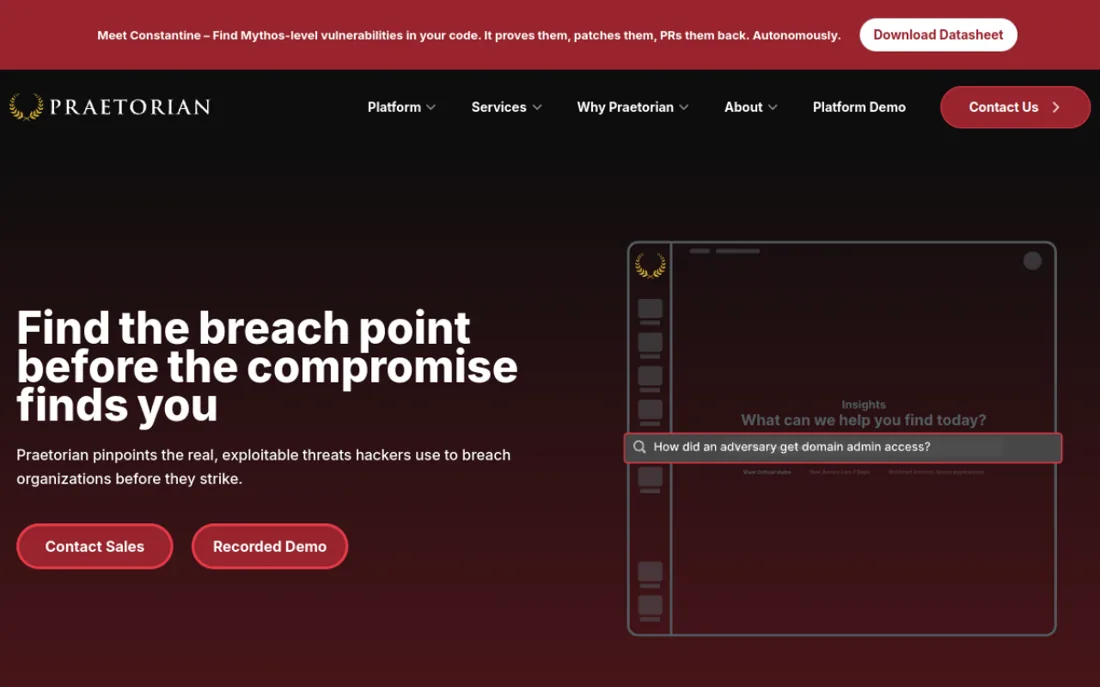
Praetorian is headquartered in Austin and is one of the stronger offensive security firms in the country, not merely in Texas. Its argument is that an annual penetration test is a snapshot of an environment that changes weekly, so testing should be continuous rather than a calendar event. For an Austin software company shipping daily, that argument is difficult to refute. This is a serious engineering-led firm and priced accordingly; it is not the right call for a twenty-person business.
Continuous Offensive Security
How Praetorian describes itself on praetorian.com, September 2026
Strengths
- Austin headquartered and nationally regarded for offensive security
- Continuous testing model suits organisations that ship frequently
- Engineering-led, with genuine original research output
Watch out for
- Priced for funded technology companies, not small businesses
- Offensive testing only; no managed IT or day-to-day operations
Team size: 250-999 · Rate: Project based · Minimum engagement: Project based
2. SpyCloud
Austin, TX · Website: spycloud.com
Best for: Organisations worried about credentials already stolen and circulating
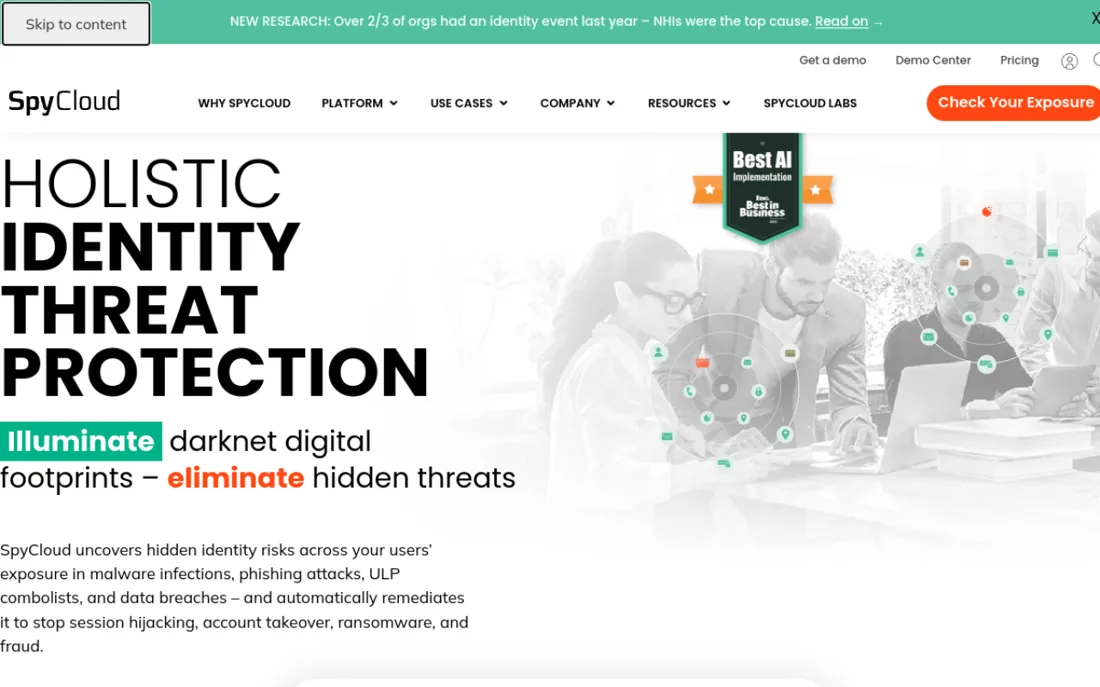
SpyCloud is an Austin company working on a specific and frequently ignored problem: the credentials belonging to your staff that are already stolen and circulating from breaches of entirely unrelated services. Since people reuse passwords, a breach at a consumer site becomes your problem without anything happening on your network at all. Account takeover using valid credentials remains one of the most common ways organisations are compromised, precisely because nothing looks like an attack.
Identity Threat Protection Powered by Recaptured Dark Web Data
How SpyCloud describes itself on spycloud.com, September 2026
Strengths
- Austin headquartered, addressing a genuinely under-served problem
- Targets credential-based account takeover, a leading cause of breaches
Watch out for
- Solves one specific problem; it is a layer, not a programme
- Needs a process to act on what it surfaces, or nothing improves
Team size: 250-999 · Rate: Subscription · Minimum engagement: Platform subscription
3. SailPoint
Austin, TX · Website: sailpoint.com
Best for: Large organisations that need to govern who has access to what, and prove it
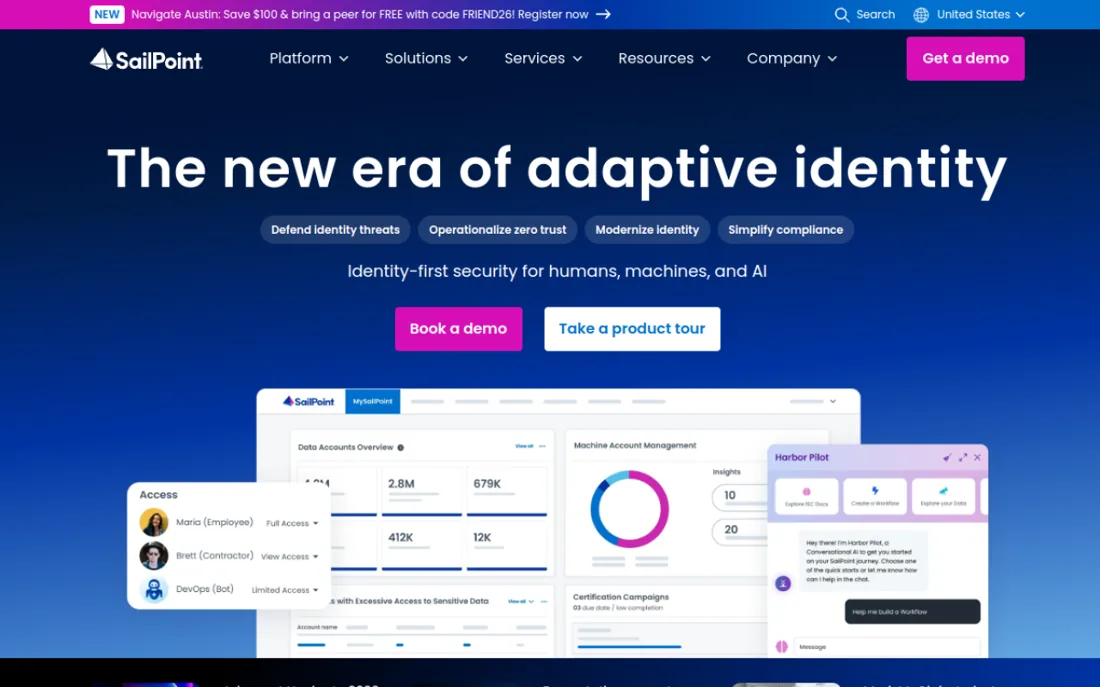
SailPoint is headquartered in Austin and is one of the largest identity governance companies in the world. The problem it addresses sounds like paperwork and is anything but: in an organisation of several thousand people, nobody can say with confidence who has access to what, and leavers routinely keep access for months. Identity governance is how that becomes provable rather than assumed. It is genuinely enterprise software, with the implementation effort that implies.
The new era of adaptive identity - For humans, machines, AI
How SailPoint describes itself on sailpoint.com, September 2026
Strengths
- Austin headquartered and a global leader in identity governance
- Addresses access certification, which auditors ask about directly
Watch out for
- Enterprise scale, cost and implementation effort
- Substantially more than a mid-sized company needs
Team size: 2,000+ · Rate: Enterprise licensing · Minimum engagement: Platform subscription
4. Atlant Security
Remote, serving 14 countries · Website: atlantsecurity.com
Best for: Companies that need someone to decide what to do and then implement it
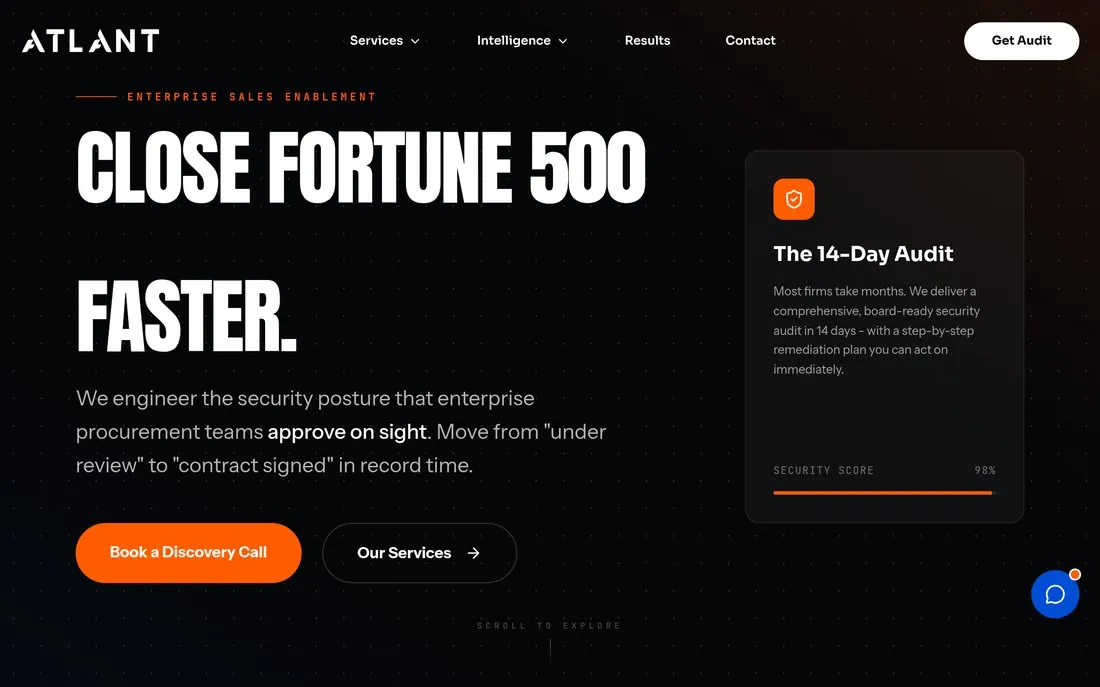
Atlant Security is a consultancy rather than a managed services provider or a product vendor, and the distinction is the reason it is on this list at all. There is no help desk, no monitoring platform and nothing to resell. What it does is the part most local providers leave to you: an audit that produces a prioritised remediation plan with named owners and effort estimates, and the same engineers then implementing the fixes. The firm has run 200+ security assessments across 14 countries since 2013, works to fixed prices rather than hourly billing, and is vendor-independent, so the recommendation carries no resale commission. For a company that does not yet know whether it needs an MSP, a penetration test or a compliance programme, that ordering is the useful thing to buy first.
Strengths
- Fixed price, so scope and invoice are agreed before work starts
- Implements the fixes rather than stopping at a findings report
- Vendor-independent, with no product resale margin behind the advice
Watch out for
- No help desk, so day-to-day IT support still needs a local provider
- No 24/7 monitoring platform of its own; continuous detection goes to a partner
- Remote-first, so regular on-site presence is not the model
Team size: Small senior team · Rate: Fixed price, not hourly · Minimum engagement: $8,000+
5. IT GOAT
Austin, TX · Website: itgoat.com
Best for: Austin businesses wanting managed IT at a mid-market rate with a low entry point
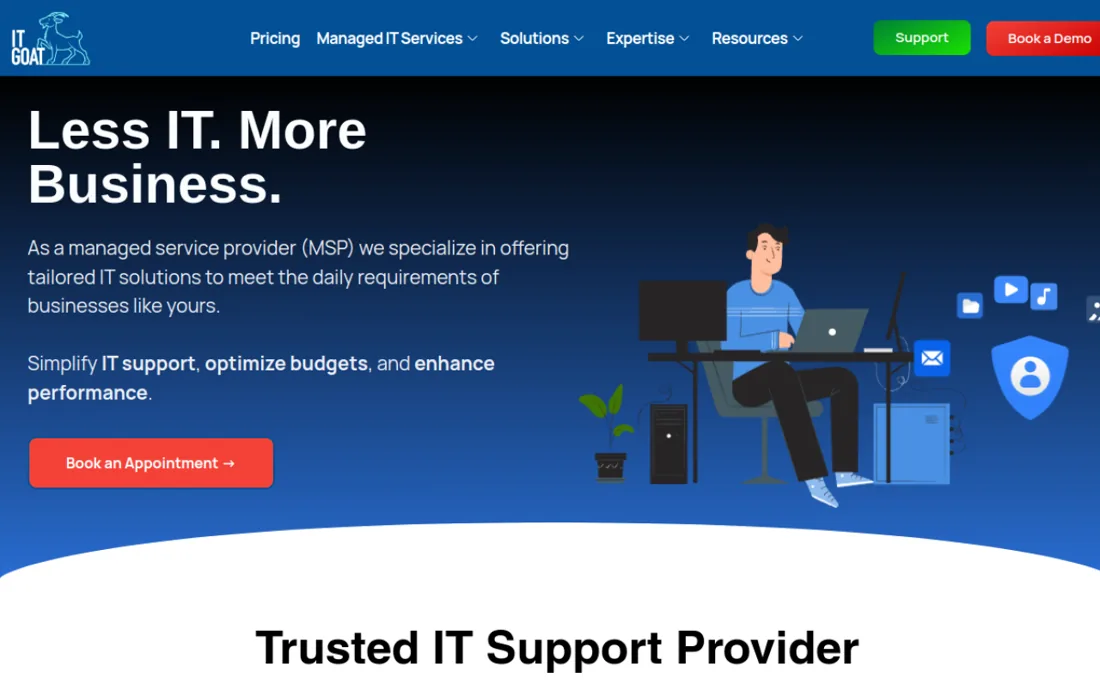
IT GOAT is an Austin managed services provider with a larger team than most of the local independents and a published rate band at the lower end of the market, with a $1,000 minimum. For an Austin business that needs day-to-day IT handled with competent security hygiene underneath, this is the operational tier rather than the specialist tier. The three Austin-headquartered security companies above solve particular problems; a provider like this keeps the estate running.
Managed IT Services & IT Support Provider
How IT GOAT describes itself on itgoat.com, September 2026
Strengths
- Larger local team than most Austin independents
- Lower rate band with a $1,000 entry point
Watch out for
- Managed IT led rather than security-engineering led
- Specialist testing and compliance work goes elsewhere
Team size: 250-999 · Rate: $100-$149 · Minimum engagement: $1,000+
6. Parried
Austin, TX · Website: parried.com
Best for: Austin businesses that want a security-forward managed provider
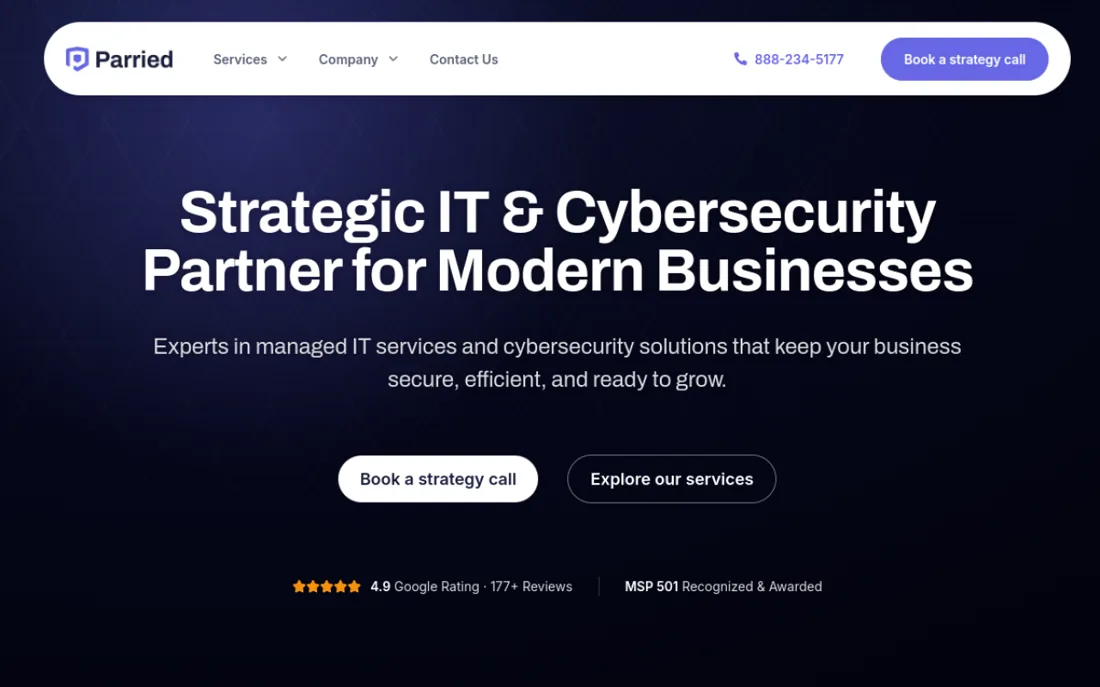
Parried is a small Austin provider naming cybersecurity alongside managed IT in its own positioning, at the top of the local rate band. A higher rate from a small firm usually signals more senior people doing the work, which for security is generally the right trade. Verify it rather than assume it: ask who specifically will be assigned, what their background is, and what proportion of their week your engagement actually buys.
Managed IT Services and Cybersecurity Solutions
How Parried describes itself on parried.com, September 2026
Strengths
- Security named explicitly in the core positioning
- Top-of-band rate usually indicates more senior staff
Watch out for
- $200-$300 per hour with a small team behind it
- Confirm exactly who is assigned before signing
Team size: 10-49 · Rate: $200-$300 · Minimum engagement: $1,000+
7. TechProComp
Austin, TX · Website: techprocomp.com
Best for: Texas businesses wanting a small managed provider with predictable costs
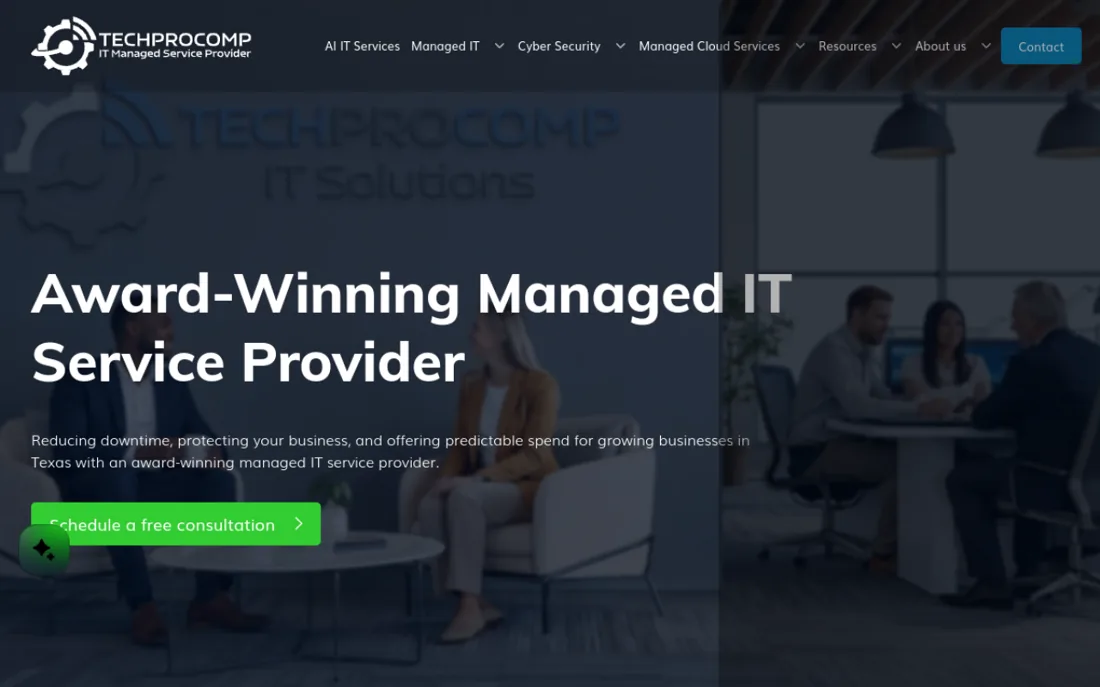
TechProComp is a small Austin managed provider that pitches predictable spend and reduced downtime for growing businesses in Texas. Predictability is an underrated selling point: a great many small businesses are less troubled by the absolute cost of IT than by not knowing what next month will cost. A fixed monthly arrangement with a small local firm solves a budgeting problem as much as a technical one, which is a legitimate reason to buy.
Managed IT Service Provider You Can Trust
How TechProComp describes itself on techprocomp.com, September 2026
Strengths
- Predictable fixed monthly cost model
- Small enough for direct access to the people doing the work
Watch out for
- Small team with finite capacity
- No specialist security practice of its own
Team size: 10-49 · Rate: $150-$199 · Minimum engagement: $5,000+
8. TPx
National, with DC, Atlanta and Austin offices · Website: tpx.com
Best for: Multi-site businesses that want networking, voice and security from one supplier
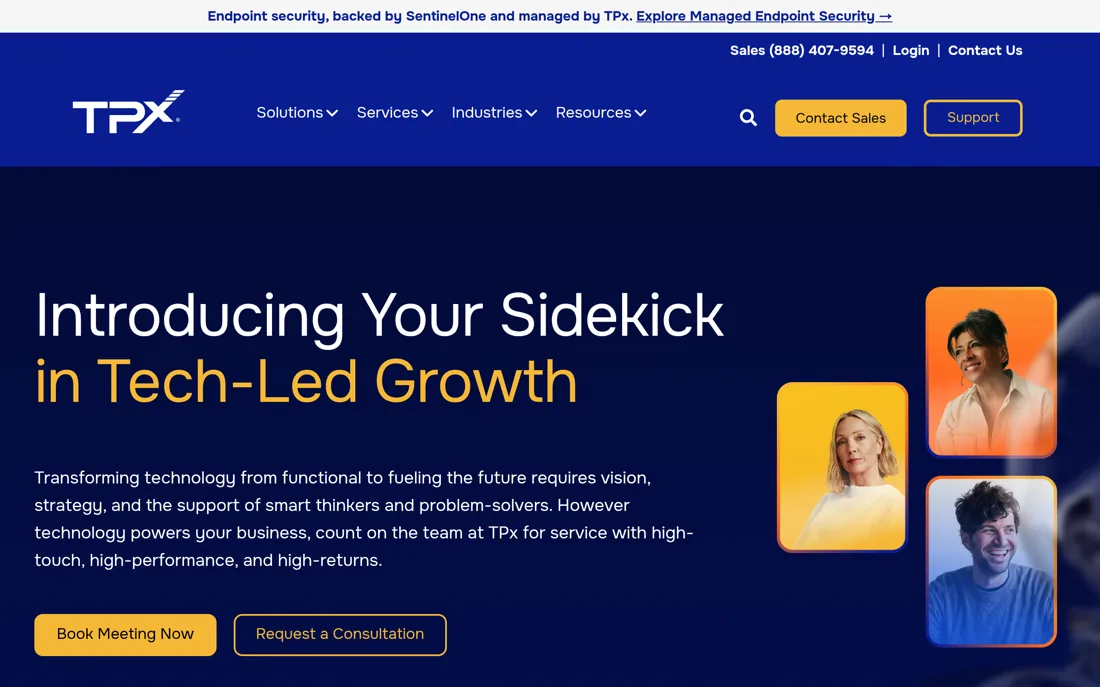
TPx comes at security from the network side, with a background in managed connectivity and voice, and offices in several of the cities in this series. For a business with many locations that is already buying network services, consolidating security with the same supplier removes a genuine source of finger-pointing when something breaks between the firewall and the carrier. The $1,000 minimum and mid-range rate make it accessible. It is a broad provider rather than a specialist security consultancy.
Your Sidekick for IT Services & Tech Solutions
How TPx describes itself on tpx.com, September 2026
Strengths
- Network, voice and security under one supplier and one support number
- Low entry point and a mid-range published rate
Watch out for
- Breadth over depth; not a specialist security consultancy
- Security heritage is newer than the networking heritage
Team size: 250-999 · Rate: $100-$149 · Minimum engagement: $1,000+
How to Choose a Cybersecurity Company in Austin
Several of the providers below are managed IT firms with a security practice attached, and the rest fall into four or five quite different categories. That makes the selection process matter more than the shortlist. Work through these five steps in order.
- Work out which of the things below you are buying
A managed provider keeps your estate running day to day. A testing firm tries to break in and reports how it went. A consultancy decides what you should do and in what order. A product vendor sells you a platform somebody then has to operate. The table above says which is which.
- Ask who fixes the problem after it is found
A scan, an audit and a penetration test all end with a document. Somebody then has to change firewall rules, rebuild permissions, roll out multi-factor authentication and argue with a vendor about a legacy application. Ask in writing whether remediation is included, excluded, or billed separately.
If the gap between annual tests is what worries you, AI penetration testing closes it. Same coverage across web apps, APIs, cloud and internal network, evidence you can hand a developer, and a turnaround measured in days.
- Get the scope and the price in writing before anyone starts
A proposal that prices security services without listing what is monitored, tested or documented is not a proposal you can hold anyone to. Ask for a fixed or capped price and an explicit list of exclusions. The price transparency panel further down shows how many of these firms publish anything at all.
- Separate the product from the company
Austin companies routinely conflate two different security problems. Securing the software you ship is application security and testing work. Securing the company that builds it is managed IT and identity work. They need different providers and different budgets, and a firm that offers to do both should be asked which one it actually does for a living.
- Ask what you keep if you leave after twelve months
Documentation, configurations, log history, tenancy ownership. If the answer is that you keep nothing, you are not buying a security programme, you are renting one, and the renewal conversation will reflect that.
Good signs
- They name the engineer who will do the work, and you can check that person exists
- They tell you what is out of scope before you ask
- They are willing to quote a fixed price for a bounded piece of work
- They ask about your customers and your parent company, not just your firewall
- They can say plainly which parts of the job they would subcontract
Walk away if
- Security is one of a dozen services listed and nobody on the team does it full time
- The proposal prices security services as a single line with no itemised scope
- The recommendation happens to be the product they resell
- They will not put the remediation position in writing
- They quote for the company and the product as one undifferentiated engagement
Five questions worth putting in the RFP
| Ask this | Why it matters | What a good answer sounds like |
|---|---|---|
| What proportion of your revenue is security work? | A directory search returns many firms listing cybersecurity among a dozen services. | A number, followed by the names of the people who do it full time. |
| Who specifically will be assigned, and what is their background? | Small teams sell with a senior and deliver with a junior. It is the most common complaint. | A name, a history you can verify, and a willingness to put it in the contract. |
| What does your managed security tier actually monitor, and during which hours? | MSSP is a marketing term as often as it is an operating model. | Named data sources, named hours, and who reads an alert at 03:00. |
| Is remediation included, excluded, or billed separately? | This is where the budget you did not plan for appears. | One of the three words, in writing, before you sign. |
| What happens contractually if we are breached during the engagement? | It reveals how much of the risk the provider is genuinely taking on. | A clear, unembarrassed answer. Whether they have thought about it matters most. |
Atlant Security editorial, September 2026. These are the questions we would ask, based on what goes wrong in engagements we are called in to rescue.
What Cybersecurity Costs in Austin
Austin is cheaper than the coastal markets but no longer dramatically so. Managed providers on this page publish $100 to $300 per hour, with most in the $150 to $199 band and minimum engagements from $1,000. The three headquartered specialists are project priced or subscription priced and are a different category of purchase.
Continuous offensive security is priced as a programme rather than a project and is aimed at funded technology companies rather than small businesses. A traditional bounded penetration test from a specialist firm generally starts around $8,000 to $15,000 depending on scope.
A fixed-price independent audit generally runs $8,000 to $35,000. For an Austin software company that has grown fast without ever formalising security, that assessment is usually the highest value purchase available, because it establishes what order to do everything else in.
The practical problem with buying here
Price transparency among these providers
What each firm publishes about what it charges, before you have spoken to anyone.
| Provider | Hourly rate published | Minimum engagement published | Fixed price offered |
|---|---|---|---|
| Praetorian | |||
| SpyCloud | |||
| SailPoint | |||
| Atlant Security | |||
| IT GOAT | |||
| Parried | |||
| TechProComp | |||
| TPx |
4 of the 8 publish an hourly rate. 5 publish a minimum engagement. Expect to ask, and expect to get the answer in writing before anyone starts.
Rates and minimums as published by each firm on the Clutch directory, checked 14 September 2026. A cross means the figure is not published. It is not a finding that the firm refuses to quote.
| What you are buying | Price | Where this number comes from |
|---|---|---|
| Hourly rate, published bands | $100-$149 · $150-$199 · $200-$300 | Published by 4 of the 8 firms above on the Clutch directory. |
| Minimum engagement, published | $1,000+ to $8,000+ | Published by 5 of the 8 firms above. |
| Fixed-price independent security audit | US$8,000 to US$35,000 | Atlant Security estimate, based on our own engagements. Not a published figure. |
| Penetration test, bounded scope | US$8,000 to US$20,000 | Atlant Security estimate. Varies more with scope than with provider. |
| Managed detection and response, per year | From US$30,000 | Atlant Security estimate. The variable is who reads the alerts, not the platform licence. |
| Gap assessment against SOC 2 readiness | Quoted per organisation | Scope depends on which framework applies. See our SOC 2 readiness page. |
Rows marked as published are the firms’ own figures, checked 14 September 2026. Rows marked as an estimate are Atlant Security’s, are labelled as such, and should be treated as a planning range rather than a quotation.
Frequently Asked Questions: Cybersecurity Companies in Austin
Which cybersecurity companies are headquartered in Austin?
Praetorian, which does continuous offensive security, SpyCloud, which focuses on recaptured credential data and account takeover prevention, and SailPoint, one of the largest identity governance companies in the world, are all headquartered in Austin. Rapid7, which appeared in earlier versions of this article, is headquartered in Boston.
Is Rapid7 an Austin company?
No. Rapid7 is headquartered in Boston. Listing it as an Austin company, as previous versions of this article did, was incorrect and it has been removed from this edition.
We are a fast-growing SaaS company. What should we buy first?
An assessment, then identity and cloud configuration, then application security testing. The common pattern in fast-growing Austin software companies is that permissions accumulate and nobody ever removes them, and that secrets end up in places nobody is tracking. Those two issues cause more real incidents than exotic attacks.
What does a cybersecurity company cost in Austin?
Published hourly bands on this page run $100 to $300, with most managed providers at $150 to $199 and minimum engagements from $1,000. A bounded penetration test generally starts around $8,000 to $15,000. A fixed-price independent audit runs $8,000 to $35,000.
Does Texas have its own data privacy law?
Texas has enacted a comprehensive consumer data privacy statute with obligations around personal data and enforcement by the Attorney General. Whether it applies to your business depends on your size, activity and the volume of personal data you process, which is a question for counsel. Practically, it means knowing what personal data you hold and where.
We are pre-revenue. Is SOC 2 worth it yet?
Only if a named deal is blocked on it. SOC 2 is a sales asset, and buying a sales asset before you have the sale is the wrong order. What is usually worth doing early is the underlying control work, because that is the part that takes months, and it makes the eventual report a formality.
Do we need application security or managed IT?
If your risk is in the software you ship, application security and penetration testing. If your risk is laptops, email, identity and the office, managed IT. Most Austin product companies need both eventually, and the ones that get it wrong usually buy the office-focused service and assume it covered the product.
Not sure which of these you actually need?
That is the question a fixed-price security audit answers. We assess what you have, tell you what to fix and in what order, and give you a plan you can hand to any provider on this page, including one of our competitors. 200+ assessments across 14 countries since 2013, fixed price agreed before we start.
See what a fixed-price audit coversRelated reading: the 15 largest computer security companies compared, our fixed-price IT security audit, and virtual CISO services.
Need options beyond Austin? The cybersecurity companies directory covers providers worldwide, filterable by speciality and location.
