

We have probably seen your problem before. Our smallest client had eight employees. Our largest secures the nuclear power plant of the United Arab Emirates. Whatever shape yours is, tell us about it and we will tell you how we would fix it.
Here is the uncomfortable truth about SOC 2 compliance companies: most of them sell software, and software does not design security controls.
We have spent years pulling companies out of the same trap. A founder signs an enterprise deal contingent on a SOC 2 report. They buy a compliance automation platform - Vanta, Drata, or Secureframe - because that is what everyone on their investor's Slack recommended. They pay $12,000 or more for the year, connect their AWS account, and watch the dashboard light up red. Then the real question lands: who is going to fix all of this?
The platform will not. Automation platforms are evidence collection machines, and they are genuinely good at that job. They monitor your infrastructure, pull screenshots and logs automatically, and keep your policies in one place. But they do not decide which controls your business actually needs, they do not configure your cloud, they do not write policies that match how your team really works, and they do not sit next to you when the auditor starts asking questions. A $12,000 platform subscription can still leave you failing the audit, because the platform was never designed to make you audit-ready. It was designed to prove readiness you already have.
Consultants and platforms solve different problems. A platform automates the collection of proof; a consultant creates the things worth proving. Confuse the two and you end up owning a very polished inventory of your own security gaps. That distinction is the single most important thing to understand before you spend a dollar on SOC 2, and it is the lens we use for every company reviewed below.
One more thing before the list: SOC 2 is not a certification you buy. It is an attestation issued by a licensed CPA firm after an audit of your security controls against the AICPA Trust Services Criteria. Everyone on this list - including us - operates on the readiness side of that line. The auditor is a third party you hire separately, and any vendor blurring that boundary is telling you something about their honesty.
Key Takeaways
- Automation platforms (Vanta, Drata, Secureframe, Strike Graph) collect and monitor evidence; they do not design, implement, or fix your security controls
- A consultant builds the controls, writes the policies, remediates the gaps, and coaches you through the CPA audit
- Platforms typically run $7,500-$25,000 per year; consultant-led readiness runs $2,800-$15,000 fixed; the CPA audit itself is a separate $15,000-$50,000
- Realistic total first-year SOC 2 cost: $20,000-$55,000
- Most companies without a dedicated security lead need both: a consultant to get ready, and a platform to stay ready
Best SOC 2 Compliance Companies in 2026
There are dozens of vendors in this market, and most of the "top 10" lists you will find are written by the platforms themselves. Here are the five companies we would actually put in front of a founder or CTO, with an honest account of what each one does, what it does not do, and who should hire it. Yes, we put ourselves first - and we explain exactly why, so you can judge the reasoning instead of taking our word for it.
Disclosure: Atlant Security publishes this guide and appears in the list below. We have placed ourselves where we think we honestly belong rather than at the top, and we say plainly which entries are the better call for situations we do not serve well. Every other company is assessed from public information, published pricing, client reviews and industry reputation. No company paid for placement.
1. Vanta - The Default Compliance Automation Platform

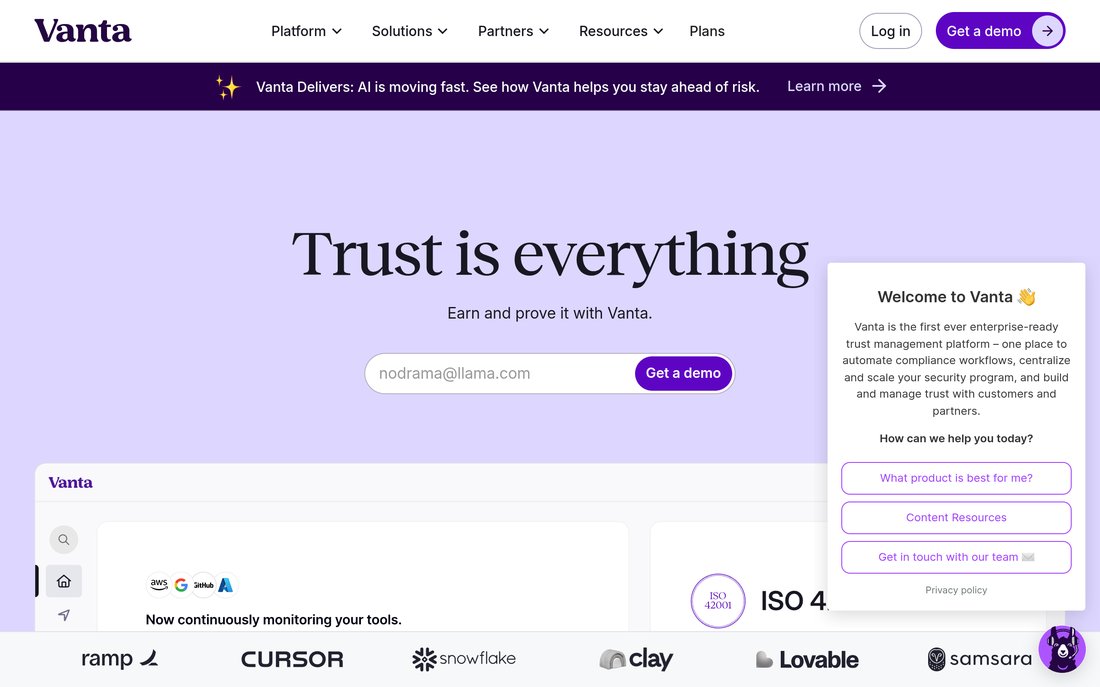
Type: Automation platform. Website: vanta.com
Vanta is the market leader in compliance automation, and for good reason. It connects to your cloud provider, identity provider, HR system, and code repositories, then continuously tests your environment against SOC 2 criteria and collects evidence automatically. Onboarding is fast, the interface is clear, the policy templates are serviceable, and the auditor marketplace makes it easy to find a CPA firm that already knows how to read Vanta's evidence exports. It also covers ISO 27001, HIPAA, and other frameworks if you expect to stack certifications later.
Honest limitation: Vanta tells you what is failing; it does not fix anything. If your IAM roles are over-permissioned, logging is off, and your policies do not match reality, Vanta will faithfully report that in red - every day - until someone with security expertise remediates it. Pricing is a recurring annual subscription, typically in the $7,500-$25,000 per year range depending on company size and frameworks.
Best for: teams with a strong internal security owner who need evidence automation, not security design.
2. Secureframe - Automation with More Guided Support

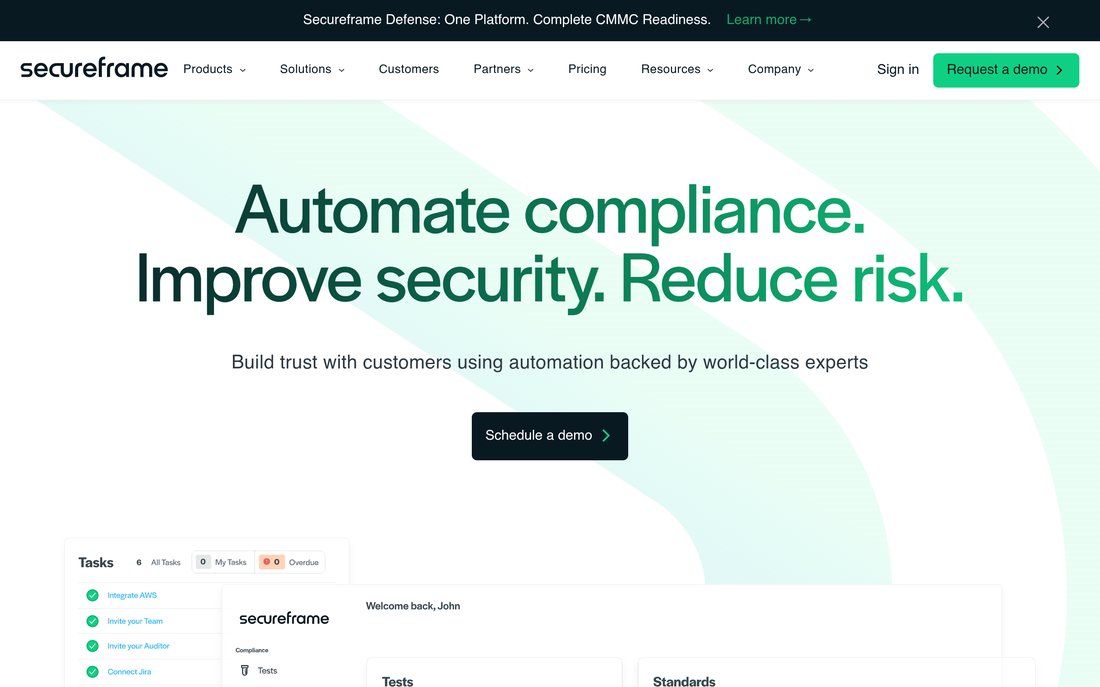
Type: Automation platform. Website: secureframe.com
Secureframe competes directly with Vanta and Drata and differentiates on support: alongside the automated evidence collection, integrations, and policy library, you get access to compliance staff who help you interpret requirements, scope your audit, and stay unstuck during onboarding. For a first-time buyer who does not know what a Trust Services Criterion is, that guidance genuinely reduces confusion, and the auditor network shortens the search for a CPA firm.
Honest limitation: the support is compliance guidance, not security engineering. Secureframe's team can explain what a control means; they will not redesign your AWS account, roll out MFA across your workforce, or build your incident response process. Complex or unusual environments still end up needing outside hands. Pricing sits in the same annual-subscription band as its competitors.
Best for: small-to-mid SaaS companies with straightforward cloud infrastructure who want automation plus a help desk, and who have someone internal to do the actual remediation.
3. Atlant Security - Consultant-Led SOC 2 Readiness, Fixed Price
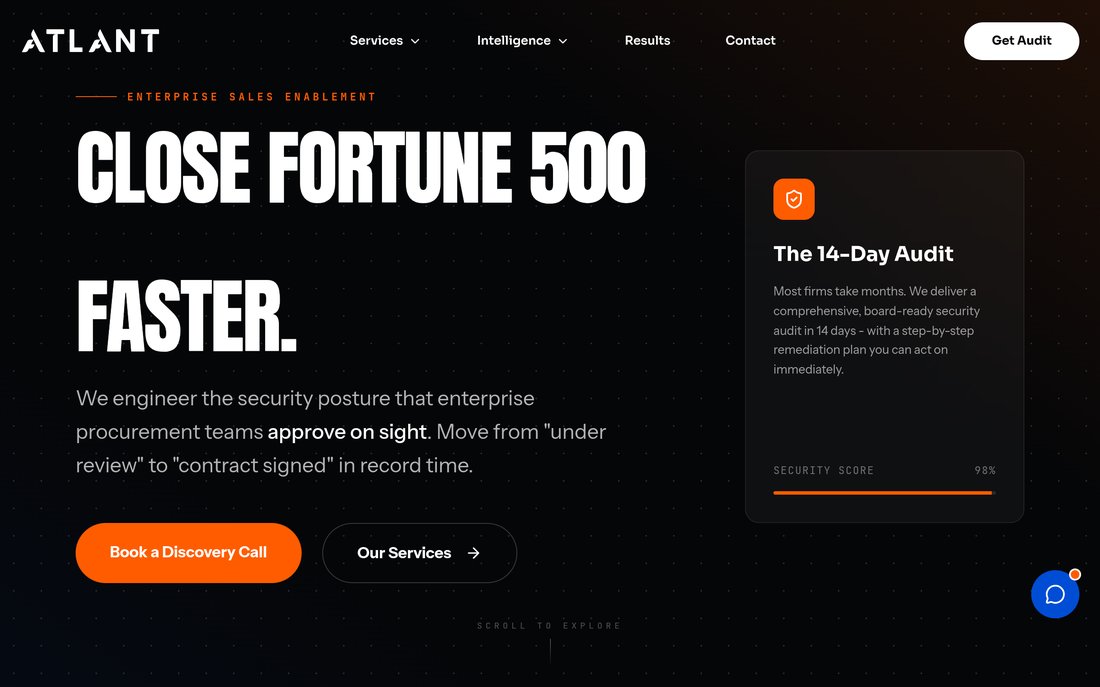
Type: Security consulting firm. Website: atlantsecurity.com
We are a consulting firm, not a software vendor, and that is the point. Our SOC 2 compliance consulting engagement starts with a gap assessment against the Trust Services Criteria, then we do the part no platform will touch: we design the controls your business actually needs, implement them with your team, harden your cloud (AWS, Azure, or GCP), write policies that describe what you really do instead of a template fantasy, and prepare the evidence your auditor will ask for. We then stay with you through the CPA audit itself, answering auditor questions alongside you.
The engagement is fixed-price and fixed-scope: we get you audit-ready in 23 working days, you see the full price before we start, and you pay after you approve the work. The practice is led personally by a former Microsoft security consultant with 200+ security assessments across 14 countries.
Honest limitation: we are not a monitoring platform. For continuous evidence collection after the first audit, we often recommend pairing our readiness work with Vanta or Drata - the combination is stronger than either alone.
Best for: companies with no dedicated security lead, a hard deadline, controls that do not exist yet, or a failed audit behind them.
4. Strike Graph - Flexible, Framework-Agnostic GRC

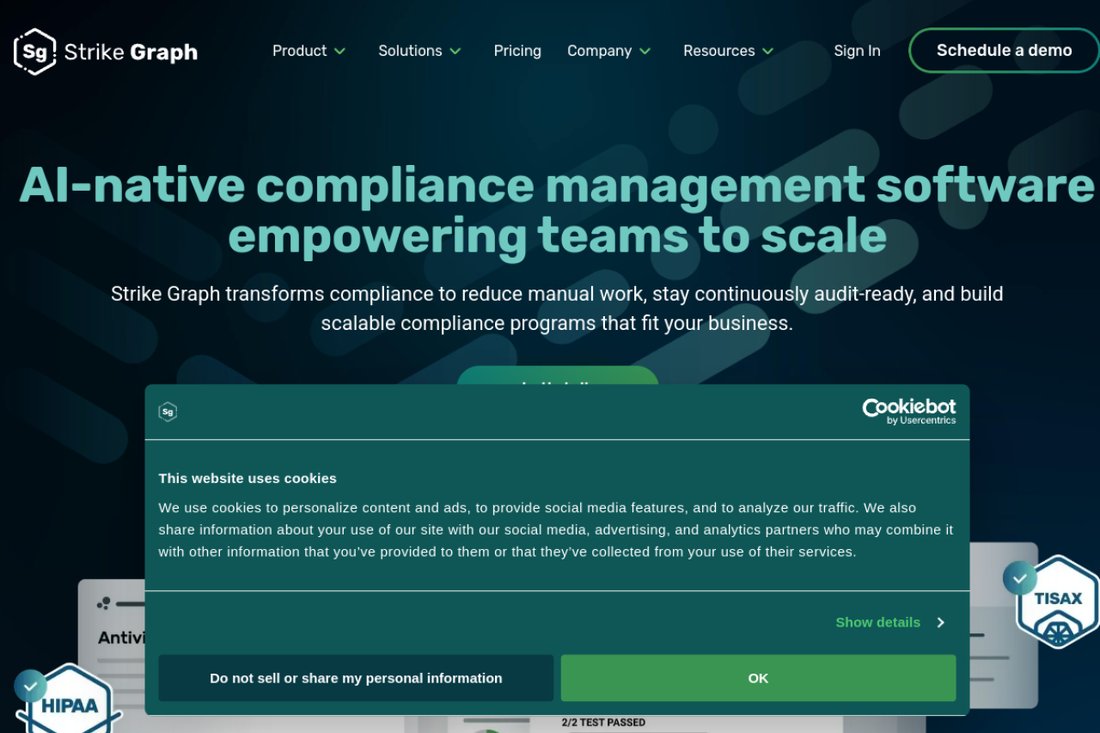
Type: GRC platform. Website: strikegraph.com
Strike Graph takes a different approach from the big automation platforms: instead of prescribing a rigid control set, it lets you build and map custom controls across SOC 2, ISO 27001, HIPAA, PCI DSS, and other frameworks. That flexibility is valuable if your environment does not fit the standard SaaS-on-AWS mold - think hardware components, on-premises systems, or unusual data flows that break the assumptions baked into cookie-cutter templates.
Honest limitation: flexibility cuts both ways. Designing your own control set assumes you know which controls your risks require, which is precisely the expertise most first-time SOC 2 buyers lack. Without a security lead or a consultant defining the program, the blank canvas becomes a liability rather than a feature.
Best for: companies with non-standard environments or multi-framework roadmaps, ideally with in-house security expertise or a consultant driving the control design.
5. Drata - Automation Built for Scale and Multiple Frameworks

Type: Automation platform. Website: drata.com
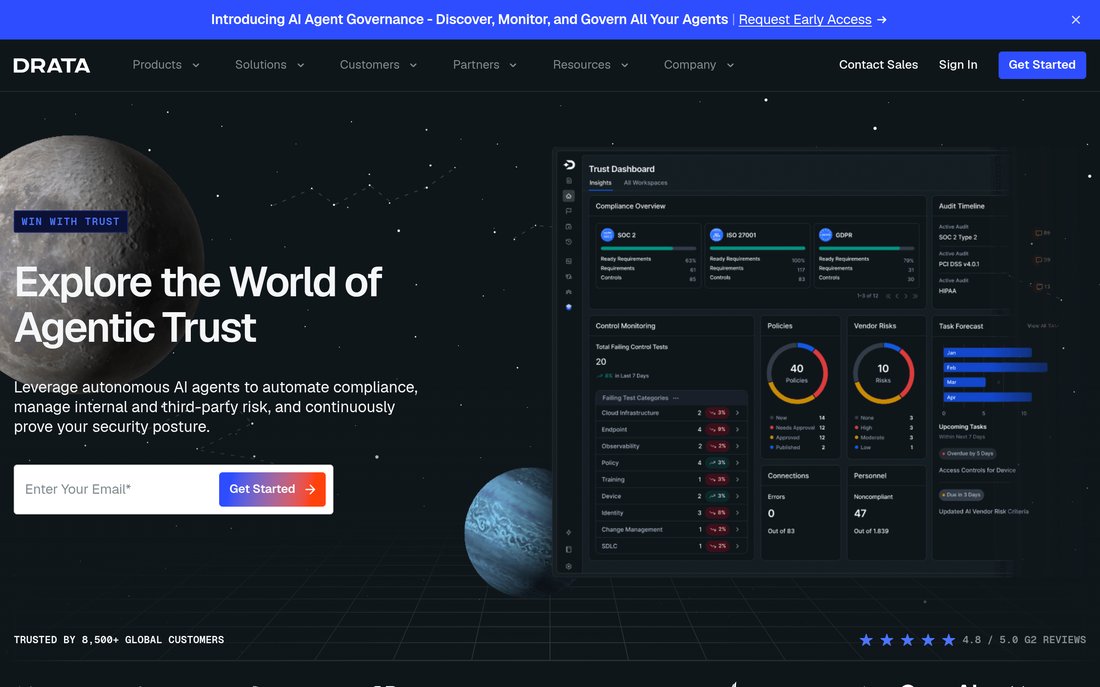
Drata is Vanta's closest rival and, in practice, a near-equivalent product: deep integrations with AWS, GitHub, Okta, Slack, and the rest of the modern stack, continuous control monitoring, automated evidence collection, and clean audit-ready reporting. Where Drata tends to shine is at scale - companies managing several frameworks at once, or growing past the startup stage, often find its control mapping and risk management features mature well as complexity increases.
Honest limitation: identical category weakness. Drata monitors; it does not remediate. It will not fix your cloud misconfigurations, define your access review process, or advise your board. It requires a committed internal owner who treats the failing tests as a work queue, or the dashboard becomes an expensive list of problems nobody resolves. Pricing follows the same annual-subscription model as Vanta and Secureframe.
Best for: VC-backed and scaling companies with internal security ownership, especially those planning SOC 2 plus ISO 27001 or HIPAA on one platform.
At a Glance
| Company | Type | Designs and fixes controls | Automated evidence collection | Pricing model |
|---|---|---|---|---|
| Atlant Security | Consultant | Yes | No (pairs with a platform) | Fixed price, pay on approval |
| Vanta | Platform | No | Yes | Annual subscription |
| Secureframe | Platform + support | No | Yes | Annual subscription |
| Strike Graph | GRC platform | No | Partial | Annual subscription |
| Drata | Platform | No | Yes | Annual subscription |
SOC 2 Platform vs. Consultant: Which Do You Need?
This is the decision that determines whether your SOC 2 budget buys you a report or a shelf ornament. The honest answer depends on one variable: does your company already have someone who can design and implement security controls?
A platform alone is enough when:
- You have a security engineer, CISO, or technically strong founder who owns security and knows the Trust Services Criteria
- Your controls mostly exist already: SSO and MFA enforced, cloud logging on, access reviews happening, policies that reflect reality
- Your problem is evidence collection and monitoring drudgery, not missing controls
- Your timeline is flexible enough to absorb remediation done in-house between sprints
You need a consultant when:
- Nobody on the team owns security - your engineers build product, and SOC 2 landed on someone's desk as a side quest
- Your controls are not designed yet, and a platform dashboard would simply catalog everything that is missing
- You already failed an audit, or your auditor flagged exceptions you do not know how to fix
- You have a deadline - an enterprise deal or investor requirement - measured in weeks, not quarters
The first box describes maybe one in five companies that come to us. The rest are in the second box and often do not realize it until the platform trial ends. Here is the pattern we see over and over: the platform onboarding goes smoothly, the integrations connect, and then progress stops at around 60-70 percent of controls passing. The remaining controls are the hard ones - access reviews that require a process nobody has defined, incident response plans nobody has written, vendor management nobody owns, encryption and logging configurations nobody knows how to change safely in production. Those controls do not yield to software. They yield to someone who has implemented them before.
If you land in the second box, understand what you are buying from a consultant: outcomes, not tooling. Our own SOC 2 readiness engagement is built around exactly that failure mode - we take companies with zero designed controls to audit-ready in 23 working days, at a fixed price agreed up front, and you pay after you approve the work. No hourly meter, no scope surprises. The platform-versus-consultant question is also not either-or: the most durable setup we see is consultant-designed controls monitored by a platform afterward. The consultant makes you compliant; the platform keeps you that way.
SOC 2 Compliance Pricing Compared
Vendors in this market are allergic to publishing prices, so here are the real ranges we see across the industry. Every situation varies with headcount, infrastructure complexity, and audit scope, but if a quote falls far outside these bands, ask why.
| Cost item | Typical range | Notes |
|---|---|---|
| Compliance automation platform | $7,500-$25,000 / year | Vanta, Drata, Secureframe; recurs every year |
| Consultant-led readiness | $2,800-$15,000 fixed | One-time; scales with company size and gap severity |
| CPA audit, SOC 2 Type I | $15,000-$30,000 | Point-in-time attestation |
| CPA audit, SOC 2 Type II | $25,000-$50,000 | Covers a 3-12 month observation period |
| Realistic total, first year | $20,000-$55,000 | Readiness + audit, with or without a platform |
Three observations worth making. First, the audit fee goes to a licensed CPA firm no matter what - neither a platform nor a consultant can issue your SOC 2 report, so budget for it separately. Second, the platform subscription is the only line item that recurs at full price every single year, which is why the "platform instead of consultant" framing often costs more over three years than people expect. Third, the most expensive path is the invisible one: buying a platform, stalling for six months because nobody can remediate the findings, and losing the enterprise deal that motivated the project. That failure never shows up on an invoice, but it dwarfs every number in the table.
A note on Type I versus Type II, since it changes both budget and timeline. A Type I report attests that your controls were designed correctly on a specific date; a Type II report attests that they operated effectively over an observation period, usually 3 to 12 months. Enterprise security teams increasingly ask for Type II, but a Type I is a legitimate first milestone: it proves your program exists, satisfies many mid-market buyers, and lets your Type II observation window start from a clean baseline instead of a moving target.
How to Choose a SOC 2 Compliance Company
Whichever direction you lean, put these six questions to every vendor on your shortlist. The answers separate partners from products:
- Do they fix security problems, or just flag them? You cannot take a red dashboard into an audit. Ask specifically who performs remediation and what it costs.
- Do they understand your actual infrastructure? A SaaS on AWS, a data platform on GCP, and a hybrid on-prem environment need different controls. Template control sets fit none of them perfectly.
- Will they help you build policies and prove them? Auditors test whether your documented policies match observable evidence. Policy PDFs without enforcement are a fast route to exceptions.
- Do they know what your auditor will ask? Experience with real CPA audits beats theory. Ask how they support you during fieldwork, not just before it.
- Are they useful after the report is issued? SOC 2 Type II is an annual cycle. A partner who disappears after the first report leaves you rebuilding momentum every year.
- Is the pricing fixed and transparent? Open-ended hourly engagements and opaque subscription tiers both hide the true cost. Insist on a full number before you commit.
And two red flags that should end a conversation immediately: any vendor who promises to "certify" you (SOC 2 reports come only from licensed CPA firms, and a readiness partner claiming otherwise is misrepresenting the entire framework), and any vendor who quotes you a price before asking a single question about your infrastructure, headcount, or data flows. Scoping SOC 2 without understanding the environment is how projects blow past budgets and deadlines.
FAQ: SOC 2 Compliance Companies
How much does SOC 2 compliance cost?
Plan for $20,000-$55,000 in your first year, all-in. That breaks down into readiness work (a consultant at $2,800-$15,000 fixed, a platform at $7,500-$25,000 per year, or both) plus the CPA audit itself at $15,000-$30,000 for Type I or $25,000-$50,000 for Type II. Company size, infrastructure complexity, and how many gaps you start with move you within those ranges.
Do I need a consultant or a platform?
If you have an internal security lead and your controls already exist, a platform alone can carry you - your problem is evidence automation. If nobody owns security, your controls are not designed yet, or you are on a deadline, you need a consultant first; a platform will only document what is missing. Many companies use both: consultant to get ready, platform to stay ready.
How long does SOC 2 take?
With a consultant driving the work, readiness takes about 23 working days - that is our fixed timeline at Atlant Security. Doing it in-house alongside a platform typically takes 3-6 months. After readiness, a Type I audit can happen almost immediately, while a Type II report requires an observation window of at least 3 months (commonly 3-12) before the auditor can attest to your controls operating over time.
Vanta vs. Drata: does it matter which one I choose?
Less than the marketing suggests. Both automate evidence collection, monitor controls continuously, integrate with the standard SaaS stack, and support multiple frameworks. Differences show up at the edges: specific integrations you rely on, auditor familiarity, pricing for your headcount, and multi-framework plans. Pick the one that covers your stack and your auditor knows well - then remember that neither will design or fix your controls.
Can a platform alone get me SOC 2 compliant?
Only if the underlying security work gets done by someone. The platform collects evidence of controls; it cannot create controls that do not exist. If your team can remediate every failing check the platform surfaces - IAM, logging, encryption, access reviews, incident response - then yes. If not, you will pay the subscription and still walk into the audit with exceptions.
What happens if I fail the SOC 2 audit?
Technically you do not "fail" - the auditor issues a report with a qualified opinion or noted exceptions, which tells every prospect exactly where your security fell short. In practice that report is unusable for sales, so you remediate the deficiencies and go through another audit period, paying audit fees again and losing months. This is precisely the scenario readiness work exists to prevent, and it is far cheaper to prevent than to repeat.
Get audit-ready in 23 working days, at a fixed price
Start with a free consultation. We will map your gaps against the Trust Services Criteria, tell you honestly whether you even need us or whether a platform alone will do, and send you a fixed-price quote within 24 hours. You pay after you approve the work.
Ready to get started? Atlant Security helps companies close security gaps and pass compliance fast, led personally by a former Microsoft security consultant with 200+ assessments across 14 countries. Book a free strategy call and get a fixed-price proposal within 24 hours.
Need the SOC 2 report, not another explainer?
We run SOC 2 readiness end to end: gap assessment, the control work, and the evidence your auditor will ask for. Audit-ready in about 90 days, fixed price agreed before we start.
See SOC 2 readiness