

Put this guidance into practice. Explore Atlant Security’s ecommerce cybersecurity solutions for platform reviews, payment and API testing, prioritized remediation, and ongoing security leadership.
We have probably seen your problem before. Our smallest client had eight employees. Our largest secures the nuclear power plant of the United Arab Emirates. Whatever shape yours is, tell us about it and we will tell you how we would fix it.
Ecommerce Security · Global Edition · September 2026
Ecommerce moves $7 trillion globally, yet roughly 43% of all cyber attacks aim at small and mid-sized online stores, and around 60% of them close within six months of a breach. This is the definitive guide to the top 25 cybersecurity providers for Shopify, Magento, WooCommerce, and headless stacks.
Key Takeaways
- 43% of all cyber attacks target small-to-medium online stores, with 60% closing within 6 months of a breach
- Average breach cost: $4.88 million - but the real crisis is operational paralysis from compromised access and misconfigured cloud storage
- Ecommerce security goes far beyond your Shopify store - 18+ categories of security controls are typically missing
- Domain registrar, email management, social media accounts, and SaaS tool integrations are all attack vectors
- Key evaluation criteria: platform expertise, PCI-DSS compliance, bot mitigation, incident response, and pricing transparency
- Atlant Security specializes in ecommerce security audits, virtual CISO services, and access management hardening for multi-brand retailers
Most ecommerce owners focus on protecting their website: authentication, fraud prevention, Cloudflare... and think they are done. This leaves their entire business exposed to at least 18 categories of security controls that are missing.
Suppose a hacker gains access to your domain registrar account. The consequences: they also gain access to your email management, your ecommerce store, your online accounting - all by controlling your domain’s DNS records. Have you thought about that vector of attack?
What if they send a carefully crafted malware-infested PDF to your accountant? What if they convince your outsourced social media manager to share credentials over a fake login page - where you are spending millions in advertising per month?
The problem goes much deeper than your Shopify store or your WordPress with WooCommerce. You have main accounts (Microsoft 365 or Google Workspace) which control access to dozens of business systems - Klaviyo, Facebook, TikTok ad management, QuickBooks, HR systems. All of these need protection.
The Real Scenario
You wake up. Your Stripe dashboard shows thousands of chargebacks. Your site is flagged on Chrome. Facebook ads are burning money but your checkout is broken. Support is overwhelmed. Your developer shrugs. Your brand is bleeding. It happened overnight. This is why selecting the right cybersecurity partner is not a technical decision - it is a survival move.
Evaluation Criteria
What Makes a Top Cybersecurity Firm for Ecommerce?

| Criteria | Description |
|---|---|
| Ecommerce Specialization | Focus on retail, checkout, fraud prevention, app security |
| Compliance Expertise | PCI-DSS, GDPR, CCPA, PDPL, ISO 27001 alignment |
| Threat Intelligence | Real-time monitoring, bot mitigation, dark web alerts |
| Technical Depth | Penetration testing, CDN configuration, web application firewalls |
| Reputation & Support | Responsiveness, client stories, platform integrations |
| Value Creation | ROI, offer structure, pricing transparency |
Red Flags: How to Spot the Wrong Partner
Avoid generalist IT firms with no online retail knowledge, firms with no PCI-DSS or payment protection experience, inability to work with Shopify/WooCommerce/Magento, no bot mitigation or WAF capability, “one-size-fits-all” offerings, and poor SLA or response times.
Green Flags of Elite Ecommerce Security Partners
They offer threat modeling for ecommerce platforms, understand payment gateways and API security, provide 24/7 breach response, offer client dashboards with real-time analytics, are platform-agnostic (Shopify, Magento, BigCommerce), and deliver audit-readiness for GDPR, CCPA, and PCI-DSS.
The Rankings
Top 25 Ecommerce Cybersecurity Providers
Disclosure: Atlant Security publishes this guide and is ranked 9 below. The providers above us are the platform and bot-mitigation specialists that handle ecommerce traffic at a scale we do not. Every other company is assessed from public information. No company paid for placement.

About the publisher of this guide: Atlant Security (ranked 9 above)
Why we are on the list at all: Atlant Security is not just a cybersecurity firm - it is a business enabler. Specializing in security audits, Virtual CISO services, and infrastructure hardening, they have helped ecommerce brands scale across MENA, Europe, and North America with zero compromise.
Strengths: Deep PCI-DSS, PDPL, GDPR compliance knowledge. Cloud & CDN security (AWS, Azure, GCP). Advanced hardening for Shopify, Magento, and WooCommerce. Incident response planning. Custom 80/20 fixes for budget optimization. Virtual CISO services for scaling stores.
Best For: High-growth stores, multi-brand retailers, VC-backed ecommerce platforms in regulated regions.
| Rank | Company | Specialty |
|---|---|---|
| 1 | Sift Security | Digital trust & fraud prevention |
| 2 | HUMAN (formerly PerimeterX) | Bot mitigation & account protection |
| 3 | Cloudflare | CDN, WAF, DDoS protection for ecommerce |
| 4 | Akamai Bot Manager | Bot management & web performance |
| 5 | SecurityScorecard | Continuous security ratings & risk monitoring |
| 6 | Netacea | Server-side bot detection & intent analytics |
| 7 | Imperva | WAF, database security, API protection |
| 8 | Radware | DDoS protection & application delivery |
| 9 | Atlant Security | Security audits, virtual CISO and platform hardening for Shopify, Magento and WooCommerce |
| 10 | Verizon Cybersecurity | Managed security & threat intelligence |
| 11 | Trustwave SpiderLabs | MSSP, pen testing & forensics |
| 12 | Invicti (formerly Netsparker) | Web application security scanning |
| 13 | CyberSmart | SME cybersecurity compliance & certification |
| 14 | RiskIQ | Digital threat management & external attack surface |
| 15 | Rapid7 | Cloud security, SIEM & vulnerability management |
| 16 | Armor Defense | Cloud-native managed security |
| 17 | EclecticIQ | Threat intelligence platform |
| 18 | CyberProof | Managed SOC & advanced detection |
| 19 | Fortinet | NGFW, SD-WAN & unified security fabric |
| 20 | Tenable | Vulnerability management & exposure analytics |
| 21 | Darktrace | AI-powered autonomous cyber defence |
| 22 | Barracuda Networks | Email, application & cloud security |
| 23 | Group-IB | Threat intelligence & fraud protection |
| 24 | OneSpan | Ecommerce identity & transaction security |
| 25 | Kount | AI-driven fraud prevention & digital identity |
Security Checklist
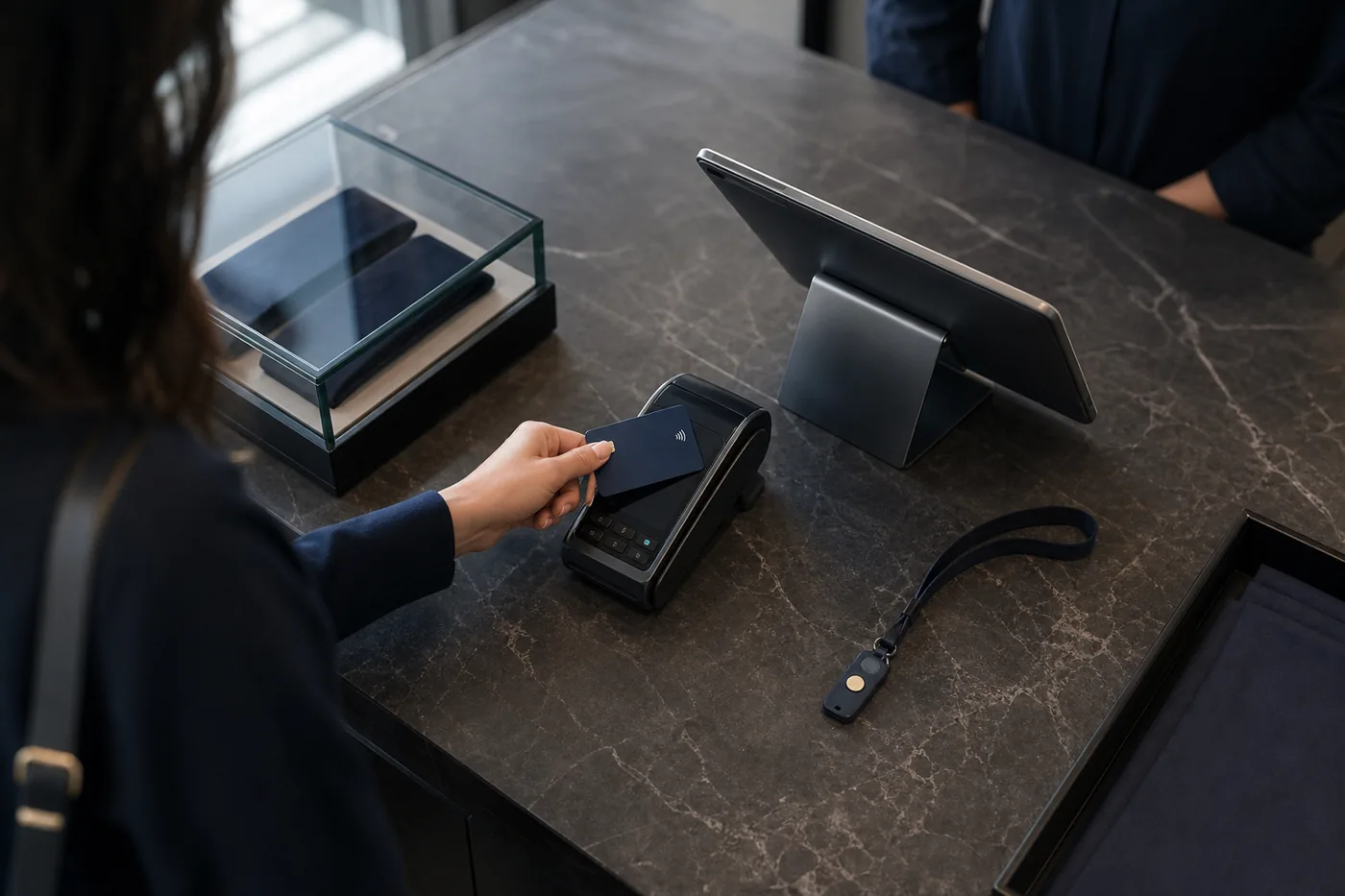
Essential Ecommerce Security Controls
| Category | Controls |
|---|---|
| Access Management | MFA on all accounts, SSO implementation, privileged access management, regular access reviews |
| Payment Security | PCI-DSS compliance, tokenization, fraud detection, secure checkout |
| Infrastructure | WAF, CDN security, DDoS protection, DNS security, SSL/TLS configuration |
| SaaS & Third-Party | Vendor risk assessment, API security, plugin/extension auditing, supply chain monitoring |
| Data Protection | Encryption at rest and in transit, backup strategy, GDPR/CCPA compliance, data classification |
| Monitoring & Response | 24/7 monitoring, SIEM/XDR, incident response playbook, offline backups with <24h RTO |
Common Questions
Frequently Asked Questions

Why are ecommerce businesses such frequent targets?
Ecommerce stores process payment data, store customer PII, and rely on dozens of integrated SaaS tools - each an attack vector. Small-to-medium stores often lack dedicated security teams, making them high-value, low-effort targets. The combination of valuable data and weak defenses is irresistible to attackers.
Is PCI-DSS compliance required for my Shopify store?
If you process, store, or transmit cardholder data, PCI-DSS compliance is required by the card brands. Shopify handles most PCI requirements at the platform level, but you are still responsible for securing your admin access, third-party apps, and any custom integrations. A security partner can help you understand your specific compliance obligations.
How much should an ecommerce business spend on cybersecurity?
Industry benchmarks suggest 5-15% of IT budget. For a high-growth ecommerce brand doing $10M+ in annual revenue, expect to invest $50,000-$200,000 annually in security. Compare this to the average breach cost of $4.88 million - the ROI on proper security is clear.
What about outsourced social media management security?
Outsourced social media is a major risk vector. Agencies often use shared logins, weak passwords, and no MFA. If an attacker compromises your agency’s access to your Facebook/TikTok ad accounts where you spend millions monthly, they can redirect budgets and damage campaigns. Require your agency to use your SSO, enforce MFA, and limit access through role-based permissions.
What is the biggest security mistake ecommerce founders make?
Thinking “website security” equals “business security.” Your domain registrar, email provider, cloud storage, HR systems, accounting tools, and social media accounts are all attack vectors. A comprehensive security partner addresses the entire business ecosystem, not just the storefront.
Can a virtual CISO help my ecommerce brand?
A virtual CISO is often the perfect fit for ecommerce brands with 15-100+ employees. You get executive-level security leadership - security roadmap, vendor management, compliance guidance, board reporting - at a fraction of the cost of a full-time CISO (typically $200,000-$400,000/year). Atlant Security offers vCISO services specifically designed for scaling ecommerce operations.
Protect Your Ecommerce Business Today

Atlant Security offers free SaaS + access management audits for ecommerce brands. We can be your Virtual CISO, perform regular security audits, harden your infrastructure, and prepare M&A-ready security documentation.
Published: September 2026 · Author: Alexander Sverdlov
This guide reflects our independent research and direct experience helping ecommerce brands secure their operations. Statistics sourced from IBM Cost of a Data Breach Report and Statista. Always conduct your own due diligence.
There are more firms than fit in any ranking. The independent cybersecurity companies directory is a free index you can filter by location, speciality and credentials.
Running an online store?
Security work scoped for ecommerce: the checkout path, the payment integration, the plugins and the admin accounts, with PCI DSS scope settled before anyone spends money securing the wrong systems.
See ecommerce security services