Last updated: July 2026
Nuclear Power Plants - Banks - FinTech - MedTech - SaaS - Government
Every Weakness Ranked, With a Plan to Fix It. Not a Scanner Dump.
A vulnerability assessment surfaces every exploitable weakness across your entire technology stack - applications, network, cloud infrastructure, endpoints, and human processes - before attackers find them first.

Every Vulnerability Assessment Is Led by Alexander Sverdlov
Former Microsoft Security Consulting team member. CISSP, CEH, CHFI and Mandiant certified. Secured nuclear energy infrastructure at Emirates Nuclear Energy Corporation. Alexander has personally led 200+ security assessments across 14 countries since 2013. At Atlant Security, the senior consultant who scopes your vulnerability assessment is the same person who runs the assessment and delivers your prioritised remediation plan - never handed to junior staff.
Connect on LinkedInWhat Is a Vulnerability Assessment?

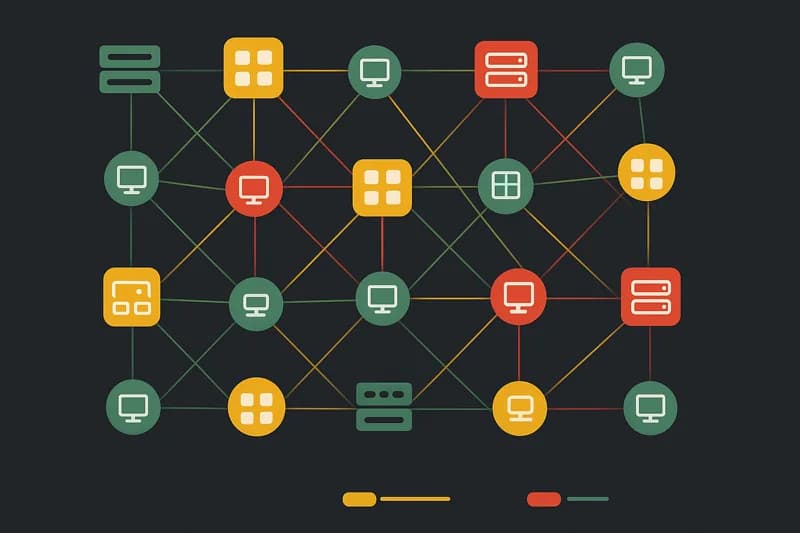
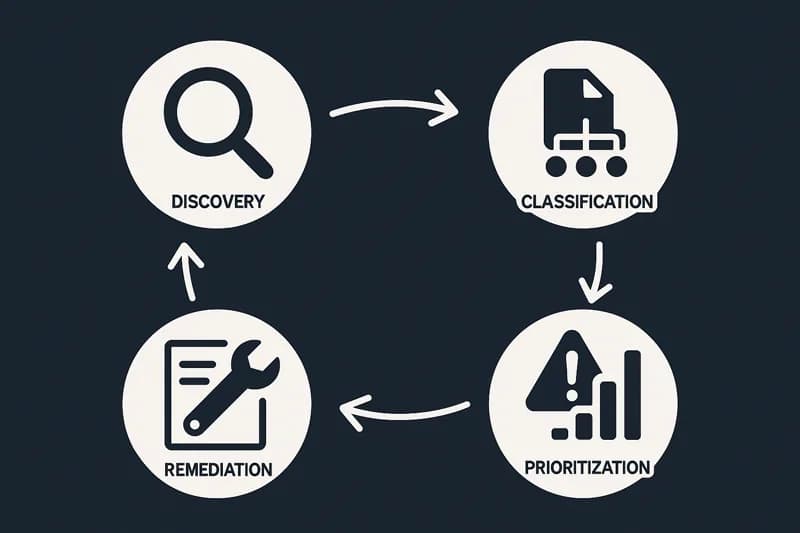
A vulnerability assessment (also called a security vulnerability assessment, IT vulnerability assessment, or cyber vulnerability assessment) is a systematic, expert-led evaluation of your organisation's security posture across people, processes, and technology. It identifies, classifies, and prioritises every exploitable weakness - and delivers a structured remediation plan your team can act on immediately.
Unlike automated scanning alone, our assessment includes expert analysis, false-positive filtering, business-context remediation sequencing, and structured action plans. Led by former Microsoft Security consultants, we provide a detailed remediation plan that tells you exactly how to fix what we find.
IBM's 2025 Cost of a Data Breach Report found the average cost of a data breach is $4.88M globally - and $9.36M in the United States. The majority of these breaches exploited vulnerabilities that a professional assessment would have identified.
Vulnerability Assessment vs Scan vs Audit vs Pentest
Four different services, four different purposes. Understanding which you need prevents wasted budget and missed risks.
Vulnerability Assessment
Identifies, classifies, and prioritises security weaknesses across your full tech stack. Expert analysis produces a remediation plan ordered by risk and business impact.
Right for: any organisation that wants to know where its security stands and what to fix first.
Vulnerability Scan
Automated tool output only - a list of potential CVEs with no expert analysis, no false-positive filtering, no business context, and no remediation prioritisation. A starting point, not an assessment.
Right for: organisations running regular automated checks between professional assessments.
Security Audit
Compliance-focused review that checks whether specific controls are in place against a defined standard (ISO 27001, SOC 2, HIPAA). Produces a pass/fail finding for each control.
Right for: organisations pursuing formal certification or responding to regulatory requirements.
Penetration Test
Active exploitation of confirmed vulnerabilities - simulating an attacker breaching the system. Should follow vulnerability assessment and remediation, not replace it. Its purpose is validation, not discovery.
Right for: mature security programmes validating that remediation was effective.
The correct security testing sequence is: (1) Vulnerability Assessment - identify where you stand. (2) Remediation - implement the findings. (3) Penetration Test - validate that fixes are effective. Starting with a penetration test before assessment is like stress-testing a bridge before checking if the bolts are tightened.
14 Assessment Areas
Cloud, network, endpoints, people, processes, applications - every attack surface covered in a single engagement.
Password & Access Management
Credential security, MFA enforcement, access provisioning, privileged access management, and authentication protocol security.
Attack Mitigation Controls
Coverage of all 17 attack types: account compromise, unauthorized access, ransomware, network intrusion, malware, sabotage, and more.
Security Awareness & Training
Training coverage, content quality, real-world effectiveness via phishing simulation results, and role-appropriate programme design.
Cloud Security Configuration
Microsoft 365 (280+ settings), AWS, Azure, and GCP - every security configuration option audited.
IT Infrastructure Hardening
Server configuration, network device hardening, desktop baseline security, data security controls, and backup architecture.
Vulnerability Management Programme
Assessing whether your organisation has a functioning programme to continuously identify, track, and remediate new vulnerabilities.
Email & Communications Security
DMARC, DKIM, SPF authentication, anti-phishing controls, secure communication platform configuration, and business email compromise prevention.
Penetration Testing Readiness
Pen testing programme maturity - whether remediation cycles are in place and previous findings were addressed.
Secure Software Development
Security integration across the full SDLC: DevSecOps practices, secrets management, dependency scanning, and code review processes.
Security Policies & Procedures
Policy completeness, currency, practical enforceability, and employee awareness - the governance layer that formal audits evaluate.
Secure Remote Access
Remote access controls for employees, contractors, third-party vendors, and guests - evaluating whether each access path is secured appropriately.
Zero Trust Architecture
Readiness for Zero Trust principles - network access decisions based on identity + context rather than network location.
Advanced Endpoint Security
12 endpoint security controls: antivirus, EDR coverage, application whitelisting, USB controls, patch management, encrypted storage, and more.
Security Monitoring & Detection
Log coverage, SIEM configuration, alerting thresholds, incident detection capabilities, and response procedures.

Baldrige Cybersecurity Excellence Builder
The executive section of our report is not just a summary - it is an independent assessment of how senior leadership manages security across the organisation, benchmarked against the NIST Baldrige Cybersecurity Excellence Builder framework. This is the section your board, investors, and insurers read.
The Baldrige framework evaluates cybersecurity management from a leadership and governance perspective - not just technical controls. It measures whether security is embedded in business strategy or bolted on as an afterthought.
Seven Baldrige Assessment Categories:
- Leadership commitment to cybersecurity and risk governance
- Strategic planning for cybersecurity risk and resource allocation
- Customer and stakeholder focus - how security expectations are identified and met
- Measurement, analysis, and knowledge management of security performance
- Workforce security engagement and role-based responsibilities
- Operations - how cybersecurity is embedded in daily business processes
- Results - quantitative measures of cybersecurity programme effectiveness
What You Receive
Executive Section - Baldrige Assessment
An independent assessment of how senior leadership manages security, benchmarked against the NIST Baldrige Cybersecurity Excellence Builder. Written for your board, investors, and insurers.
Technical Findings - High / Medium / Low
All findings classified by severity using CVSS scoring. Each finding paired with its specific remediation instruction - not vague advice, but step-by-step fixes.
Prioritised Remediation Plan
A structured remediation schedule organised by urgency and business impact: immediate (this week), short-term (30 days), medium-term (90 days), and strategic (6-12 months).
How Our Vulnerability Assessment Works - 4 Steps
A structured process from strategic alignment through to remediation delivery. Consulting sessions during the assessment - your IT team learns as we audit.
Strategic Meeting
We meet with management to understand business goals and critical assets.
Technical Scoping
We work with your IT team to define the technical boundaries and access requirements.
Consulting Sessions
Our experts conduct deep-dive assessments across 14 security areas.
Remediation Delivery
We present a prioritized plan and walk you through the steps to secure your environment.
Timeline
Small organisations (~100 users) require approximately 5 business days for data collection. Larger organisations (100-500+ users) need up to 10 business days, plus 2-5 additional days for analysis. Total engagement runs 3-4 weeks from initial meeting to report delivery.
Vulnerability Assessment Pricing
Fixed-price proposals within 24 hours of your scoping call. No hourly billing. Pay only after you receive and approve the report.
Standard Assessment
Fixed-price assessment based on environment scope.
- 14 Assessment Dimensions
- Baldrige Maturity Score
- Executive & Technical Reports
- Remediation Workshop
- 3-4 Week Delivery
Who Needs a Vulnerability Assessment?
Why Choose Atlant Security
Industries We Assess
What Clients Say
“The assessment was beyond my expectations, very detailed. We are making great progress and the most eye-catching part is that we are developing a secure culture which is helping each and every individual.”
Know Your Weaknesses Before Attackers Do
Get Your Answer. We will discuss your environment, scope the assessment, and give you a fixed-price proposal within 24 hours. Payment only after you receive and approve your report.
Get Your Vulnerability Assessment Scope
For small projects and ad-hoc work outside our pre-agreed packages or retainers, our standard hourly rate is $460.
Vulnerability Assessment FAQ
What is the difference between a vulnerability scan and a vulnerability assessment?
How long does a vulnerability assessment take?
What is the Baldrige Cybersecurity Excellence Builder?
What happens after I receive the report?
How much does a vulnerability assessment cost?
What areas does the assessment cover?
How often should we perform a vulnerability assessment?
Can a vulnerability assessment help us pass SOC 2 or ISO 27001?
Do we need a vulnerability assessment if we already have antivirus and a firewall?
What tools do you use?
Related: IT Security Audit - Cloud Security Consulting - SOC 2 Readiness - Virtual CISO Services - Web Penetration Testing