

We have probably seen your problem before. Our smallest client had eight employees. Our largest secures the nuclear power plant of the United Arab Emirates. Whatever shape yours is, tell us about it and we will tell you how we would fix it.
Quick answer: The most secure messaging app in 2026 is Signal for most people - free, open source, and now hardened against future quantum attacks. If you refuse to hand over a phone number, choose Threema or SimpleX Chat. And stop using SMS: even the FBI now tells Americans to use end-to-end encrypted apps.
I advise founders, executives, and high net worth families on personal security, and messaging is where most of them are exposed. Your texts carry deal terms, travel plans, family logistics, and wire instructions. This guide is my current ranking of the seven secure messaging apps I actually recommend to clients in 2026, what each one gets right, and where each one honestly falls short.
Before you read on: your messaging app is one door into your life. Your email, cloud accounts, home network, and your family's devices are the rest of the house. As a former Microsoft security consultant, I lock all of it down - phones, accounts, home network, family - in about 30 days, at a fixed price starting from $2,500, and you review the plan before we touch anything. If that is the level of protection you want, start with a personal cybersecurity consultant.
Why Even the FBI Now Tells You to Use Encrypted Apps

If you still think encrypted messaging is for the paranoid, consider what changed in late 2024. The Salt Typhoon intrusions - attributed to Chinese state-linked hackers - penetrated major US telecom carriers. The attackers gained access to systems that handle calls, text messages, and lawful-intercept infrastructure. In response, the FBI and CISA did something remarkable: they publicly urged Americans to use end-to-end encrypted apps for calls and texts.
Read that again. The US government's own law enforcement and cyber defense agencies told citizens that ordinary phone calls and SMS messages are not safe from interception, and that end-to-end encryption is the fix. For my clients - people whose conversations move markets and settle estates - this is not a debate anymore. It is the baseline.
How I Ranked These Apps

Every app on this list provides end-to-end encryption of message content. What separates them is everything else:
- Metadata posture. Who you talk to, when, and how often can be as damaging as the words themselves.
- Identity requirements. Does the app demand your phone number, or can you stay anonymous?
- Code transparency and audits. Open source, independently reviewed cryptography beats marketing claims.
- Jurisdiction and governance. Nonprofit, Swiss company, or decentralized network - it matters when someone comes asking for your data.
- Honest usability. An app your family will not actually use protects nothing.
If your threat model is real
Picking the right app fixes one layer. Attackers go around it.
If you are an executive, a lawyer, in litigation, or your family's logistics travel over these apps, the app is not where you get hit. Your email, cloud backups, phone number and home network are. I lock all of it down in about 30 days, fixed price from $2,500, and you approve the plan before any work starts.
See what the 30 days coverWhat Is Chat Control, and Why It Belongs in This Ranking
Chat Control is the nickname critics gave the European Union's proposed Child Sexual Abuse Regulation, first put forward by the European Commission in 2022. On paper it targets child sexual abuse material, which no one defends. In practice it would hand authorities the power to issue "detection orders" that compel messaging and email providers to scan the private messages, photos, and links of ordinary users - for known illegal content, for previously unknown content, and even for signs of "grooming" in plain text.
The catch is what scanning an end-to-end encrypted message actually requires. Because the provider cannot read encrypted content on its servers, the only way to comply is to inspect your messages on your own device, before they are encrypted and sent. This is called client-side scanning: software on your phone quietly checking every message against a detection system and reporting the hits. Cryptographers, security researchers, and Europe's own data protection regulators have warned again and again that this breaks the core promise of end-to-end encryption. Once a scanning channel exists inside the app, it is a permanent surveillance capability that can be widened, abused, or repurposed, and its false positives drag innocent private conversations in front of human reviewers.
The proposal has been fought over in the Council of the EU for years. It has repeatedly failed to reach the majority it needs, blocked by a group of member states citing legal opinions that it is incompatible with fundamental rights, and it has swung back and forth between mandatory detection and softer "voluntary" scanning as successive Council presidencies rewrite it. It keeps coming back. The United Kingdom has already passed comparable client-side-scanning powers in its Online Safety Act. The point for you is simple: this is a live, recurring threat to private messaging, not a settled question, and any serious app choice now has to account for it.
This is exactly why jurisdiction, governance, and architecture matter as much as the encryption math. An app that can be legally ordered to scan on your device, or whose operator would rather comply than leave the market, gives you weaker protection against Chat Control than one that is decentralized, self-hostable, based outside EU reach, or run by people who have publicly committed to shutting down rather than backdooring their users. The short "Chat Control resilience" note under each app below applies that lens to every option in this ranking.
Top 7 Secure Messaging Apps at a Glance
| App | Encryption | Metadata Policy | Jurisdiction | Open-Source | Price Model |
|---|---|---|---|---|---|
| Signal | Signal Protocol + PQXDH (post-quantum) | Minimal; phone number required (hidden via usernames) | U.S. nonprofit | Yes | Free |
| Threema | NaCl/libsodium | None; anonymous IDs, no phone number | Switzerland | Yes | One-time fee (~$5-6) |
| SimpleX Chat | Double ratchet + post-quantum additions | No user identifiers at all | Decentralized relays | Yes | Free |
| Session | Modified Signal-derived protocol | Onion-routed; no phone number | Decentralized network | Yes | Free |
| Element (Matrix) | Olm & Megolm | Depends on homeserver you choose | Self-hostable, federated | Yes | Free / Hosted |
| Wire | MLS (Proteus legacy) | Minimal, business-oriented | Germany & Switzerland | Yes | Subscription |
| Silent Phone | ZRTP (encrypted calls) | No logs | Switzerland | No | Subscription |
1. Signal
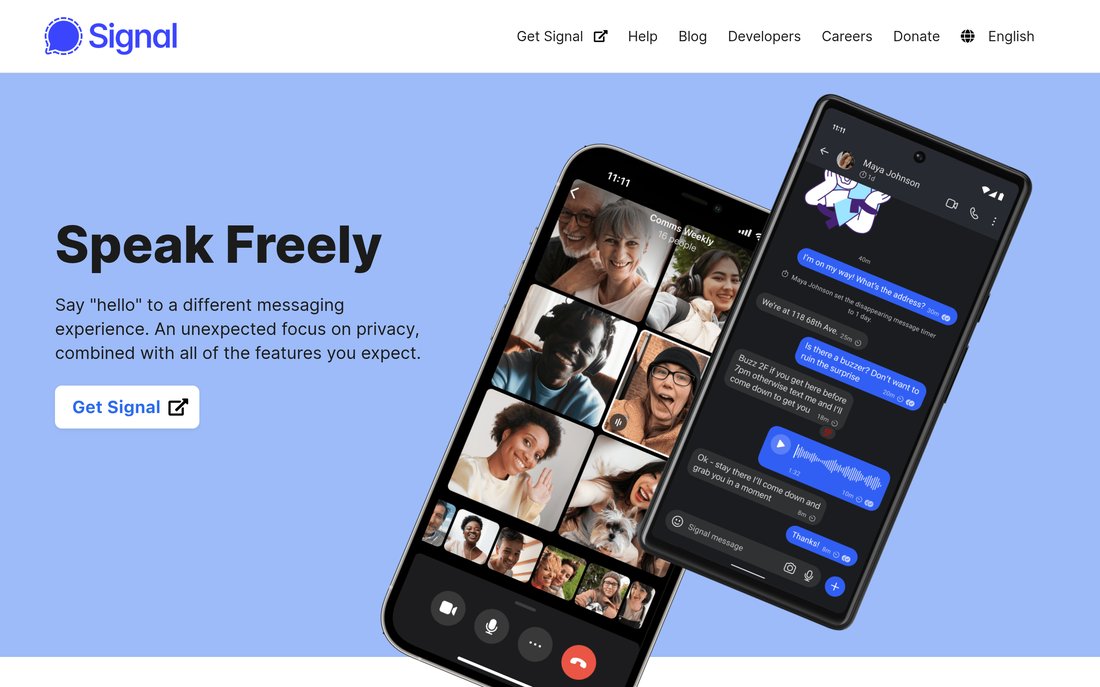
Signal remains the gold standard, and it is what I put on nearly every client's phone first. The Signal Protocol pioneered the double ratchet design that most competitors borrow, and in 2023-2024 Signal went further by rolling out PQXDH, a post-quantum key agreement that protects your conversations against future quantum computers harvesting today's traffic. It is run by a nonprofit foundation, it is completely free, and the code is open source and heavily scrutinized.
Signal still requires a phone number to register - its most criticized weakness - but the username feature added in 2024 means you no longer have to reveal that number to the people you chat with. Disappearing messages, safety number verif

Chat Control resilience: Strong on principle, weaker on availability. Signal is a US nonprofit that has stated plainly it would pull out of any market that legally forces client-side scanning rather than weaken its encryption, so it will not quietly bolt on a scanner. The trade-off is that Signal cannot be self-hosted, so if it ever withdrew from the EU or UK, local users would have to sideload it to keep using it.
Best for: almost everyone. Honest limitation: the phone number requirement at signup, and a centralized server infrastructure in the US.
2. Threema
Threema is the Swiss option, and jurisdiction is only part of its appeal. You buy the app once for roughly $5-6, and that single payment is the business model - no ads, no data harvesting, no subscription. Crucially, Threema requires no phone number and no email. Your identity is a randomly generated Threema ID, so the app can operate knowing essentially nothing about you.
Encryption is built on the well-regarded NaCl cryptography library, and
Chat Control resilience: High, thanks to jurisdiction. Threema is based in Switzerland, outside the EU, so an EU detection order does not bind it directly, and Switzerland has no equivalent scanning mandate. App store pressure is the main residual risk, not a legal duty to scan your messages.
Best for: people who refuse to link their identity to their messenger, and European teams. Honest limitation: a smaller user base outside German-speaking Europe, so you will be inviting your contacts to join.
3. SimpleX Chat
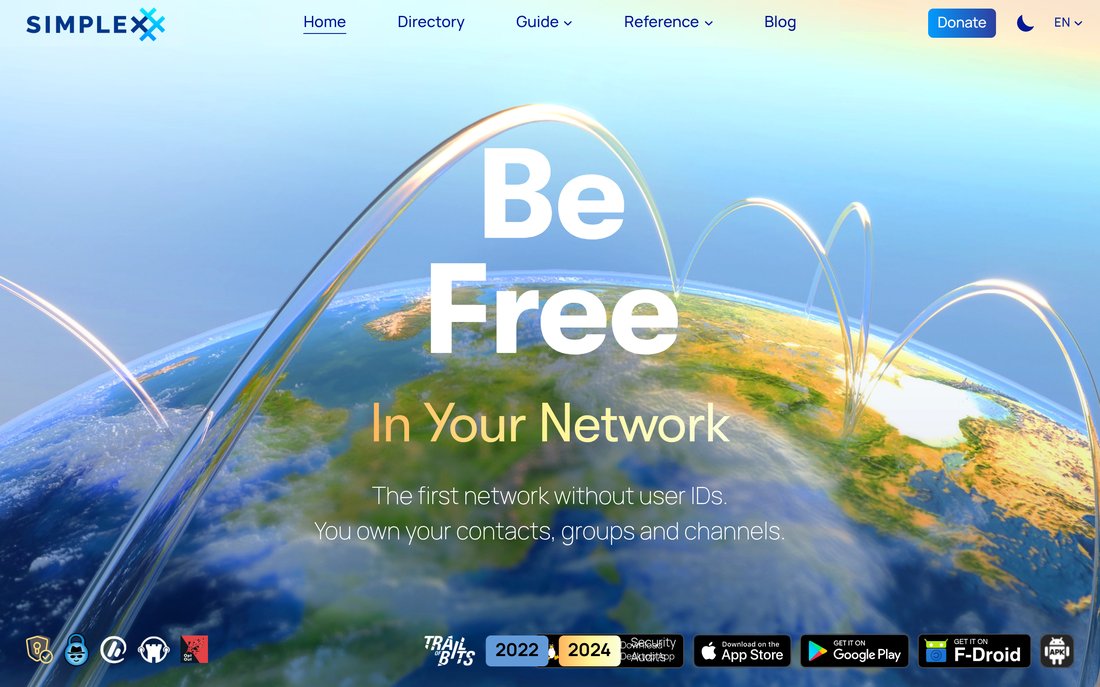
SimpleX Chat is the most interesting design on this list. It has no user identifiers at all - no phone number, no username, not even a persistent internal ID. Messages move through paired o
On the cryptography side it uses the proven double ratchet design and has added post-quantum protections. The project is fully open source. For clients with genuinely elevated threat models - contested divorces, hostile litigation, targeted surveillance concerns - this is the one I reach for.
Chat Control resilience: Very high. SimpleX is fully open source, has no accounts and no central operator to serve an order against, and its relays can be self-hosted - so there is no single provider a detection order can compel and no closed binary that could hide a scanner.
Best for: maximum anonymity and metadata protection. Honest limitation: the user experience is rougher than Signal's, the n
4. Session
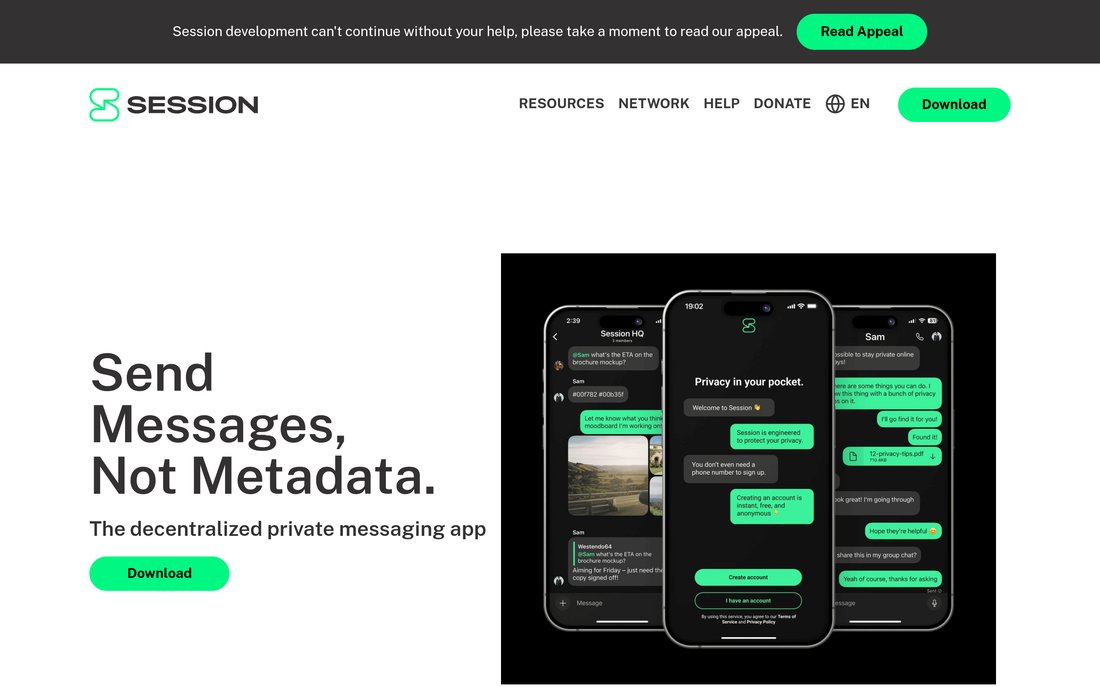
Session takes a different route to anonymity: decentralization. There is no phone number and no central server. You are identified by a random Session ID, and your messages are onion-routed through a distributed node network, so no single relay knows both the origin and the destination of a message.
One honest caveat: Session forked from the Signal protocol and made its own modifications along the way, and some of those custom changes have drawn scrutiny from cryptographers. That does not make it broken, but it means its cryptography carries
Chat Control resilience: High. Session runs on a decentralized node network with no central company holding your messages, its foundation is based in Switzerland, and the client is open source - so there is no obvious provider for a detection order to target and no hidden code path to force scanning into.
Best for: people who prioritize not having an identity or a central operator above all else. Honest limitation: the protocol modifications mentioned above, and a smaller community than the established players.
5. Element (Matrix)
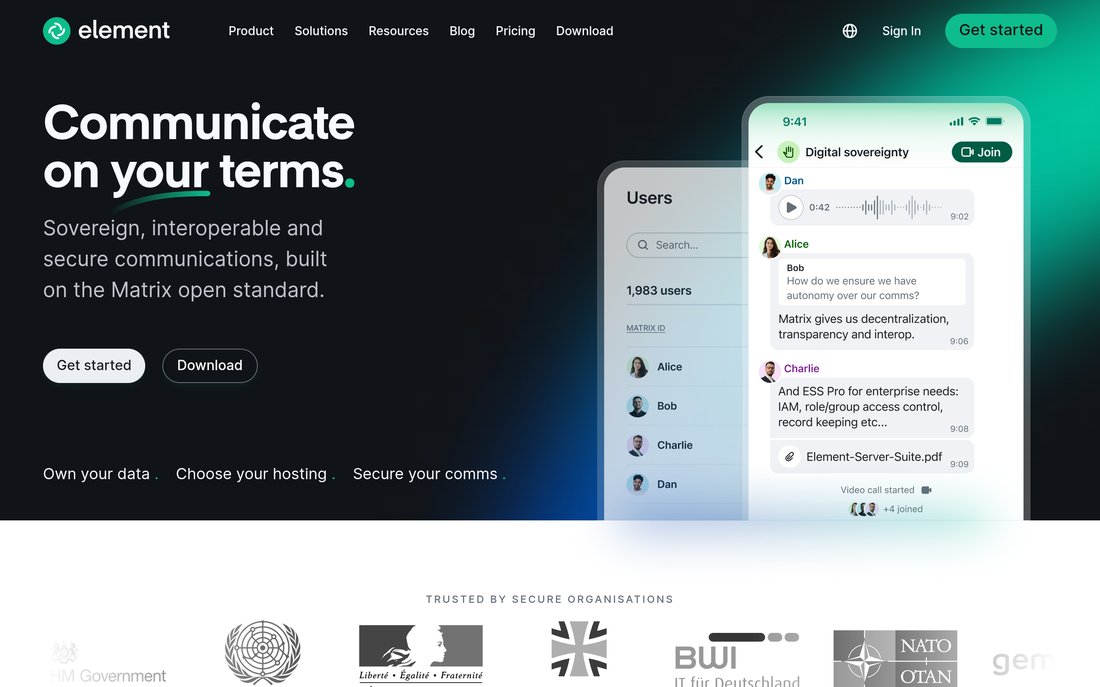
Element is the flagship client for the Matrix network, a federated protocol where anyone can run their own server. End-to-end encryption is provided by the Olm and Megolm cryptographic libraries. The killer feature is control: a family office, law firm, or company can self-host its own Matrix homeserver and own the ent
That control is why I recommend Element to organizations rather than individuals. A properly run private homeserver is one of the strongest setups available.
Chat Control resilience: High when self-hosted. Because you can run your own Matrix homeserver with open-source clients, a provider-focused scanning mandate is very hard to apply to your deployment, and the client cannot be secretly made to scan. Note the parallel threat: Matrix is UK-based, and the UK Online Safety Act carries its own client-side-scanning powers.
Best for: organizations and families who want to own their infrastructure. Honest limitation: complexity. Running a homeserver well requires real administration skills, and if you federate with other servers, those servers see metadata about shared rooms. This is a tool you deploy deliberately, not casually.
6. Wire
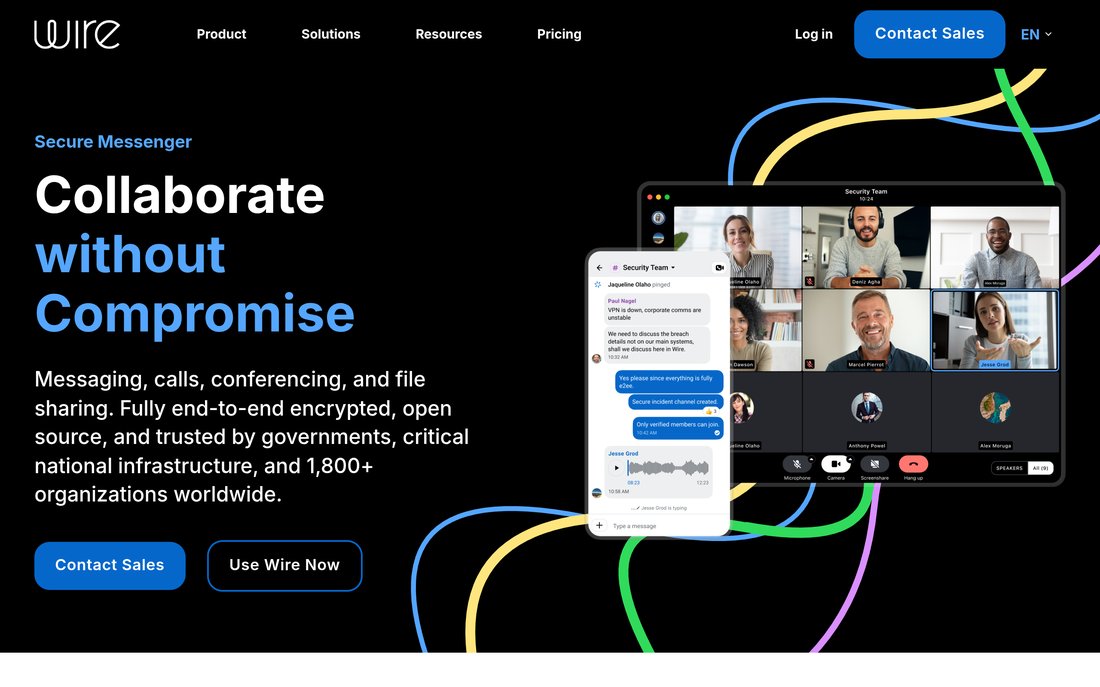
Wire has evolved into an enterprise-focused platform - Wire for business is its center of gravity - with hosting in Germany and Switzerland. Its original Proteus protocol was a respected double ratchet implementation, and Wire has been an early adopter of MLS, the new IETF standard for scalable group encryption, which matters a lot once encrypted groups grow beyond a handful of people.
For an executive team that needs encrypted messaging, calls, and conferencing with admin controls and compliance features, Wire is the most business-shaped product on this list.
Chat Control resilience: The weakest on this list. Wire is an EU-based commercial provider hosted in Germany, which puts it squarely within reach of EU detection orders, and as an enterprise vendor it is far more likely to comply with a legal mandate than to exit the market.
Best for: companies and leadership teams that need managed, auditable secure collaboration. Honest limitation: the consumer experience is clearly secondary to the enterprise product, and you will pay a subscription for the capabilities that make it worthwhile.
7. Silent Phone
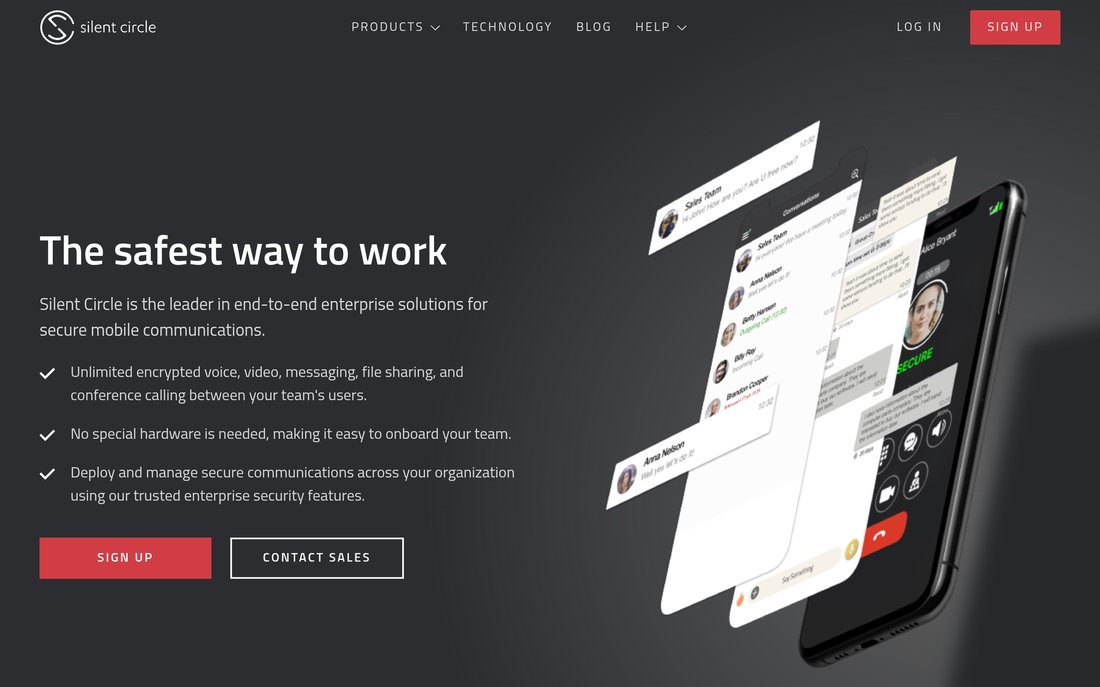
Silent Phone, from Silent Circle, is a specialist. Where the other apps on this list treat voice as a feature, Silent Phone treats encrypted calling as the product, built on the ZRTP protocol. It is a subscription service aimed squarely at the enterprise and government niche, and it has served that market since the early 2010s.
I include it because some clients genuinely need hardened voice: negotiators, security teams, and executives operating in high-risk jurisdictions where call interception is a realistic threat.
Chat Control resilience: Moderate, and hard to verify. Its Swiss hosting and enterprise and government focus reduce direct EU consumer-scanning exposure, but the client is closed source, so you cannot independently confirm no scanning has been added - you are trusting the vendor rather than auditable code.
Best for: organizations whose primary concern is secure voice communication. Honest limitations: it is a paid subscription, the client software is not open source, and the network effect is weak - it only works if everyone in your circle is also a subscriber.
What About WhatsApp, Telegram, and iMessage?
The apps everyone already uses deserve straight answers, because the myths here are dangerous.
- Telegram is NOT end-to-end encrypted by default. This surprises almost every client I tell. Regular Telegram "cloud chats" - which is what you use unless you deliberately start a "secret chat" - are readable on Telegram's servers. Group chats are never end-to-end encrypted. Telegram is a social platform with an optional encryption feature, not a secure messenger.
- WhatsApp encrypts content well but watches the envelope. WhatsApp uses the Signal protocol for message content, which is genuinely strong. But Meta collects extensive metadata: who you message, when, how often, from where. For a public figure or executive, that relationship graph is sensitive data in itself.
- iMessage is solid until your backup betrays you. Apple's end-to-end encryption for iMessage is well engineered. But if you use iCloud Backup without enabling Advanced Data Protection, a readable copy of your message history sits in Apple's cloud, reachable by legal process or account compromise. Turn on Advanced Data Protection or the encryption story falls apart.
- SMS and RCS are not private. SMS is plaintext that your carrier - and anyone inside your carrier, as Salt Typhoon proved - can read. RCS encryption is inconsistent across platforms and carriers, so treat any green-bubble conversation as potentially readable.
Best Practices That Matter More Than Your App Choice

I have watched flawless encryption defeated by sloppy habits. Whichever app you pick, do these four things:
- Turn on disappearing messages. A message that no longer exists cannot be leaked, subpoenaed, or stolen from a lost phone. I set one week as the default for clients and shorter timers for sensitive threads.
- Verify safety numbers. Signal's safety numbers and Threema's QR verification exist to prove there is no impostor in the middle. Verify your critical contacts once, in person or over a video call, and re-verify when the app warns you a number changed.
- Remember the device is the real target. No app can protect a compromised phone. Keep the operating system updated, use a strong passcode with biometrics, and lock down the accounts attached to the device. Device security matters more than app choice, every time.
- Protect the phone number itself. If an attacker hijacks your number, they can intercept resets and registration codes for anything tied to it. Read my guide on how to prevent SIM swap attacks and put a port-out lock on your account this week.
Frequently Asked Questions

What is the most secure messaging app in 2026?
Signal, for most people. It combines audited open source cryptography, post-quantum key agreement, a nonprofit operator, and an app your contacts will actually use. If metadata is your main concern, SimpleX Chat is stronger; if you refuse to provide a phone number, use Threema.
Is Telegram safe for private conversations?
Not by default. Regular Telegram chats are encrypted only between you and Telegram's servers, where they are readable. Only one-on-one "secret chats" are end-to-end encrypted, and groups never are. For sensitive conversations, use Signal or Threema instead.
Is WhatsApp secure enough for sensitive business conversations?
The message content is protected by the Signal protocol, which is strong. The problem is metadata: Meta can see who you talk to, when, and how often. For deal-sensitive or legally-sensitive communication, I move clients to Signal or Threema, where the metadata exposure is far smaller.
Which secure messaging apps do not require a phone number?
Threema (you buy the app and get a random ID), SimpleX Chat (no identifiers of any kind), and Session (a random Session ID) all work without a phone number. Signal still requires one to register, although usernames let you hide it from your contacts.
Did the FBI really recommend using encrypted messaging apps?
Yes. After the Salt Typhoon intrusions into US telecom carriers in late 2024, the FBI and CISA publicly urged Americans to use end-to-end encrypted apps for calls and texts, because ordinary phone calls and SMS cannot be considered safe from interception.
What matters more: the app I choose or the device I run it on?
The device. A compromised phone exposes every message before encryption and after decryption, no matter which app you use. Keep your OS updated, use a strong passcode, protect your SIM against swapping, and secure the email and cloud accounts attached to the phone.
Secure Messaging Is One Layer. Your Digital Life Is the Target.
Installing Signal takes five minutes, and you should do it today. But attackers who target wealthy individuals rarely bother attacking the encryption. They go after everything around it: your email accounts, your cloud backups, your home network, your phone number, your assistant's laptop, your children's devices.
That is the problem I solve. As a former Microsoft security consultant, I personally lock down your phones, accounts, home network, and family in about 30 days. The engagement is a fixed price starting from $2,500, and you review and approve the plan before any work begins - so there are no surprises and no open-ended billing. If your conversations, assets, and family are worth protecting properly, work with a personal cybersecurity consultant and get every layer handled, not just the messaging one.
Protecting a family rather than a company?
Private, discreet security work for individuals and family offices: the accounts, devices, homes and staff that actually carry the risk. No products to sell you, no monitoring platform to subscribe to.
See personal cybersecurity services