

Healthcare Cybersecurity · March 2026
Why healthcare organizations face the highest breach costs of any industry ($10.9M average), how HIPAA Security Rule safeguards actually work, and what a healthcare cybersecurity consulting engagement delivers from start to finish.
In the fall of 2024, a regional hospital system in the Midwest called us on a Friday afternoon. Their voice was the kind of calm that only comes after panic has already burned through every other emotion. Ransomware had encrypted their electronic health records, their imaging systems were offline, and the emergency department was diverting ambulances to a hospital forty minutes away.
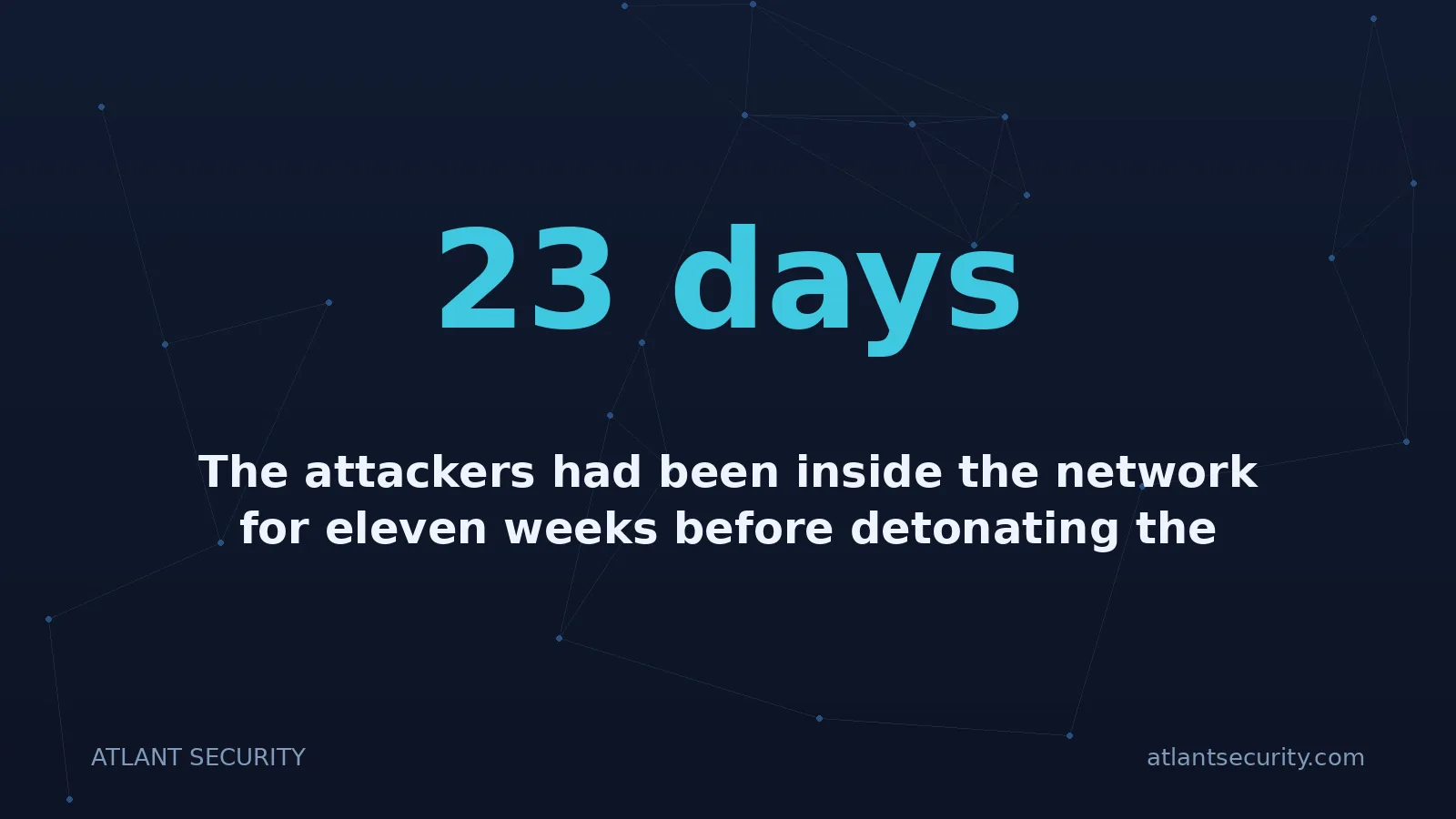
The attackers had been inside the network for eleven weeks before detonating the payload. They entered through a phishing email sent to a billing clerk, moved laterally through flat network segments that connected administrative systems to clinical devices, and escalated privileges using a service account with a password that hadn't been rotated in three years. The ransom demand was $4.2 million. The total cost of the incident - including forensics, notification of 310,000 patients, regulatory penalties, class-action settlement, and lost revenue during 23 days of degraded operations - exceeded $14 million.
When we conducted the post-incident assessment, we found that every single vulnerability the attackers exploited had a known remediation. Multifactor authentication would have stopped the initial access. Network segmentation would have contained the lateral movement. Privileged access management would have prevented the escalation. A healthcare security audit performed six months earlier would have flagged all of it.
That hospital is now one of our clients. They have a security program that works. But they will carry the cost of learning that lesson the hard way for years. This guide exists so that you don't have to.
Before You Dive In
Key Takeaways
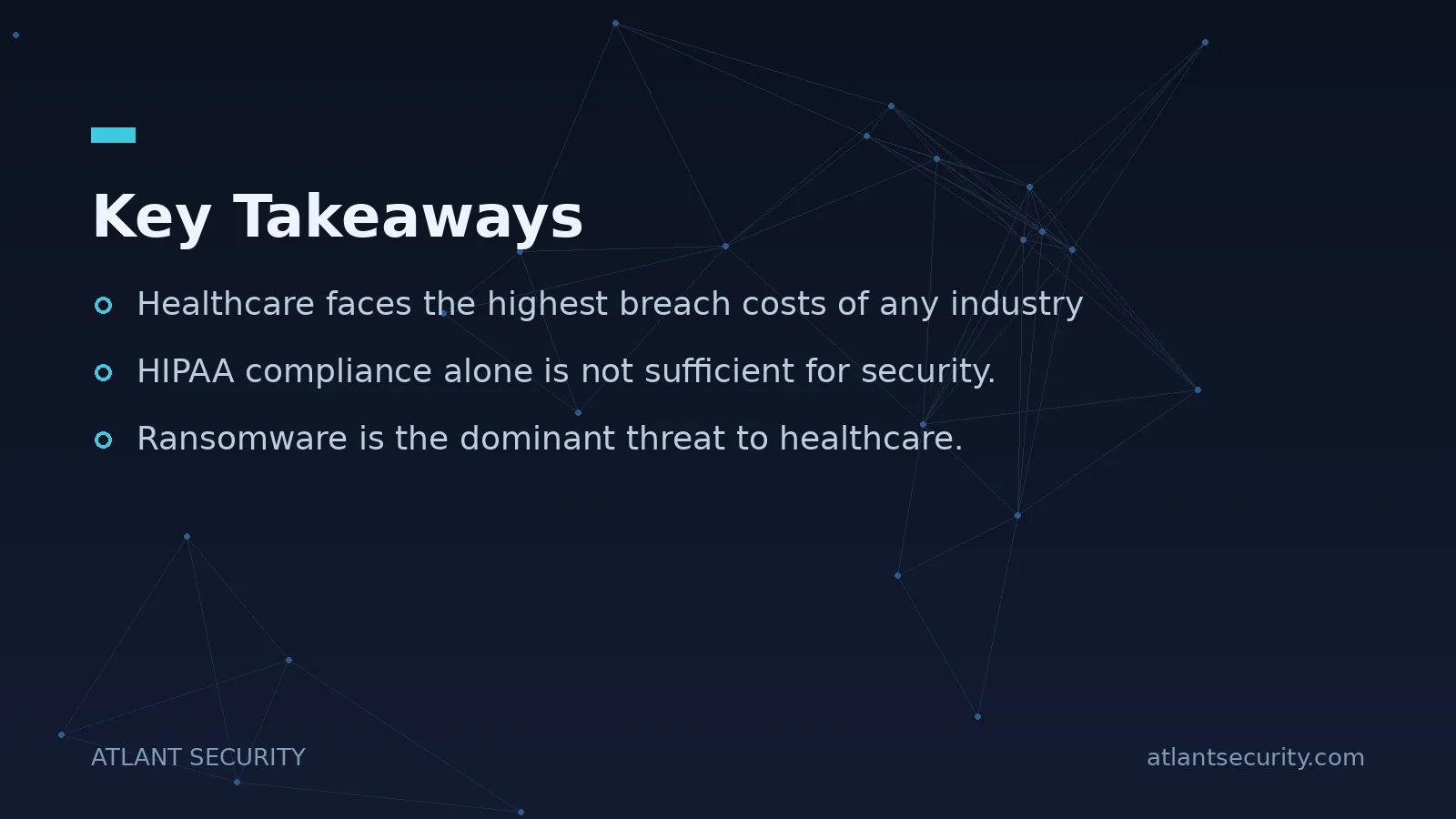
- Healthcare faces the highest breach costs of any industry - averaging $10.9 million per incident, nearly double the cross-industry average of $4.88 million.
- HIPAA compliance alone is not sufficient for security. The Security Rule sets a floor, not a ceiling. Organizations that treat compliance as their security goal consistently underperform against real threats.
- Ransomware is the dominant threat to healthcare. Hospitals cannot tolerate downtime, which makes them prime targets for attackers who know the organization will pay to restore clinical operations.
- Medical devices and telehealth expand the attack surface dramatically. Connected infusion pumps, imaging systems, and virtual care platforms all introduce vulnerabilities that traditional IT security programs miss.
- A healthcare cybersecurity consulting engagement builds what internal teams cannot build alone - specialized HIPAA knowledge, threat intelligence from dozens of healthcare environments, and the independent perspective regulators expect.
The Financial Reality
Why Healthcare Breaches Cost More Than Any Other Industry
For fourteen consecutive years, healthcare has held the top position in IBM's Cost of a Data Breach Report for the most expensive industry to experience a breach. The 2024 report placed the average healthcare breach cost at $10.93 million - a figure that reflects not just the direct cost of investigation and remediation but the cascading consequences unique to this industry.
Several factors drive these extraordinary costs:
Why Healthcare Breaches Are So Expensive
Regulatory penalties are severe and escalating. The HHS Office for Civil Rights (OCR) has increased both the frequency and magnitude of HIPAA enforcement actions. A single violation category can carry penalties up to $2.13 million per year, and the OCR resolved or settled 12 major cases in 2024 alone.
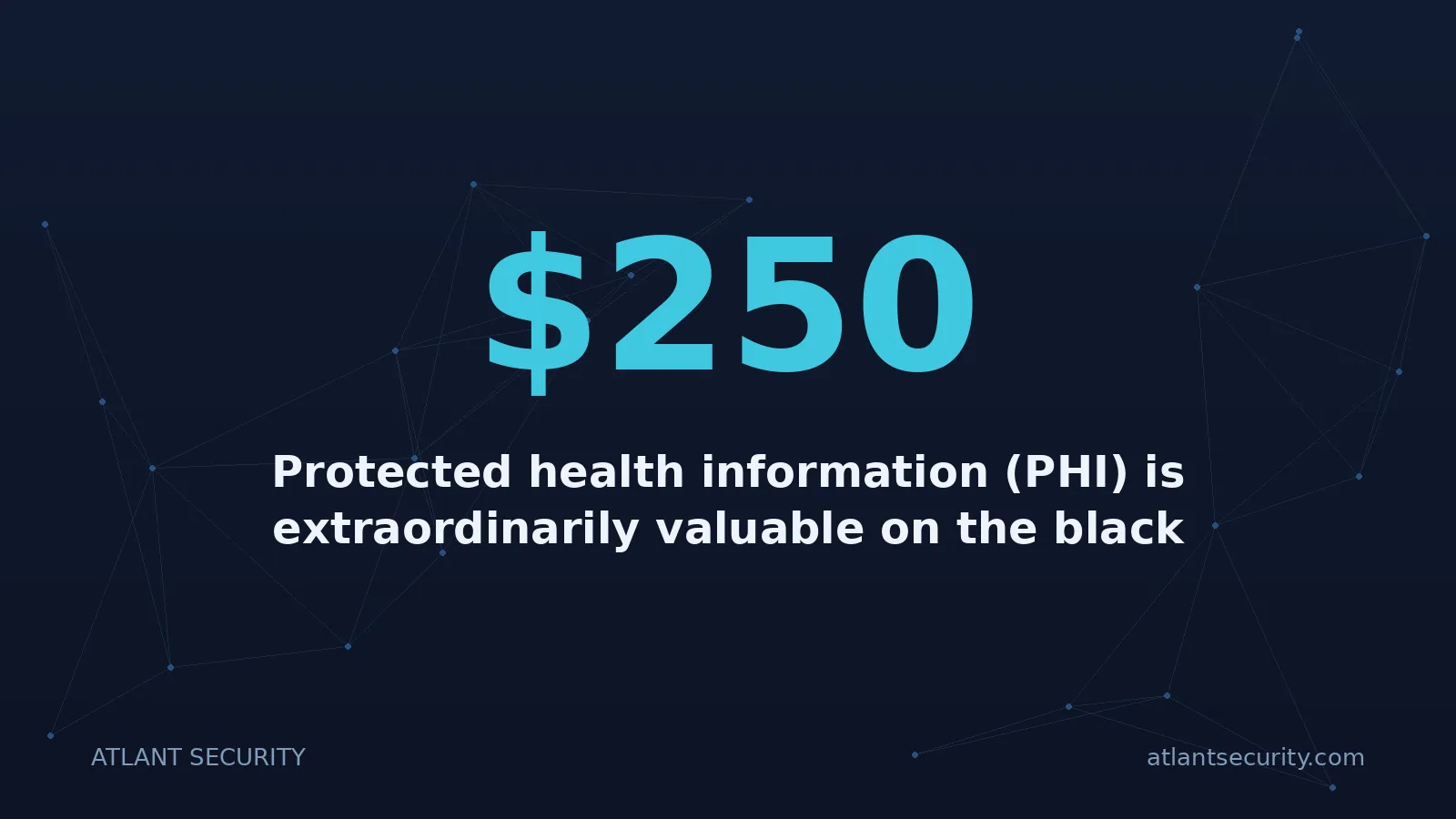
Protected health information (PHI) is extraordinarily valuable on the black market. A stolen credit card sells for $1-$2. A complete health record - containing Social Security numbers, insurance details, medical histories, and billing information - sells for $250 to $1,000. Unlike credit cards, you cannot cancel and reissue a patient's medical history.
Patient notification costs scale with volume. HIPAA requires individual notification of every affected patient within 60 days. For breaches affecting hundreds of thousands of records, notification alone can cost millions.
Operational disruption threatens patient safety. When clinical systems go down, the cost isn't just financial - it's measured in delayed diagnoses, diverted ambulances, and compromised care quality. Hospitals operating in degraded mode lose an average of $1.5 million per day in revenue.
The gap between healthcare and other industries continues to widen. Financial services, the second most expensive industry for breaches, averages $6.08 million - roughly 44% less than healthcare. This disparity is precisely why healthcare cybersecurity consulting has become essential rather than optional. The threat landscape is too specialized, the regulatory environment too complex, and the stakes too high for generalist security approaches.
Organizations that invest in proactive security programs - including a dedicated healthcare vCISO or specialized consulting engagement - typically reduce breach costs by 35-50% compared to organizations that respond reactively.
Regulatory Foundation
HIPAA Security Rule Deep Dive: Administrative, Physical, and Technical Safeguards
The HIPAA Security Rule (45 CFR Part 160 and Subparts A and C of Part 164) establishes the national standards for protecting electronic protected health information (ePHI). Understanding its three safeguard categories is fundamental to any healthcare cybersecurity consulting engagement, because these categories define the structure of every compliance assessment, gap analysis, and remediation roadmap.
Administrative Safeguards (45 CFR § 164.308)
Administrative safeguards account for more than half of the Security Rule's requirements. They encompass the policies, procedures, and organizational structures that govern how ePHI is managed.
Security Management Process: Conduct a comprehensive risk analysis identifying all threats and vulnerabilities to ePHI. Implement security measures sufficient to reduce risks to a reasonable and appropriate level. This is the single most cited deficiency in OCR enforcement actions.
Assigned Security Responsibility: Designate a security official responsible for developing and implementing security policies. This doesn't require a full-time CISO - many organizations fulfill this with a healthcare vCISO who brings healthcare-specific expertise without the $250K+ annual salary.
Workforce Security and Training: Implement policies ensuring workforce members have appropriate access to ePHI and receive regular security awareness training. Training must be role-specific - the billing department faces different threats than clinical staff.
Information Access Management: Implement policies for authorizing access to ePHI consistent with the minimum necessary standard. This means role-based access controls, not blanket permissions.
Contingency Planning: Establish data backup plans, disaster recovery plans, and emergency mode operation plans. Test these plans regularly - a backup that has never been tested is not a backup.
Physical Safeguards (45 CFR § 164.310)
Physical safeguards address the physical protection of electronic information systems, buildings, and equipment from natural hazards, environmental threats, and unauthorized intrusion.
Facility Access Controls: Implement policies to limit physical access to electronic information systems and the facilities housing them. This includes visitor logs, badge access, surveillance cameras, and secure areas for servers and network equipment.
Workstation Use and Security: Specify proper functions and physical attributes of workstations accessing ePHI. In healthcare environments, this extends to nursing stations, mobile workstations on wheels (WOWs), and shared terminals in clinical areas.
Device and Media Controls: Govern the receipt and removal of hardware and electronic media containing ePHI. Disposal procedures must ensure ePHI is rendered unrecoverable. We routinely find decommissioned laptops, hard drives, and even MRI system storage devices that were never properly wiped.
Technical Safeguards (45 CFR § 164.312)
Technical safeguards define the technology, policies, and procedures that protect ePHI and control access to it. This is where cybersecurity controls directly intersect with HIPAA requirements. Healthcare has its own failure modes, from exposed health APIs to over-permissioned provider access, and pentesting patient-facing systems tests for those rather than for a generic checklist.
Access Control: Implement technical policies to allow only authorized persons to access ePHI. This includes unique user identification, emergency access procedures, automatic logoff, and encryption/decryption mechanisms.
Audit Controls: Implement hardware, software, and procedural mechanisms that record and examine activity in systems containing ePHI. Logs must be reviewed regularly - not just collected.
Integrity Controls: Implement policies to protect ePHI from improper alteration or destruction. Electronic mechanisms must confirm that ePHI has not been altered without authorization.
Transmission Security: Implement technical measures to guard against unauthorized access to ePHI transmitted over electronic communications networks. This means encryption for data in transit - TLS 1.2 or higher for all ePHI transmissions, with no exceptions for internal network traffic.
In our healthcare cybersecurity consulting engagements, the risk analysis requirement under Administrative Safeguards is the most common area of non-compliance. Organizations that skip or shortcut this step build their entire security program on an incomplete foundation - and OCR knows it.
Threat Landscape
Healthcare-Specific Cybersecurity Threats You Must Address
Healthcare organizations face the same threats as every other industry - phishing, credential stuffing, supply chain attacks - plus an entire category of threats unique to clinical environments. A healthcare cybersecurity consulting firm must understand both the universal and the specialized.
Ransomware Targeting Hospitals and Health Systems
Healthcare is the number one target for ransomware operators, and the reason is simple economics. When an e-commerce site goes down, the company loses revenue. When a hospital's EHR goes down, patients face delayed treatment, surgeries get postponed, and ambulances get diverted. The operational urgency to restore services creates enormous pressure to pay the ransom - and attackers know it.
In 2024, the Change Healthcare ransomware attack disrupted insurance claims processing across the entire U.S. healthcare system for weeks. Thousands of providers could not submit claims, pharmacies could not process prescriptions, and the financial impact stretched into the billions. The attack demonstrated that healthcare ransomware risk extends far beyond individual organizations into the supply chain.
Ransomware Readiness Essentials
Immutable backups: Backups stored in a way that ransomware cannot encrypt, alter, or delete them. Air-gapped or write-once storage with tested restoration procedures.
Network segmentation: Separate clinical networks from administrative networks, biomedical device networks from general IT, and internet-facing systems from internal infrastructure.
Endpoint detection and response (EDR): Deploy on every endpoint that supports it. Legacy systems that cannot run EDR must be isolated behind compensating controls.
Incident response playbooks: Pre-written, pre-approved, rehearsed procedures specific to ransomware scenarios. Include communication templates, escalation chains, and decision criteria for paying versus not paying ransoms.
Medical Device Vulnerabilities
The average hospital has 10-15 connected medical devices per bed. Infusion pumps, patient monitors, ventilators, imaging systems, and surgical robots all run software - and much of it is outdated, unpatched, and running operating systems that reached end-of-life years ago. The FDA has strengthened its premarket cybersecurity requirements for new devices, but the installed base of vulnerable legacy devices will persist for a decade or more.
Medical device security requires a specialized approach: comprehensive asset inventory, risk classification, network microsegmentation, passive monitoring (because active scanning can disrupt clinical devices), and vendor management to ensure manufacturers provide timely security patches.
Electronic Health Record (EHR) Security
EHR systems like Epic, Cerner (now Oracle Health), and MEDITECH are the central nervous system of healthcare operations. They contain the most comprehensive collection of PHI in the organization, and they must be accessible to hundreds or thousands of users across multiple locations and roles. Securing EHR access without impeding clinical workflow is one of the hardest problems in healthcare cybersecurity. Hospitals fail through clinical network segmentation, EHR integrations and supplier remote access far more than through their websites, which is what penetration testing for hospitals tests.
Key EHR security controls include role-based access with the minimum necessary standard, break-the-glass procedures for emergency access (with mandatory post-access review), session management and automatic timeout, audit logging with anomaly detection, and secure interoperability configurations for data exchange with external systems via FHIR and HL7 interfaces.
Telehealth Security
The rapid expansion of telehealth - accelerated during the pandemic and now a permanent feature of care delivery - introduced new attack vectors that many organizations have not fully addressed. Video consultations, remote patient monitoring devices, patient portals, and mobile health applications all transmit ePHI across networks and devices that the organization does not fully control.
Telehealth security must address HIPAA-compliant video platforms (not consumer tools), encryption for remote monitoring data in transit and at rest, patient authentication for portal access, mobile device management for clinician devices used in home settings, and consent and access controls for shared devices in patient homes. A thorough healthcare security audit should evaluate telehealth infrastructure as a distinct attack surface.
Building Your Program
What a Healthcare Cybersecurity Consulting Engagement Delivers
A healthcare cybersecurity consulting engagement is not a single event - it's a structured program that transforms an organization's security posture over time. Here is what a comprehensive engagement looks like, from initial assessment through ongoing management.
Phase 1: Comprehensive Risk Assessment (Weeks 1-4)
Every engagement begins with a risk assessment that meets the HIPAA Security Rule's requirements under 45 CFR § 164.308(a)(1)(ii)(A). This is not a checkbox exercise. It involves identifying every system that creates, receives, maintains, or transmits ePHI; cataloging threats and vulnerabilities specific to your environment; assessing the likelihood and impact of each threat-vulnerability pair; and documenting the current state of controls against each identified risk.
Phase 2: Gap Analysis and Prioritized Roadmap (Weeks 4-6)
The risk assessment reveals gaps. The gap analysis translates those gaps into a prioritized remediation roadmap organized by risk severity, implementation complexity, and regulatory urgency. Critical items - those that could lead to an immediate breach or regulatory penalty - get addressed first. Strategic improvements follow in phases aligned with budget cycles and operational capacity.
Phase 3: Policy and Procedure Development (Weeks 6-10)
Healthcare organizations need policies that satisfy HIPAA requirements while remaining operationally practical. Generic templates downloaded from the internet fail both tests. A healthcare cybersecurity consultant develops policies tailored to your organizational structure, technology stack, and clinical workflows - including incident response plans, business continuity procedures, access management policies, vendor risk management frameworks, and workforce training requirements.
Phase 4: Technical Control Implementation (Weeks 8-16)
Working alongside your IT team, consultants implement the technical controls identified in the roadmap. This includes network segmentation, identity and access management enhancements, encryption deployment, security monitoring and SIEM configuration, vulnerability management programs, and medical device security controls. The timeline varies based on the complexity and current maturity of the environment.
Phase 5: Training and Culture Development (Ongoing)
Security awareness training for healthcare must be role-specific. Clinical staff need training on securing workstations in shared spaces and recognizing social engineering attempts that leverage clinical urgency. Administrative staff need phishing recognition and PHI handling procedures. IT staff need technical security training relevant to healthcare environments. Leadership needs board-level risk reporting and governance training.
Phase 6: Continuous Monitoring and Improvement (Ongoing)
Security is not a destination. Healthcare organizations need ongoing vulnerability scanning, penetration testing, policy reviews, compliance monitoring, and incident response exercises. Many organizations maintain this through a healthcare vCISO arrangement that provides continuous strategic oversight without the cost of a full-time executive hire.
Framework Comparison
HIPAA vs. HITRUST vs. SOC 2 vs. NIST CSF: Which Framework Do You Need?
Healthcare organizations rarely operate under a single compliance framework. Depending on your business model, customer base, and risk profile, you may need to satisfy multiple frameworks simultaneously. Understanding how they relate and where they overlap is critical to avoiding duplicated effort and wasted budget.
| Framework | Who Needs It | Certification Type | Healthcare Relevance | Typical Timeline |
|---|---|---|---|---|
| HIPAA | Covered entities and business associates | Regulatory requirement (no formal certification) | Mandatory for all healthcare organizations handling PHI | Ongoing compliance |
| HITRUST CSF | Organizations seeking validated security certification | Third-party validated certification (e1, i1, r2) | Gold standard for healthcare security; maps HIPAA controls into certifiable framework | 6-18 months |
| SOC 2 | Service organizations, SaaS companies, cloud providers | CPA-attested report (Type I or Type II) | Required for health tech vendors; can include HIPAA criteria | 3-12 months |
| NIST CSF | Any organization seeking risk-based security framework | Self-assessment (no certification) | Excellent foundation; HHS crosswalk maps NIST CSF to HIPAA | 3-6 months for initial assessment |
| ISO 27001 | Organizations with international operations or customers | Accredited third-party certification | Recognized globally; ISO 27799 provides healthcare-specific guidance | 6-18 months |
For most healthcare organizations, we recommend a layered approach: HIPAA compliance as the non-negotiable baseline, NIST CSF as the risk management framework, and either HITRUST readiness or SOC 2 as the validated certification depending on whether your primary stakeholders are healthcare payers and providers (HITRUST) or technology customers and enterprise buyers (SOC 2).
The strategic advantage of working with a specialized healthcare cybersecurity consulting firm is that they understand the overlap between these frameworks and can design a unified control set that satisfies multiple requirements simultaneously - reducing the total cost and timeline by 30-40% compared to addressing each framework in isolation.
Penalties and Enforcement
Common HIPAA Violations and Their Penalties
Understanding the most common violations and their associated penalties helps organizations prioritize remediation efforts. The following table reflects the current HIPAA penalty structure as adjusted for inflation under the HITECH Act and the 2024 HHS enforcement guidance.
| Violation Type | Common Examples | Penalty Per Violation | Annual Maximum |
|---|---|---|---|
| Tier 1: Lack of Knowledge | Employee accesses wrong patient record unintentionally | $137 - $68,928 | $2,134,831 |
| Tier 2: Reasonable Cause | Failure to conduct risk analysis, lack of BAAs | $1,379 - $68,928 | $2,134,831 |
| Tier 3: Willful Neglect (Corrected) | Known PHI exposure corrected within 30 days | $13,785 - $68,928 | $2,134,831 |
| Tier 4: Willful Neglect (Not Corrected) | Ongoing non-compliance despite knowledge of violations | $68,928 - $2,134,831 | $2,134,831 |
Beyond financial penalties, the most common violations that trigger OCR enforcement include:
| Violation | Why It Happens | How Consulting Prevents It |
|---|---|---|
| Failure to perform risk analysis | Organizations skip it, use incomplete templates, or don't update annually | Consultants conduct thorough, OCR-defensible risk analyses using proven methodologies |
| Lack of access controls | Over-provisioned accounts, shared credentials, no MFA on remote access | IAM reviews, RBAC implementation, MFA deployment across all access points |
| Missing business associate agreements | Vendor sprawl, informal agreements, untracked cloud services | Vendor inventory, BAA tracking program, third-party risk management framework |
| Insufficient encryption | Unencrypted laptops, email containing PHI, legacy system limitations | Encryption gap assessment, full-disk encryption, email DLP, TLS enforcement |
| Delayed breach notification | Lack of incident detection capability, unclear reporting procedures | SIEM/monitoring deployment, incident response plan with clear notification triggers |
| Improper PHI disposal | Devices decommissioned without wiping, paper records in unsecured bins | Media sanitization policies, certified destruction procedures, staff training |
The pattern across all these violations is clear: they are preventable with proper planning, and they are exactly what a healthcare cybersecurity consulting engagement is designed to identify and remediate before OCR comes knocking.
Common Questions
Healthcare Cybersecurity Consulting FAQ
1. What does a healthcare cybersecurity consultant actually do?
A healthcare cybersecurity consultant assesses your organization's security posture against HIPAA requirements and industry best practices, identifies gaps and vulnerabilities, develops a prioritized remediation roadmap, helps implement technical and administrative controls, and provides ongoing guidance for maintaining compliance. They bring specialized knowledge of healthcare-specific threats, regulations, and technologies that generalist IT teams typically lack.
2. How much does healthcare cybersecurity consulting cost?
Costs vary significantly based on organization size, complexity, and scope. A HIPAA risk assessment for a small practice (under 50 employees) typically ranges from $5,000 to $15,000. For mid-sized healthcare organizations (50-500 employees), comprehensive assessments run $15,000 to $50,000. Large health systems with multiple locations and complex clinical environments can invest $75,000 to $250,000+ for full program development. Ongoing vCISO services typically cost $5,000 to $15,000 per month, which represents a fraction of a full-time CISO salary.
3. Is HIPAA compliance enough to protect our organization?
No. HIPAA establishes a regulatory floor, not a security ceiling. The Security Rule was last substantially updated in 2013, and the threat landscape has evolved dramatically since then. Organizations that treat HIPAA compliance as their security goal are consistently the ones that experience breaches. True security requires going beyond minimum compliance to implement defense-in-depth strategies, threat-informed controls, and continuous monitoring capabilities that address modern attack techniques.
4. What is the difference between HIPAA and HITRUST?
HIPAA is a federal law that requires covered entities and business associates to protect PHI. HITRUST CSF is a certifiable security framework that incorporates HIPAA requirements along with controls from NIST, ISO 27001, PCI DSS, and other standards into a single, comprehensive control set. Think of HIPAA as the legal requirement and HITRUST as the structured, validated methodology for demonstrating compliance. Many healthcare payers and large health systems now require HITRUST certification from their vendors and business associates. Learn more about preparing for HITRUST readiness.
5. How often should we conduct a HIPAA risk assessment?
HIPAA does not specify a required frequency, but OCR has made clear through enforcement actions and guidance that risk assessment must be an ongoing process. Industry best practice and most healthcare cybersecurity consultants recommend conducting a comprehensive risk assessment at least annually, with additional assessments triggered by significant changes such as new system implementations, major organizational changes, new facilities, or security incidents. Continuous risk monitoring between assessments is increasingly considered standard practice.
6. Do we need a full-time CISO, or can we use a vCISO?
For most healthcare organizations under 1,000 employees, a healthcare vCISO provides better value than a full-time hire. A qualified healthcare vCISO brings cross-industry experience from working with multiple healthcare clients, stays current on the latest threats and regulatory changes, and costs a fraction of a full-time CISO salary ($250,000-$400,000+ including benefits). The vCISO model works because most organizations need strategic security leadership and regulatory expertise, not necessarily a full-time executive sitting in an office five days a week.
7. How do we secure medical devices that cannot be patched?
Legacy medical devices running outdated operating systems require a compensating controls approach. This includes network microsegmentation to isolate devices from the broader network, passive monitoring to detect anomalous behavior without disrupting device function, application whitelisting where supported, restricting USB and removable media access, implementing strict access controls on management interfaces, and working with device manufacturers on available firmware updates. A comprehensive medical device security program also includes a replacement roadmap for devices approaching end-of-life from a security perspective.
8. What should we look for when hiring a healthcare cybersecurity consulting firm?
Prioritize firms with demonstrated healthcare experience - not just general cybersecurity expertise repackaged for healthcare. Key indicators include: consultants with healthcare-specific certifications (HCISPP, HITRUST CCSFP), documented experience with OCR audits and breach response, understanding of clinical workflows and medical device environments, references from healthcare organizations of similar size and complexity, and a methodology that goes beyond checklist compliance to address real-world threats. Ask how many healthcare clients they currently serve and what percentage of their practice is dedicated to healthcare.
Protect Your Patients. Protect Your Organization.
Ready to understand where your healthcare security program stands and what it takes to reach compliance and true resilience?
Our initial consultation is completely free and includes: a 30-minute discussion of your healthcare security challenges, a high-level HIPAA gap assessment, preliminary recommendations and budget estimates. No obligation, no pressure - just honest guidance from consultants who specialize in healthcare.
Published: March 2026 · Author: Alexander Sverdlov
This article is for informational purposes only and does not constitute legal or professional advice. Healthcare organizations should consult qualified legal counsel and certified cybersecurity professionals for guidance specific to their circumstances. Penalty amounts reflect 2024 inflation-adjusted figures and are subject to change. Consult the HHS Office for Civil Rights for the most current enforcement guidance.
