

Industry · March 2026
Everything you need to know about fintech security audits: what they cover, how they differ from generic IT audits, the regulatory frameworks that drive them, what auditors actually look for, and how to prepare your platform without losing your mind.
Key Takeaways
- A fintech security audit examines payment flows, API integrations, encryption at rest and in transit, access controls, and third-party vendor risk - areas that generic IT audits typically skim over
- Regulatory frameworks like PCI DSS, SOC 2, DORA, and MAS TRM each impose specific audit requirements on fintech companies depending on geography and business model
- The most common audit findings involve broken API authentication, excessive permissions, missing encryption key rotation, and incomplete incident response plans
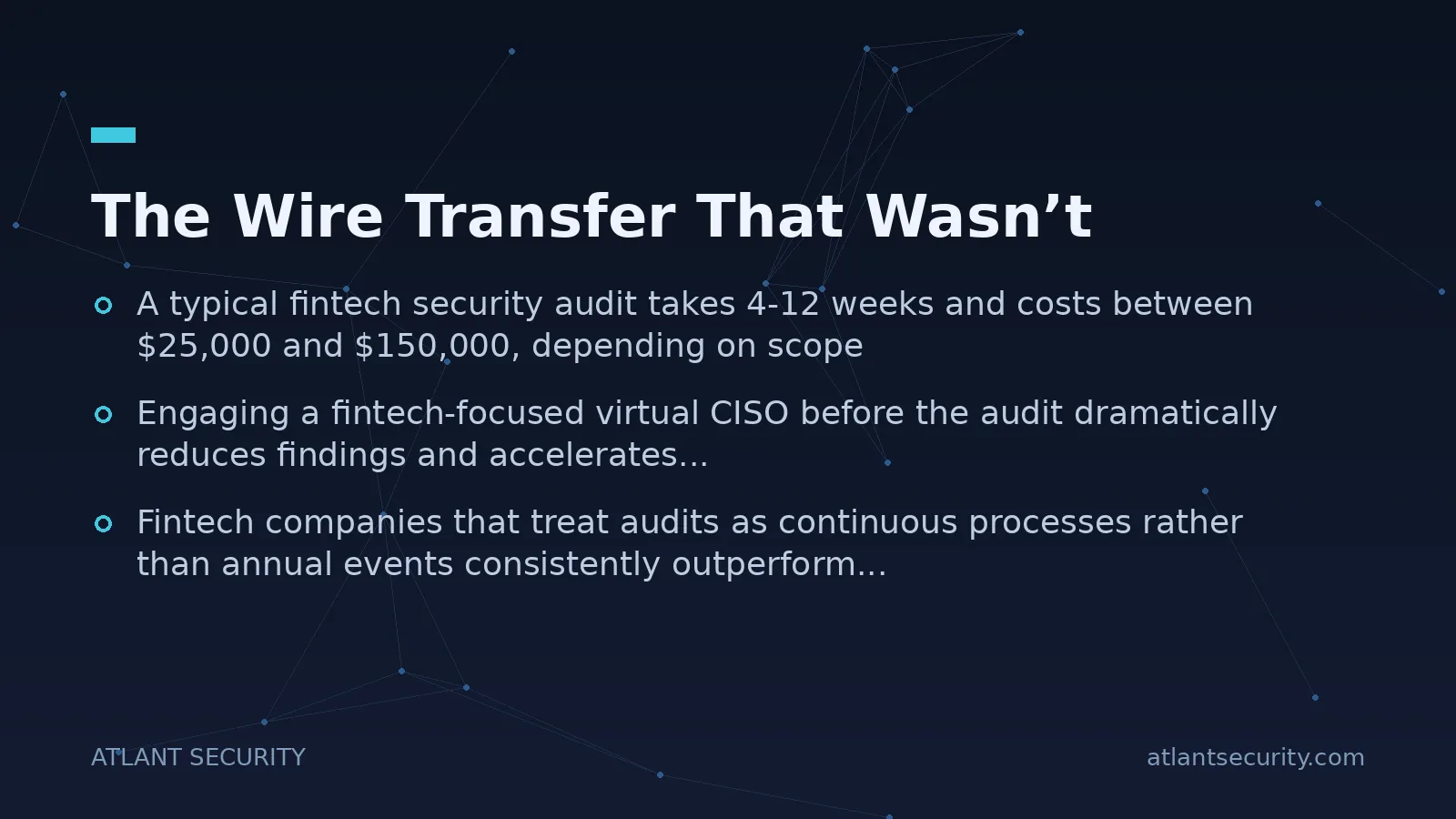
- A typical fintech security audit takes 4-12 weeks and costs between $25,000 and $150,000, depending on scope, company size, and regulatory complexity
- Engaging a fintech-focused virtual CISO before the audit dramatically reduces findings and accelerates remediation
- Fintech companies that treat audits as continuous processes rather than annual events consistently outperform on security metrics and customer trust
Table of Contents
The Opening
The Wire Transfer That Wasn’t
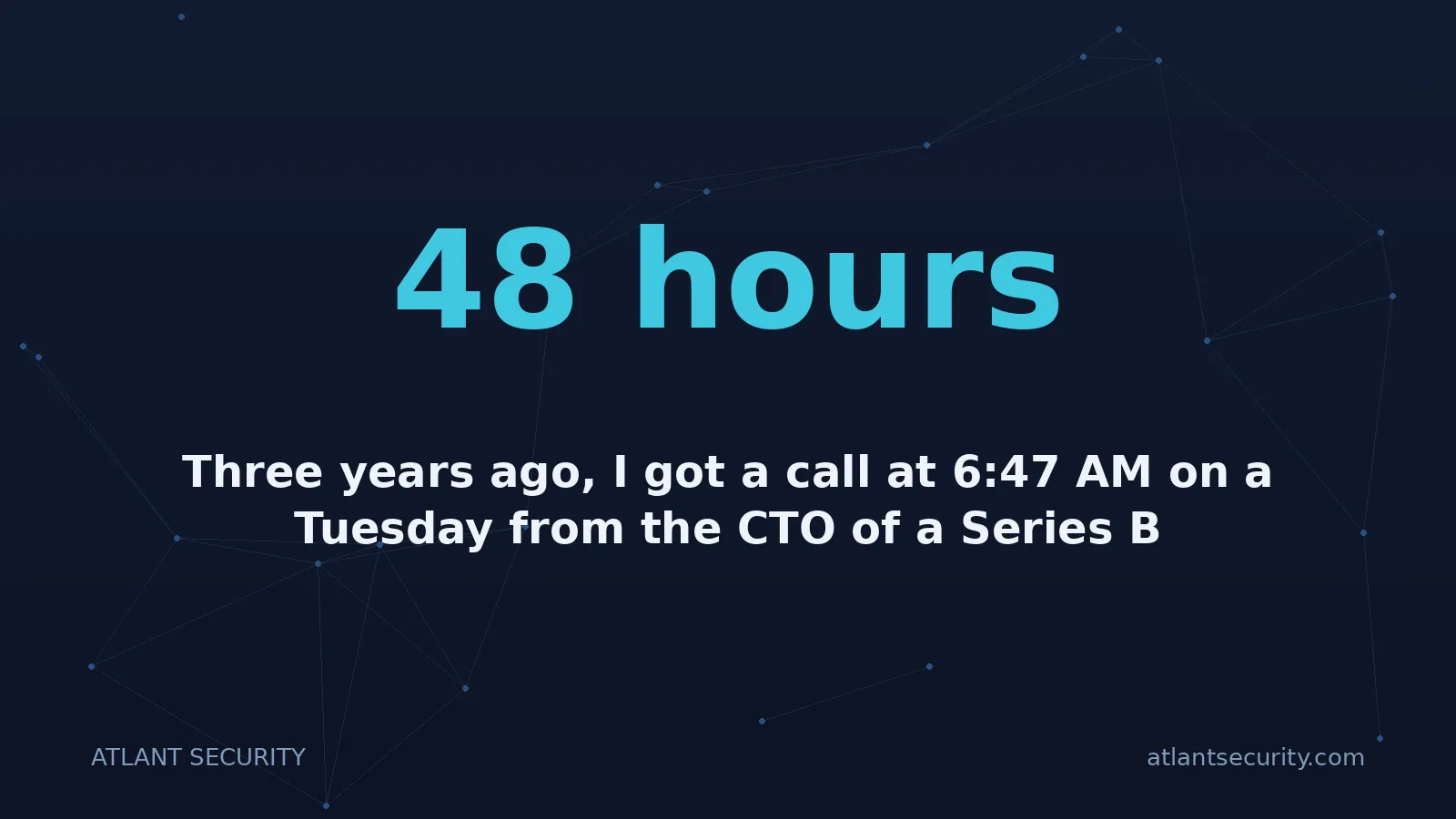
Three years ago, I got a call at 6:47 AM on a Tuesday from the CTO of a Series B payments startup. His voice had that particular flatness you only hear when someone hasn’t slept. “We have a problem,” he said. “A customer just told us they received a settlement 48 hours late. Except we show it as settled on time. And the amounts don’t match.”
Long story short: a misconfigured API gateway was allowing a subset of transaction callbacks to be replayed. The amounts were small - tens of dollars - and the discrepancy had been happening for weeks before anyone noticed. No customer funds were actually lost, but the reputational damage was real, the regulatory scrutiny was immediate, and the engineering team spent the next three months rebuilding their entire webhook verification pipeline.
When we finally did a proper fintech security audit of their platform, the API replay vulnerability was just one of 34 findings. There were hardcoded credentials in a staging environment that shared a database with production. There was a third-party KYC provider with unfettered read access to customer PII. There was an incident response plan that nobody had updated since the company had seven employees - they now had eighty-five.
None of these would have been caught by a standard IT security audit. A generic auditor would have checked their firewall rules, verified their antivirus was current, maybe run a vulnerability scan, and handed them a green report. The fintech-specific risks - payment flow integrity, settlement timing, API authentication between financial counterparties, regulatory data residency requirements - would have sailed right through.
That experience crystallized something I had been telling clients for years: if you move money, store financial data, or sit anywhere in the payments value chain, a generic security audit is not enough. You need an audit designed for fintech - one that understands your specific threat landscape, your regulatory obligations, and the catastrophic consequences of getting it wrong.
Let me walk you through exactly what that looks like.
Scope & Coverage
What a Fintech Security Audit Covers
A fintech security audit is a structured, evidence-based examination of the security controls, architecture, and operational practices that protect a financial technology platform and the sensitive data it handles. Unlike a generic IT security audit, it is purpose-built for the unique risk profile of companies that process payments, manage financial accounts, facilitate lending, provide insurance technology, or operate in adjacent financial services.
At its core, a fintech security audit evaluates three interconnected dimensions:
The Three Dimensions of a Fintech Security Audit
- Technical Security - Application security, infrastructure hardening, encryption implementation, API security, network segmentation, and vulnerability management
- Operational Security - Access management, change management, incident response, business continuity, vendor management, and security monitoring
- Regulatory Compliance - Adherence to applicable financial regulations, data protection laws, and industry standards specific to the company’s operating jurisdictions and business model
The scope of a fintech security audit is deliberately broader than what most technology companies expect. It typically includes transaction processing pipelines, settlement and reconciliation systems, customer onboarding and KYC/AML workflows, payment card environments, open banking API integrations, mobile application security, and the entire chain of custody for financial data from ingestion to archival.
The audit also examines how security controls interact with business logic. In fintech, a security vulnerability is not just a data breach risk - it can directly result in financial loss, regulatory fines, license revocation, or systemic risk to counterparties. This is why auditors with fintech domain expertise are non-negotiable.
Comparison
Fintech Audit vs. Generic IT Audit
I often get asked: “We already do an annual IT security audit. Why do we need a fintech-specific one?” The honest answer is that a generic IT audit and a fintech security audit share a common ancestor but have diverged significantly. Here is where they differ:
| Audit Dimension | Generic IT Audit | Fintech Security Audit |
|---|---|---|
| Scope Focus | General IT infrastructure, endpoints, network perimeter | Payment flows, financial data pipelines, settlement systems, API ecosystems |
| Regulatory Knowledge | Basic compliance checks (SOX, HIPAA if applicable) | Deep understanding of PCI DSS, PSD2, DORA, MAS TRM, state money transmitter laws |
| API Testing | Basic vulnerability scanning of web applications | Deep API security review: authentication, rate limiting, input validation, webhook integrity, idempotency |
| Encryption Review | Verifies TLS is enabled, checks certificate validity | Reviews key management lifecycle, HSM usage, tokenization strategy, field-level encryption of PAN/PII |
| Third-Party Risk | Vendor inventory and basic questionnaires | Deep dive into payment processors, banking partners, KYC/AML providers, BaaS platforms, data aggregators |
| Business Logic Testing | Rarely performed | Tests for transaction manipulation, balance tampering, race conditions in transfers, privilege escalation in financial workflows |
| Incident Response | Generic IR plan review | Fraud-specific playbooks, regulatory notification timelines, customer fund protection procedures, card network breach protocols |
The bottom line: a generic IT audit tells you whether your firewall is configured correctly. A fintech security audit tells you whether someone can steal money through your API, whether your encryption meets payment card industry requirements, and whether your incident response plan accounts for the 72-hour breach notification window that three different regulators require.
Deep Dive
Key Audit Domains for Fintech
Every fintech security audit should cover six core domains. The depth of coverage varies based on your specific business model - a neobank will have different priorities than an embedded lending platform - but all six need at least a baseline assessment.
1. Payment Security
This is the beating heart of most fintech audits. Auditors examine the entire payment lifecycle: how transactions are initiated, authorized, processed, settled, and reconciled. They look for weaknesses in payment flow integrity, transaction signing mechanisms, idempotency controls (to prevent duplicate processing), and settlement timing accuracy.
For companies that handle card data, this domain overlaps heavily with PCI DSS requirements. The audit will verify cardholder data environment (CDE) segmentation, assess tokenization and point-to-point encryption (P2PE) implementations, and ensure that primary account numbers (PANs) are never stored in plaintext - not in logs, not in error messages, not in support tickets.
2. API Security
Fintech platforms are API-first by nature. A typical payments company might expose dozens of external APIs to merchants, consume APIs from banking partners, and use internal APIs for microservice communication. Each API endpoint is an attack surface.
The audit evaluates authentication mechanisms (OAuth 2.0, mutual TLS, API key management), authorization logic (can merchant A access merchant B’s data?), rate limiting and throttling, input validation, and the security of webhook callbacks. Auditors specifically test for OWASP API Security Top 10 vulnerabilities, including broken object-level authorization (BOLA) and mass assignment - both of which are disproportionately common in fintech.
3. Encryption and Key Management
Fintech companies handle some of the most sensitive data categories in existence: payment card numbers, bank account details, social security numbers, income verification documents. The encryption audit goes beyond “is TLS enabled?” to examine the complete cryptographic posture. APIs, payment logic, cloud identities and multi-tenant isolation are where fintech breaks; fintech penetration testing is scoped to exactly those surfaces and produces reproducible findings your engineers can act on.
This includes encryption algorithms in use (and whether any deprecated ones like 3DES remain), key generation and storage (ideally in HSMs or cloud KMS), key rotation schedules, certificate management lifecycle, and field-level encryption of sensitive attributes in databases. The audit also checks that encryption keys are not accessible to application code at runtime - a surprisingly common anti-pattern.
4. Access Controls
In fintech, the principle of least privilege is not just good practice - it is a regulatory requirement in most jurisdictions. The audit reviews identity and access management (IAM) across the entire stack: infrastructure access (cloud console, production servers), application-level roles and permissions, database access, and administrative interfaces.
Auditors pay special attention to privileged access to financial systems. Who can initiate manual fund movements? Who can modify transaction records? Are these actions logged immutably? Is multi-factor authentication enforced for all privileged operations? Is there separation of duties between developers who write code and operators who deploy it to production?
5. Third-Party and Vendor Risk
Fintech companies are embedded in a web of third-party relationships: banking-as-a-service providers, payment processors, card networks, KYC/AML vendors, data aggregators, cloud hosting providers, and more. Each vendor represents a potential attack vector and a shared responsibility boundary that must be clearly defined and verified.
The audit evaluates vendor due diligence processes, contract security requirements, ongoing monitoring, right-to-audit clauses, and data processing agreements. For critical vendors (especially banking partners and payment processors), auditors review SOC 2 reports, PCI Attestations of Compliance, and assess the actual technical integrations for security weaknesses.
6. Incident Response
When a security incident hits a fintech company, the clock starts ticking on multiple fronts simultaneously: regulatory notification deadlines, card network breach protocols, customer communication obligations, and fund protection measures. A generic incident response plan is dangerously insufficient.
The audit assesses whether the company has fintech-specific incident playbooks covering scenarios like unauthorized fund transfers, payment data breaches, API key compromise, third-party vendor breaches, and fraud detection failures. It also verifies that the IR team has practiced these scenarios through tabletop exercises and that notification timelines align with all applicable regulatory requirements.
Compliance
Regulatory Drivers: Why Fintech Audits Are Non-Negotiable
Fintech companies don’t get to choose whether to undergo security audits. Multiple regulatory frameworks mandate them, and the specific requirements depend on what you do, where you operate, and who your customers are. Here are the four most impactful:
PCI DSS (Payment Card Industry Data Security Standard)
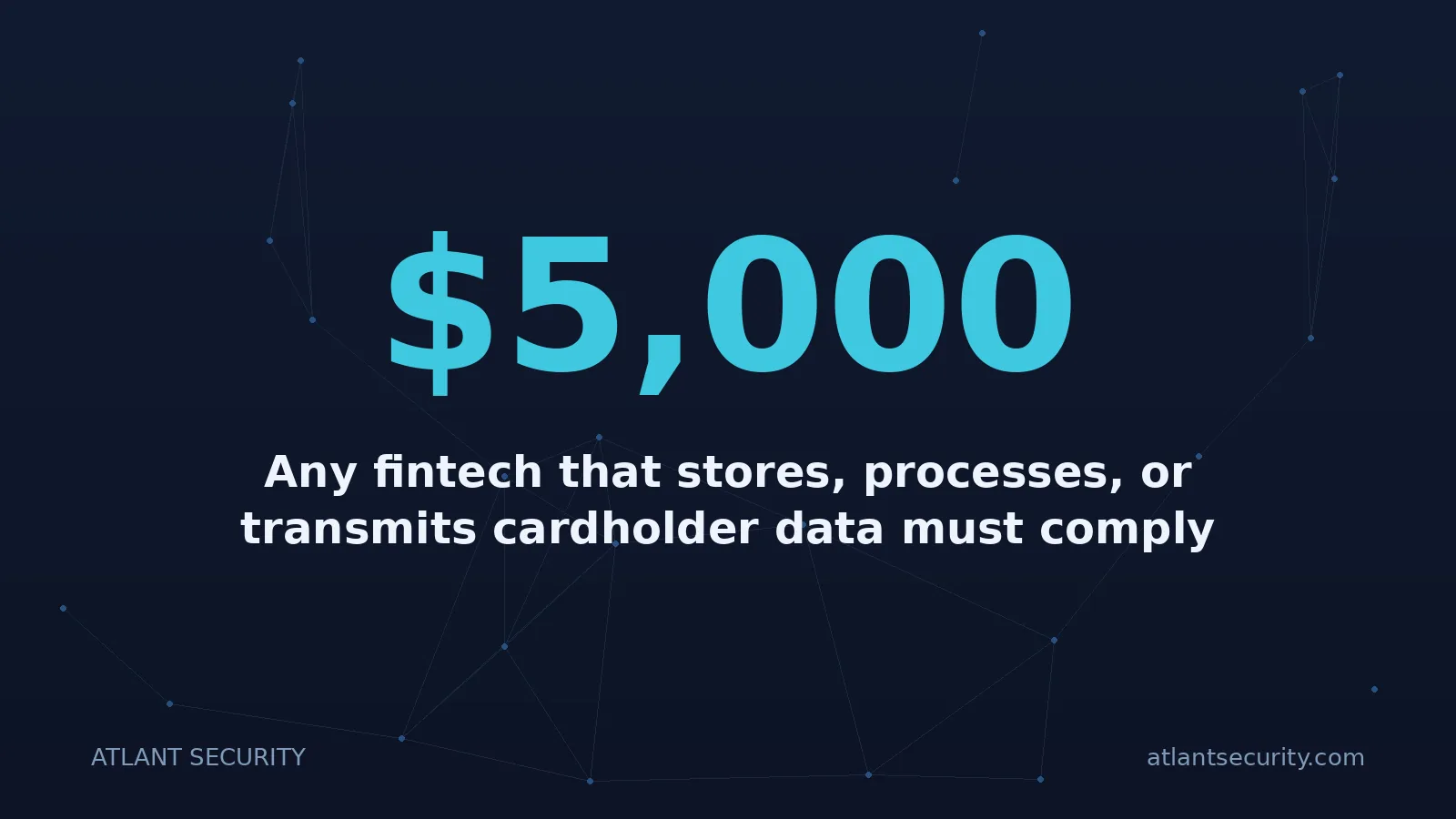
Any fintech that stores, processes, or transmits cardholder data must comply with PCI DSS. Version 4.0.1 (effective since 2024) introduced 64 new requirements, many of which directly affect fintech architecture: targeted risk analysis for each PCI requirement, authenticated vulnerability scanning, client-side script management, and enhanced multi-factor authentication. Non-compliance can result in fines of $5,000-$100,000 per month and, in severe cases, loss of the ability to process card payments entirely.
SOC 2 (System and Organization Controls)
While not technically a regulation, SOC 2 has become a de facto requirement for fintech companies serving enterprise clients or other financial institutions. A SOC 2 Type II report demonstrates that your security controls have been operating effectively over a period of time (typically 6-12 months). For fintechs, the most relevant Trust Services Criteria are Security, Availability, and Confidentiality. Increasingly, Processing Integrity is also in scope, as it directly relates to the accuracy and completeness of financial transactions.
DORA (Digital Operational Resilience Act)
DORA applies to virtually all financial entities operating in the EU, including fintech companies. Fully enforceable since January 2025, it mandates comprehensive ICT risk management, regular digital operational resilience testing (including threat-led penetration testing for significant institutions), incident reporting within strict timelines, third-party ICT risk management, and information sharing. DORA is notable for its explicit focus on third-party technology providers - meaning your cloud and SaaS vendors are now in regulatory scope.
MAS TRM (Monetary Authority of Singapore - Technology Risk Management)
For fintech companies operating in Singapore - one of the world’s most important fintech hubs - MAS TRM guidelines are the governing framework. They cover technology risk governance, software development lifecycle security, IT operations management, cyber security, and online financial services security. MAS requires annual independent audits of technology risk management, and the guidelines are notably prescriptive on topics like access control, data loss prevention, and cyber surveillance.
Beyond these four, fintech companies may also need to consider GDPR (if handling EU personal data), state-level regulations in the US (NY DFS Cybersecurity Regulation, for example), PSD2 Strong Customer Authentication requirements in Europe, and local data protection laws in markets like Australia (CPS 234), the UAE, and Brazil (LGPD).
The practical implication: your fintech security audit needs to be designed with your specific regulatory map in mind. A virtual CISO can help you identify which regulations apply and ensure the audit scope covers all of them efficiently.
The Process
Audit Process Step-by-Step
While every audit firm has its own methodology, a well-executed fintech security audit follows a predictable lifecycle. Understanding these phases helps you prepare effectively and minimize disruption to your engineering and operations teams.
Phase 1: Scoping and Planning (1-2 Weeks)
The audit begins long before anyone looks at a firewall rule. During scoping, the audit team works with your leadership to define exactly what is in and out of scope: which systems, which environments, which business processes, which regulatory requirements. For fintech, this is particularly important because the scope often extends beyond traditional IT boundaries to include banking partner integrations, payment processor connections, and third-party data flows.
The planning phase also identifies key stakeholders (engineering leads, compliance officers, DevOps teams), schedules interviews, and establishes secure channels for evidence exchange. A good audit team will provide a detailed document request list at this stage so your team can begin gathering evidence in parallel.
Phase 2: Document Review and Architecture Analysis (1-2 Weeks)
Auditors review your security policies, architecture diagrams, data flow maps, access control matrices, incident response plans, vendor contracts, and previous audit reports. For fintech, they also examine payment flow documentation, settlement process descriptions, API specifications, and regulatory compliance evidence.
This phase often surfaces gaps before any technical testing begins. Missing documentation, outdated architecture diagrams, or absent policies are findings in themselves - and they tell the auditor where to focus their technical testing.
Phase 3: Technical Testing (2-4 Weeks)
This is the most intensive phase. The audit team conducts vulnerability assessments, penetration testing, configuration reviews, code reviews (for critical components), and API security testing. For fintech, technical testing also includes payment flow integrity testing, business logic testing, and cryptographic implementation review.
Technical testing is typically performed in a staging or pre-production environment that mirrors production. Some tests (like external penetration testing and API security testing) may be conducted against production with careful coordination and rollback procedures.
Phase 4: Interviews and Process Validation (1-2 Weeks)
Auditors interview key personnel to validate that documented processes match reality. They speak with engineers about deployment practices, with operations teams about incident handling, with compliance officers about regulatory monitoring, and with leadership about security governance. In fintech, they also interview teams responsible for fraud detection, transaction monitoring, and customer dispute resolution.
Phase 5: Reporting and Remediation Guidance (1-2 Weeks)
The audit culminates in a detailed report that categorizes findings by severity (Critical, High, Medium, Low, Informational), provides evidence for each finding, maps findings to applicable regulatory requirements, and offers specific remediation guidance. A good fintech audit report also includes a risk-prioritized remediation roadmap that accounts for business impact and regulatory deadlines.
Critical Tip: Don’t Treat the Report as the Finish Line
The audit report is the beginning of the remediation process, not the end of the security journey. Schedule a formal remediation review 60-90 days after receiving the report to validate that critical and high findings have been addressed. Many regulatory frameworks (including DORA and MAS TRM) explicitly require evidence of remediation follow-through.
Real-World Lessons
Common Findings in Fintech Audits
After conducting hundreds of fintech security audits across payments companies, neobanks, lending platforms, and insurtech providers, certain findings appear with remarkable consistency. Here are the ones we see most often, drawn from real (anonymized) engagements:
Broken Object-Level Authorization in APIs
A payments platform allowed merchants to retrieve transaction details via /api/v2/transactions/{transaction_id}. By incrementing the transaction ID, merchant A could view merchant B’s transaction details, including customer names and partial card numbers. The API checked authentication (is this a valid merchant?) but not authorization (does this merchant own this transaction?). This is BOLA - the number one API security risk according to OWASP - and we find it in roughly 40% of fintech audits.
Excessive Cloud IAM Permissions
A lending platform had 14 engineers with full administrator access to their AWS production account. The company had grown from 5 to 60 employees in 18 months, and the original “everyone gets admin” approach from the garage days was never revisited. Three former employees still had active IAM credentials. The remediation required implementing role-based access, enabling CloudTrail for all regions, and conducting a full access review - a process that took six weeks.
Encryption Keys Stored Alongside Encrypted Data
An insurtech company encrypted customer Social Security numbers in their database (good), but stored the encryption key in an environment variable on the same application server (not good). If an attacker gained access to the server, they would have both the encrypted data and the key to decrypt it. The fix was migrating to AWS KMS with envelope encryption, ensuring the master key never left the HSM.
Missing or Untested Incident Response Plans
A neobank had a beautifully written 40-page incident response plan that referenced a Slack channel that no longer existed, a PagerDuty rotation with employees who had left the company, and an external forensics firm they had never actually contracted. When we ran a tabletop exercise simulating a card data breach, the team took 35 minutes just to figure out who was supposed to be in the room. Regulatory notification timelines (4 hours for MAS, 72 hours for GDPR, “without unreasonable delay” for most US state laws) are unforgiving.
Insufficient Webhook Verification
A payments company was consuming webhooks from their banking partner to trigger fund disbursements. The webhook endpoint accepted any POST request with the correct JSON structure - there was no signature verification, no IP allowlisting, and no replay protection. An attacker who discovered the endpoint URL could theoretically trigger arbitrary disbursements. This is the same class of vulnerability that caused the 6:47 AM phone call I described at the beginning of this article. For licensed banks and deposit-taking institutions the testing half of this is scoped differently again; our bank pentest is built around payment workflows, core-banking integrations and examiner-facing evidence.
Third-Party Vendor Access Without Monitoring
A KYC provider had been granted persistent API access to a fintech’s customer database - including fields that were not necessary for identity verification (account balances, transaction history). The access had been provisioned during initial integration two years prior and never reviewed. There was no logging of what data the KYC vendor was actually querying. The remediation involved implementing field-level access controls, API usage monitoring, and quarterly vendor access reviews.
Pattern Recognition
If you look across these findings, a pattern emerges: most fintech security vulnerabilities are not exotic zero-day exploits. They are ordinary mistakes - excessive permissions, missing validation, stale configurations - amplified by the high-stakes nature of financial services. This is exactly why a structured, systematic fintech security audit catches what ad-hoc security reviews miss.
Investment
Cost and Timeline Breakdown
One of the most common questions I hear is “How much does a fintech security audit cost and how long does it take?” The honest answer depends on several variables, but here is a realistic breakdown based on market data and our own engagement history:
| Company Profile | Typical Scope | Timeline | Cost Range | Key Drivers |
|---|---|---|---|---|
| Seed / Series A Startup | Core platform, 1-2 integrations, single cloud environment | 4-6 weeks | $25,000-$50,000 | Limited scope, fewer systems, lighter regulatory burden |
| Series B/C Growth Stage | Full platform, 5-15 integrations, multi-region cloud | 6-10 weeks | $50,000-$100,000 | More APIs, multiple regulations, larger team interviews |
| Late Stage / Public | Enterprise platform, 20+ integrations, global presence | 8-12 weeks | $100,000-$150,000+ | Multi-jurisdiction compliance, complex architecture, extensive vendor ecosystem |
| Banking / Neobank | Full banking stack, core banking integrations, card programs | 10-16 weeks | $120,000-$200,000+ | Highest regulatory scrutiny, PCI DSS scope, banking partner requirements |
Factors that increase cost: PCI DSS scope (adds $15,000-$40,000 for a dedicated QSA), multi-jurisdiction regulatory requirements, custom penetration testing for complex financial workflows, source code review, and tight timelines that require surge staffing.
The economics of this changed recently. AI-driven pentesting runs the same OWASP Top 10, API, cloud and network checks a human tester works through, chains the findings into proof-of-concept evidence, and returns results in five to ten days with retesting included once you have fixed things. That turns testing after every release from an aspiration into a line item.
Factors that decrease cost: Prior audit history (repeat audits are more efficient), well-organized evidence and documentation, existing compliance programs (SOC 2, ISO 27001), and a fintech virtual CISO who can pre-remediate known gaps before the auditors arrive.
The ROI Perspective
A $75,000 audit feels expensive until you compare it to the cost of a fintech security incident. IBM’s 2025 Cost of a Data Breach Report puts the average financial services breach at $6.08 million. Regulatory fines alone can dwarf audit costs - PCI DSS non-compliance fines start at $5,000/month and compound rapidly. And the reputational cost of a fintech breach? Ask any founder who has had to explain a security incident to their banking partner, and they will tell you: the audit is the cheaper option.
Common Questions
Frequently Asked Questions
How often should a fintech company conduct a security audit?
At minimum, annually. However, you should also conduct targeted audits after major platform changes (new payment method, new market entry, significant architecture migration), after a security incident, or when onboarding a new banking partner or payment processor. Many regulatory frameworks, including MAS TRM and DORA, mandate annual independent assessments. Companies processing high volumes of card transactions may need quarterly vulnerability scans and annual penetration tests under PCI DSS.
Can we use our SOC 2 audit as a substitute for a fintech security audit?
Not entirely. A SOC 2 audit provides valuable assurance about your control environment, but it has a different objective: it attests to control design and operating effectiveness against the Trust Services Criteria. A fintech security audit is more hands-on - it includes active penetration testing, business logic testing, payment flow validation, and deep technical assessment that a SOC 2 examination typically does not cover. Think of SOC 2 as the compliance layer and a fintech security audit as the technical validation layer. Most mature fintechs do both.
What should we prepare before the auditors arrive?
Start with four essentials: (1) an up-to-date architecture diagram showing all systems, data flows, and third-party integrations; (2) a complete inventory of APIs (internal and external) with authentication methods; (3) your current security policies and procedures (even if incomplete - auditors would rather see an honest “work in progress” than a fabricated document); and (4) access to previous audit reports, penetration test results, and vulnerability scan data. Having a single point of contact who understands both the business and technical sides will also dramatically accelerate the process.
Do we need a separate PCI DSS assessment if we already do a fintech security audit?
If you store, process, or transmit cardholder data, yes. PCI DSS compliance requires a formal assessment by a Qualified Security Assessor (QSA) or an Internal Security Assessor (ISA), depending on your merchant or service provider level. A fintech security audit can incorporate PCI DSS requirements into its scope (and a good audit firm will do this seamlessly), but the formal PCI DSS Report on Compliance (ROC) or Self-Assessment Questionnaire (SAQ) is a distinct deliverable that your acquiring bank and the card networks require.
How do we choose between a Big Four firm and a specialized security consultancy?
Both have trade-offs. Big Four firms (Deloitte, EY, PwC, KPMG) carry brand recognition that satisfies board-level governance requirements and some banking partners. However, they tend to be more expensive, slower, and less technical - their fintech audit teams often lack hands-on experience with modern payment architectures. Specialized firms like Atlant Security typically offer deeper technical expertise, faster turnaround, more actionable findings, and better value for money. The best choice depends on your primary audience for the audit results: if it is a regulator or a board, the Big Four brand may matter; if it is your engineering team and customers, depth of technical findings matters more.
What happens if the audit uncovers a critical vulnerability in production?
A reputable audit firm will notify you immediately through a pre-agreed escalation channel - typically a phone call to the designated security contact, not buried in a report that arrives weeks later. You should have a rapid-response process in place: assess the exploitability and blast radius, implement an emergency fix or compensating control, validate the fix, and document the entire response. If the vulnerability involves customer financial data, you may need to engage your legal team to assess regulatory notification obligations. This scenario is exactly why having a fintech virtual CISO on retainer is invaluable - they can coordinate the response while your engineering team focuses on the fix.
Is a fintech security audit required for fundraising or M&A due diligence?
Increasingly, yes. Series B and later investors routinely ask for recent security audit reports as part of technical due diligence, especially for fintech companies. In M&A scenarios, a comprehensive security audit is almost always required - acquirers want to understand the security posture they are inheriting, the remediation costs they may need to budget, and any regulatory compliance gaps that could affect deal valuation. Having a recent, clean audit report can materially accelerate deal timelines and strengthen your negotiating position.
How is a fintech security audit different from a penetration test?
A penetration test is one component of a fintech security audit, not a substitute for it. A pentest focuses on actively exploiting technical vulnerabilities to demonstrate impact. A fintech security audit is broader: it includes the pentest but also covers policy review, process validation, regulatory compliance assessment, vendor risk evaluation, access control review, encryption audit, and incident response readiness. Think of a pentest as the “can someone break in?” question, while a fintech security audit answers “is our entire security program adequate for a company that handles financial data?”
Ready to Audit Your Fintech Platform?
Atlant Security has conducted fintech security audits for payments companies, neobanks, lending platforms, and insurtech providers across 14 countries. Our auditors combine deep technical expertise with regulatory knowledge spanning PCI DSS, SOC 2, DORA, and MAS TRM. Schedule a free consultation to discuss your audit scope and get a fixed-price proposal.
Protect Your Fintech Platform Before the Next Audit Deadline
Whether you are preparing for your first fintech security audit, responding to a banking partner requirement, or strengthening your security posture ahead of fundraising, Atlant Security can help.
Our initial consultation includes a preliminary scope assessment, regulatory requirement mapping, and realistic timeline and cost estimates. No obligation, no pressure - just practical guidance from people who understand fintech security.
Published: March 2026 · Author: Alexander Sverdlov
This article is for informational purposes only and does not constitute legal or professional advice. Audit requirements, costs, and timelines vary based on organization size, business model, regulatory jurisdiction, and scope complexity. Organizations should consult with qualified security professionals and legal counsel before making compliance decisions.
