

We have probably seen your problem before. Our smallest client had eight employees. Our largest secures the nuclear power plant of the United Arab Emirates. Whatever shape yours is, tell us about it and we will tell you how we would fix it.
Industry · March 2026
A deep-dive into cybersecurity for fintech companies: the regulatory frameworks you must navigate, the technical controls that actually matter, the attack vectors threat actors are exploiting right now, and a step-by-step roadmap for building a security program that satisfies auditors, regulators, and customers.
Key Takeaways
- Financial services accounted for 27% of all data breaches in 2025, with the average fintech breach costing $5.9 million - nearly 40% higher than the cross-industry average
- Fintech companies typically face overlapping compliance mandates: PCI DSS for payments, SOC 2 for enterprise sales, GDPR/state privacy laws for user data, and sector regulations like DORA, MAS TRM, or NY DFS 23 NYCRR 500
- API security is the single largest technical attack surface for most fintechs - over 60% of fintech breaches in 2025 involved API exploitation
- A risk-based, phased security program outperforms a checkbox approach: start with asset inventory and threat modeling, then layer controls by criticality
- Credential stuffing, supply-chain compromise, and business logic abuse top the list of fintech-specific attack vectors - traditional perimeter defenses miss all three
- Early investment in security architecture pays compounding dividends: it shortens compliance timelines, reduces insurance premiums, and becomes a genuine sales differentiator
Table of Contents
The Opening
The $4.2 Million Lesson I Learned Over Lukewarm Coffee
A few years ago, I sat across a wobbly table in a WeWork conference room from the CTO of a Series B payments startup. He had dark circles under his eyes and a stale mug of coffee that he kept stirring but never drank. “We got popped,” he said, flatly. The previous Friday, someone had exploited an unauthenticated internal API endpoint that a junior developer had left exposed during a sprint demo. That endpoint returned full customer records - names, bank account numbers, transaction histories, the works. By Monday morning, 340,000 records were for sale on a Telegram channel. By Wednesday, the company had burned through its cyber insurance deductible and was staring down a $4.2 million remediation and notification bill.
I asked him the question I always ask: “Did you have a security program?” He pointed to a dusty three-ring binder on the shelf behind him. “Our lawyer wrote that when we closed our Series A. Nobody has opened it since.”
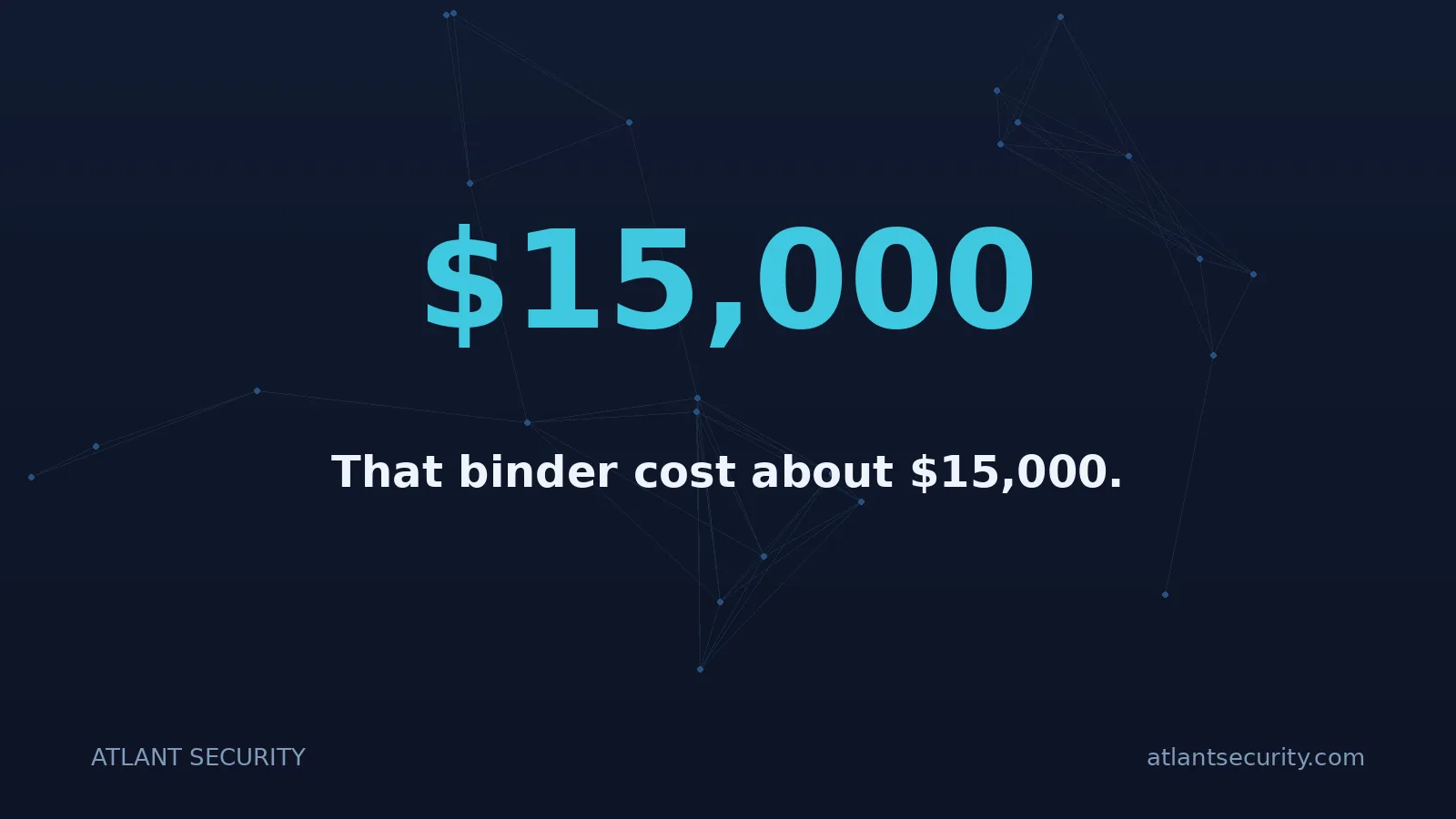
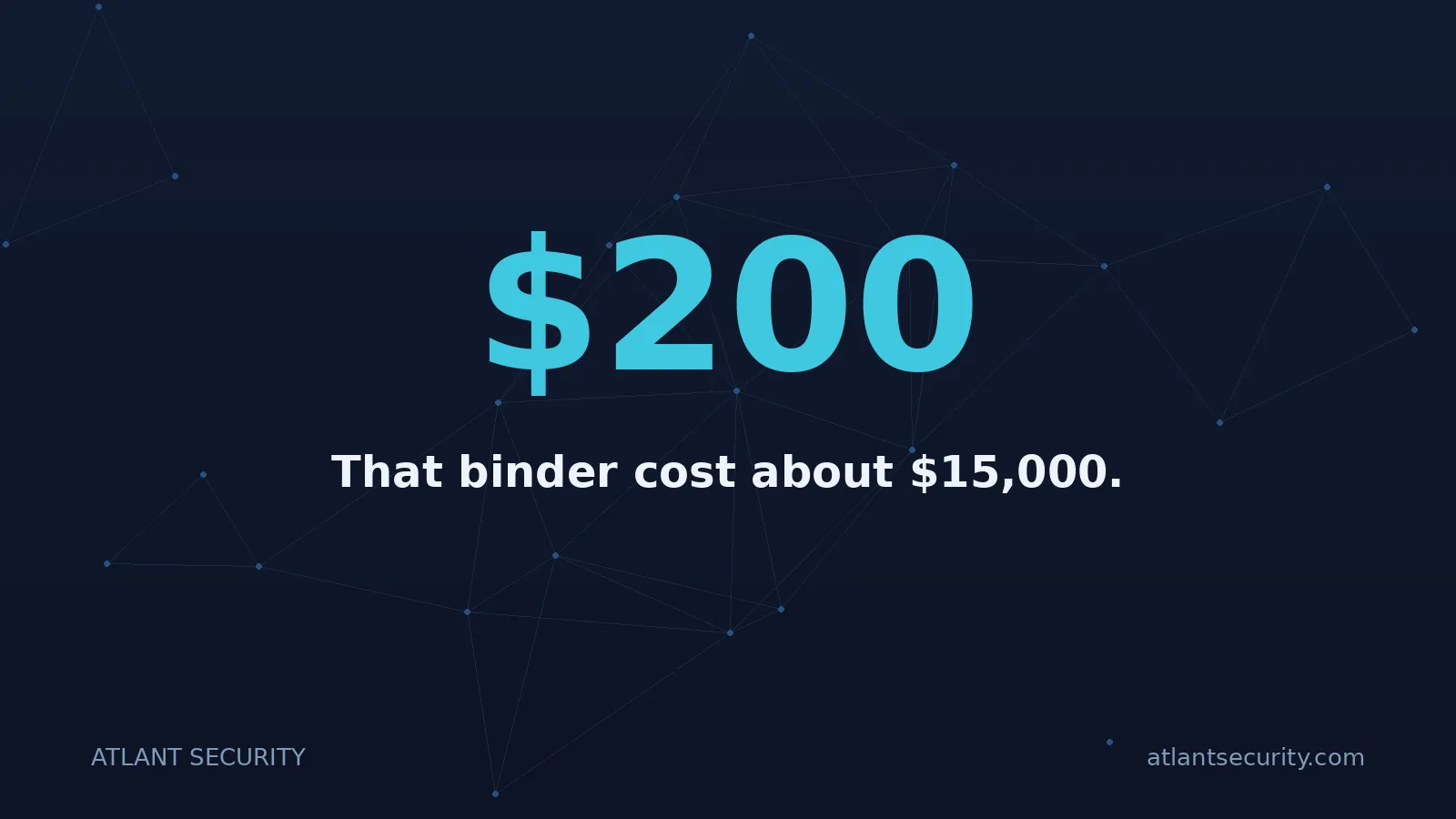
That binder cost about $15,000. The breach cost 280 times more. And the truly painful part? The entire incident could have been prevented by a $200/month API gateway configuration and a basic asset inventory. I think about that lukewarm coffee every time a fintech founder tells me, “We’ll deal with security after we hit product-market fit.”
This guide is the one I wish I could have handed that CTO before the breach. It covers everything a fintech company needs to know about cybersecurity - not the sanitized, vendor-pitch version, but the real stuff: which regulations actually apply to you, what technical controls matter most, how attackers are getting in right now, and how to build a security program that scales with your product instead of fighting against it.
Threat Landscape
Why Fintech Is the #1 Target for Cyber Attacks
Fintech companies sit at the intersection of everything attackers want: money, data, and velocity. Traditional banks evolved their security posture over decades; fintechs are expected to move fast, ship constantly, and scale globally - often with engineering teams that double as the security department. That combination makes fintech the single most targeted sector in cybersecurity today.
The numbers tell a stark story:
Fintech Breach Statistics (2024-2025)
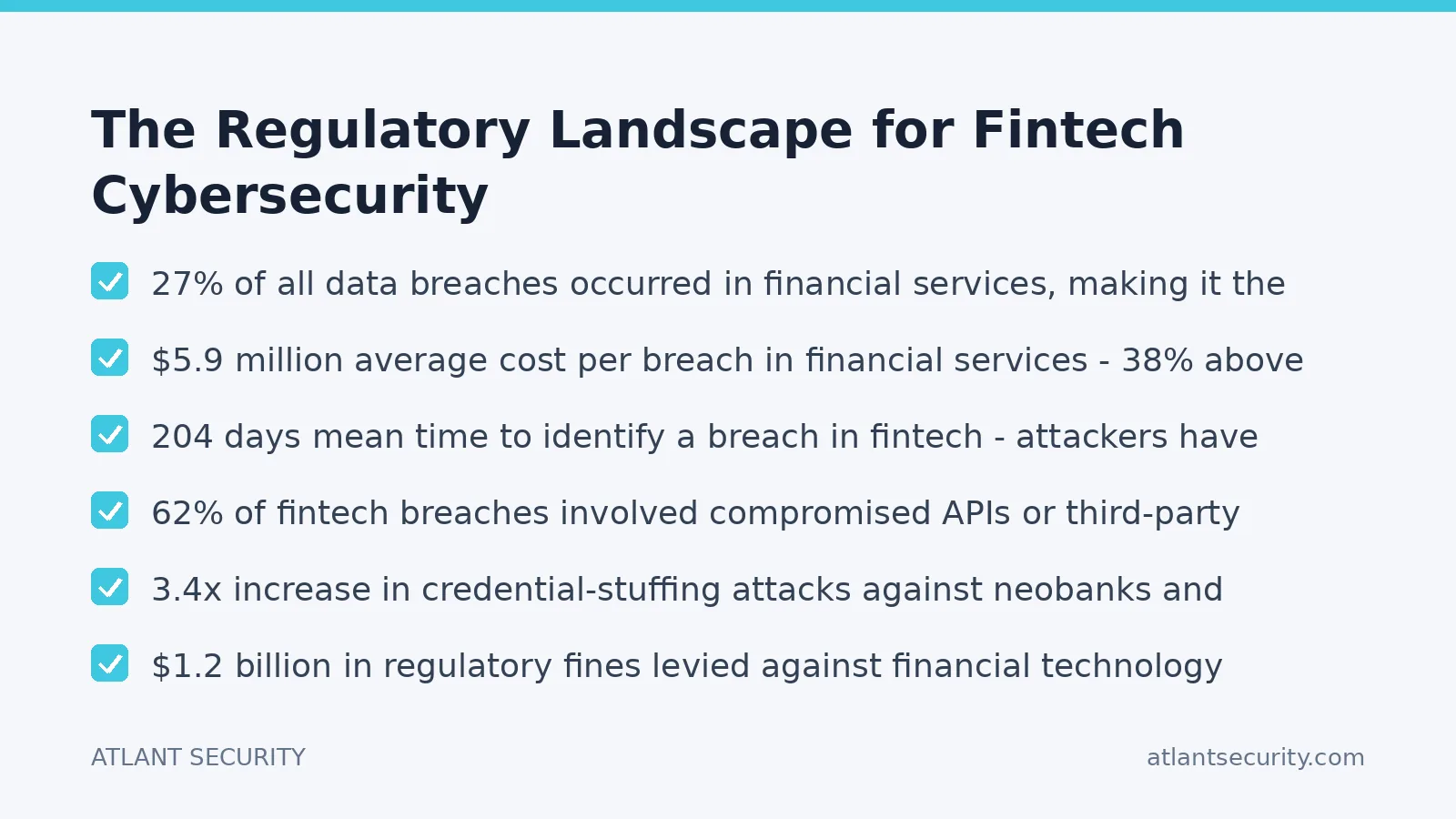
- 27% of all data breaches occurred in financial services, making it the most breached industry for the fifth consecutive year (IBM/Ponemon, 2025)
- $5.9 million average cost per breach in financial services - 38% above the cross-industry average of $4.45M
- 204 days mean time to identify a breach in fintech - attackers have nearly seven months of dwell time
- 62% of fintech breaches involved compromised APIs or third-party integrations (Salt Security State of API Security, 2025)
- 3.4x increase in credential-stuffing attacks against neobanks and payment platforms year over year
- $1.2 billion in regulatory fines levied against financial technology firms globally in 2024 alone
There are five structural reasons fintech companies are disproportionately targeted:
1. Direct access to money movement. Unlike a SaaS company where a breach exposes data, a fintech breach can result in immediate, irreversible financial theft. Attackers can initiate wire transfers, manipulate ledger entries, or redirect payment flows. The payout is instant and liquid.
2. Treasure trove of PII and financial data. KYC/AML onboarding processes mean fintechs collect the most sensitive possible combination: government IDs, bank account numbers, social security numbers, tax IDs, income documentation, and real-time transaction data. This data commands premium prices on darknet markets - 10x to 50x the price of basic email/password combinations.
3. Massive API surface area. The average fintech product integrates with 15 to 40 external APIs: banking-as-a-service providers, payment processors, identity verification services, credit bureaus, accounting platforms, and blockchain nodes. Each integration is a potential attack vector, and most fintechs lack comprehensive API inventories.
4. Speed-over-security culture. Venture-backed fintechs face enormous pressure to ship features, acquire users, and demonstrate growth. Security is often treated as friction. Engineers deploy to production dozens of times per day with minimal security review. The result is an ever-expanding attack surface that defenders struggle to map, let alone protect.
5. Regulatory arbitrage creates blind spots. Many fintechs operate across multiple jurisdictions - they might be incorporated in Delaware, process payments through a UK-licensed entity, store data in AWS eu-west-1, and serve customers in Singapore. Each jurisdiction has its own compliance requirements, and the gaps between them are where breaches happen.
In traditional banking, security evolved alongside the business over decades. In fintech, you’re expected to build a bank-grade security program in 18 months with a fraction of the budget. That asymmetry is exactly what attackers exploit.
This is precisely why a proactive approach matters. An IT security audit early in a fintech’s lifecycle can identify these structural weaknesses before threat actors do.
Compliance
The Regulatory Landscape for Fintech Cybersecurity
If you run a fintech company, compliance is not optional - it is an existential requirement. The challenge is that no single framework covers everything. Most fintechs need to satisfy multiple overlapping (and occasionally contradictory) regulatory regimes simultaneously. Here is the full landscape:
PCI DSS 4.0
If your fintech touches cardholder data in any way - processing, storing, or transmitting credit card numbers - PCI DSS applies. Version 4.0 (fully enforced from March 2025) introduced 64 new requirements including mandatory multi-factor authentication for all access to the cardholder data environment, authenticated vulnerability scans, and a formal requirement for a targeted risk analysis to justify control frequencies. The key shift in 4.0 is the “customized approach,” which allows organizations to meet objectives through alternative controls - but only if they can document equivalent security outcomes. For most fintechs, Level 2 or Level 3 SAQ compliance is sufficient, but if you process over 6 million transactions annually, you need a full Report on Compliance (ROC) from a Qualified Security Assessor (QSA).
SOC 2 Type II
SOC 2 is not a legal requirement - it is a market requirement. If you sell to other businesses (B2B), especially enterprise clients, they will demand a SOC 2 Type II report during procurement. The framework evaluates your controls across five Trust Services Criteria: Security, Availability, Processing Integrity, Confidentiality, and Privacy. For fintechs, Processing Integrity is particularly important because it validates that financial transactions are processed completely, accurately, timely, and with proper authorization. A SOC 2 readiness engagement typically takes 3-6 months of preparation before you are ready for the auditor.
GDPR (EU/EEA)
Any fintech serving European customers - even if headquartered outside the EU - must comply with GDPR. For fintechs, the most critical provisions include: Article 35 (Data Protection Impact Assessments for high-risk processing, which includes any automated decision-making related to credit scoring or fraud detection), Article 25 (data protection by design and by default), and Article 33 (72-hour breach notification to supervisory authorities). Fines under GDPR reach up to 4% of annual global turnover or €20 million, whichever is greater. In practice, GDPR compliance for fintechs also requires a lawful basis for processing financial data, explicit consent for data sharing with third-party banking partners, and robust data subject access request (DSAR) mechanisms. For a fintech the test that matters is the one against your payment logic and your API authorisation model, which is why fintech penetration testing is a separate engagement from a generic web pentest.
DORA (Digital Operational Resilience Act)
DORA applies to virtually all financial entities operating in the EU, including fintech companies, payment institutions, e-money institutions, and their critical ICT third-party providers. Fully enforceable since January 2025, DORA mandates: ICT risk management frameworks with board-level oversight, incident classification and reporting within 4 hours of detection for major incidents, digital operational resilience testing (including threat-led penetration testing for significant entities), and comprehensive ICT third-party risk management with contractual requirements for all technology providers. DORA is particularly significant because it creates a direct supervisory framework for critical third-party technology providers to financial institutions - meaning the cloud providers, BaaS platforms, and payment processors that fintechs depend on are also subject to regulatory oversight.
MAS TRM (Singapore)
The Monetary Authority of Singapore’s Technology Risk Management Guidelines are mandatory for all financial institutions licensed in Singapore, and MAS has been increasingly aggressive about applying them to fintech companies holding payment services licenses, capital markets services licenses, or digital payment token service licenses. Key requirements include: annual penetration testing and vulnerability assessments, mandatory use of strong cryptography for data at rest and in transit, detailed system resilience requirements (including recovery time objectives of 4 hours for critical systems), and cyber surveillance requirements including real-time monitoring of security events. MAS also requires notification of material cyber incidents within one hour - one of the shortest reporting windows globally.
NY DFS 23 NYCRR 500 (New York)
If your fintech holds a BitLicense, a money transmitter license in New York, or serves New York customers under a banking charter, you are subject to the New York Department of Financial Services cybersecurity regulation. The 2023 amendments (effective November 2025) significantly expanded requirements: mandatory CISO appointment (internal or external), annual independent audits for Class A companies (those with over $20M gross revenue and 2,000+ employees), 24-hour ransomware notification, expanded MFA requirements, and a formal asset inventory. Crucially, NY DFS 500 has personal liability provisions - senior officers must sign annual certifications of compliance, and material misstatements can result in individual enforcement actions.
State Privacy Laws Are Multiplying
Beyond NY DFS, fintech companies must now contend with comprehensive state privacy laws in California (CCPA/CPRA), Virginia (VCDPA), Colorado (CPA), Connecticut (CTDPA), Utah (UCPA), and over a dozen others that have passed or are pending. Many of these include specific provisions for financial data and automated decision-making that directly impact fintech operations. A virtual CISO can help map your specific regulatory obligations across all applicable jurisdictions.
ISO 27001
While not fintech-specific, ISO 27001 certification is increasingly expected by banking partners, institutional investors, and enterprise customers. For fintechs expanding internationally, ISO 27001 serves as a universal trust signal that maps well to most regulatory frameworks. Our ISO 27001 readiness program is specifically tailored for fast-moving fintech companies that need certification without slowing down product development.
Technical Deep Dive
Technical Security Requirements Specific to Fintech
Generic security advice - “use strong passwords, patch your systems, enable MFA” - is necessary but wildly insufficient for fintech. The technical security requirements for companies handling money and financial data are qualitatively different from those of a standard SaaS application. Here are the domains that require fintech-specific controls:
API Security
APIs are the circulatory system of every fintech product. Your app talks to Plaid for bank connections, Stripe or Adyen for payments, Jumio or Onfido for identity verification, and dozens of other services. Each of these integrations creates bidirectional attack surface. Fintech API security must go far beyond basic authentication:
- Mutual TLS (mTLS) for all service-to-service communication, not just TLS termination at the load balancer
- OAuth 2.0 with PKCE and short-lived tokens - fintech access tokens should expire in minutes, not hours. Refresh tokens must be bound to the device and rotated on each use
- Request signing (HMAC-SHA256 or RSA-based) for all payment-related API calls to prevent tampering in transit
- Rate limiting with business-logic awareness - not just requests-per-second, but limits on sensitive operations: account lookups, balance inquiries, transfer initiations. An attacker running 100 balance-check calls per minute is doing reconnaissance, even if they stay under your global rate limit
- API schema validation at the gateway level to reject malformed requests before they reach application code
- Comprehensive API inventory - you cannot protect what you do not know exists. Shadow APIs (endpoints deployed during development but never decommissioned) are the most common entry point in fintech breaches
- Webhook verification - every inbound webhook from payment processors and banking partners must be cryptographically verified. Attackers regularly spoof payment-confirmation webhooks to manipulate account balances
Payment Processing Security
If your fintech moves money - whether through card payments, ACH, wire transfers, or crypto rails - you need transaction-level security controls that go beyond PCI DSS compliance:
- Transaction velocity controls: maximum amounts, maximum frequency, and anomaly-based limits per user, per account, per device, and per IP. These limits must be configurable in real-time without code deployments
- Dual-authorization for high-value transactions: any transfer above a risk-adjusted threshold should require approval from a second authenticated party, whether that’s a human approver or an automated risk-scoring engine
- Idempotency enforcement: every payment operation must be idempotent with server-side deduplication. Replay attacks exploit non-idempotent payment endpoints to duplicate transactions
- Tokenization of all card data: use network tokens or processor-provided tokens; never store raw PANs, even in encrypted form, unless you have a specific, documented business reason and a QSA who has signed off on the controls
- Segregated payment processing environments: the infrastructure that handles payment flows should be logically (ideally physically) separated from the general application environment, with dedicated access controls, monitoring, and change-management processes
KYC/AML Data Protection
Know Your Customer and Anti-Money Laundering processes require collecting and storing the most sensitive personal data imaginable: government-issued photo IDs, selfie biometrics, proof of address, tax identification numbers, and source-of-funds documentation. The security requirements for this data are among the most stringent in any industry:
- Data minimization and retention limits: collect only what is legally required, delete it when the retention period expires, and maintain a defensible retention schedule that maps to specific regulatory obligations
- Envelope encryption with customer-managed keys: KYC data should be encrypted with unique per-record keys, themselves encrypted by a KMS master key. This limits blast radius if any single key is compromised
- Access controls with break-glass procedures: production access to KYC data stores should require just-in-time authorization with automatic expiration. Customer support agents should see masked/redacted data by default, with full data access requiring a documented reason and manager approval
- Secure biometric handling: if you process facial recognition for identity verification, biometric templates must be encrypted separately from the images they were derived from, and stored in compliance with applicable biometric privacy laws (BIPA in Illinois, GDPR Article 9 in the EU)
- Third-party KYC provider security: most fintechs outsource identity verification to providers like Jumio, Onfido, or Veriff. You need contractual security requirements, SOC 2 reports, and regular access reviews for these providers because their breach is effectively your breach
Real-Time Fraud Detection
Fraud detection in fintech is a security function, not just a product feature. Your fraud detection system must:
- Operate at transaction speed: fraud decisions must be rendered in under 100 milliseconds. A system that takes seconds to score a transaction either creates unacceptable user friction or forces you to approve transactions before scoring completes
- Combine rules-based and ML-based detection: rules catch known patterns; ML catches anomalies. Neither alone is sufficient. Rules-only systems have high false-positive rates; ML-only systems are vulnerable to adversarial manipulation and model drift
- Include device fingerprinting and behavioral biometrics: keyboard cadence, touch pressure, mouse movement patterns, and session behavior analytics provide a continuous authentication layer that is extremely difficult for attackers to spoof
- Support real-time model updates: fraud patterns evolve daily. Your system must support hot-swapping models without downtime and A/B testing new detection rules against production traffic
- Feed back into the security program: every confirmed fraud case should generate threat intelligence that feeds into your security operations. Fraud and security teams operating in silos is one of the most common organizational failures in fintech
Threat Intelligence
Common Attack Vectors Targeting Fintech Companies
Understanding how fintech companies are actually being compromised is essential for building effective defenses. These are the attack vectors we see most frequently in our fintech vCISO services engagements:
1. Credential Stuffing and Account Takeover (ATO)
Credential stuffing is the number-one attack vector against consumer-facing fintechs. Attackers purchase billions of leaked username/password combinations from previous breaches and systematically test them against fintech login endpoints. Because users reuse passwords across services, hit rates of 0.5% to 3% are common - and when an attacker takes over a fintech account, they have direct access to funds. Modern credential-stuffing operations use residential proxy networks, CAPTCHA-solving farms, and browser fingerprint spoofing to evade traditional bot-detection systems. Effective defense requires: device fingerprinting, impossible-travel detection, step-up authentication for high-risk actions, and real-time credential-leak monitoring to proactively force resets on compromised accounts.
2. API Abuse and Business Logic Exploitation
API attacks against fintechs are rarely about SQL injection or XSS - they are about exploiting legitimate business logic in unintended ways. Real examples we have encountered include: manipulating currency-conversion rounding errors to generate micro-profits at scale, exploiting race conditions in balance-check and transfer operations to overdraw accounts, abusing referral and promotional credit systems through automated account creation, and chaining multiple API calls to bypass transaction limits (e.g., splitting a $10,000 transfer into 100 x $100 transfers to avoid velocity checks). Defending against business logic attacks requires deep understanding of your own application’s transaction flows and purpose-built monitoring rules - generic WAF rules will not catch these.
3. Supply Chain Attacks
Fintechs have complex supply chains: open-source dependencies, third-party SDKs, banking-as-a-service providers, cloud infrastructure, and SaaS tools with deep integrations. Each link is a potential entry point. In 2025, we saw multiple incidents where compromised npm packages injected credential-harvesting code into fintech applications, where BaaS provider API keys were leaked through misconfigured CI/CD pipelines, and where attackers compromised Slack and email integrations to intercept internal communications about high-value transactions. Supply chain defense requires: software bill of materials (SBOM) management, dependency scanning with automated alerting for known vulnerabilities, vendor security assessments with contractual breach-notification requirements, and least-privilege access scoping for all third-party integrations.
4. Insider Threats
Insider threats are particularly dangerous in fintech because employees often have direct access to payment systems, customer financial data, and transaction infrastructure. Insider threats fall into three categories: malicious insiders (employees who intentionally steal data or manipulate transactions, often during their notice period), negligent insiders (developers who expose API keys in public repos, ops engineers who misconfigure S3 buckets, or support agents who fall for phishing), and compromised insiders (employees whose credentials or devices are compromised by external attackers). Effective insider threat management requires role-based access control with genuine least privilege, behavioral analytics on employee activity (especially around financial data access), mandatory code review for all changes to payment-related systems, and comprehensive off-boarding procedures including immediate revocation of all access and rotation of any shared credentials the departing employee had access to.
5. Social Engineering Targeting Finance and Operations Teams
Beyond technical attacks, fintech companies face sophisticated social engineering campaigns targeting finance, operations, and customer-support teams. Business email compromise (BEC) attacks that impersonate executives to authorize fraudulent wire transfers remain devastatingly effective. Deepfake audio and video technology has advanced to the point where attackers can convincingly impersonate executives on phone calls. Voice-phishing (vishing) attacks targeting customer-support agents to trigger account changes or password resets are a growing concern. Defense requires: out-of-band verification for all wire transfers and account changes, security awareness training tailored to fintech-specific scenarios, and strict verification procedures for any request that involves money movement or data access, regardless of the apparent source.
The Attacker’s Perspective
Think like a threat actor: why would you attack a SaaS company for email addresses when you can attack a fintech for instant access to money, full identity documents, and credit card numbers? The economics of cybercrime strongly favor targeting financial technology companies. Your security posture needs to reflect the fact that you are a high-value target - not a generic technology company.
Roadmap
Building a Security Program for Your Fintech
A fintech security program should not be a static collection of policies. It should be a living, prioritized roadmap that evolves with your product, your threat landscape, and your regulatory obligations. Here is the phased approach we recommend based on our experience building security programs for fintech companies from seed stage through post-IPO:
Phase 1: Foundation (Months 1-3)
- Asset and data inventory: catalog every system, API, data store, and third-party integration. You cannot protect what you do not know about
- Threat modeling: use STRIDE or PASTA methodology to identify threats specific to your transaction flows, not generic threats from a template
- Identity and access management: implement SSO with MFA for all employees, enforce least-privilege access, and establish break-glass procedures for production access
- Encryption baseline: TLS 1.2+ everywhere, AES-256 for data at rest, key management via HSM or cloud KMS - no hard-coded keys, no shared secrets in environment variables
- Vulnerability management: deploy dependency scanning (Snyk, Dependabot), container scanning, and infrastructure vulnerability scanning with SLA-based remediation timelines
- Incident response plan: document your IR plan with clear roles, escalation paths, communication templates, and regulatory notification timelines. Tabletop-test it before you need it
Phase 2: Hardening (Months 3-6)
- API security layer: deploy an API gateway with schema validation, rate limiting, and request signing. Implement API versioning and deprecation policies
- Security logging and monitoring: centralize logs from all systems, build detection rules for fintech-specific attack patterns (credential stuffing, transaction anomalies, privilege escalation), and establish 24/7 alerting
- Secure SDLC integration: embed SAST/DAST scanning in CI/CD pipelines, require security-focused code review for payment and authentication code, and maintain a security champions program across engineering teams
- Third-party risk management: assess all vendors with access to sensitive data or critical systems. Establish contractual security requirements and ongoing monitoring
- Data loss prevention: implement DLP controls for financial data exfiltration via email, cloud storage, USB, and API endpoints
- Penetration testing: conduct your first comprehensive penetration test, including API testing, business logic testing, and authentication/authorization testing. Remediate critical and high findings within 30 days
Phase 3: Compliance and Maturity (Months 6-12)
- Formal compliance mapping: map your controls to applicable frameworks (SOC 2, PCI DSS, GDPR, DORA, MAS TRM, NY DFS) and identify gaps
- SOC 2 Type II preparation: begin the observation period with controls documented, evidence collection automated, and GRC tooling in place
- Security governance: establish a security committee with executive representation, formalize risk-acceptance procedures, and implement a metrics-driven security reporting dashboard
- Business continuity and disaster recovery: test backup and recovery procedures for all critical systems, validate RTO and RPO targets under realistic scenarios
- Red team engagement: hire an external red team to simulate realistic attack scenarios against your fintech - including social engineering, physical access, and supply chain compromise
- Security awareness program: move beyond annual compliance training to ongoing, fintech-specific security education including phishing simulations, social engineering awareness, and secure coding workshops
The best fintech security programs are not the ones with the most tools. They are the ones where security is built into the way the company ships software, makes decisions, and evaluates risk - every single day.
If this roadmap feels overwhelming, you are not alone. Most fintech companies do not have the headcount or internal expertise to execute all three phases in-house. That is exactly the gap that fintech vCISO services are designed to fill - you get an experienced security leader who has built these programs before, without the $300K+ fully-loaded cost of a full-time CISO hire.
Comparison
Compliance Framework Comparison for Fintech
Which compliance frameworks apply to your fintech depends on where you operate, what financial products you offer, and who your customers are. This table maps frameworks to markets and fintech types:
| Framework | Geography | Applies To | Mandatory? | Audit Cycle | Penalty Range |
|---|---|---|---|---|---|
| PCI DSS 4.0 | Global | Any entity processing, storing, or transmitting cardholder data | Yes (contractual via card networks) | Annual SAQ or ROC | $5K-$100K/month + loss of processing rights |
| SOC 2 Type II | Global (US origin) | B2B fintechs, BaaS providers, payment processors | No (market-driven) | Annual (12-month observation) | Lost deals, not fines |
| GDPR | EU/EEA + UK | Any fintech handling EU resident data | Yes (statutory) | Ongoing compliance; DPA audits ad hoc | Up to 4% of global turnover or €20M |
| DORA | EU | All EU-regulated financial entities + critical ICT providers | Yes (statutory) | Ongoing; TLPT every 3 years for significant entities | Up to 1% of avg daily global turnover (daily fines) |
| MAS TRM | Singapore | MAS-licensed financial institutions, payment service providers | Yes (regulatory) | Annual pen testing; ongoing compliance | License revocation, enforcement orders |
| NY DFS 500 | New York State | DFS-regulated entities: money transmitters, BitLicense holders, banks | Yes (statutory) | Annual certification + independent audit for Class A | Per-violation fines + personal liability for officers |
| ISO 27001 | Global | Any fintech seeking international trust signal | No (market-driven; sometimes required by partners) | 3-year certificate; annual surveillance audits | Lost deals and partnerships, not fines |
| CCPA/CPRA | California | Fintechs collecting data of CA residents (revenue/data thresholds apply) | Yes (statutory) | Annual cybersecurity audit for high-risk processors | $2,500-$7,500 per violation + private right of action |
Practical Advice on Prioritization
Do not try to achieve all certifications simultaneously. Start with whatever unblocks revenue (usually SOC 2 for B2B fintechs or PCI DSS for payment processors), then layer additional frameworks. Most controls overlap - a well-implemented SOC 2 program covers 60-70% of ISO 27001 requirements, and both map heavily to DORA’s ICT risk management expectations. A fintech vCISO services engagement can help you build a unified control framework that satisfies multiple regulators with a single set of operational processes.
Common Questions
Frequently Asked Questions
What is the biggest cybersecurity risk for fintech companies?
API security is the single biggest risk for most fintech companies. Over 60% of fintech breaches in 2025 involved API exploitation, whether through unauthenticated endpoints, broken object-level authorization (BOLA), or business logic abuse. Unlike traditional web application attacks, API attacks often bypass WAFs entirely because the requests are syntactically valid - they simply use the API in unintended ways. Combine this with the fact that the average fintech has dozens of third-party API integrations, and the attack surface is enormous.
How much should a fintech company budget for cybersecurity?
The industry benchmark is 10-15% of total IT spend for financial services, but this varies significantly by stage and risk profile. A pre-revenue fintech startup might spend $5,000-$15,000 per month on a combination of security tooling, a part-time or virtual CISO, and compliance preparation. A growth-stage fintech processing significant transaction volumes should expect to spend $200,000-$500,000+ annually on security headcount, tools, penetration testing, compliance audits, and cyber insurance. The key principle: security spend should scale with transaction volume and data sensitivity, not just headcount.
Do fintech startups really need SOC 2?
If you sell to businesses (B2B), yes - almost certainly. SOC 2 has become the de facto security due-diligence standard in North American enterprise procurement. Without a SOC 2 report, you will face extended security questionnaires, custom audit requests, and often outright disqualification from enterprise deals. The good news is that starting SOC 2 readiness early (even at seed stage) is significantly cheaper and faster than trying to bolt it on later. Many of the controls you need for SOC 2 are things you should be doing anyway.
What is the difference between DORA and existing EU financial regulations?
DORA (the Digital Operational Resilience Act) is the first EU regulation that creates a unified, cross-sector ICT risk management framework specifically for financial services. Previous regulations like PSD2 or the EBA Guidelines on ICT risk addressed digital resilience in fragments across different regulatory bodies. DORA harmonizes these requirements into a single framework and, crucially, extends direct supervisory powers over critical third-party ICT providers (such as cloud providers and BaaS platforms). For fintechs, the key new obligations include: standardized incident reporting (4-hour initial notification for major incidents), mandatory threat-led penetration testing (TLPT) for significant entities, and comprehensive ICT third-party risk management with detailed contractual requirements.
If you want this more often than once a year without a retainer, AI penetration testing is the route: AI-driven testing across web, API, cloud, network and mobile, with results back in five to ten days.
Can a fintech company use a virtual CISO instead of hiring a full-time CISO?
Absolutely, and for most fintechs below $50M in revenue, it is the more practical choice. A full-time CISO costs $250,000-$400,000+ in total compensation (more in major fintech hubs like New York or London). A fintech vCISO services engagement provides the same strategic leadership - security roadmapping, board reporting, regulatory navigation, vendor management, incident response oversight - at a fraction of the cost. Many regulatory frameworks (including NY DFS 500) explicitly permit the CISO function to be outsourced, provided the external CISO has appropriate qualifications and access. The vCISO model also gives you access to someone who has built security programs across multiple fintechs, bringing cross-industry pattern recognition that a single-company CISO may lack.
How often should a fintech company conduct penetration testing?
At minimum, annually - but annual-only pen testing is insufficient for fintechs that deploy code frequently. We recommend: a comprehensive external penetration test at least annually (covering infrastructure, web applications, APIs, and mobile apps), a focused API security assessment after any major product launch or integration change, continuous automated security testing (DAST/IAST) integrated into the CI/CD pipeline, and a red team engagement every 12-18 months for mature fintechs. Several regulations mandate specific frequencies: MAS TRM requires annual penetration testing, NY DFS 500 requires annual pen testing, and DORA requires TLPT at least every three years for significant entities.
What should a fintech do immediately after discovering a breach?
The first 24 hours are critical. Step 1: Activate your incident response plan and assemble your IR team (if you do not have an IR plan, that is your biggest vulnerability right now). Step 2: Contain the breach - isolate affected systems, revoke compromised credentials, and preserve forensic evidence. Do not wipe or reimage until forensics are complete. Step 3: Assess the scope - what data was accessed, how many records, which customer populations. Step 4: Engage legal counsel (ideally a firm with breach-response specialization) to advise on notification obligations. Depending on your regulatory footprint, you may have notification deadlines as short as 1 hour (MAS), 4 hours (DORA), 24 hours (NY DFS for ransomware), or 72 hours (GDPR). Step 5: Notify your cyber insurance carrier immediately - delayed notification can void coverage. Step 6: Begin customer notification and remediation planning. Throughout all of this, document everything meticulously - regulators will scrutinize your response timeline. For designated financial entities we run this as a dedicated engagement through threat-led penetration testing for DORA: scope your authority validates, targeted threat intelligence, and the evidence pack the supervisor signs off.
Is cyber insurance worth it for fintech companies?
Yes, unequivocally. Cyber insurance is not a substitute for a security program, but it is a critical risk-transfer mechanism. For fintechs, look for policies that cover: breach response costs (forensics, notification, credit monitoring), regulatory fines and penalties (where insurable by law), business interruption losses, social engineering and funds-transfer fraud, and third-party liability. Expect premiums of $15,000-$75,000+ annually for $1M-$5M in coverage, depending on your revenue, transaction volume, and security posture. Insurers are increasingly requiring specific controls (MFA, EDR, backup testing, incident response plans) as conditions for coverage, so a strong security program directly reduces your premiums.
Need Help Securing Your Fintech?
Building a fintech security program does not have to be overwhelming. Whether you need a comprehensive IT security audit, SOC 2 readiness preparation, or ongoing fintech vCISO services, Atlant Security has helped dozens of fintech companies build security programs that satisfy regulators, win enterprise deals, and actually stop attackers.
Ready to Secure Your Fintech Company?
Whether you are a seed-stage startup building your first security program or a growth-stage fintech navigating complex compliance requirements, Atlant Security can help.
Our initial consultation includes a threat landscape assessment tailored to your fintech model, regulatory obligation mapping, and a prioritized security roadmap with realistic timelines and budget estimates. No obligation, no pressure - just honest guidance from people who do this every day.
Published: March 2026 · Author: Alexander Sverdlov
This article is for informational purposes only and does not constitute legal or professional advice. Cybersecurity requirements for fintech companies vary based on jurisdiction, business model, licensing status, and regulatory environment. Organizations should consult with qualified legal, compliance, and security professionals before making decisions about their cybersecurity programs.
Selling into regulated financial buyers?
A named vCISO who has answered these questionnaires before takes your security programme, your evidence and your regulator-facing reporting, so due diligence stops being the thing that stalls the deal.
See fintech virtual CISO