Cybersecurity for LegalTech Startups: Protecting Attorney-Client Privilege in the Digital Age
Alexander Sverdlov
Security Analyst
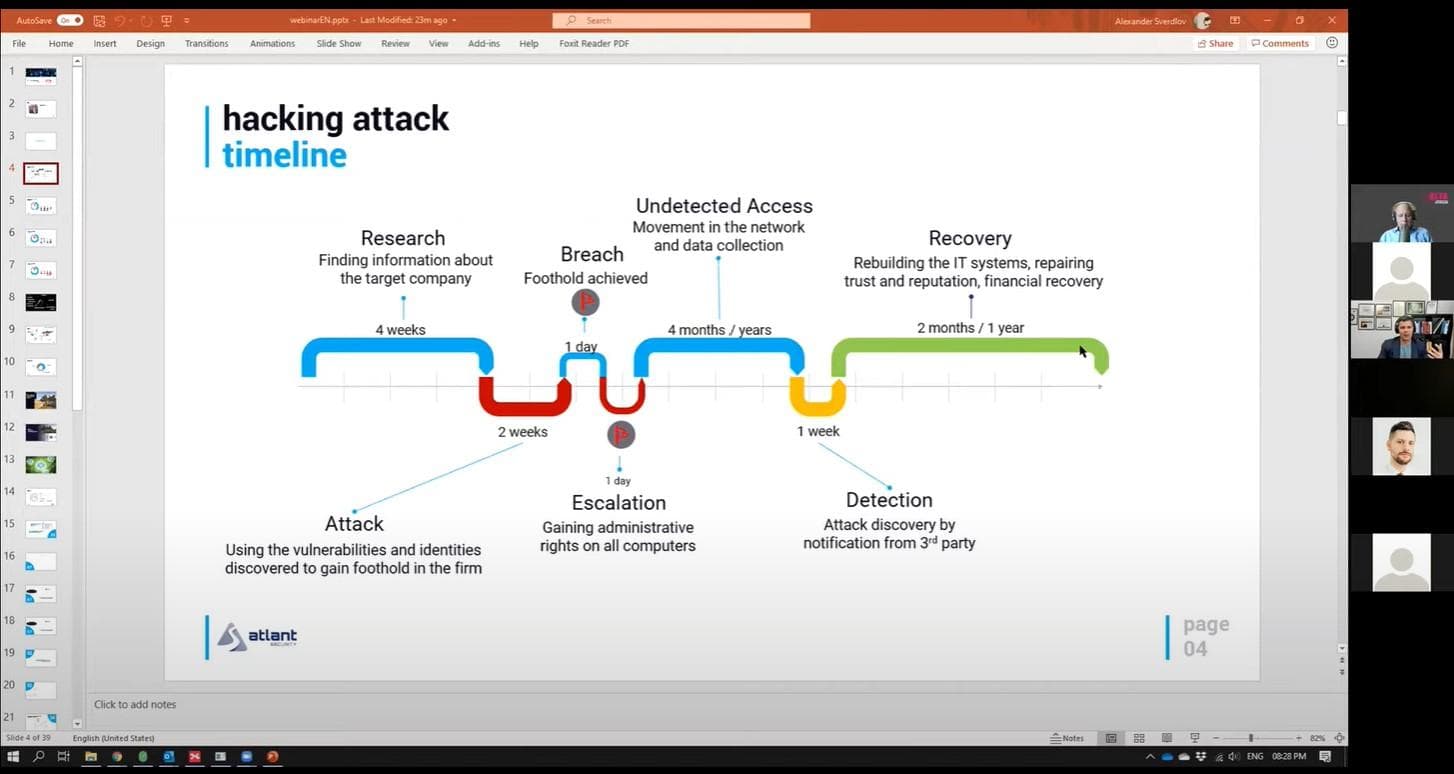
💫 Key Takeaways
- LegalTech companies are high-value targets because they aggregate privileged data from multiple law firms and clients into a single platform
- A data breach at a legaltech startup can waive attorney-client privilege for every affected matter - a catastrophic legal consequence that no amount of cyber insurance can undo
- Compliance requirements span GDPR, SOC 2, bar association ethics rules, and industry-specific regulations depending on your market and client base
- Common vulnerabilities in legal SaaS include insecure document storage, weak access controls, inadequate audit logging, and unencrypted data at rest
- Building a security program early is dramatically cheaper than retrofitting one after a breach or failed enterprise procurement due diligence
- Vendor risk management is critical - your law firm clients will scrutinize your security posture as part of their own ethical obligations
The legal industry has been slow to digitize, but when it finally moved, it moved fast. LegalTech is now one of the fastest-growing segments in enterprise software, with startups building everything from AI-powered contract review and e-discovery platforms to client intake portals, case management systems, and virtual deal rooms.
But here is the problem most legaltech founders do not fully appreciate until it is too late: you are not just building software. You are building a vault. And the contents of that vault - privileged communications, litigation strategies, M&A documents, client financial records - are among the most sensitive categories of data that exist.
This article is a practical guide for legaltech founders, CTOs, and product leaders who want to understand the threat landscape, the compliance requirements, and the concrete steps needed to build a security program that protects both your clients and your business.
The Threat Landscape
Why LegalTech Is a High-Value Target
Attackers are rational economic actors. They go where the value is. And legaltech platforms concentrate an extraordinary amount of value in a single place:
Data aggregation risk. A single legaltech platform may serve dozens or hundreds of law firms, each with thousands of client matters. Compromising that one platform gives an attacker access to privileged data across every firm and every client. This is a fundamentally different risk profile than compromising a single law firm - it is a supply chain attack on the legal industry.
Privileged communications. Attorney-client privilege is one of the oldest and most fiercely protected legal doctrines. If privileged communications are exposed through a data breach, there is a real risk that privilege can be deemed waived for those communications. In active litigation, this can be case-ending. For the legaltech company that caused the exposure, it means malpractice claims, regulatory sanctions, and irreparable reputational damage.
Financial and strategic intelligence. Legal platforms often contain M&A deal terms before they are public, litigation strategies that reveal a party’s vulnerabilities, financial records submitted as part of due diligence, and intellectual property filings before they are published. This information has enormous value to competitors, hostile parties in litigation, insider traders, and nation-state actors engaged in economic espionage.
| Data Type | Where It Lives in LegalTech | Value to Attacker |
|---|---|---|
| Privileged communications | Messaging, email integrations, document annotations | Litigation leverage, extortion, privilege waiver |
| M&A and deal documents | Virtual deal rooms, document management | Insider trading, competitive intelligence |
| Client financial records | Billing systems, trust account integrations | Financial fraud, identity theft |
| Case strategies and work product | Case management, AI analysis outputs | Opposing counsel advantage, extortion |
| PII of clients and witnesses | Client intake forms, e-discovery databases | Identity theft, harassment, witness intimidation |
The Stakes Are Higher Than a Typical SaaS Breach
When a generic SaaS product is breached, the consequences are financial - fines, remediation costs, customer churn. When a legaltech product is breached, the consequences include potential waiver of attorney-client privilege across every affected matter, malpractice liability for every law firm that trusted you with privileged data, regulatory sanctions from bar associations, and the permanent loss of trust from an industry that is already skeptical of technology vendors.
Technical Risks
Common Vulnerabilities in Legal SaaS Platforms
After conducting security audits for multiple legaltech companies, we see the same patterns repeatedly. These are not exotic vulnerabilities - they are fundamental security gaps that exist because the founding team prioritized product-market fit (understandably) and deferred security (dangerously).
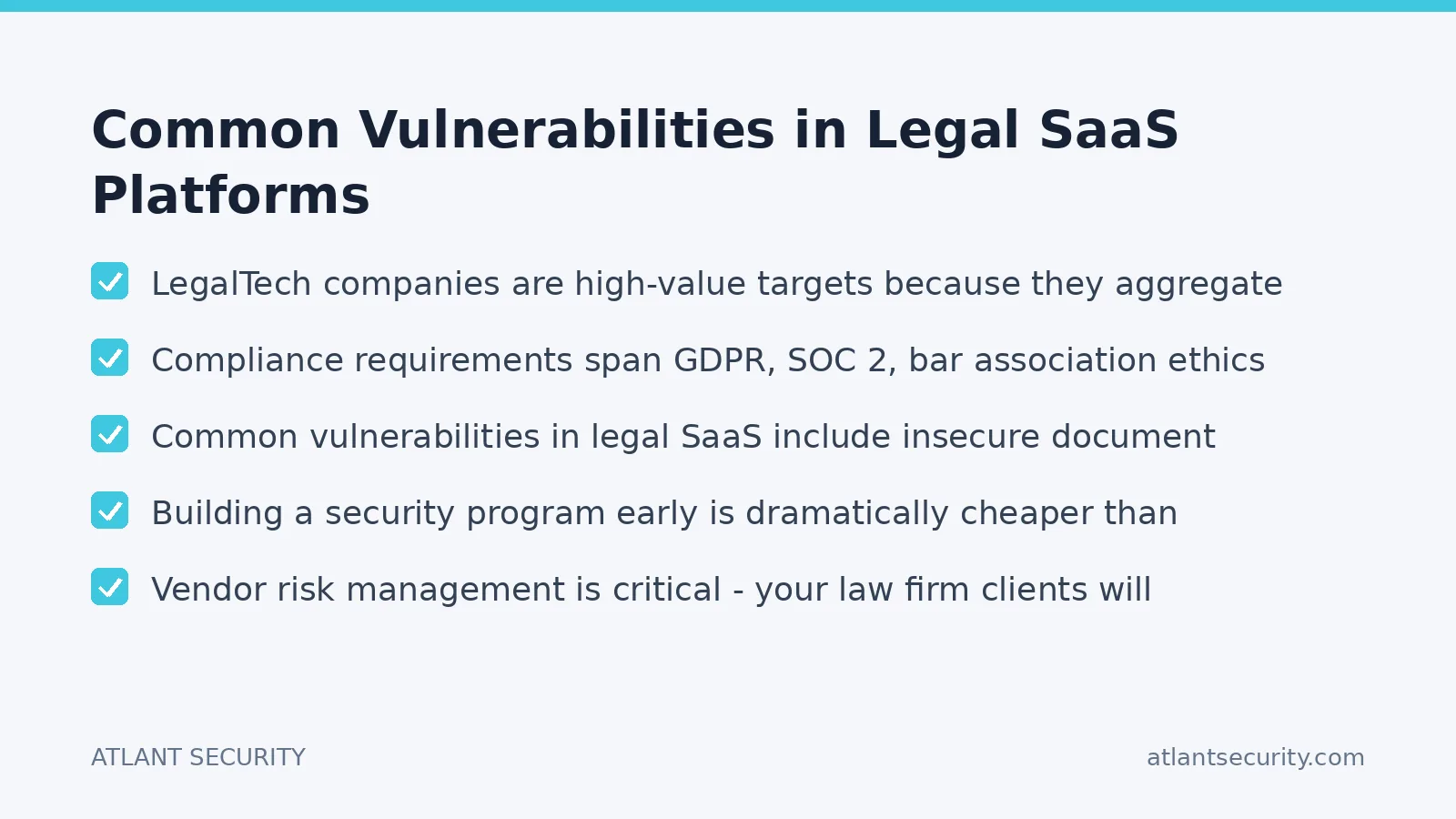
Insecure document storage. Documents are the core asset of any legaltech platform, yet we routinely find them stored in S3 buckets with overly permissive access policies, without server-side encryption using customer-managed keys, and without versioning or deletion protection. In one engagement, we found that any authenticated user could access any document in the system by modifying the document ID in the API request - a classic Insecure Direct Object Reference (IDOR) vulnerability that exposed every document in the platform.
Weak access controls and multi-tenancy failures. LegalTech platforms serve multiple law firms, and strict tenant isolation is non-negotiable. Yet we frequently find shared database schemas without robust row-level security, API endpoints that do not properly validate tenant context, and administrative functions accessible to non-admin users through parameter manipulation.
Inadequate audit logging. Bar associations and courts may require law firms to demonstrate who accessed what documents and when. If your platform does not maintain immutable, tamper-evident audit logs with sufficient granularity, your law firm clients cannot meet their ethical obligations - and you become a liability rather than an asset.
Unencrypted data at rest and in transit. Encryption in transit (TLS) is table stakes, but encryption at rest is equally critical for legal data. We have seen platforms that encrypt the database but leave search indexes, temporary files, log files, and backup snapshots unencrypted - creating multiple vectors for data exposure.
Third-party integration risks. LegalTech products commonly integrate with email providers, cloud storage, court filing systems, payment processors, and AI/ML services. Each integration introduces a potential data leakage path. The most common failure is sending privileged document content to third-party AI APIs without understanding where that data is processed, stored, and retained.
Regulatory Landscape
Compliance Requirements for LegalTech Startups
LegalTech companies face a multi-layered compliance landscape. You are not just subject to data protection regulations - you are also subject to the ethical rules that govern your law firm clients. Understanding this dual obligation is critical.
| Framework | Applies When | Key Requirements for LegalTech |
|---|---|---|
| SOC 2 Type II | Enterprise law firm clients require it during procurement | Security, availability, confidentiality controls audited over 6-12 months by independent assessor |
| GDPR | Processing data of EU residents (including EU-based law firm clients) | Lawful basis for processing, data minimization, 72-hour breach notification, DPIAs, cross-border transfer mechanisms |
| ABA Model Rules (US) | Serving US law firms | Rule 1.6 requires reasonable efforts to prevent unauthorized access to client information. Your platform is part of the firm’s “reasonable efforts” |
| SRA Standards (UK) | Serving UK-regulated solicitors | Solicitors must ensure outsourced services (including technology) maintain confidentiality and data protection standards |
| State Privacy Laws (CCPA, etc.) | Processing data of residents in applicable US states | Consumer rights, data inventory, vendor agreements, breach notification |
The Bar Association Factor
This is the compliance dimension that most SaaS founders miss entirely. When a law firm uses your platform, they are ethically obligated to ensure that you provide adequate security for client data. ABA Formal Opinion 477R (2017) explicitly states that lawyers must make reasonable efforts to prevent inadvertent or unauthorized disclosure of information related to representation - including when using technology. If your platform is breached and you cannot demonstrate adequate security measures, every law firm that used your platform faces potential disciplinary proceedings. This makes security not just a feature for your legaltech product - it is a prerequisite for market access.
The Roadmap
Security Program Roadmap for LegalTech Startups
Building a security program does not have to be overwhelming. Here is a phased approach that scales with your company:
| Phase | Stage | Key Actions | Timeline |
|---|---|---|---|
| Phase 1 | Foundation (Pre-Seed to Seed) | Encrypt data at rest and in transit, implement MFA for all accounts, establish basic access controls and tenant isolation, set up audit logging from day one | First 90 days |
| Phase 2 | Formalization (Series A) | Conduct a security audit against SOC 2 criteria, implement vulnerability scanning and dependency management, write security policies and incident response plan, begin SOC 2 readiness process | 3-6 months |
| Phase 3 | Enterprise Readiness (Series B+) | Achieve SOC 2 Type II certification, implement SIEM and continuous monitoring, conduct annual penetration tests, establish vendor risk management program, engage vCISO for ongoing governance | 6-12 months |
Securing client data specifically. Beyond general security hygiene, legaltech platforms need controls tailored to legal data. This means implementing matter-level access controls so that only authorized users within a firm can access specific matters. It means providing client-managed encryption keys for firms that require them. It means building data retention and deletion capabilities that comply with legal hold requirements. And it means ensuring that your AI features do not inadvertently train on or expose privileged data across tenants.
Vendor risk management. Your law firm clients will scrutinize your security posture as part of their ethical obligations. Be prepared to complete detailed security questionnaires, provide your SOC 2 report, demonstrate your incident response process, and explain your sub-processor relationships. The firms that handle the most sensitive work - AmLaw 100, Magic Circle - will have the most demanding requirements. If you cannot pass their vendor risk assessment, you cannot access the enterprise legal market.
Common Questions
Frequently Asked Questions
When should a legaltech startup begin investing in security?
From day one. The foundational elements - encryption, access controls, audit logging, and MFA - cost almost nothing to implement when built into the architecture from the start. Retrofitting them into a production system with live client data is orders of magnitude more expensive and risky. More importantly, enterprise law firms will not evaluate your product without basic security controls in place, so delaying security delays your ability to sell.
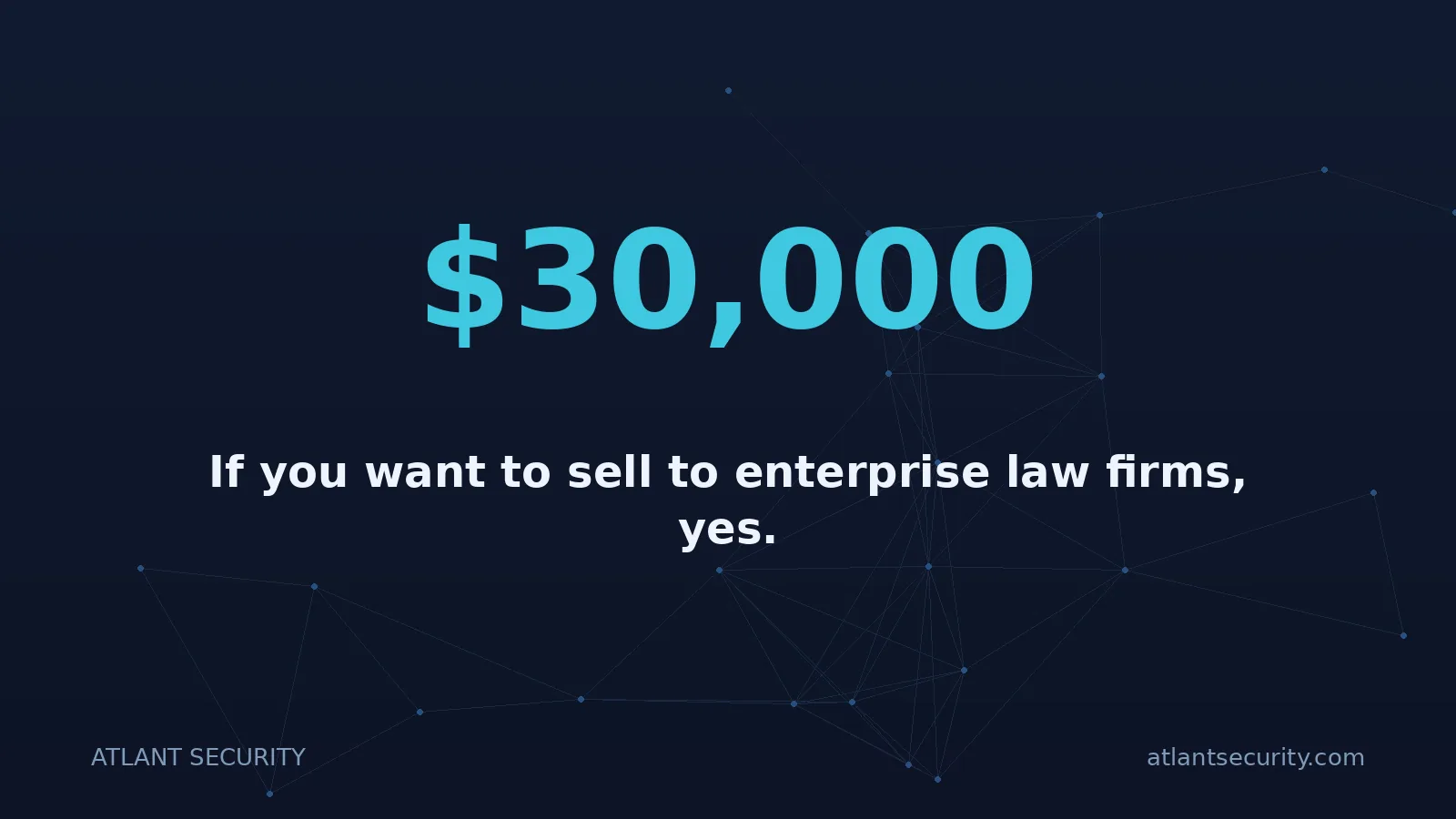
Do we need SOC 2 if we are a small startup?
If you want to sell to enterprise law firms, yes. SOC 2 Type II has become the de facto minimum for legal technology vendors. Mid-size and large firms will not complete a pilot, let alone sign a contract, without seeing your SOC 2 report. The investment typically costs $30,000-$80,000 for the initial audit and pays for itself by unlocking enterprise deals that would otherwise be impossible.
Can a data breach actually waive attorney-client privilege?
Yes, though the legal analysis is nuanced and jurisdiction-dependent. Courts have held that privilege can be waived when the holder fails to take reasonable precautions to maintain confidentiality. If a legaltech vendor stores privileged communications without encryption, with poor access controls, and without adequate security measures, a court could find that the law firm did not take reasonable steps to protect the privilege. This is why law firms are increasingly rigorous about vendor security assessments - their ethical obligations and their clients’ privilege are on the line.
How do we handle AI features without compromising client data?
This is one of the most pressing questions in legaltech right now. Key principles: never send privileged data to third-party AI APIs without explicit client consent and a clear understanding of the provider’s data retention and training policies. Prefer self-hosted or private-instance AI models when processing privileged content. Implement strict tenant isolation in any AI pipeline so that one firm’s data cannot influence results for another. Document your AI data flows thoroughly - law firms will ask about them during procurement.
What is the biggest security mistake legaltech startups make?
Treating security as a feature to be added later rather than an architectural requirement from day one. The second most common mistake is building multi-tenant systems without rigorous tenant isolation. In our experience, the most devastating breaches in legaltech come from IDOR vulnerabilities and broken access controls that allow one tenant to access another tenant’s data - not from sophisticated external attacks.
Should we hire a security engineer or engage a vCISO?
At the seed and Series A stage, a virtual CISO is almost always the better investment. A vCISO provides strategic leadership, helps you build the security program, guides your SOC 2 readiness, and represents your security posture to enterprise clients - all at a fraction of the cost of a full-time hire. As you scale past Series B and have a dedicated engineering team of 30+, hiring an in-house security engineer begins to make sense as a complement to vCISO advisory.
Published: March 2026 · Author: Alexander Sverdlov
This article is for informational purposes only and does not constitute legal advice. LegalTech companies should consult with qualified legal counsel regarding their specific compliance obligations and the ethical rules applicable to their law firm clients.
Related services from Atlant Security: SOC 2 Readiness, SaaS Security Audit, Cybersecurity Due Diligence. Book a discovery call to discuss your specific situation.

Alexander Sverdlov
Founder of Atlant Security. Author of 2 information security books, cybersecurity speaker at the largest cybersecurity conferences in Asia and a United Nations conference panelist. Former Microsoft security consulting team member, external cybersecurity consultant at the Emirates Nuclear Energy Corporation.