

Cybersecurity Advisory · March 2026
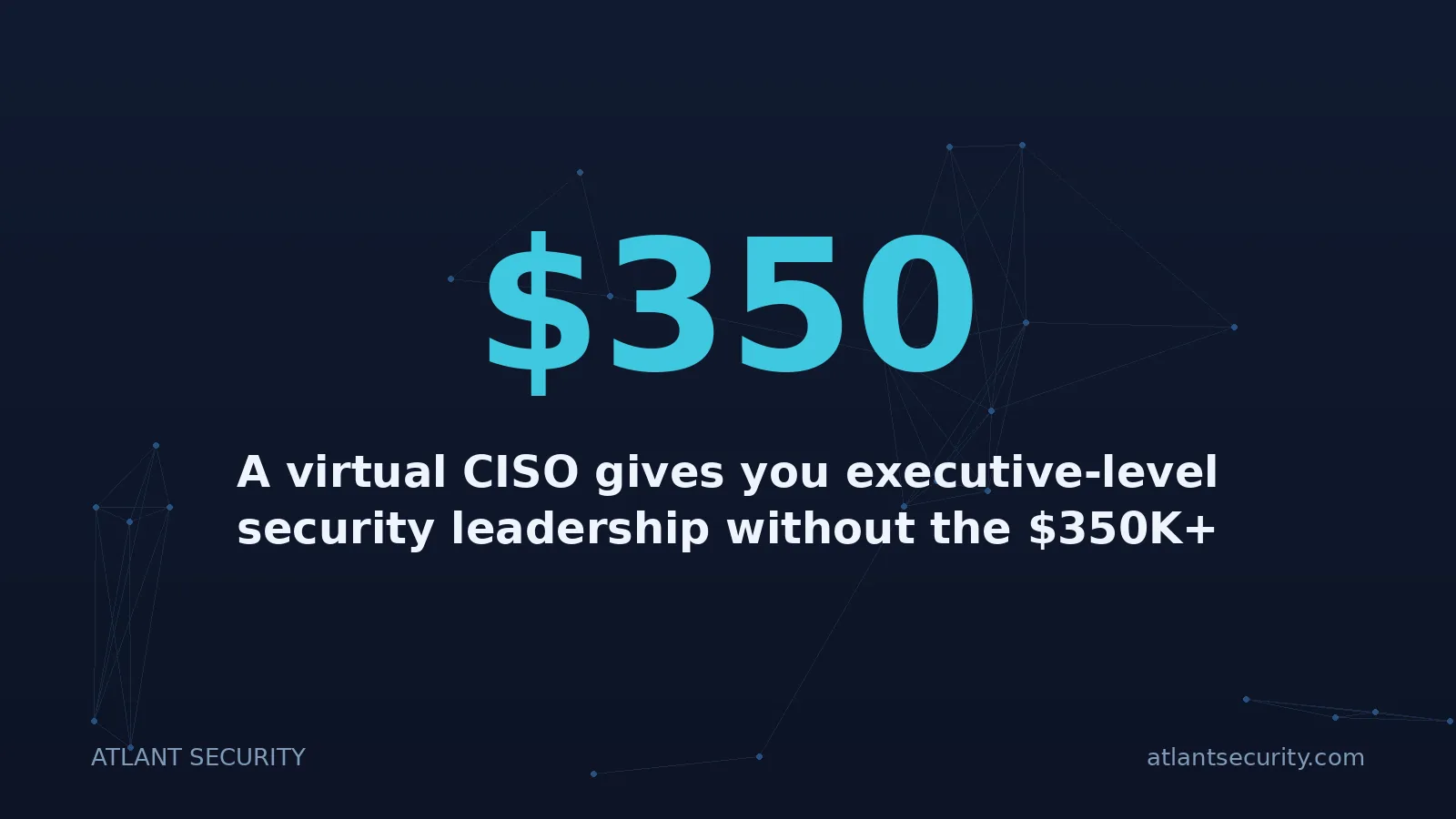
A virtual CISO gives you executive-level security leadership without the $350K+ salary. Here’s what they actually do, who needs one, what it costs, and how to hire the right one.
Key Takeaways
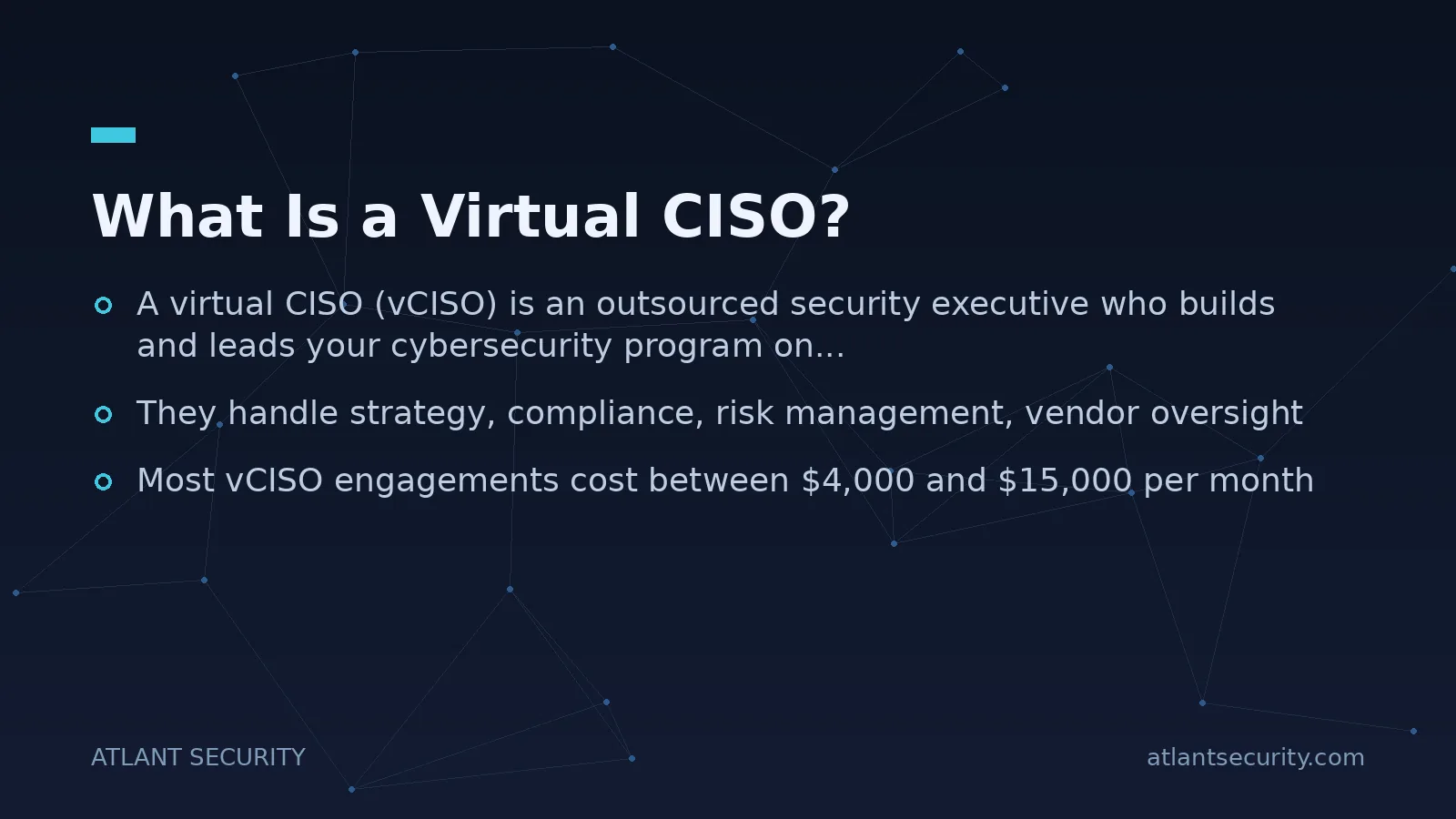
- A virtual CISO (vCISO) is an outsourced security executive who builds and leads your cybersecurity program on a part-time or fractional basis
- They handle strategy, compliance, risk management, vendor oversight, and board reporting-exactly what a full-time CISO does, minus the full-time price tag
- Most vCISO engagements cost between $4,000 and $15,000 per month, compared to $300K-$500K+ for a salaried CISO with benefits
- Three main engagement models exist: monthly retainer, project-based, and fractional (embedded part-time)
- The right time to hire a vCISO is when you feel the gap-a compliance deadline, a board question you can’t answer, or the sinking feeling that nobody owns security
In This Guide
I still remember the exact moment the question first hit me.
It was 2014, a Tuesday night, and I was sitting in a cramped conference room helping a 60-person fintech startup prepare for a SOC 2 audit they had promised a client would be done “soon.” The CTO looked at me over a pile of half-written security policies and said: “We clearly need a CISO. But we can barely afford another developer. What do we do?”
I gave him the most honest answer I had at the time: “You hire one part-time. You hire someone like… me.”
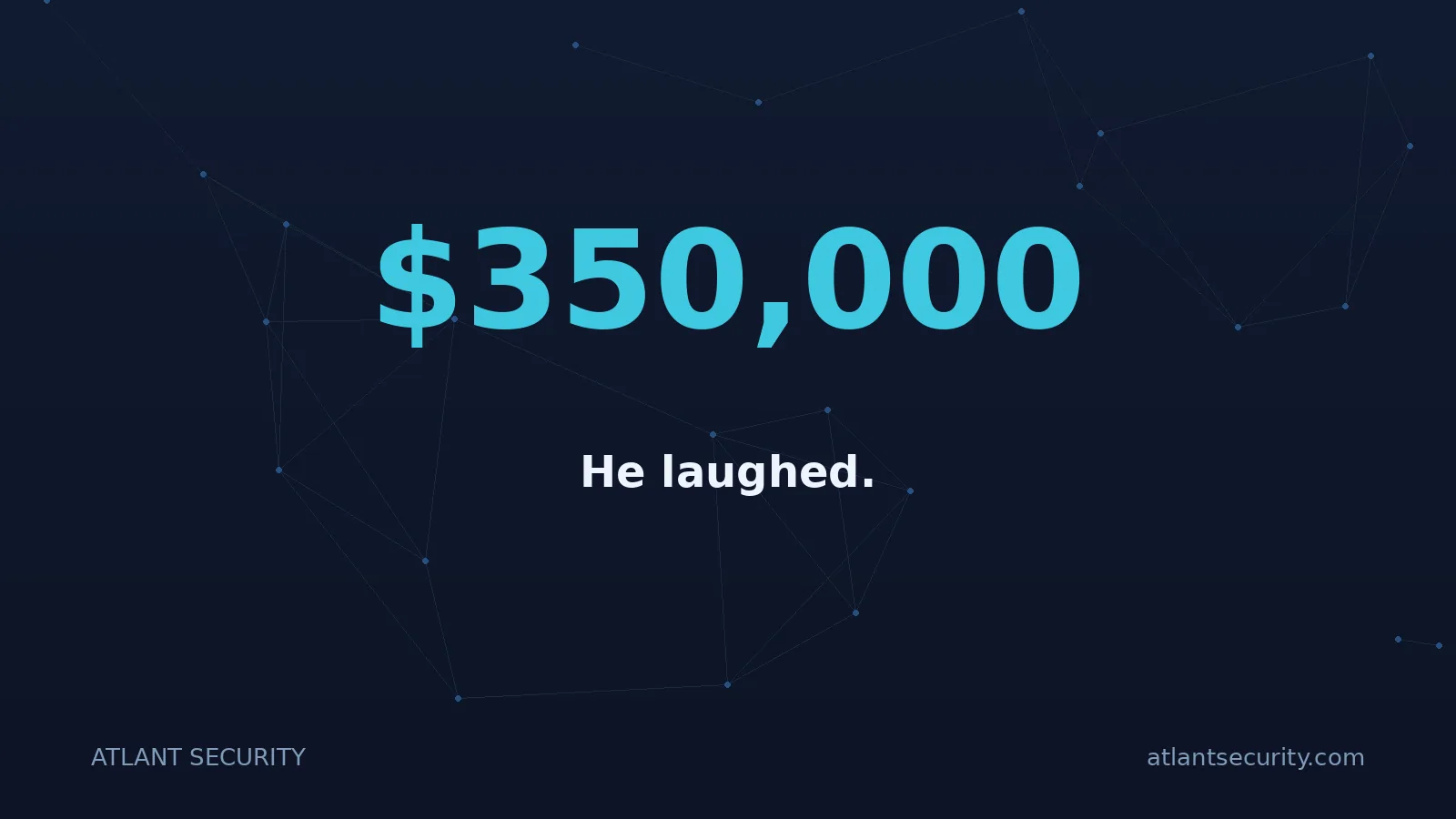
He laughed. I laughed. It sounded ridiculous-like hiring a part-time surgeon. But that awkward, slightly corny moment in a room that smelled like stale pizza was, in hindsight, exactly the problem that the entire virtual CISO industry exists to solve. Thousands of companies need executive-level security leadership. Very few can justify a $350,000-a-year hire to get it.
Over the past decade, I’ve served as a virtual CISO for dozens of companies-from five-person startups shipping their first SaaS product to 800-employee healthcare organizations staring down HIPAA auditors. The role has a real name now. It has pricing models, engagement frameworks, and a growing community of practitioners. But the core question hasn’t changed: what is a virtual CISO, and is it the right move for your company? Let’s break it all down.
Definition
What Is a Virtual CISO?
A virtual CISO (vCISO) is an experienced cybersecurity executive who provides Chief Information Security Officer services to your organization on an outsourced, part-time, or fractional basis. Instead of sitting in your office five days a week drawing a six-figure salary with benefits and equity, a vCISO works with you on a flexible schedule-typically 10 to 40 hours per month-to build, manage, and improve your security program.
The “virtual” part is slightly misleading. It doesn’t mean the person is an AI bot or only works remotely. It means the role is outsourced rather than filled by a permanent employee. Many vCISOs attend board meetings in person, walk the halls during on-site assessments, and embed deeply with the teams they serve. The delivery model is flexible, but the work is as real and hands-on as any full-time CISO’s.
You might also hear the terms fractional CISO, outsourced CISO, or CISO-as-a-Service. These all describe roughly the same concept with minor differences in emphasis. “Fractional” usually implies a higher weekly time commitment (two to three days per week), while “virtual CISO” is the broadest umbrella term covering everything from a few hours a month to near-full-time engagement.
The Simple Version
A virtual CISO is your security executive-on demand. They own your security strategy, manage risk, guide compliance, report to leadership, and drive the security program forward. They do everything a traditional CISO does, but under a flexible engagement model that scales with your needs and budget. Learn more about our vCISO services →
Responsibilities
What a Virtual CISO Actually Does Day-to-Day
One of the biggest misconceptions about a vCISO is that they just “review some policies and disappear.” In reality, a good virtual CISO is deeply embedded in your security operations. Their work spans strategic planning, tactical execution, and ongoing governance. Here is what a typical engagement actually looks like week to week:
Security Strategy & Program Development
The vCISO starts by understanding your business-what you sell, who your customers are, where your data lives, and what regulations apply. From there, they build or refine a security program tailored to your risk profile. This includes defining security policies, selecting control frameworks (NIST CSF, ISO 27001, CIS Controls, or whatever fits), and creating a multi-year roadmap that the board and leadership team can actually follow.
Risk Assessment & Management
Your vCISO conducts regular security assessments to identify threats and vulnerabilities across your environment. They maintain and update a risk register, prioritize remediation efforts based on business impact, and present risk posture to executive leadership in language that makes sense to non-technical stakeholders. This isn’t a one-time snapshot-it’s a continuous cycle of measure, mitigate, and re-measure.
Compliance & Audit Readiness
Whether you’re pursuing SOC 2 readiness, navigating HIPAA requirements, satisfying customer security questionnaires, or preparing for ISO 27001 certification, a vCISO owns the compliance process. They map your controls to the relevant framework, identify gaps, coordinate evidence collection, and serve as the primary point of contact for external auditors.
Vendor & Third-Party Risk Management
Your vCISO evaluates the security posture of your vendors, SaaS providers, and partners. They review SOC 2 reports, assess contractual security requirements, flag high-risk relationships, and build a vendor risk management program that scales as you add new tools and integrations. This is one of the most time-consuming areas of security work and one where vCISOs add tremendous value.
Board & Executive Reporting
Security leadership isn’t just about firewalls and endpoint detection. A huge part of the CISO role is translating technical risk into business terms for the board, the CEO, and investors. Your vCISO prepares quarterly security reports, presents at board meetings, and fields questions from due-diligence teams during fundraising rounds or M&A activity.
Incident Response Planning & Coordination
They build and maintain your incident response plan, run tabletop exercises to test it, and if something goes wrong, they coordinate the response-working with internal teams, forensics providers, legal counsel, and communications. Having someone who has managed real breaches before is invaluable when the pressure hits.
Security Awareness & Culture
Your vCISO designs and oversees security awareness training, runs phishing simulations, and works to build a culture where security is everyone’s responsibility-not just “that one person’s job.” They coach internal IT staff, mentor junior security team members, and gradually build internal capability so the organization becomes more self-sufficient over time.
A Typical vCISO Week at a 200-Person SaaS Company
- Monday: Review new vulnerability scan results, update the risk register, respond to two customer security questionnaires
- Tuesday: 1-hour check-in with the IT team on patch management progress; draft updated access control policy
- Wednesday: Evaluate a new SaaS vendor’s SOC 2 Type II report; review SOC 2 evidence collection status
- Thursday: Prepare board-level security metrics dashboard; join architecture review for a new feature launch
- Friday: Run a 45-minute tabletop incident response exercise with the engineering leads
Is It Right for You?
Who Needs a Virtual CISO?
The honest answer: most companies between 30 and 1,000 employees that handle sensitive data, face compliance requirements, or sell to enterprise customers. But timing matters as much as size. Here are the signals that tell you it’s time:
A customer or prospect asks for SOC 2, ISO 27001, or HIPAA documentation-and you don’t have it
This is the single most common trigger. A $500K deal stalls because your prospect’s security team sends a 300-question vendor assessment and nobody on your side knows how to respond. A vCISO can field those questionnaires immediately and build the program to back up the answers long-term.
Your board or investors start asking about cybersecurity risk
Once you take outside investment or reach a certain revenue threshold, governance expectations increase. Board members want to see a security roadmap, metrics, and evidence that someone credible is managing risk. A vCISO provides that leadership layer.
You’re preparing for a compliance audit or certification
SOC 2, HITRUST, PCI DSS, GDPR, CMMC-all of these require someone who understands the framework deeply and can manage the process end to end. Trying to self-manage a compliance program with no security leadership almost always results in failed audits, wasted money, and lost time.
You experienced a security incident (or a near-miss) and realized nobody owned the response
Nothing concentrates the mind like a breach or a close call. If your last incident revealed that there was no plan, no clear owner, and a lot of improvising, a vCISO can build the structure to prevent that chaos next time.
You’re growing fast and security keeps falling through the cracks
Rapid growth creates security debt faster than most people realize. New employees with unmanaged access, new SaaS tools nobody vetted, cloud infrastructure that scaled before guardrails were in place. A vCISO brings order to the chaos before a breach forces you to.
Your full-time CISO just left-and you can’t hire a replacement fast enough
CISO turnover is notoriously high-average tenure is about 26 months. When yours leaves, you face a four-to-six month recruitment cycle during which nobody is steering the ship. A vCISO can step in within days to maintain continuity.
You can’t afford a full-time CISO, but you know you need one
This is the most straightforward trigger. A full-time CISO with benefits, bonus, and equity costs $300K to $500K or more per year. If your security budget is $50K to $150K annually, a virtual CISO is the only way to get that caliber of leadership.
You don’t need a full-time fire chief if your building has good sprinklers, alarms, and a solid evacuation plan. But someone has to design that system, test it, and update it. That’s the vCISO.
Head-to-Head
Virtual CISO vs. Full-Time CISO
This is the comparison most decision-makers need. Both options deliver security leadership-but the structure, cost, and trade-offs are dramatically different. Here is how they stack up across the factors that matter most:
| Factor | Virtual CISO | Full-Time CISO |
|---|---|---|
| Annual Cost | $48K-$180K (retainer-based) | $300K-$500K+ (salary + benefits + bonus + equity) |
| Time to Onboard | 1-2 weeks | 3-6 months (recruiting + notice period) |
| Availability | Scheduled hours + on-call for critical issues | Full-time, dedicated to one organization |
| Breadth of Experience | Works across multiple industries and company sizes simultaneously | Deep expertise in one organization’s context |
| Team Depth | Often backed by a firm with specialists (GRC, pen testing, cloud) | One individual; may need to build a team |
| Cultural Integration | Moderate-external resource, but builds relationships over time | High-fully embedded in company culture |
| Scalability | Scale hours up or down as needed; no severance risk | Fixed commitment; scaling means hiring additional staff |
| Vendor Independence | Typically vendor-neutral; recommends best-fit tools | May have preferences shaped by prior experience |
| Turnover Risk | Low-firm continuity even if individual rotates | High-average CISO tenure is ~26 months |
| Best For | Companies with 30-1,000 employees, limited security budget, compliance-driven needs | Large enterprises (1,000+), heavily regulated industries, organizations with mature security teams |
When a Full-Time CISO Still Makes Sense
If your organization has 1,000+ employees, operates in a highly regulated environment (financial services, defense, critical infrastructure), maintains a dedicated security team of five or more people, and has the budget-a full-time CISO is the right call. Many companies start with a vCISO and transition to full-time as they scale, using the vCISO to build the foundation and even help recruit the permanent hire.
How It Works
vCISO Engagement Models Explained
Not all vCISO engagements look the same. The right model depends on your current security maturity, budget, and what you need accomplished. Here are the three most common structures:
1. Monthly Retainer
This is the most common model. You pay a fixed monthly fee for a defined number of hours (typically 10-40 hours per month). The vCISO provides ongoing security leadership, attends regular meetings, and is available for ad-hoc questions and escalations. This model works best for organizations that need continuous security oversight without predictable spikes in demand.
Typical cost: $4,000-$15,000/month | Best for: Ongoing security program management, compliance maintenance, steady-state governance | Contract length: 6-12 months, often with month-to-month renewal
2. Project-Based
A project-based engagement has a defined scope, deliverables, and timeline. Common examples include achieving SOC 2 certification, building an incident response program from scratch, conducting a comprehensive risk assessment, or preparing for a specific audit. Once the project is complete, the engagement ends (though many transition to a retainer afterward).
Typical cost: $15,000-$80,000 per project | Best for: Compliance certifications, security program buildouts, M&A due diligence | Duration: 2-6 months
3. Fractional (Embedded Part-Time)
In a fractional model, the vCISO works a significant number of hours per week-typically two to four days-and functions almost like a part-time employee. They attend internal meetings, have a company email address, and are treated as a member of the leadership team. This model sits between a full retainer and a full-time hire, offering deep integration without the permanent headcount.
Typical cost: $10,000-$25,000/month | Best for: Organizations in transition (post-breach, pre-IPO, rapid growth), CISO vacancy bridge | Duration: 6-18 months
Most of our clients start with a retainer, increase hours during audit season or after a security event, and scale back to maintenance mode once the program matures. Flexibility is the whole point.
Hiring Guide
What to Look For When Hiring a Virtual CISO
The vCISO market has grown significantly, which means quality varies widely. Some providers are seasoned security executives with decades of experience; others are junior consultants using the title to charge more. Here is how to separate the real ones from the pretenders:
1. Relevant Industry Experience
A vCISO who has only worked in financial services may struggle with the nuances of healthcare compliance, and vice versa. Ask about their experience with companies similar to yours-in size, industry, and regulatory environment. They don’t need to be an exact match, but they should be able to articulate how their past experience translates to your situation.
2. Team Backing, Not Just One Person
The best virtual CISO providers aren’t solo practitioners-they’re backed by a team. When your vCISO needs a penetration test conducted, a cloud security architect consulted, or a compliance specialist pulled in, a firm-backed vCISO can make that happen. A solo consultant has to subcontract or tell you to find someone else.
3. Communication Skills and Executive Presence
Your vCISO will present to your board, talk to customers, and work with non-technical leaders. Technical brilliance is necessary but insufficient. You need someone who can explain a zero-day vulnerability to a CFO in three sentences and present a security budget in terms of business risk, not technical jargon.
4. Vendor-Neutral Recommendations
Beware of vCISOs who push specific tools or platforms they happen to resell. A good virtual CISO evaluates your needs and recommends the best-fit solution, regardless of vendor relationships. Ask directly: “Do you resell any security products or receive referral fees?”
5. Defined Deliverables and Measurable Outcomes
A professional vCISO engagement comes with clear deliverables: a security roadmap with milestones, regular status reports, board-ready dashboards, policy documents, risk registers. If the proposal is vague (“ongoing advisory services” with no specifics), keep looking.
6. References You Can Actually Call
Ask for references from similar companies-and call them. Questions to ask: How responsive were they? Did they hit their milestones? How did they handle unexpected issues? Would you hire them again? References tell you more than any sales presentation ever will.
7. Clear Contractual Terms
Understand what you’re signing. Good contracts include: defined scope of work, monthly hour allocation, response time SLAs, termination terms, IP ownership clauses, and confidentiality protections. Avoid providers who resist putting specifics in writing.
Red Flags to Watch For
- No verifiable CISO-level experience (look for actual leadership roles, not just consulting titles)
- Pushes specific security products or platforms without evaluating your needs first
- Can’t explain their approach to risk assessment or framework selection in plain language
- Reluctant to provide client references or case studies
- Proposes a fixed solution before conducting any assessment of your environment
Pricing
How Much Does a Virtual CISO Cost?
Pricing varies based on provider type, scope, and your organization’s complexity. But here are the realistic ranges you should expect in 2026 based on what we see across the market:
| Engagement Model | Typical Range | Hours Included | Annual Equivalent |
|---|---|---|---|
| Light Retainer | $4,000-$7,000/mo | 10-20 hrs/month | $48K-$84K |
| Standard Retainer | $7,000-$15,000/mo | 20-40 hrs/month | $84K-$180K |
| Fractional / Embedded | $10,000-$25,000/mo | 40-80+ hrs/month | $120K-$300K |
| Project-Based | $15,000-$80,000 total | Varies by scope | N/A (one-time) |
| Hourly (Ad Hoc) | $200-$450/hour | As needed | Depends on usage |
What drives the price up: highly regulated industries (healthcare, finance), larger environments with complex cloud infrastructure, multi-framework compliance needs (SOC 2 + HIPAA + GDPR simultaneously), and urgent timelines. Enterprise-grade vCISO firms with deep bench strength charge more than solo practitioners, but you’re paying for team coverage and breadth of expertise.
What drives the price down: smaller environments, single-framework compliance, established security programs that need guidance rather than buildout, and longer contract commitments that give the provider predictable revenue.
The Real Math
Consider a mid-market company paying $8,000/month for a vCISO retainer. That’s $96,000 per year. A full-time CISO at the same company would cost approximately $350,000 in total compensation (salary, benefits, bonus, recruiting fees). The vCISO costs 27% of the full-time equivalent-and brings a team behind them. For most companies under 500 employees, the ROI case is overwhelming.
Common Questions
Frequently Asked Questions
Is a virtual CISO the same thing as a fractional CISO?
Mostly, yes. The terms are used interchangeably in most contexts. If there’s a distinction, “fractional CISO” often implies a higher time commitment and deeper organizational integration (two to four days per week), while “virtual CISO” is a broader term that covers everything from a few hours per month to near-full-time engagement. For practical purposes, evaluate the scope and hours rather than the label.
Can a virtual CISO help with SOC 2 or ISO 27001 certification?
Absolutely-this is one of the most common reasons companies hire a vCISO. They manage the entire certification process: scoping the audit, selecting the framework, implementing controls, collecting evidence, coordinating with external auditors, and remediating findings. A vCISO who has guided dozens of companies through SOC 2 will get you there faster and with fewer false starts than trying to figure it out internally. Learn about SOC 2 readiness →
How quickly can a virtual CISO start?
Most vCISO providers can begin within one to two weeks of signing the agreement. The first two to four weeks typically involve a discovery phase-reviewing your current security posture, interviewing key stakeholders, auditing your environment, and building a prioritized roadmap. You’ll start seeing tangible deliverables within the first month, which is dramatically faster than the three-to-six month timeline to recruit and onboard a full-time CISO.
What if we eventually want to hire a full-time CISO?
That’s a great outcome, and a good vCISO will help you get there. They can define the full-time CISO role based on your actual needs (not a generic job description), help screen candidates, and manage the transition. Many organizations use a vCISO for 12 to 24 months to build a mature security program, then hire full-time to maintain and evolve it. The vCISO ensures you hire the right person-not just the first available one.
Will a virtual CISO work with our existing IT team?
Yes, and they should. A vCISO isn’t a replacement for your IT or engineering team-they’re the strategic layer that sits on top. They work collaboratively with your internal teams, provide guidance and mentorship, help prioritize security tasks within existing workflows, and leverage your team’s institutional knowledge. The best vCISO relationships feel like having a trusted advisor who makes your existing team more effective.
What certifications should a virtual CISO have?
Certifications like CISSP, CISM, CISA, and CRISC are common and valuable, but they’re not sufficient on their own. What matters more is demonstrated experience leading security programs, managing compliance projects, and communicating with executive stakeholders. A CISSP-certified consultant with five years of experience is not the same as a vCISO who has served as a security executive across 30 organizations. Look at the track record, not just the alphabet soup after the name.
How do I measure whether my vCISO is delivering value?
Good vCISOs set measurable KPIs at the start of the engagement. Common metrics include: number of critical risks remediated, compliance milestones achieved, time to respond to security questionnaires, reduction in audit findings, employee security training completion rates, and mean time to detect and respond to incidents. If your vCISO can’t articulate how they’ll measure success, that’s a concern.
Is a virtual CISO appropriate for startups?
Startups are one of the best use cases for a vCISO. You get security leadership without the overhead, which is critical when you’re trying to win enterprise customers who require SOC 2 or other certifications. A vCISO can build your security program from day one, baked into your architecture and processes, rather than retrofitting it later at much greater cost. Many Series A and Series B SaaS companies use a vCISO as one of their first security investments.
Bottom Line
Security Leadership Doesn’t Have to Be All-or-Nothing
For years, companies faced a binary choice: hire a full-time CISO at enormous cost, or go without security leadership entirely and hope for the best. The virtual CISO model breaks that false dichotomy. It gives growing companies access to the same caliber of expertise that Fortune 500 firms have-right-sized for their stage, budget, and risk profile.
The companies I’ve seen get the most out of vCISO engagements share a few traits: they treat the relationship as a genuine partnership (not just a checkbox), they empower the vCISO to push back and challenge assumptions, and they recognize that security is an ongoing discipline rather than a one-time project. Whether you’re a 50-person startup chasing your first SOC 2 report or a 500-person company that just lost its CISO, a virtual CISO can provide the leadership you need while you figure out the long-term plan.
And if you’re still not sure? Start with a conversation. A good vCISO provider will tell you honestly whether you need their services or whether your current setup is sufficient. That honesty is part of the value.
The best security investment isn’t the most expensive one. It’s the one that matches where you are right now and grows with you.
Ready to Explore Virtual CISO Services?
Atlant Security provides team-backed virtual CISO services tailored to your industry, compliance requirements, and growth stage.
Our initial consultation is free and includes: a 30-minute discussion of your security challenges, a high-level gap assessment, and preliminary recommendations. No obligation, no pressure.
Related Resources
Published: March 2026 · Author: Alexander Sverdlov
This article is for informational purposes only and does not constitute legal or professional advice. Pricing reflects 2026 U.S. market estimates and may vary based on scope, geography, and provider experience. Atlant Security is a virtual CISO provider; this guide reflects both our experience and publicly available industry data.
