

Cybersecurity Leadership · March 2026
A detailed, experience-driven comparison of virtual CISOs and full-time CISOs - covering real costs, hidden trade-offs, hybrid models, and when it makes sense to transition from one to the other.
I still remember the exact moment the vCISO-vs-CISO question stopped being theoretical for me.
It was a Tuesday evening in 2019. I was sitting in the parking lot of a grocery store, engine running, listening to a panicked CEO on speakerphone. His 120-person fintech startup had just received a SOC 2 readiness report that read like a horror novel. Fifty-three control gaps. No security policies. An AWS environment that was, in his words, "held together with duct tape and optimism." His board wanted a CISO. Yesterday.
"How fast can you find me someone full-time?" he asked.
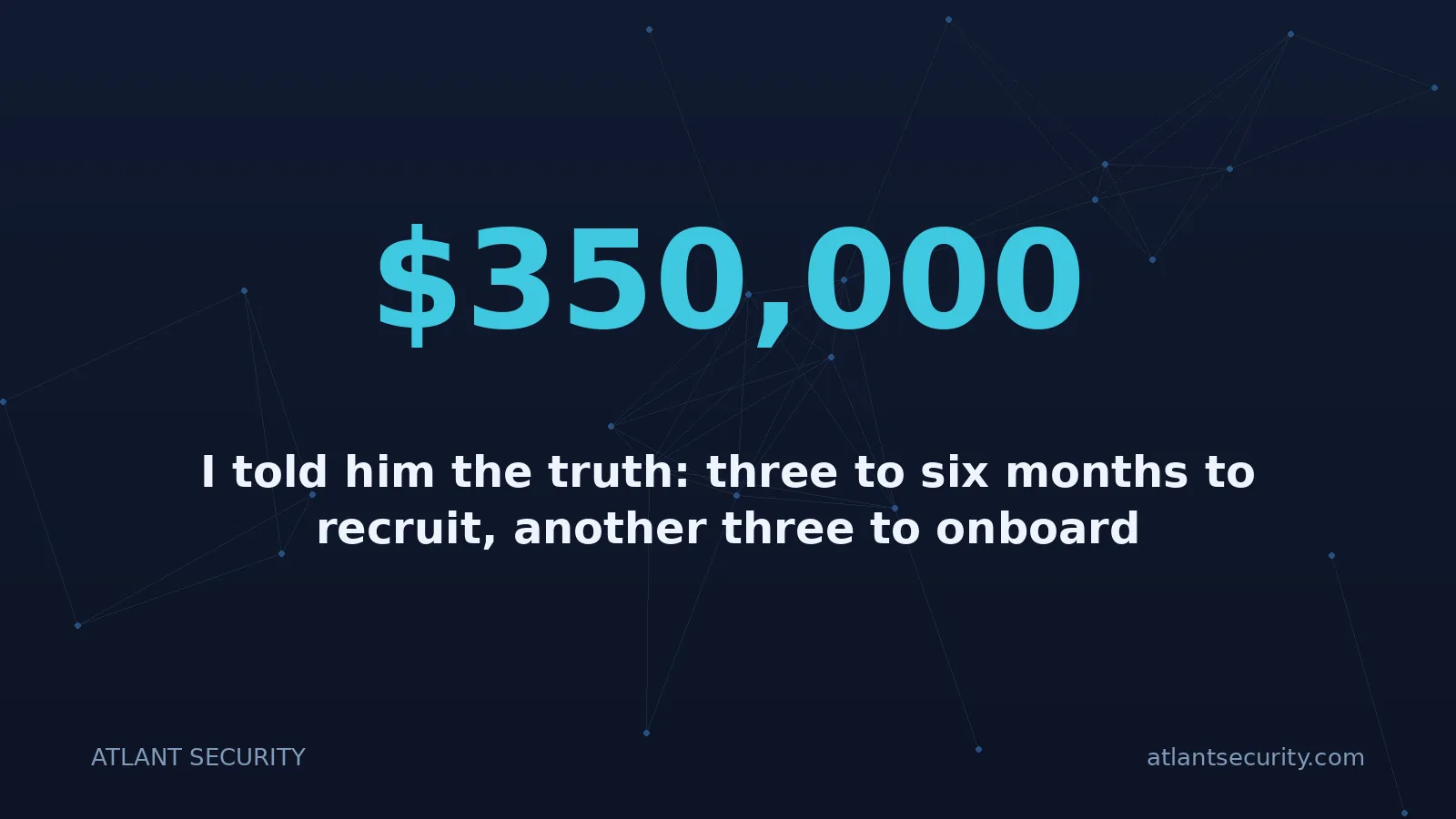
I told him the truth: three to six months to recruit, another three to onboard, and he'd be looking at $350,000 or more per year, fully loaded. He went quiet. Then he said something I've heard a hundred times since: "We don't have that kind of time. Or that kind of money."
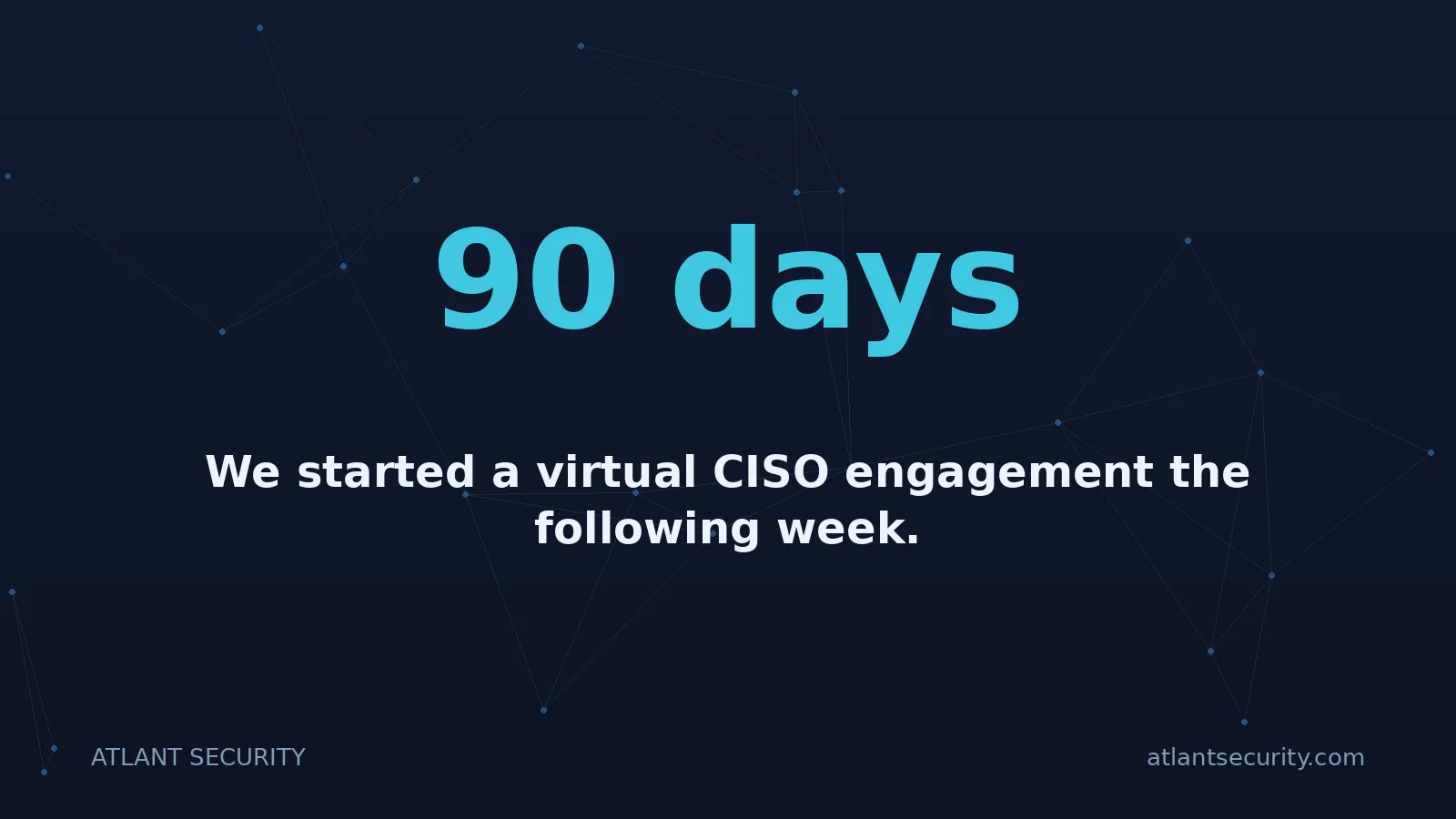
We started a virtual CISO engagement the following week. Within 90 days, they had a security program, passed their SOC 2 readiness assessment, and the CEO stopped losing sleep. The total cost for those first three months? Less than what a full-time CISO's signing bonus would have been.
That experience crystallized something I now share with every organization wrestling with this decision: the right answer isn't always "vCISO" or "CISO." It's understanding exactly what each model delivers, what it costs, and which one matches where your organization actually is today. That's what this guide provides.
Key Takeaways
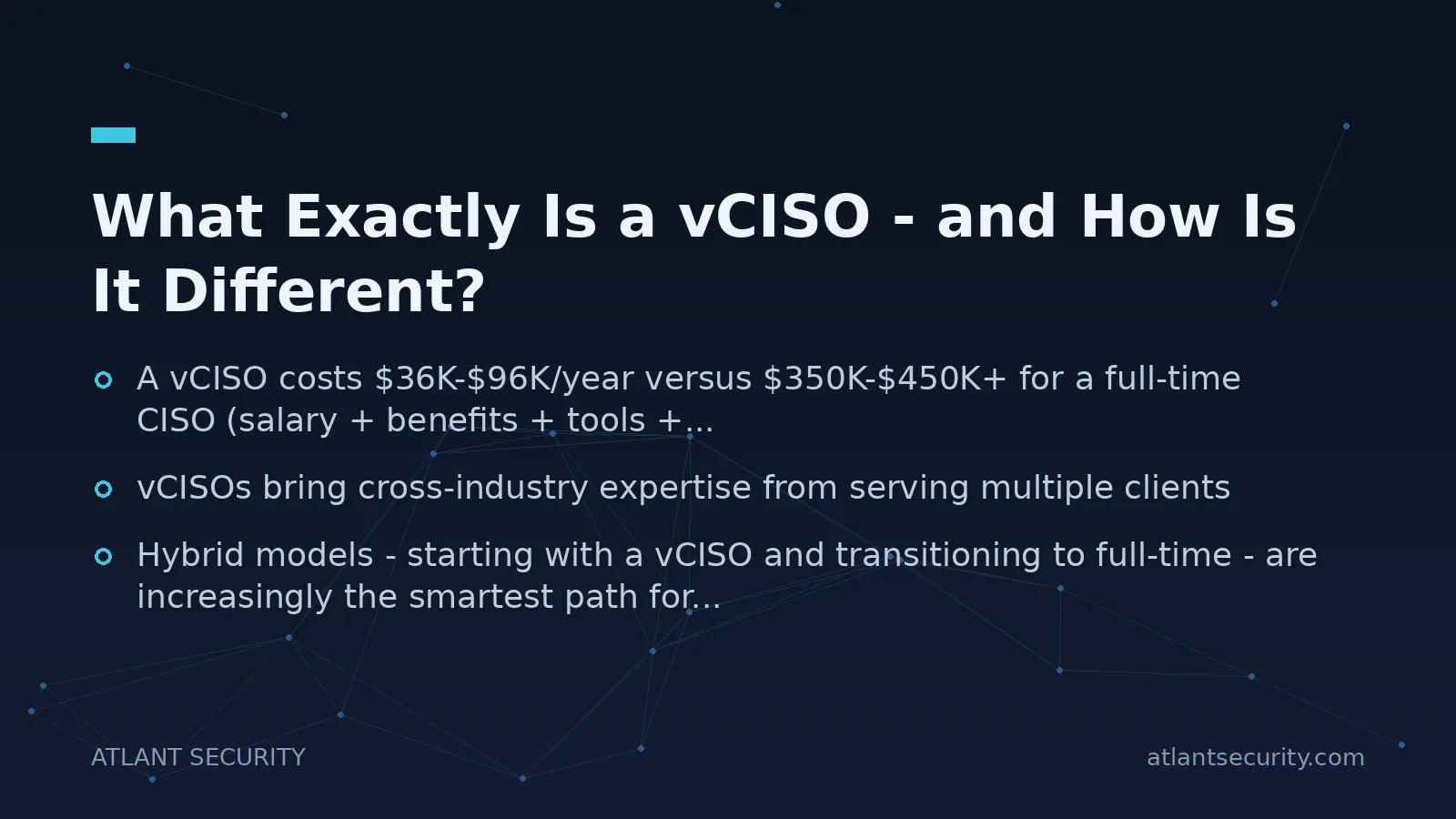
- A vCISO costs $36K-$96K/year versus $350K-$450K+ for a full-time CISO (salary + benefits + tools + recruiting).
- vCISOs bring cross-industry expertise from serving multiple clients; full-time CISOs bring deep institutional knowledge and daily availability.
- Hybrid models - starting with a vCISO and transitioning to full-time - are increasingly the smartest path for growing companies.
- The decision should be based on company size, security maturity, compliance obligations, and budget - not on what sounds more impressive.
- Most companies under 500 employees get better outcomes from a vCISO than from an underfunded full-time hire.
The Basics
What Exactly Is a vCISO - and How Is It Different?
A Virtual Chief Information Security Officer (vCISO) is an experienced security executive who provides strategic cybersecurity leadership to your organization on a fractional, retained, or part-time basis. They perform the same core functions as a full-time CISO - building security programs, managing compliance, overseeing risk, advising the board, and coordinating incident response - but without sitting on your payroll as a full-time employee.
A full-time CISO, by contrast, is a dedicated W-2 employee (or sometimes a C-level contractor) who works exclusively for your organization 40+ hours per week. They are embedded in your culture, attend every leadership meeting, and have a singular focus on your security posture.
Both roles exist to answer the same fundamental question: "Who owns security at this company?" The difference is in the delivery model, not the mission.
Quick Clarification: vCISO vs. Fractional CISO vs. Part-Time CISO
These terms are used interchangeably throughout the industry. A "virtual CISO" typically emphasizes remote delivery. A "fractional CISO" emphasizes part-time allocation. A part-time CISO emphasizes flexible hours. In practice, they all describe the same model: senior security leadership without a full-time salary commitment. What matters is the provider's experience and the engagement scope - not the label.
Head-to-Head
vCISO vs CISO: The Complete Comparison
I've sat on both sides of this table - as a vCISO serving multiple clients and as an advisor to organizations hiring full-time CISOs. Here's the honest, side-by-side breakdown across every dimension that matters.
| Dimension | vCISO | Full-Time CISO |
|---|---|---|
| Annual Cost | $36K-$96K/year ($3K-$8K/month retainer) | $350K-$450K+ (salary + benefits + bonus + tools) |
| Availability | Scheduled hours (typically 10-40 hrs/month); on-call for emergencies via SLA | Full-time, 40+ hrs/week; immediately available for any issue |
| Expertise Breadth | Broad - works across multiple industries, frameworks, and threat landscapes simultaneously | Deep but narrow - single-organization focus may limit exposure to diverse threats |
| Commitment Level | Flexible - month-to-month or quarterly contracts; scale up/down as needed | Long-term - employment contract, typically 2+ year expectation (avg. tenure: 26 months) |
| Scalability | Highly scalable - increase hours during audits, M&A, incidents; decrease during steady state | Fixed capacity - one person, one salary regardless of fluctuating security needs |
| Institutional Knowledge | Builds over time but never as deep as full-time; mitigated by documentation and regular cadence | Deep - fully embedded in culture, politics, and operations from day one |
| Time to Impact | Days to weeks - can start immediately with existing frameworks and playbooks | 3-6 months recruiting + 3 months onboarding before full productivity |
| Team Leadership | Guides and mentors existing staff; may not have same internal authority as FTE | Direct reports, hiring/firing authority, full organizational influence |
| Board Reporting | Prepares and presents board-level security reports; increasingly accepted by boards | Permanent board-level presence; deeper relationship with directors over time |
| Risk if They Leave | Low - firm-backed vCISOs provide continuity; documentation transfers easily | High - single point of failure; departure creates leadership vacuum (avg. 4-6 month gap) |
The best security leader for your company isn't the most expensive one. It's the one whose delivery model matches your actual needs, budget, and growth stage.
The Real Numbers
Total Cost of Ownership: vCISO vs Full-Time CISO
This is where most comparisons fall short. They compare a vCISO retainer to a CISO salary and call it a day. But the real cost of a full-time CISO goes far beyond base compensation. Let me lay out the full picture - every dollar, no hiding.
Full-Time CISO: Total Annual Cost
| Line Item | Annual Cost |
|---|---|
| Base salary (U.S. average for experienced CISO) | $280,000-$350,000 |
| Benefits (health, dental, vision, 401k match, PTO) | $40,000-$65,000 |
| Annual bonus (15-25% of base) | $42,000-$87,500 |
| Equity / stock options (if applicable) | $20,000-$100,000+ |
| Recruiting fees (headhunter: 20-30% of first-year salary) | $56,000-$105,000 (amortized) |
| Security tools & platform licenses (GRC, SIEM, etc.) | $30,000-$80,000 |
| Conferences, training, certifications (CISSP, SANS, etc.) | $8,000-$15,000 |
| Onboarding downtime (3 months at reduced productivity) | ~$70,000 in lost output |
| TOTAL (Year One) | $420,000-$550,000+ |
vCISO: Total Annual Cost
| Line Item | Annual Cost |
|---|---|
| Monthly retainer ($3,000-$8,000/month) | $36,000-$96,000 |
| Additional project hours (compliance sprints, incident response) | $5,000-$20,000 |
| Security tools (often included or recommended at lower cost) | $0-$15,000 |
| Recruiting fees | $0 |
| Onboarding downtime | Minimal (1-2 weeks) |
| TOTAL (Year One) | $41,000-$131,000 |
Bottom Line on Cost
A vCISO engagement typically costs 70-85% less than a full-time CISO in year one. Even in subsequent years (when recruiting costs are removed), the gap remains 60-75%. For companies with annual revenue under $50M, redirecting that savings into actual security controls - endpoint protection, SIEM, employee training - often produces better security outcomes than paying one person more.
Best Fit Analysis
When a vCISO Is the Right Choice
A virtual CISO makes the most sense in these scenarios:
- You're a company with 30-500 employees that needs security leadership but can't justify a $400K+ line item. Most of our vCISO clients fall in this range.
- You're facing an urgent compliance deadline - SOC 2, ISO 27001, HIPAA, PCI DSS - and can't wait six months to hire and onboard a full-time CISO.
- You're going through M&A, fundraising, or due diligence and need a credible security leader to present to investors, acquirers, or enterprise clients immediately.
- Your current CISO left unexpectedly and you need interim coverage while you recruit a replacement.
- You want cross-industry perspective. A vCISO who works with healthcare, fintech, and SaaS companies simultaneously brings patterns and solutions a single-company CISO simply won't see.
- Your security needs fluctuate. Heavy compliance season in Q1, lighter maintenance in Q3? A vCISO scales with you. A full-time CISO costs the same regardless.
I've seen this play out repeatedly with our own clients. One 200-person SaaS company hired us as their vCISO at $5,000/month. Within six months, they achieved SOC 2 Type II, closed three enterprise deals that required it, and generated enough new revenue to fund their entire security program three times over. A full-time CISO would still have been onboarding during month six.
Enterprise Needs
When a Full-Time CISO Is the Better Investment
Let me be honest: there are clear situations where a full-time CISO is not just justified but necessary. I'd be doing you a disservice to pretend otherwise.
- Your organization has 500+ employees and processes sensitive data at scale. At this size, the volume of daily security decisions, vendor reviews, and incident triage demands someone who's there every single day.
- You operate in a highly regulated industry (banking, defense, critical infrastructure) where regulators expect - or mandate - a named, full-time security officer.
- You have a security team of 5+ people that needs direct management, mentorship, career development, and daily direction. A vCISO can guide a small team, but managing a department requires full-time presence.
- Your board or investors specifically require a full-time C-level security executive. Some governance structures mandate it, particularly post-IPO or in heavily regulated sectors.
- Security is a core competitive differentiator for your product. If you're selling security to your customers (e.g., a cybersecurity vendor, a secure cloud platform), having a full-time CISO signals commitment.
The key insight: most organizations that truly need a full-time CISO have annual revenues north of $100M or operate in sectors where regulatory non-compliance carries existential risk. Everyone else is better served - at least initially - by a vCISO.
The Best of Both Worlds
Hybrid Models: Why the Smartest Companies Use Both
Here's something most "vCISO vs CISO" articles won't tell you: you don't always have to choose one or the other. Hybrid models are increasingly common, and they often deliver the best outcomes.
I've personally helped design and implement three variations that work exceptionally well:
Model 1: vCISO + Internal Security Manager
Hire a mid-level security manager ($100K-$140K) for day-to-day operations and pair them with a vCISO ($4K-$6K/month) for strategic direction, board reporting, and compliance oversight. Total cost: ~$200K/year. You get both daily presence and executive-level strategy at less than half the cost of a standalone full-time CISO.
Model 2: vCISO as Interim + Full-Time CISO Pipeline
Engage a vCISO immediately to build the security program and establish compliance foundations while simultaneously conducting a thorough search for your permanent CISO. When the full-time hire starts, the vCISO transitions to an advisory role for 60-90 days to ensure smooth knowledge transfer. No coverage gap, no rushing a bad hire.
Model 3: Full-Time CISO + vCISO Specialist Support
Even organizations with a full-time CISO sometimes engage a vCISO for specialized needs: a compliance framework the CISO hasn't worked with before, a second opinion during a major architecture decision, or additional bandwidth during audit season. Think of it as a force multiplier.
The hybrid model isn't a compromise. It's an optimization. You get strategic leadership, daily operational coverage, and financial efficiency - all at once.
The Transition Point
When to Transition from vCISO to Full-Time CISO
This is the question I get asked most often. Companies start with a vCISO, things are going well, and then they wonder: "When do we outgrow this model?"
The honest answer: later than most people think. But there are clear inflection points. Here's the framework I use with our own clients:
Five Signals It's Time to Hire Full-Time
- Your vCISO consistently exceeds 30+ hours per month. At this point, you're approaching the cost of a mid-range full-time hire without getting full-time availability. The math starts favoring a dedicated person.
- You have a security team of 3+ people who need daily management. A vCISO can guide a small team remotely, but managing hiring, performance reviews, career development, and daily standups requires someone in the seat every day.
- Regulatory obligations require a named, full-time security officer. Some frameworks (like NY DFS for financial services) have explicit CISO requirements. Check whether a vCISO satisfies the regulatory language in your specific jurisdiction.
- You're processing extremely sensitive data at massive scale. If you're handling millions of health records, processing billions in financial transactions, or managing classified information, the risk profile demands full-time, undivided attention.
- Your company has crossed the ~500-employee / $100M-revenue threshold. This isn't a hard rule, but it's where the organizational complexity typically justifies - and can afford - a full-time CISO.
Here's what a good transition looks like in practice. We've guided several of our vCISO clients through this exact process:
| Phase | Timeline | What Happens |
|---|---|---|
| Decision | Month 0 | Leadership recognizes the need. vCISO helps draft the full-time CISO job description based on the actual security program they've built. |
| Recruitment | Months 1-4 | vCISO continues running the program with zero disruption while the company recruits. The vCISO often participates in candidate evaluation - they know exactly what skills the role requires. |
| Overlap | Months 4-6 | New full-time CISO starts. vCISO transitions to advisory, conducting knowledge transfer: program documentation, vendor relationships, compliance status, risk register, and institutional context. |
| Advisory | Months 6-9 | vCISO steps back to a few hours per month for questions, second opinions, and specialized projects. Clean, gradual off-ramp. |
| Complete | Month 9+ | Full-time CISO is fully autonomous. vCISO engagement ends or converts to on-demand specialist support as needed. |
The biggest mistake I see? Companies rushing the transition and creating a coverage gap. A vCISO-to-CISO handoff should take three to five months, not three weeks. The cost of a brief overlap period is trivial compared to the cost of a security leadership vacuum.
Avoid These Pitfalls
The 5 Most Expensive Mistakes in vCISO vs CISO Decisions
After advising dozens of companies on this decision, I've watched the same mistakes repeat. Each one costs real money and real security exposure.
Mistake #1: Hiring a full-time CISO you can't properly support
You hire a $300K CISO but give them no budget for tools, no team, and no executive backing. They spend a year writing policies nobody reads, burn out, and leave. You're back to zero - except now you've spent $400K+. A well-supported vCISO at $5K/month would have delivered more actual security improvement.
Mistake #2: Choosing a vCISO based solely on lowest price
A vCISO at $1,500/month sounds great until you realize they're a junior consultant with a CISSP who's never actually built a security program. You get checkbox compliance theater instead of real risk reduction. Experienced vCISOs cost $3K-$8K/month because they deliver $3K-$8K/month of actual value.
Mistake #3: Treating the vCISO as a compliance-only resource
Compliance is one deliverable. A good vCISO should also be reducing your actual attack surface, training your team, evaluating your vendors, and building incident response capability. If you only use them for audit prep, you're getting 30% of the value you're paying for.
Mistake #4: Waiting for a full-time CISO instead of starting now
"We'll hire a CISO next quarter" turns into next year. Meanwhile, you have no security program, no compliance posture, and you're losing deals. Every month without security leadership is a month of compounding risk. Start with a vCISO today and transition later if needed.
Mistake #5: Not establishing clear scope and SLAs with your vCISO
"They're our vCISO, so they handle everything security" is a recipe for mismatched expectations. Define deliverables, meeting cadence, response times, reporting format, and escalation procedures upfront. The best vCISO relationships operate with the same structure and accountability as a full-time hire.
Your Questions Answered
Frequently Asked Questions: vCISO vs CISO
1. Can a vCISO satisfy regulatory requirements that mandate a CISO?
In most cases, yes. Regulations like SOC 2, ISO 27001, and HIPAA require a designated security officer - they don't specify employment status. NY DFS is one of the few frameworks with specific CISO requirements, and even there, a part-time or outsourced CISO can satisfy the obligation with proper documentation. Always verify with your specific regulatory body.
2. How many hours per month does a typical vCISO engagement require?
Most engagements range from 10-30 hours per month. Early-stage programs (building from scratch, preparing for first audit) trend toward 20-30 hours. Mature programs in maintenance mode can operate effectively at 10-15 hours. Our clients typically start at 15-20 hours and adjust after the first quarter based on actual needs.
3. What happens if there's a security incident at 2 AM and our vCISO serves other clients?
This is the most common concern, and it's valid. The answer depends on your provider. Quality vCISO firms (including ours) include incident response SLAs in the engagement - typically 1-2 hour response time for critical incidents, 24/7. Firm-backed vCISOs have team depth, so if your primary contact is unavailable, another senior security leader steps in. Solo vCISO consultants carry more risk here.
4. Will our employees take a vCISO as seriously as a full-time CISO?
This depends entirely on how leadership introduces and supports the vCISO. When the CEO introduces the vCISO in an all-hands meeting, grants them appropriate access and authority, and visibly supports their recommendations, adoption is virtually identical to a full-time hire. The vCISO's external perspective can actually carry more weight in some cases - similar to how companies take outside auditors more seriously than internal reviewers.
5. Can a vCISO present to our board of directors?
Absolutely, and this is one of the highest-value activities a vCISO provides. Experienced vCISOs have presented to dozens (sometimes hundreds) of boards. They know what board members care about, how to translate technical risk into business language, and how to answer tough questions about cyber exposure. Many of our clients tell us their board is more satisfied with vCISO reporting than what they received from previous full-time hires.
6. How do we evaluate whether our vCISO is doing a good job?
Measure outcomes, not hours. Key indicators include: compliance certifications achieved on schedule, reduction in audit findings year over year, security incident response time improvements, employee security awareness metrics, and the ability to close enterprise deals that require security attestation. A good vCISO should present a quarterly business review showing progress against these metrics.
7. Is it awkward to have a vCISO if we eventually want to hire full-time?
Not at all - it's actually the ideal path. A competent vCISO will proactively help you plan the transition, including writing the job description, evaluating candidates, and ensuring a smooth handoff. They build the security program with documentation specifically designed to be transferable. Any vCISO who resists your transition to full-time is prioritizing their revenue over your interests.
The Bottom Line
The Decision Comes Down to Honesty
Back to that CEO in the grocery store parking lot. His company used our vCISO services for two and a half years. During that time, they achieved SOC 2 Type II, passed three enterprise security questionnaires that unlocked seven-figure contracts, survived a ransomware attempt with zero data loss (because we'd built the incident response plan months earlier), and grew from 120 to 400 employees.
At the 400-employee mark, they hired a full-time CISO. We helped them recruit, onboarded the new hire over 90 days, and transitioned out gracefully. Today, that company has a mature security program, a strong internal team, and a CISO who inherited a program that was already working - instead of having to build from rubble.
That's the real story of vCISO vs CISO. It's rarely either/or. It's usually vCISO first, full-time CISO when the organization is ready - with no gap, no wasted spend, and no compromise on security.
Be honest about where your organization is today. Not where you want it to be. Not where your board thinks it should be. Where it actually is - in terms of size, budget, security maturity, and immediate needs.
That honesty will lead you to the right model. And in most cases, for most companies, the right starting point is a vCISO who can deliver results now and set you up for whatever comes next.
The worst security decision isn't choosing the wrong model. It's delaying the decision while threats don't wait.
Not Sure Which Model Is Right for You?
We'll give you a straight answer - even if that answer is "you need a full-time CISO, not us."
Our free 30-minute consultation covers: your current security posture, which model fits your size and budget, realistic timelines, and estimated costs. No sales pressure. Just honest guidance from people who've made this decision with hundreds of companies.
Published: March 25, 2026 · Author: Alexander Sverdlov
This article is for informational purposes only and does not constitute legal or professional advice. Cost estimates reflect 2026 U.S. market data and may vary by geography, industry, and scope. Organizations should evaluate their specific needs before making cybersecurity leadership decisions.
