
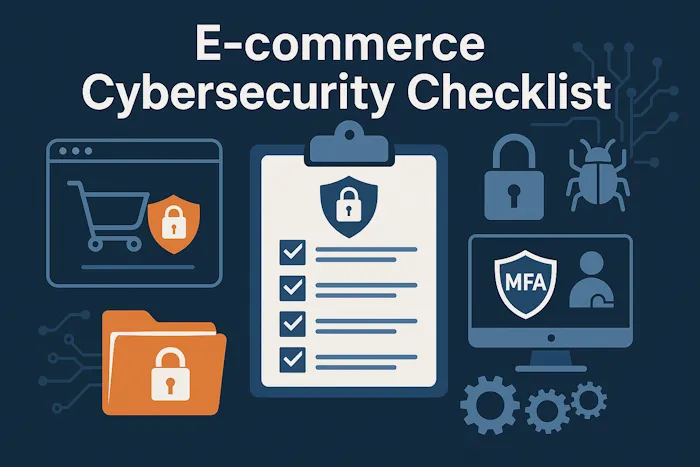
Every e-commerce company that has ever been hacked had an antivirus on their endpoints and a firewall in the office.
And most of them used Cloudflare. Does that mean Cloudflare is bad or insecure? No. it just means that just having 3 security controls, when hackers can use hundreds of attack methods against you, is simply not enough!
Alright, you use 2-factor authentication everyone. Just google "2-fa bypass" and see the results! Still confident in your defenses?
Let's be honest: your online store runs on trust. Your customers need to believe it's safe to buy from you. Meanwhile, hackers are counting on one weak link - a lazy password, an outdated plugin, an admin panel left in the open, or a staff member who isn't trained. The result is simple: one mistake can shut down your sales overnight.
Your absolute first job is locking down access. Protecting your own accounts isn't just about you; it's your first line of defense for every customer. A long, strong password and multi-factor authentication will stop most attacks before they even get started. And don't forget those default passwords on your router, Wi-Fi, or cloud dashboard - they're a silent threat. Change them the second you set up anything new.
Think of your store's platform as a car; it needs regular tune-ups. Every plugin, theme, and app connection is a potential back door for a determined attacker. When a security update drops, patching it fast slams that door shut. Keep a running list of every single piece of software your store uses. If you know what you're running, you know what you need to protect.
The customer data you hold is a responsibility, not just an asset. Encrypting it is your safety net for the worst-case scenario. And only keep the data you actually need-the less you store, the less you risk. If you have international customers, you need to know their local privacy laws. Holding payment data without the proper safeguards isn't just risky; it's a legal and financial time bomb.
Never underestimate the human element. Your team can be your strongest shield or your weakest link. One clever phishing email can bring your whole operation to its knees. Train your people to spot the red flags and make it dead simple for them to report anything odd. A culture of clear communication stops small mistakes from blowing up into full-blown crises.
That public face you've worked so hard to build? It's a target, too. Scammers create fake accounts, impersonate brands, and trick your followers. Lock down your social media by verifying your accounts and keeping posting rights within a tight, trusted circle. Don't let some outsider hijack your brand's voice.
On a technical level, a flat network is a hacker's dream - get in one place, and you have access to everything. By isolating your critical e-commerce systems from your general office network, you build a series of roadblocks that slow an attacker down and limit the damage. And sometimes, you're too close to see the gaps. Bringing in an external expert to test your defenses can reveal the flaws you've been missing.
The bottom line? Stop thinking of your store as a static website. Treat it like a living, breathing system. It needs constant watchfulness, regular maintenance, and a team that knows what to watch for.
If this has you thinking about your own setup, just ask. We can put together a tailored security plan specifically for your store.
1. Use Strong Authentication
Replace predictable, shared or outdated passwords with strong ones: upper & lower-case letters, numbers, special characters. (source: National Cybersecurity Authority)
Ensure passwords are at least 8 characters long.
Change passwords every 3 months.
Do NOT disclose passwords to others.
Immediately change all default passwords on devices, systems or services.
Enable Multi-Factor Authentication (MFA) for all consumer login systems and for your own access.
2. Protect Your E-commerce Systems
Maintain a current inventory of all e-commerce assets: hardware, software, data, devices.
Limit admin accounts: grant minimal rights, review access regularly, restrict remote access.
Install and update anti-malware software on every device. Configure automatic daily updates.
Patch and update all systems and applications (including OS) as soon as vendor releases.
Subscribe to vendor or cybersecurity alerts; monitor threat intelligence feeds for new risks.
Avoid conducting business over unsecure Wi-Fi or public networks.
Ensure website uses strong encryption (TLS) to protect transactions and data.
Display ads only on trusted websites to reduce click-fraud risk.
3. Minimise Impact of Data Breaches
Implement regular backups of critical business data (customer info, inventory, social-media accounts). Use cloud services or external storage.
If using cloud backups, ensure Saudi customer data remains in-country or aligns with local laws.
Encrypt sensitive data at rest and in transit (USB, external drive, email).
Collect and retain only the minimal consumer data required; apply strong controls on payment data.
For international customers, ensure compliance with global data-protection laws (e.g., GDPR).
Report payment-data breaches to regulators (e.g., Saudi Arabian Monetary Authority - SAMA) and affected customers as required.
4. Guard Your Social Media Accounts Used in E-commerce
Assign a responsible person to manage your business's social-media accounts.
Verify your social-media business accounts (look for platform badges) to boost credibility.
Reject connection requests from unknown businesses; do quick legitimacy check before linking services/apps.
Review and change default security settings on social-media apps and browsers (disable auto-fill, credential saving).
Enable remote wiping for business mobile devices and enforce prompt reporting of lost devices.
5. Defend Your Network
Disable unnecessary services and software on all devices (routers, computers, IoT).
Segment your network: isolate sensitive systems (e-commerce platform, payment systems) from general-use networks.
Deploy network-perimeter defense: firewalls, intrusion-prevention systems (IPS), access-list reviews.
Perform penetration tests and system-vulnerability assessments regularly and after major updates.
6. Continuously Educate and Train Your Employees
Develop and enforce a cybersecurity policy: defines acceptable behaviour, roles, consequences.
Develop and publish a privacy policy for your e-commerce site, referencing how you handle personal data.
Train employees on phishing and social engineering: identification signs (poor grammar, unusual requests, urgent urgency).
Restrict staff from installing unknown applications; use only trusted sources and vetted software.
Train staff to recognise signs of compromise: slow systems, locked accounts, unexpected messages. Ensure incident-reporting process is in place.
7. Strengthen Your Internal E-commerce Infrastructure
Ensure backups are stored in a secure location (e.g., locked off-site, encrypted storage).
Use email filters/spam defences: block unknown senders, don't open links from consumers in email unless verified.
Review audit trails and security logs regularly: account login/logout activity, system change logs, unusual patterns.
For user-registration flows: use email activation and CAPTCHAs to reduce bot sign-ups.
Deploy anti-fraud software: monitor for click-fraud, mass registrations, inventory hoarding.
Choose a trusted e-commerce/payment platform: check for ISO/PCI certifications or local regulator compliance (NCA, SAMA).
If allowing user registration: customise forms and links to avoid default targets for bots.
Protect against inventory-denial and bots: apply shopping-cart limits, hold time limits, restrict back-and-forth adding.
See also: SOC 2 Compliance Checklist for Australian Companies: Nail It, Win Big
Ready to get started? Atlant Security helps companies close security gaps and pass compliance fast, led personally by a former Microsoft security consultant with 200+ assessments across 14 countries. Book a free strategy call and get a fixed-price proposal within 24 hours.
