

We have probably seen your problem before. Our smallest client had eight employees. Our largest secures the nuclear power plant of the United Arab Emirates. Whatever shape yours is, tell us about it and we will tell you how we would fix it.
Washington has more cybersecurity companies per square mile than anywhere else in the country, and most of them are not looking for your business. The large federal integrators along the Dulles corridor are built to serve agencies and prime contractors. This guide is about the other market: firms that will take on a two hundred person association, a law firm, a non-profit or a mid-sized contractor, compared on what they charge and what they do well.
Disclosure: this guide is published by Atlant Security, which appears at number 4 of 7 below. We are not a reseller or partner of any firm listed, none paid for placement, and none saw this before publication. Every company here was checked against its own live website on 14 September 2026. Strengths and weaknesses are our editorial judgement; each quoted line is taken verbatim from the firm’s own site.
What changed in this edition: This edition was rebuilt. The previous version was a set of essays about the D.C. threat environment that never named a single company, which made it useless for anyone actually trying to hire one. Every firm below now has a verified DC-area location. One candidate was dropped during fact-checking because its identity could not be confirmed with confidence, and we would rather list six firms we are sure about than seven we are not.
Start Here: the 30 Second Version
If you read nothing else on this page, read the row that describes you. Every provider is compared in detail further down, but choosing the right category of firm matters far more than choosing between two firms in the same category.
| If this is you | Buy this first | Because |
|---|---|---|
| A defence contractor or subcontractor | A gap assessment against the clauses in your actual contract | Generic advice is worthless here. The contract, not the framework, is the requirement. |
| An association or non-profit | A local managed provider with a real security tier | Three of the seven firms below specialise in exactly this client base. |
| A software company in the Northern Virginia corridor | Application security and penetration testing | Your risk is in the code you ship, not in the office network. |
| You need a monitored SOC, not an alert forwarder | Managed detection and response | One firm below sells this from its own SOC. Ask who reads an alert at 03:00. |
| You do not know which of these you are | A scoped, fixed-price audit | In a contracting town the expensive mistake is buying to the wrong requirement. |
Atlant Security editorial assessment, September 2026. This is our reading of the market, not a figure taken from any published source.
Does a Washington, D.C. Cybersecurity Company Need to Be in Washington, D.C.?
Less than the local industry likes to suggest. The technical work is remote, and a cleared facility in Reston confers no advantage when the task is hardening a Microsoft 365 tenant. For commercial work, judge on specialism rather than address.
It matters genuinely for classified or controlled environments, where physical access requirements and personnel clearances are not negotiable, and for federal contract work where an agency expects to meet your team. If your obligations flow from a federal contract, a provider who has been through that process before is worth a premium.
For the large D.C. population of associations, non-profits, advocacy organisations and professional bodies, none of that applies. Those organisations need dependable managed IT and sound security hygiene, and geography is close to irrelevant.
What Drives Security Spending in D.C.: CMMC and the Contractor Supply Chain
The defining feature of the Washington market is that security obligations arrive through contracts rather than through statute. If you sell to the Department of Defense, or to a prime contractor who does, requirements flow down to you whether or not you consider yourself a defence company. The Cybersecurity Maturity Model Certification programme is the mechanism, and it turns what used to be a self-attestation into something assessed.
The practical consequence is that a great many small D.C.-area firms, a twelve-person engineering consultancy, a translation service, a logistics subcontractor, discover that their ability to keep a contract depends on a security programme they have never built. That is a specific and expensive problem, and the firms who have done it before are considerably more valuable than those learning on your contract.
The second pillar is the association and non-profit sector, which is larger in Washington than anywhere else. These organisations hold membership data, donor records and sometimes politically sensitive information, usually with a small IT team and a board that treats technology as overhead. Their threat model is real but ordinary: phishing, business email compromise, ransomware. They need good hygiene, not a nation-state defence posture.
The third is the genuine high-threat tier: organisations that are targeted by state actors because of what they work on. Think tanks, human rights organisations, journalists and policy institutes fall here. If you are in this group you already suspect it, and your requirement is different in kind: assume compromise, and design for it.
Work out which one you are
What actually forces the spend in Washington
The District is a contracting town, and in contracting the requirement arrives through the contract rather than through a regulator. That changes what you are buying.
You are a Department of Defense contractor or subcontractor
The Department of Defense Cybersecurity Maturity Model Certification programme, flowed down through your contract
Enforced by your contracting officer, and the prime above you if you are a subcontractor
You sell cloud services to federal civilian agencies
FedRAMP authorisation for the service offering
Enforced by the agency sponsoring you, and the FedRAMP programme
You are an association or non-profit with members
PCI DSS if you take card payments, and GDPR if any members are in the EU
Enforced by your acquiring bank, and EU supervisory authorities
The three most common situations. The full table below adds a fourth and gives the sourcing for each row.
| Your situation | What applies | Who enforces it | What it changes when you buy |
|---|---|---|---|
| You are a Department of Defense contractor or subcontractor | The Department of Defense Cybersecurity Maturity Model Certification programme, flowed down through your contract | Your contracting officer, and the prime above you if you are a subcontractor | The requirement is contractual, so the deadline is your award date. Ask which clauses are in your specific contract. |
| You sell cloud services to federal civilian agencies | FedRAMP authorisation for the service offering | The agency sponsoring you, and the FedRAMP programme | This is a long, expensive programme. Do not start it because a salesperson suggested it. |
| You are an association or non-profit with members | PCI DSS if you take card payments, and GDPR if any members are in the EU | Your acquiring bank, and EU supervisory authorities | Membership databases age badly. See PCI DSS and GDPR Article 32. |
| You sell software to enterprises or agencies | SOC 2, demanded contractually | Your customers and their auditors | See SOC 2 readiness. |
Federal programme requirements change and flow down through specific contract clauses. Confirm what applies to you with your contracting officer or counsel, not with a vendor page, this one included. The SOC 2 and PCI DSS rows are frameworks Atlant Security publishes a page on.
Cybersecurity Companies in Washington, D.C.: Side-by-Side Comparison
All 7 firms below have a real presence in the Washington, D.C. area. The table is sorted in the same order as the reviews that follow.
| Provider | Based | Team size | Hourly rate | Best for |
|---|---|---|---|---|
| Foresite Cybersecurity | Washington, DC and national | 50-249 | Not published | Organisations that need a real monitored SOC rather than an alert forwarder |
| ioSENTRIX | Herndon, VA | 10-49 | $150-$199 | Software companies in the DC and Northern Virginia corridor that need real appsec |
| designDATA | Washington, DC | 50-249 | $100-$149 | DC associations and mid-sized organisations wanting an established local MSP |
| Atlant Security | Remote, serving 14 countries | Small senior team | Fixed price, not hourly | Companies that need someone to decide what to do and then implement it |
| Teal | Washington, DC | 10-49 | $150-$199 | DC non-profits and associations that need dependable managed IT |
| B/Net Systems | Annapolis, MD | 2-9 | $150-$199 | Annapolis and Maryland-side organisations wanting a genuinely small local partner |
| TPx | National, with DC, Atlanta and Austin offices | 250-999 | $100-$149 | Multi-site businesses that want networking, voice and security from one supplier |
Team size, hourly rate and minimum engagement are as published by each firm on the Clutch directory, checked 14 September 2026. They are the firms’ own figures, not our measurements. “Best for” is Atlant Security’s editorial assessment.
What kind of firm each one actually is
The table above compares them on price and location. This one compares them on what they are, which is the comparison that decides whether the engagement works. Most bad purchases in this market are the right firm in the wrong category.
| Provider | What kind of firm it is | What the engagement ends with | The limitation this guide flags |
|---|---|---|---|
| Foresite Cybersecurity | Managed security (MSSP) | A monitored service, and an alert somebody acts on | $10,000 minimum puts it out of reach of the smallest organisations |
| ioSENTRIX | Offensive testing | A report describing how they got in | $25,000 minimum is the highest entry point in the DC group |
| designDATA | Managed IT (MSP) | A monthly service and somebody to call when it breaks | Managed IT led rather than security-engineering led |
| Atlant Security | Consultancy | A prioritised plan, and with some firms the fixes as well | No help desk, so day-to-day IT support still needs a local provider |
| Teal | Managed IT (MSP) | A monthly service and somebody to call when it breaks | Small team without an independent 24/7 capability |
| B/Net Systems | Managed IT (MSP) | A monthly service and somebody to call when it breaks | At 2-9 people, holiday and illness cover is a real planning question |
| TPx | Managed IT (MSP) | A monthly service and somebody to call when it breaks | Breadth over depth; not a specialist security consultancy |
Category is our reading of each firm’s own published description, quoted in its entry below. The limitation column is taken verbatim from the same entry. Checked against each firm’s live site in September 2026.
Read the Atlant Security row the same way you read the others. We are a consultancy. There is no help desk, no monitoring platform and nothing to resell, and that is a limitation as much as a position. If what you need is somebody to answer the phone when a laptop dies, buy from one of the managed providers on this page instead. We are here because deciding what to fix and in what order is a separate purchase from keeping the estate running.
The 7 Best Cybersecurity Companies in Washington, D.C. for 2026
Ordered by fit for a commercial or non-profit D.C. buyer rather than a federal agency. The first two are security specialists; the rest are managed providers serving the metro.
1. Foresite Cybersecurity
Washington, DC and national · Website: foresite.com
Best for: Organisations that need a real monitored SOC rather than an alert forwarder
Foresite is a security-first firm rather than an MSP with a security line, and what it sells is managed detection and response out of its own operations centre. That is the category most mid-sized organisations actually need and least often buy: tooling is easy to purchase and useless without somebody reading the output at three in the morning. The $10,000 minimum project size signals that this is a programme purchase, not a small fix, which is appropriate for what monitoring actually is.
Agentic SOC & MDR
How Foresite Cybersecurity describes itself on foresite.com, September 2026
Strengths
- Genuine managed detection and response, not tooling resale
- Security-first firm rather than a general IT provider
Watch out for
- $10,000 minimum puts it out of reach of the smallest organisations
- No published hourly rate
Team size: 50-249 · Rate: Not published · Minimum engagement: $10,000+
2. ioSENTRIX
Herndon, VA · Website: iosentrix.com
Best for: Software companies in the DC and Northern Virginia corridor that need real appsec
ioSENTRIX is in Herndon, in the Northern Virginia technology corridor, and does application security and penetration testing rather than managed IT. Application security is a distinct skill: finding a business logic flaw in a web application has almost nothing in common with patching servers. Their $25,000 minimum is the highest in the DC group and tells you plainly that this is specialist project work for organisations that build software, not a general IT arrangement.
ioSENTRIX | Penetration Testing, PTaaS & Application Security Services
How ioSENTRIX describes itself on iosentrix.com, September 2026
Strengths
- Genuine application security and penetration testing specialism
- Positioned in the Northern Virginia technology corridor
Watch out for
- $25,000 minimum is the highest entry point in the DC group
- Project specialist; no day-to-day IT management
Team size: 10-49 · Rate: $150-$199 · Minimum engagement: $25,000+
3. designDATA
Washington, DC · Website: designdata.com
Best for: DC associations and mid-sized organisations wanting an established local MSP
designDATA is one of the longer-established managed providers in the District, with a client base weighted toward associations, non-profits and professional organisations, which is the characteristic DC mid-market. Its published rate band of $100 to $149 is at the lower end for the city. For an organisation of a hundred to five hundred staff that needs steady managed IT and defensible security hygiene rather than a classified threat model, this is a sensible shortlist entry.
designDATA - Managed IT Services Provider in Washington DC
How designDATA describes itself on designdata.com, September 2026
Strengths
- Long-established DC presence and a lower published rate band
- Strong fit with the association and non-profit sector
Watch out for
- Managed IT led rather than security-engineering led
- Specialist testing and compliance work goes to a third party
Team size: 50-249 · Rate: $100-$149 · Minimum engagement: $5,000+
4. Atlant Security
Remote, serving 14 countries · Website: atlantsecurity.com
Best for: Companies that need someone to decide what to do and then implement it
Atlant Security is a consultancy rather than a managed services provider or a product vendor, and the distinction is the reason it is on this list at all. There is no help desk, no monitoring platform and nothing to resell. What it does is the part most local providers leave to you: an audit that produces a prioritised remediation plan with named owners and effort estimates, and the same engineers then implementing the fixes. The firm has run 200+ security assessments across 14 countries since 2013, works to fixed prices rather than hourly billing, and is vendor-independent, so the recommendation carries no resale commission. For a company that does not yet know whether it needs an MSP, a penetration test or a compliance programme, that ordering is the useful thing to buy first.
Strengths
- Fixed price, so scope and invoice are agreed before work starts
- Implements the fixes rather than stopping at a findings report
- Vendor-independent, with no product resale margin behind the advice
Watch out for
- No help desk, so day-to-day IT support still needs a local provider
- No 24/7 monitoring platform of its own; continuous detection goes to a partner
- Remote-first, so regular on-site presence is not the model
Team size: Small senior team · Rate: Fixed price, not hourly · Minimum engagement: $8,000+
5. Teal
Washington, DC · Website: tealtech.com
Best for: DC non-profits and associations that need dependable managed IT
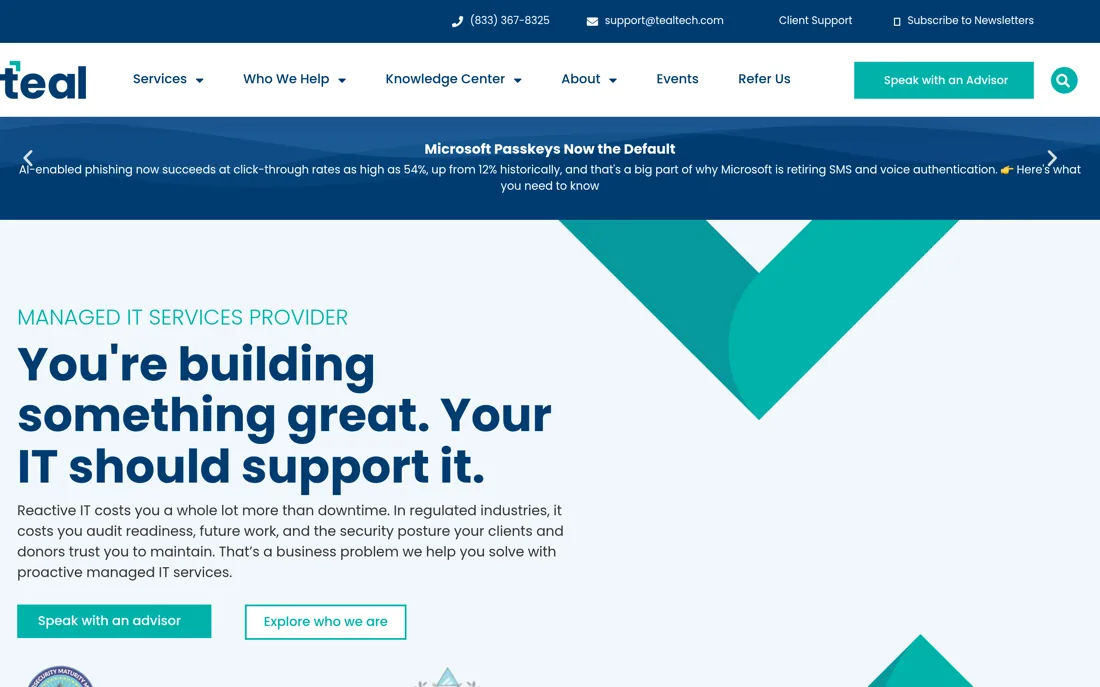
Teal is a small DC managed provider, and the Washington market has a large population of organisations that are neither federal agencies nor venture-backed startups: trade associations, non-profits, advocacy groups and professional bodies. Those organisations need dependable managed IT with sound security hygiene and rarely need a nation-state threat model. That is the segment a firm like Teal fits, and matching the provider to the actual threat model is the entire point of this exercise.
Managed IT Built to Help Your Organization Thrive
How Teal describes itself on tealtech.com, September 2026
Strengths
- Well matched to DC associations and non-profits
- $1,000 minimum makes a first engagement easy to scope
Watch out for
- Small team without an independent 24/7 capability
- Not positioned for federal contract compliance work
Team size: 10-49 · Rate: $150-$199 · Minimum engagement: $1,000+
6. B/Net Systems
Annapolis, MD · Website: bnetsystems.com
Best for: Annapolis and Maryland-side organisations wanting a genuinely small local partner
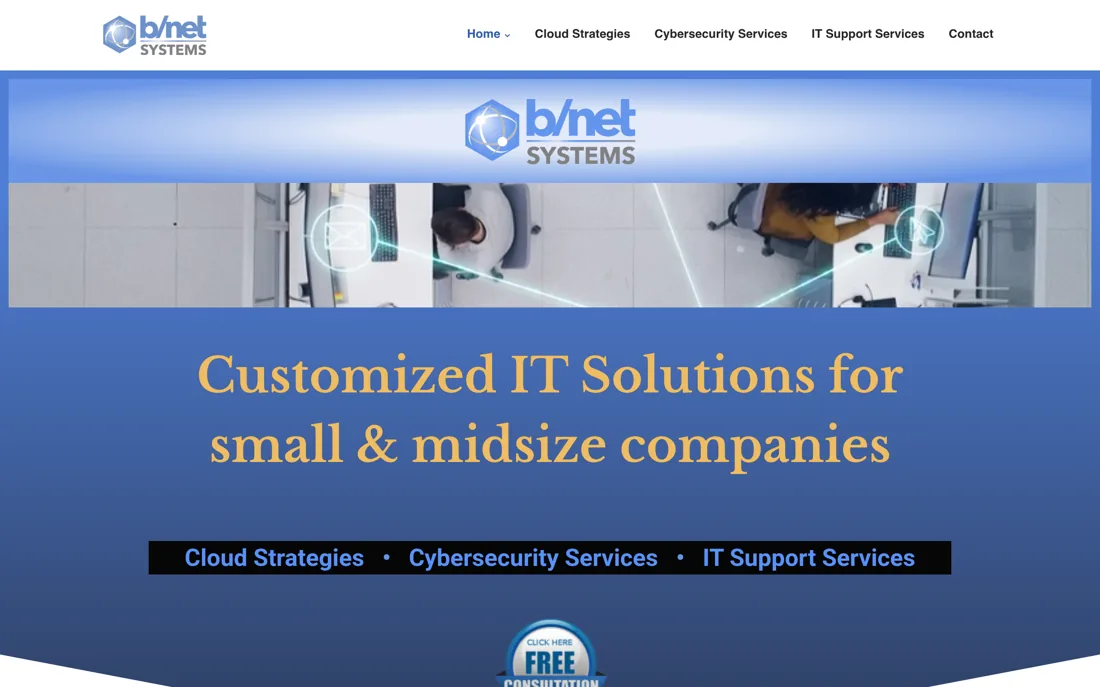
B/Net Systems is the smallest firm in this entire series, in the 2 to 9 employee band, based in Annapolis. That is a real option rather than a curiosity. For a twenty-person organisation on the Maryland side of the DC metro, a two-person firm that answers the phone and knows your network beats a national provider whose ticketing system you will never escape. The limits are obvious and should be planned around: holidays, illness and incident cover all need a documented answer.
B/Net Systems - Scalable, Turnkey IT Solutions
How B/Net Systems describes itself on bnetsystems.com, September 2026
Strengths
- Genuinely personal service; you will know everyone who touches your systems
- Low minimum and a Maryland-side location outside the DC premium
Watch out for
- At 2-9 people, holiday and illness cover is a real planning question
- No independent round-the-clock incident capability
Team size: 2-9 · Rate: $150-$199 · Minimum engagement: $1,000+
7. TPx
National, with DC, Atlanta and Austin offices · Website: tpx.com
Best for: Multi-site businesses that want networking, voice and security from one supplier
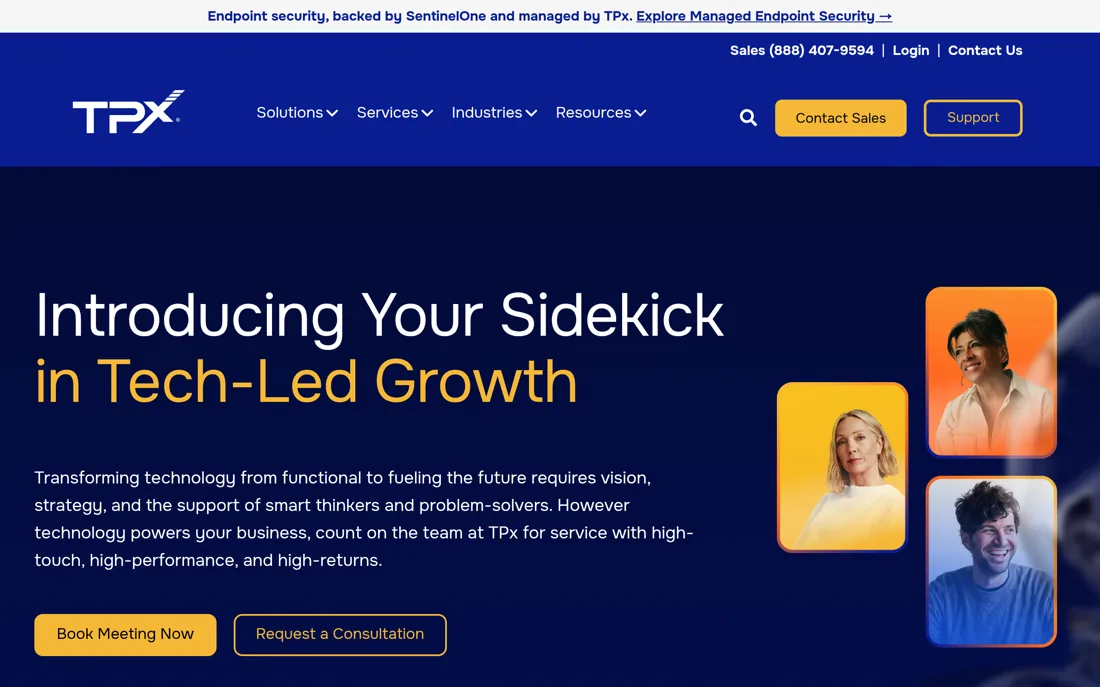
TPx comes at security from the network side, with a background in managed connectivity and voice, and offices in several of the cities in this series. For a business with many locations that is already buying network services, consolidating security with the same supplier removes a genuine source of finger-pointing when something breaks between the firewall and the carrier. The $1,000 minimum and mid-range rate make it accessible. It is a broad provider rather than a specialist security consultancy.
Your Sidekick for IT Services & Tech Solutions
How TPx describes itself on tpx.com, September 2026
Strengths
- Network, voice and security under one supplier and one support number
- Low entry point and a mid-range published rate
Watch out for
- Breadth over depth; not a specialist security consultancy
- Security heritage is newer than the networking heritage
Team size: 250-999 · Rate: $100-$149 · Minimum engagement: $1,000+
How to Choose a Cybersecurity Company in Washington, D.C.
Several of the providers below are managed IT firms with a security practice attached, and the rest fall into four or five quite different categories. That makes the selection process matter more than the shortlist. Work through these five steps in order.
- Work out which of the things below you are buying
A managed provider keeps your estate running day to day. A testing firm tries to break in and reports how it went. A consultancy decides what you should do and in what order. A product vendor sells you a platform somebody then has to operate. The table above says which is which.
- Ask who fixes the problem after it is found
A scan, an audit and a penetration test all end with a document. Somebody then has to change firewall rules, rebuild permissions, roll out multi-factor authentication and argue with a vendor about a legacy application. Ask in writing whether remediation is included, excluded, or billed separately.
One practical note on frequency: the Pentestas AI pentesting platform makes it realistic to test on your release cadence rather than your budget cycle, because the AI does the exhaustive parameter work and retesting after remediation is included.
- Get the scope and the price in writing before anyone starts
A proposal that prices security services without listing what is monitored, tested or documented is not a proposal you can hold anyone to. Ask for a fixed or capped price and an explicit list of exclusions. The price transparency panel further down shows how many of these firms publish anything at all.
- Read the contract before you read any framework
In Washington the obligation is usually a clause, not a statute. Which security clauses are in your award, what do they flow down to your subcontractors, and by when? A provider who wants to discuss frameworks before reading your contract is selling you their catalogue.
- Ask what you keep if you leave after twelve months
Documentation, configurations, log history, tenancy ownership. If the answer is that you keep nothing, you are not buying a security programme, you are renting one, and the renewal conversation will reflect that.
Good signs
- They name the engineer who will do the work, and you can check that person exists
- They tell you what is out of scope before you ask
- They are willing to quote a fixed price for a bounded piece of work
- They ask about your customers and your parent company, not just your firewall
- They can say plainly which parts of the job they would subcontract
Walk away if
- Security is one of a dozen services listed and nobody on the team does it full time
- The proposal prices security services as a single line with no itemised scope
- The recommendation happens to be the product they resell
- They will not put the remediation position in writing
- They quote a federal certification timeline without reading your contract
Five questions worth putting in the RFP
| Ask this | Why it matters | What a good answer sounds like |
|---|---|---|
| What proportion of your revenue is security work? | A directory search returns many firms listing cybersecurity among a dozen services. | A number, followed by the names of the people who do it full time. |
| Who specifically will be assigned, and what is their background? | Small teams sell with a senior and deliver with a junior. It is the most common complaint. | A name, a history you can verify, and a willingness to put it in the contract. |
| What does your managed security tier actually monitor, and during which hours? | MSSP is a marketing term as often as it is an operating model. | Named data sources, named hours, and who reads an alert at 03:00. |
| Is remediation included, excluded, or billed separately? | This is where the budget you did not plan for appears. | One of the three words, in writing, before you sign. |
| What happens contractually if we are breached during the engagement? | It reveals how much of the risk the provider is genuinely taking on. | A clear, unembarrassed answer. Whether they have thought about it matters most. |
Atlant Security editorial, September 2026. These are the questions we would ask, based on what goes wrong in engagements we are called in to rescue.
What Cybersecurity Costs in Washington, D.C.
Washington rates sit at the higher end nationally. Published bands among firms here run $100 to $149 at the low end, $150 to $199 for most, and minimum engagements from $1,000 up to $25,000 for specialist application security work. That $25,000 floor is not unreasonable; it reflects the reality that a serious application penetration test is weeks of skilled labour.
CMMC readiness is the line item that surprises people. For a small contractor starting from nothing, the combination of policy work, technical remediation, evidence collection and assessment routinely runs into tens of thousands of dollars, and the timeline is measured in months rather than weeks. Starting before a contract depends on it is materially cheaper than starting after.
A fixed-price independent audit generally runs $8,000 to $35,000 and is the sensible first step for any organisation that is not yet sure which obligations actually apply to it.
The practical problem with buying here
Price transparency among these providers
What each firm publishes about what it charges, before you have spoken to anyone.
| Provider | Hourly rate published | Minimum engagement published | Fixed price offered |
|---|---|---|---|
| Foresite Cybersecurity | |||
| ioSENTRIX | |||
| designDATA | |||
| Atlant Security | |||
| Teal | |||
| B/Net Systems | |||
| TPx |
5 of the 7 publish an hourly rate. 7 publish a minimum engagement. Expect to ask, and expect to get the answer in writing before anyone starts.
Rates and minimums as published by each firm on the Clutch directory, checked 14 September 2026. A cross means the figure is not published. It is not a finding that the firm refuses to quote.
| What you are buying | Price | Where this number comes from |
|---|---|---|
| Hourly rate, published bands | $100-$149 · $150-$199 | Published by 5 of the 7 firms above on the Clutch directory. |
| Minimum engagement, published | $1,000+ to $25,000+ | Published by 7 of the 7 firms above. |
| Fixed-price independent security audit | US$8,000 to US$35,000 | Atlant Security estimate, based on our own engagements. Not a published figure. |
| Penetration test, bounded scope | US$8,000 to US$20,000 | Atlant Security estimate. Varies more with scope than with provider. |
| Managed detection and response, per year | From US$30,000 | Atlant Security estimate. The variable is who reads the alerts, not the platform licence. |
| Gap assessment against PCI DSS | Quoted per organisation | Scope depends on which framework applies. See our PCI DSS page. |
Rows marked as published are the firms’ own figures, checked 14 September 2026. Rows marked as an estimate are Atlant Security’s, are labelled as such, and should be treated as a planning range rather than a quotation.
Frequently Asked Questions: Cybersecurity Companies in Washington, D.C.
Do I need a cleared provider for commercial work in D.C.?
No. Clearances matter for classified environments and certain federal contracts. For commercial work, an association, a law firm or a non-profit, clearance status is irrelevant and should not drive your selection. Judge on specialism and on who is actually assigned to the work.
What is CMMC and does it apply to my company?
CMMC is the Department of Defense programme that verifies contractors are protecting controlled unclassified information. It applies through your contract: if you handle such information for DoD, directly or as a subcontractor, requirements flow down to you. Check your contract clauses rather than assuming your size exempts you.
Which D.C. firm should I use for application security testing?
ioSENTRIX in Herndon specialises in penetration testing and application security. Note its $25,000 minimum engagement, which reflects that proper application testing is a multi-week specialist exercise rather than a scan.
What does a cybersecurity company cost in Washington D.C.?
Published hourly bands on this page run $100 to $199, with minimum engagements from $1,000 to $25,000 depending on whether you are buying managed services or specialist testing. A fixed-price independent audit generally runs $8,000 to $35,000.
We are a small association. Do we really need a security programme?
You need proportionate hygiene, not an enterprise programme. Multi-factor authentication everywhere, managed backups you have actually tested, current patching, and a written incident plan will address the overwhelming majority of what realistically threatens you. Buy that first and revisit once it is genuinely in place.
We are a small subcontractor. Do federal security requirements reach us?
Frequently yes, through flow-down clauses in the prime contract rather than directly. That makes your prime, not a regulator, the party who enforces it. Ask your prime and your contracting officer which clauses apply to your specific award, because the answer differs between contracts and changes over time.
Is FedRAMP worth pursuing for a small software company?
Only if you have a named agency sponsor and a realistic revenue case. It is a long and expensive authorisation programme, and starting it speculatively is one of the more costly mistakes a small company in this market can make. An independent assessment first will tell you whether you are anywhere near ready.
Not sure which of these you actually need?
That is the question a fixed-price security audit answers. We assess what you have, tell you what to fix and in what order, and give you a plan you can hand to any provider on this page, including one of our competitors. 200+ assessments across 14 countries since 2013, fixed price agreed before we start.
See what a fixed-price audit coversRelated reading: the 15 largest computer security companies compared, our fixed-price IT security audit, and virtual CISO services.
Need options beyond Washington, D.C.? The worldwide cybersecurity companies directory covers providers worldwide, filterable by speciality and location.
