
Security Services · Partner Selection · June 2026
A single hidden firewall misconfiguration once cost one of our clients more in downtime than their entire annual security budget. Preventing exactly that is the whole point of hiring a computer security service. Here is how to evaluate one, choose well, and get real value from the partner you pick.
Key Takeaways
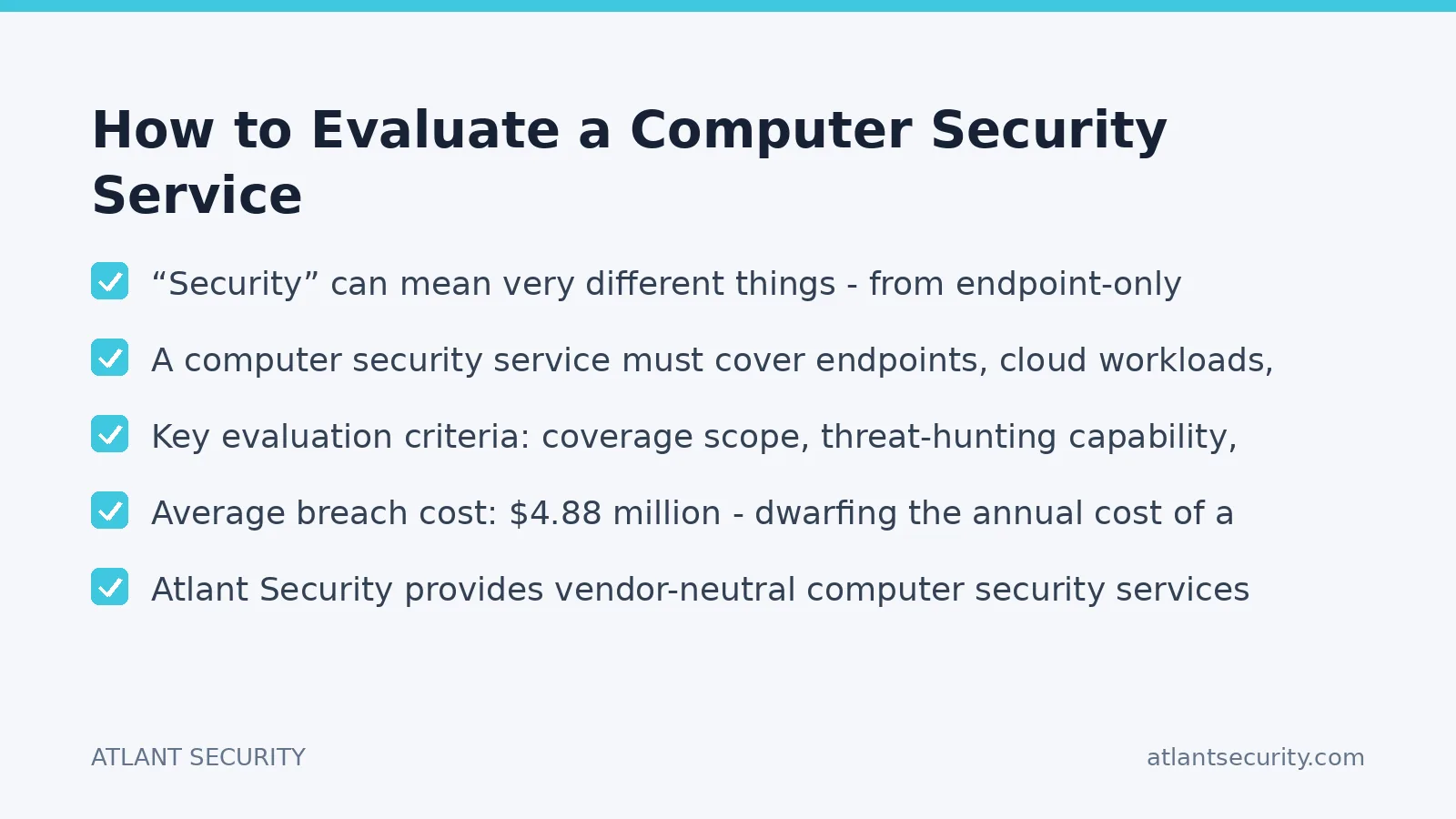
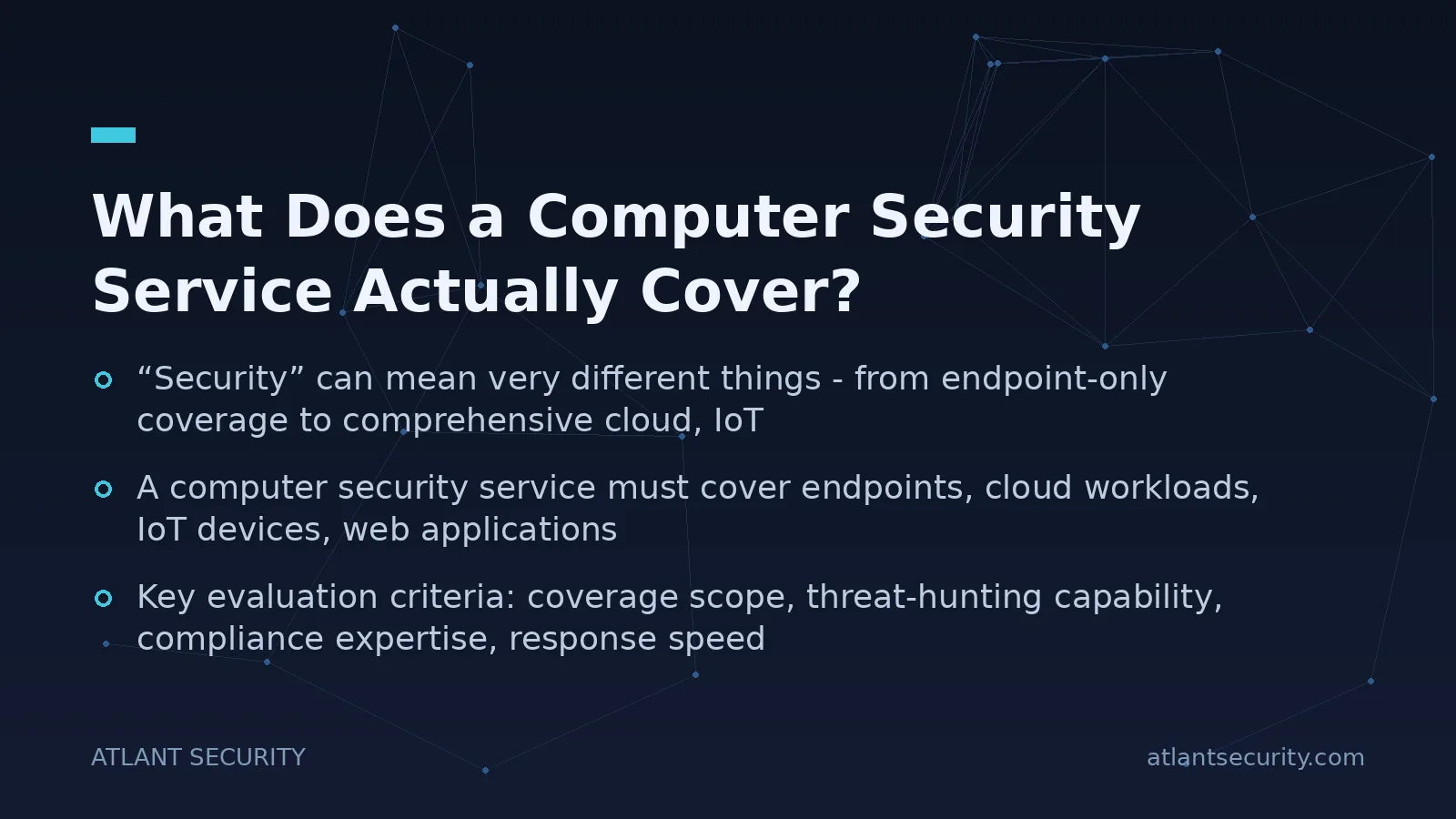
- “Security” can mean very different things - from endpoint-only coverage to comprehensive cloud, IoT, and application protection
- A computer security service must cover endpoints, cloud workloads, IoT devices, web applications, and identity management
- Key evaluation criteria: coverage scope, threat-hunting capability, compliance expertise, response speed, and pricing model
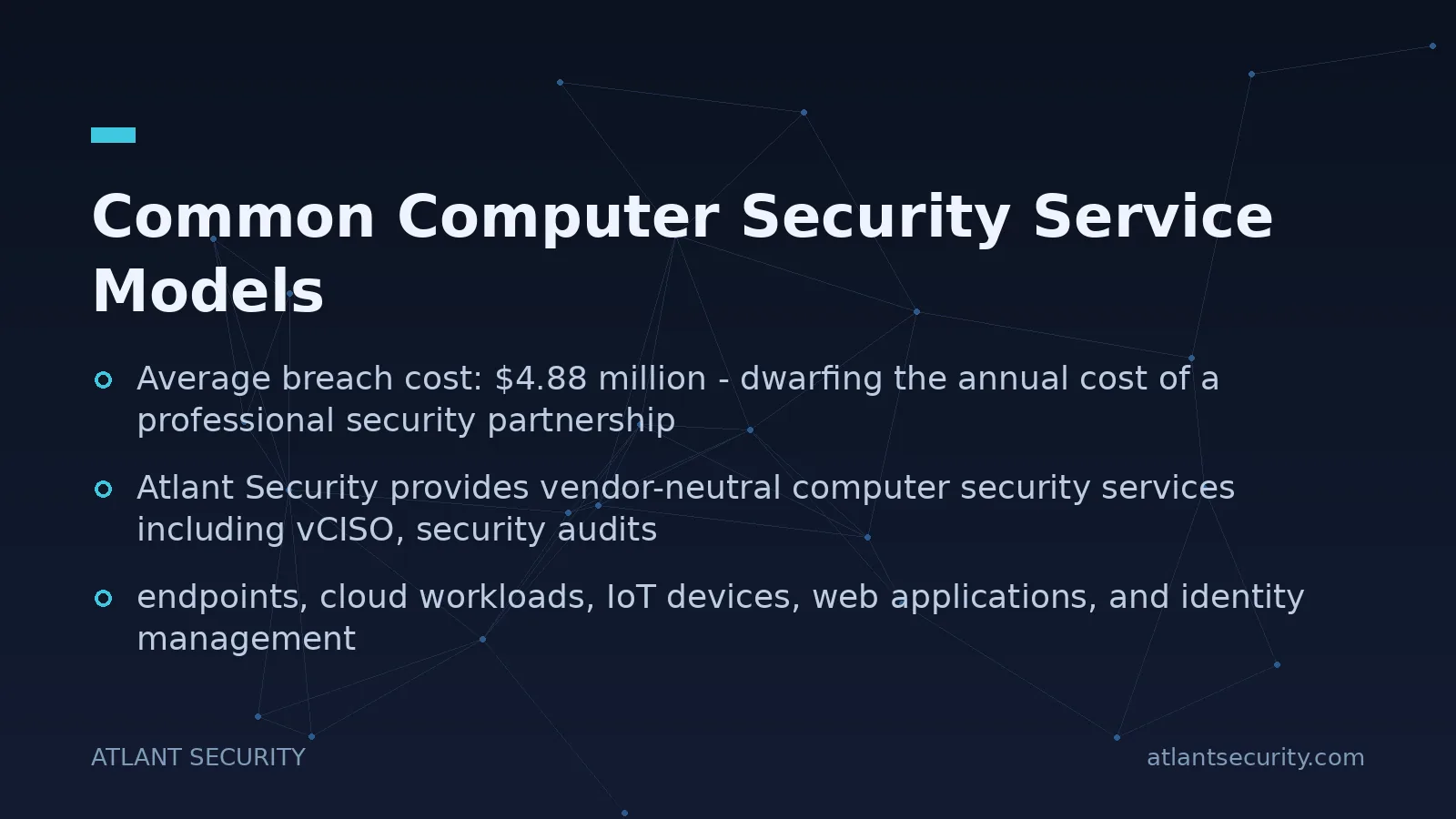
- Average breach cost: $4.88 million - dwarfing the annual cost of a professional security partnership
- Atlant Security provides vendor-neutral computer security services including vCISO, security audits, vulnerability assessments, and 24/7 monitoring
Last quarter, one of our clients discovered a hidden configuration error in their firewall - and did not notice until attackers had already moved laterally through their network. Fixing the breach cost them more in downtime than they had budgeted for the entire year, and the board was scrambling to reassure customers.
That kind of surprise is exactly what you hire a computer security service to prevent. Yet when you start interviewing vendors, you quickly realize that “security” can mean very different things.
This guide helps you understand what to look for, how to evaluate candidates, and how to ensure your investment translates into actual protection.
Service Scope
What Does a Computer Security Service Actually Cover?
| Domain | What It Covers | Why It Matters |
|---|---|---|
| Endpoints & Firewalls | Workstations, servers, network perimeter devices | The traditional attack surface - still responsible for the majority of initial access |
| Cloud Workloads | AWS, Azure, GCP infrastructure, containers, serverless | Misconfigured cloud environments are now the #1 source of data breaches |
| IoT Devices | Cameras, sensors, industrial controllers, smart devices | Often unpatched, unmonitored, and connected to production networks |
| Web Applications | Customer-facing sites, APIs, internal portals | Application-layer attacks bypass traditional network security |
| Identity & Access | SSO, MFA, privileged access, directory services | Identity is the new perimeter - compromised credentials cause 80%+ of breaches |
| Email & Collaboration | Email filtering, phishing protection, collaboration tool security | Phishing remains the most common initial attack vector |
The Coverage Question
When evaluating a computer security service, the first question is: are we talking only about endpoints and firewalls, or also cloud workloads, IoT devices, and web applications? Do they have a dedicated threat-hunting team, or just standard antivirus signatures? The scope of coverage determines whether you are buying real protection or security theater.
Selection Guide
How to Evaluate a Computer Security Service
| Factor | Questions to Ask |
|---|---|
| Coverage Scope | What environments do you protect? Endpoints only, or cloud + IoT + apps? |
| Threat Hunting | Do you have dedicated threat hunters, or rely on automated signatures only? |
| Compliance Expertise | Which frameworks do you support? ISO 27001, SOC 2, PCI-DSS, GDPR, NIS2? |
| Response Speed | What is your SLA for critical incident response? 15 minutes? 1 hour? 24 hours? |
| Reporting Quality | Can I see a sample report? Do you provide executive summaries for the board? |
| Pricing Model | Per-seat, per-asset, flat monthly, or project-based? What is NOT included? |
| Vendor Neutrality | Do you take commissions from technology vendors? Will recommendations be biased? |
Service Models
Common Computer Security Service Models
| Model | What You Get | Best For |
|---|---|---|
| Managed SOC/MDR | 24/7 monitoring, detection, and response | Organizations needing continuous protection without building an in-house SOC |
| Virtual CISO (vCISO) | Executive-level security leadership, roadmap, board reporting | Companies that need strategic direction without a full-time CISO hire |
| Security Audits & Assessments | Point-in-time evaluation, gap analysis, remediation roadmap | Organizations preparing for compliance or wanting to understand their posture |
| Penetration Testing | Simulated attacks to find exploitable vulnerabilities | Organizations needing to validate their defenses or meet compliance requirements |
| Incident Response | Emergency investigation, containment, and remediation | Organizations experiencing an active breach or wanting a retainer for emergencies |
The Investment
Understanding the True Cost of Security
The Math Is Simple
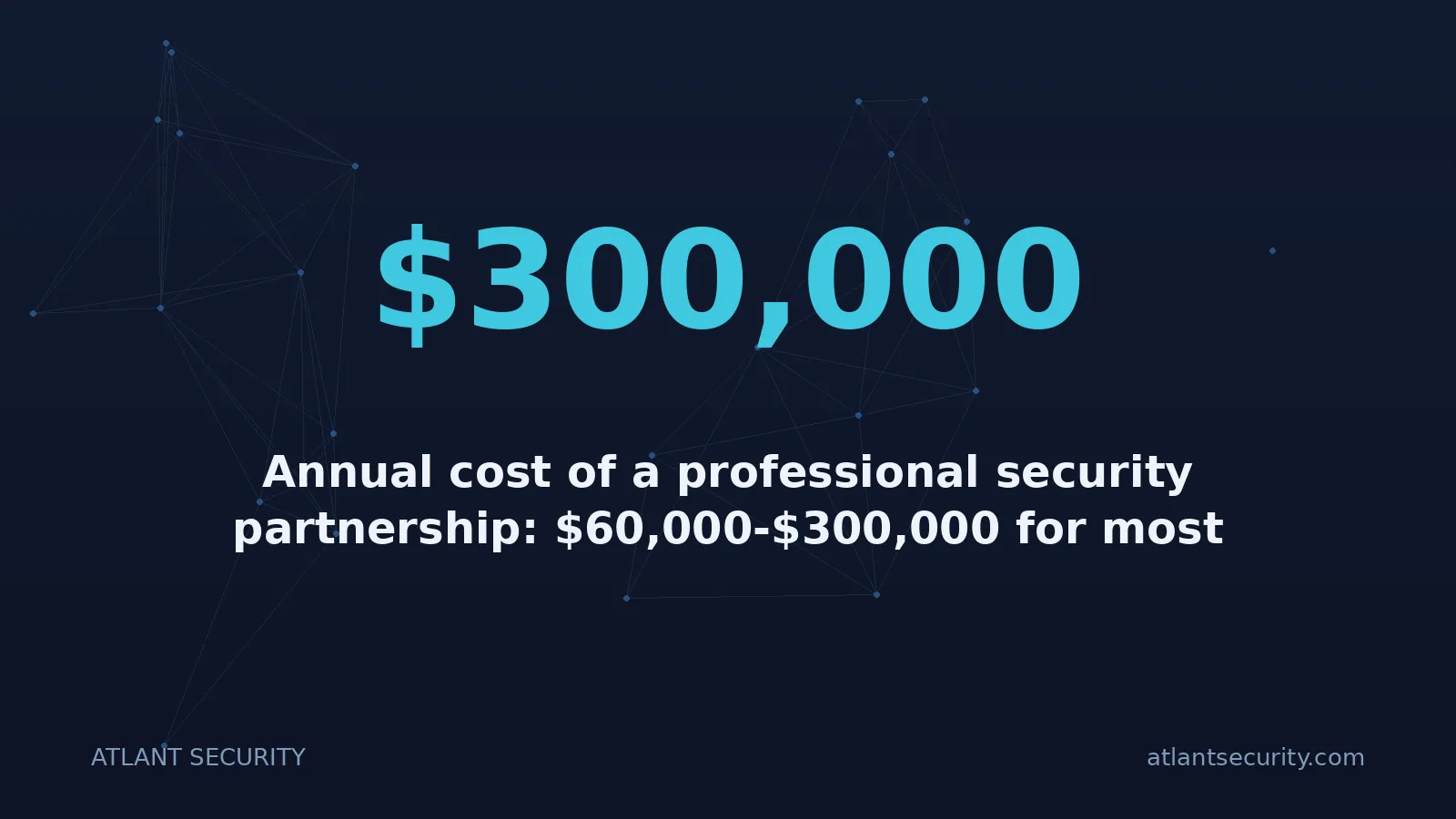
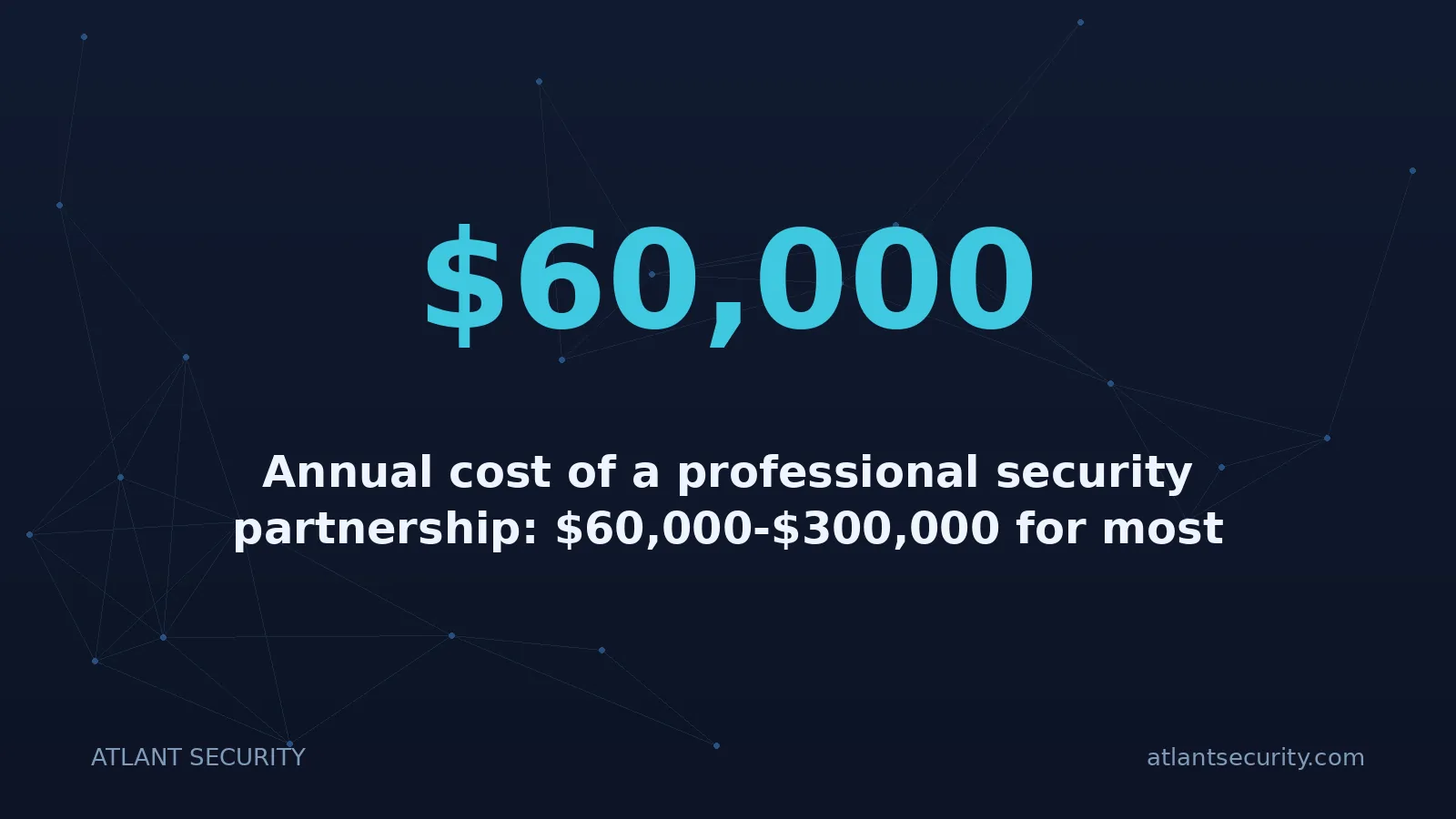
Average breach cost: $4.88 million (IBM Cost of a Data Breach Report 2025)
Annual cost of a professional security partnership: $60,000-$300,000 for most mid-market organizations
The security partner is not a cost center. It is the cheapest insurance policy your business will ever buy.
Common Questions
Frequently Asked Questions
What is a computer security service?
A computer security service is a professional offering that protects your organization’s digital assets - including endpoints, networks, cloud infrastructure, applications, and data - from cyber threats. Services range from continuous monitoring and threat detection to strategic advisory, compliance readiness, and incident response.
How much does a computer security service cost?
Costs depend on scope and model. Managed SOC: $5,000-$25,000/month. Virtual CISO: $3,000-$15,000/month. Security audits: $8,000-$40,000 per engagement. Penetration testing: $10,000-$50,000. For a mid-market company, a comprehensive security program typically runs $60,000-$300,000 annually - a fraction of the $4.88M average breach cost.
Do I need a managed SOC or just periodic assessments?
It depends on your threat profile and regulatory requirements. If you handle sensitive data, process payments, or are in a regulated industry, continuous monitoring (managed SOC) is strongly recommended. If you are smaller and lower-risk, periodic assessments combined with a vCISO for strategic direction may be sufficient. Many organizations start with assessments and graduate to managed services as they grow. When you reach that step, our managed security services site sets out what a managed service should define before you commit: ownership per platform, onboarding, monitoring coverage and response authority.
Our guide to what a managed security service provider is explains the service models and ranks 35 providers by fit.
What is the difference between antivirus and a computer security service?
Antivirus is a single tool that detects known malware on endpoints. A computer security service is a comprehensive program that includes threat detection across all environments, vulnerability management, access control, compliance management, incident response, and strategic advisory. Antivirus is one component of security - not a security program.
How do I know if my current security provider is doing a good job?
Ask for metrics: mean time to detect (MTTD), mean time to respond (MTTR), number of incidents detected vs. false positives, vulnerability remediation rates, and compliance status. If your provider cannot produce these metrics, that itself is a red flag. Consider an independent security assessment to validate their effectiveness.
Why should I choose a vendor-neutral security partner?
Vendor-neutral firms like Atlant Security do not earn commissions from technology vendors. This means every recommendation is based on what is best for your organization, not what generates the highest kickback. In a market where many firms push specific tools for financial incentives, independence ensures you get solutions matched to your actual risks and budget.
Ready to Find Your Security Partner?
Atlant Security provides vendor-neutral computer security services: Virtual CISO, security audits, vulnerability assessments, cloud security consulting, and incident response. We help you build a security program that matches your actual risks and budget.
Published: October 2026 · Author: Alexander Sverdlov
This guide reflects our independent experience helping organizations evaluate and select computer security services. Always conduct your own due diligence before selecting a partner.
