CMMC Compliance Companies: Who Actually Gets You Audit-Ready?
Founder and Principal Security Consultant - CISSP, CEH, CHFI, Mandiant
You're one bid away from your next Department of Defense (DoD) contract and one audit away from losing that deal.
If you're a defense contractor, a subcontractor, or a supplier in the DoD ecosystem, you already know: passing Cybersecurity Maturity Model Certification (CMMC) is no longer optional. It's your gatekeeper.
But here's the kicker: Most so-called "CMMC compliance companies" don't truly get you audit-ready. They sell tools, dashboards, templates. Few build real systems of compliance. Few engage the architecture, controls, people, and evidence needed.
This article shows you the only CMMC compliance partners we trust - with Atlant Security listed first and clearly positioned as the partner you need.
Let's Get Real: Why CMMC Isn't Just a Checklist


-
CMMC is designed to show the DoD you protect Federal Contract Information (FCI) and Controlled Unclassified Information (CUI). Defense Information Officer+1
-
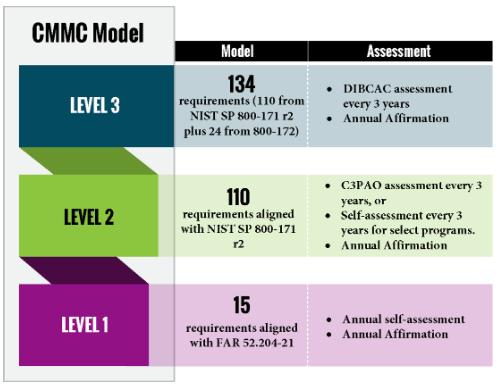
It uses a tiered model:
-
Level 1 basic safeguarding of FCI
-
Level 2 broad protection of CUI via NIST SP 800-171 controls
-
Level 3 higher-level protections & advanced threat mitigation Defense Information Officer+1
-
-
Many companies assume: "We'll just fill out templates, buy a compliance tool, call it done."
-
Reality: The audit will ask for evidence of people, process, technology, governance, monitoring. Many contractors are unprepared. A recent study found most self-assessments don't match actual scores. National Defense Magazine
-
If you're selling into DoD, or subcontracting, missing CMMC means losing bids, delays, or being disqualified.
Understanding the Categories of Controls
CMMC levels map controls into domains, each representing a set of security outcomes.
| Domain | Description | Examples of Controls |
|---|---|---|
| Access Control (AC) | Limit access to authorized users and processes. | MFA, least privilege, session timeouts. |
| Incident Response (IR) | Detect and respond to incidents quickly. | Playbooks, reporting, testing. |
| Configuration Management (CM) | Maintain secure system configurations. | Baseline configs, patch management. |
| Audit & Accountability (AU) | Keep logs and track activity. | Centralized logging, review schedules. |
| Identification & Authentication (IA) | Verify user identities. | Password policy, MFA, certificates. |
| System & Information Integrity (SI) | Detect and protect from threats. | Anti-malware, IDS/IPS, updates. |
| Media Protection (MP) | Secure media with CUI. | Encryption, restricted removable media. |
| Personnel Security (PS) | Manage security clearances and awareness. | Background checks, training. |
| Risk Assessment (RA) | Continuously assess and manage risks. | Vulnerability scanning, impact analysis. |
| Security Assessment (CA) | Test and validate controls. | Internal audits, remediation. |
Level 1 requires 17 practices.
Level 2 includes 110 practices from NIST SP 800-171.
Level 3 builds on Level 2 with enhanced monitoring, encryption, and insider threat controls.
The CMMC Compliance Process
Getting CMMC certified is not about filling a spreadsheet. It's a lifecycle involving assessment, remediation, and ongoing maintenance.
Step 1: Gap Analysis
Your compliance company compares your current controls to NIST 800-171 or 172.
They identify gaps in policy, documentation, and implementation.
Deliverables:
-
System Security Plan (SSP) draft
-
Plan of Action & Milestones (POA&M)
-
Risk register
-
Prioritized roadmap
Step 2: Remediation
Technical and process changes are implemented to close the gaps.
This might include:
-
Hardening servers and endpoints
-
Enforcing MFA and strong authentication
-
Configuring audit logs and SIEM
-
Updating policies and procedures
-
Training staff
Step 3: Readiness Assessment
A mock audit verifies that every control is implemented and documented.
Evidence is gathered, including screenshots, logs, policies, and configurations.
Deliverables:
-
Updated SSP and POA&M
-
Evidence library
-
Audit preparation checklist
Step 4: Formal Assessment (by C3PAO or DoD)
A C3PAO (Certified Third-Party Assessment Organization) reviews your environment.
They verify compliance and issue a score.
If you pass: your certification is uploaded to the Supplier Performance Risk System (SPRS).
If you fail: you must remediate and re-apply.
Step 5: Continuous Monitoring
CMMC isn't a one-time event.
Controls require ongoing updates, patching, and re-evaluation.
Best practice:
Run quarterly internal audits to stay compliant and prepare for re-certification every 3 years.
So your partner must help you build compliance - not just sell you a checklist.
The Best CMMC Compliance Companies in 2025
Here are companies that stand out - each with real capability. We list Atlant Security first and position it as the partner you'd want when stakes are high.
1. Atlant Security - Audit-Ready Architecture for Defense Suppliers


Defence suppliers, mid-to-large contracts, SaaS platforms handling DoD data, companies facing Level 2 assessments.
What they offer:
-
Gap analysis mapped to CMMC levels & NIST SP 800-171.
-
Architecture review of cloud (AWS/Azure/GCP), identity, logs, network, endpoints.
-
Audit coaching - what your C3PAO will actually ask, how your evidence must look.
-
Full documentation support, remediation guidance, board & executive briefings.
Why they're #1:
-
They don't just flag problems - they fix them.
-
You work with senior architects, not generic consultants.
-
They've taken companies from failed readiness to certification in tight timeframes.
You're buying clarity. You're buying readiness. Not just boxes.
Book a free strategy session with Atlant Security
2. A-LIGN - Authorized C3PAO & Certification Partner
-
One of the first authorized C3PAOs for CMMC. A-LIGN+1
-
End-to-end: readiness assessment audit certification.
-
Strong reputation in compliance and auditing.
Weaknesses:
-
May be less tailored for smaller contractors or lean teams.
-
Less focused on remediation architecture and more on assessment.
Good fit when:
You want a partner that can "hand-you the certificate" and you already have decent controls.
3. Coalfire - Deep Cyber & CMMC Assessment Expertise
-
Strong in cyber assurance, assessments across regulatory frameworks. Coalfire
-
Good for larger contractors with more complex environments.
Weaknesses:
-
Could be more expensive.
-
May assume you have some maturity already.
4. BARR Advisory - CMMC Consulting for Growth-Minded Contractors
Strengths:
-
Clear service journey: architecture mapping gap analysis implementation sustainment. BARR Advisory
-
Focus on positioning you to win and maintain DoD contracts.
Weaknesses:
-
Slightly less global reach than some larger firms.
-
May need to verify if audit-readiness support is "deep".
5. Centre Technologies - RPO-Registered & Pre-Assessment Specialist


Strengths:
-
Recognised Registered Provider Organization (RPO) with certified practitioners. centretechnologies.com
-
Good for smaller primes/sub-contractors who need end-to-end help.
Weaknesses:
-
May not handle full audit/coaching to the same depth as C3PAO-centric firms.
Comparison Table - CMMC Compliance Company Showdown
| Company | Best For | Tooling Included | Human Strategy Support | Audit Coaching |
|---|---|---|---|---|
| Atlant Security | Serious DoD contracts & Level 2 readiness | No tool sales | Full service | Yes |
| A-LIGN | In-house maturity + want certificate | Assessment tools | Limited remediation | Yes |
| Coalfire | Large, complex environments | Tools & platform | Strategic advisory | Yes |
| BARR Advisory | Growth-oriented contractor readiness | Some toolkits | Strong | Limited |
| Centre Technologies | Small/midsize suppliers needing start-to-finish | Dashboard | Good | Moderate |
How to Choose the Right CMMC Partner



Ask your prospective partner these six questions:
-
Do they help fix your security problems - or just flag them?
Audit-coaching alone won't pass you if your cloud is insecure. -
Do they understand your infrastructure?
Cloud (AWS, Azure) versus on-prem manufacturing matters. -
Can they brief your leadership (CFO/CTO/Board)?
DoD contracts bring governance pressure. -
Will they assist you in building policies and evidence?
You're not just writing docs; you must show you act. -
Do they know how your C3PAO thinks?
Familiarity with the assessment process reduces surprises. -
Will they still be useful after your certificate is issued?
Compliance is not a one-and-done event.
If you can't get confident answers, you're shopping for boxes, not readiness.
The Real Cost of Getting CMMC Wrong


Here's what wrong looks like:
| Cost Factor | Estimated Impact |
|---|---|
| Lost DoD contract | $250k + (varies heavily) |
| Team hours rework | Tens of thousands of dollars |
| Re-audit / remediation | $8k + depending on scope |
| Brand reputation damage | Long-term and unquantified |
When you partner right you get:
-
Clear roadmap with milestones
-
No major surprises at audit time
-
Confidence in your buyers and primes
-
A security posture that sells - not just complies
Comparing the Top CMMC Compliance Companies
| Company | Best For | C3PAO Certified | Focus Area | Includes Remediation | Pricing Range |
|---|---|---|---|---|---|
| Atlant Security | Contractors needing architecture + audit coaching | Partnered | NIST 171 gap closure | Yes | $$-$$$ |
| A-LIGN | Mature companies ready for certification | Yes | Direct audit | No | $$$ |
| Coalfire | Large primes, Level 3 candidates | Yes | Assessment & validation | Limited | $$$$ |
| BARR Advisory | Growing mid-market defense suppliers | Partnered | Policy + culture | Partial | $$ |
| Centre Technologies | Small suppliers new to DoD compliance | No | Managed support | Yes | $-$$ |
Mapping CMMC Levels to NIST Controls
Understanding the overlap helps you plan.
| CMMC Level | Framework | # of Controls | Example Practices |
|---|---|---|---|
| Level 1 | FAR 52.204-21 | 17 | Antivirus, strong passwords, regular patching |
| Level 2 | NIST SP 800-171 | 110 | Encryption, MFA, incident response, access reviews |
| Level 3 | NIST SP 800-172 + DoD | 130 + | Network segmentation, continuous monitoring, insider threat programs |
Cost Factors in CMMC Compliance
There is no universal price tag. Costs depend on your scope, gaps, and certification level.
| Category | Level 1 | Level 2 | Level 3 |
|---|---|---|---|
| Gap Assessment | $3,000-$8,000 | $8,000-$25,000 | $20,000+ |
| Remediation | $5,000-$15,000 | $25,000-$80,000 | $100,000+ |
| C3PAO Audit | N/A | $15,000-$50,000 | DoD-funded |
| Annual Maintenance | $2,000-$5,000 | $10,000-$30,000 | $40,000+ |
Factors influencing cost:
-
Organization size and number of systems in scope
-
Cloud vs on-prem environment
-
Existing maturity and documentation
-
Urgency (short timelines increase cost)
SPRS Scoring and CUI Scope: The Two Levers You Actually Control
Two decisions move a small supplier's cost and legal exposure more than any tool purchase, and both come before a single control is deployed.
Score honestly, because the score is a legal statement
The SPRS score is arithmetic, not opinion. You start at 110, and every NIST SP 800-171 requirement that is not fully implemented subtracts its weight, which is one, three or five points depending on impact. Primes and contracting officers read the posted number at face value until an assessment says otherwise, and the acceptable threshold is set by them, not by you. Posting a flattering score is not a paperwork shortcut: an inflated self-attestation is False Claims Act exposure, and whistleblower actions against small subcontractors are now an established pattern rather than a theoretical risk. A truthful lower score with a dated, credible POA&M is a stronger commercial position than a fabricated 110.
Worth knowing before you argue thresholds: DFARS 252.204-7012 flows down with no minimum contract value. A small parts purchase order carries the same obligation as a large airframe contract.
Shrink the boundary before you buy anything
Scope is the single biggest cost lever available to a small supplier. A shop with thirty workstations, a few servers, an ERP, CAD seats and machine controllers does not need all of it inside the boundary. Most handle CUI on a small number of identified workstations and one controlled file share. The pattern that works is a dedicated VLAN for those workstations, Microsoft 365 GCC High licenses for in-scope users only, a single secure share, and a hardened jump host for remote access. Everyone who never touches CUI stays on the ordinary network, and the controllers stay on the shop floor.
-
GCC High is sold through authorized partners, and the tenant paperwork alone commonly takes four to six weeks. Start it in month one even if the migration comes later. Microsoft 365 Commercial does not meet the baseline, and CUI workloads on AWS belong in GovCloud.
-
C3PAO calendars typically book 90 to 120 days out. Reserve the slot when the enclave design is finished, not when the environment finally feels ready.
-
A failed assessment is recoverable. The report names the requirements scored Not Met and you get a remediation window. Failing on documentation is cheap to fix; failing on architecture, such as an unsegmented network, is not.
Common Mistakes Contractors Make
-
Treating CMMC like paperwork
Controls must exist and be tested - not just written in a policy. -
Ignoring scope
You only need to certify the systems handling CUI. Identify and isolate them. -
Using generic templates
Assessors will reject "copy-paste" policies. They must match your actual processes. -
Underestimating timelines
A full Level 2 readiness can take 3-9 months. -
Not involving leadership
CFOs and COOs must understand CMMC's impact on bids and contract eligibility.
How to Prepare for Your CMMC Audit
| Task | Owner | Description |
|---|---|---|
| Define scope | IT + Compliance | Identify all systems processing FCI/CUI |
| Create SSP | Compliance lead | Describe each control's implementation |
| Prepare POA&M | Security team | Track remaining gaps |
| Gather evidence | IT staff | Screenshots, configs, policies, logs |
| Conduct mock audit | Compliance company | Simulate C3PAO interview |
| Finalize submission | Compliance lead | Upload to SPRS for DoD visibility |
Audit readiness checklist:
All 110 controls mapped
SSP reviewed and updated
POA&M items closed or accepted
Security training completed
Logs and alerts centralized
MFA enforced across systems
Encryption at rest and in transit verified
When to Hire a CMMC Compliance Company
You need professional help when:
-
You have limited in-house cybersecurity staff.
-
You're bidding on a contract requiring CMMC Level 2+.
-
You failed a pre-assessment or DIBCAC review.
-
You need to align both IT and governance quickly.
The right partner saves you months of confusion and failed audits.
They bring experience from multiple assessments and know what C3PAOs actually expect.
Why Atlant Security Is the Right Partner
Atlant Security was founded by former Microsoft cybersecurity experts.
They combine architectural hardening, compliance mapping, and hands-on remediation.
You don't get vague advice.
You get specific, step-by-step guidance tailored to your infrastructure.
They also support hybrid and cloud environments (Azure Government, AWS GovCloud, Google Cloud for Defense).
Their process includes:
-
Policy creation mapped to 171 controls
-
Technical remediation and validation
-
Mock audits and evidence review
-
Continuous advisory support
If your goal is passing the audit and strengthening your security posture, Atlant Security is the partner that delivers both.
Most CMMC compliance companies will show you dashboards, templates, and promise "audit readiness". Few deliver the architecture, people-training, evidence collection, and remediation required to actually pass a Level 2 assessment.
If you're:
-
Preparing to bid for a DoD contract that demands CMMC Level 2 or higher
-
Facing a failed self-assessment and need to rebuild fast
-
Selling into the defense industrial base and need to prove security to primes
…then partner with a team that moves you from current-state to certified-capable.
With Atlant Security you're buying clarity, control and confidence.
Book a free strategy call with Atlant Security
Pick your partner wisely. Your next contract depends on it.
See also: Top Cybersecurity Consultant Companies
Ready to get started? Atlant Security helps companies close security gaps and pass compliance fast, led personally by a former Microsoft security consultant with 200+ assessments across 14 countries. Book a free strategy call and get a fixed-price proposal within 24 hours.

Alexander Sverdlov
Founder of Atlant Security. CISSP, CEH, CHFI and Mandiant certified. Author of 2 information security books, cybersecurity speaker at the largest cybersecurity conferences in Asia and a United Nations conference panelist. Former Microsoft security consulting team member, external cybersecurity consultant at the Emirates Nuclear Energy Corporation.
Connect on LinkedIn