

The Unseen Threat in M&A Deals
Mergers and acquisitions aren't just about spreadsheets, revenue, and synergy models anymore. They're about risk, and in today's deal landscape, cyber risk is one of the biggest blind spots.
The security posture of a target company is not just an IT concern - it's a financial liability and reputational bomb waiting to explode.
In 2025, cybersecurity due diligence isn't optional. It's a legal, operational, and strategic requirement - especially in deals involving software, finance, healthcare, or any data-driven business.
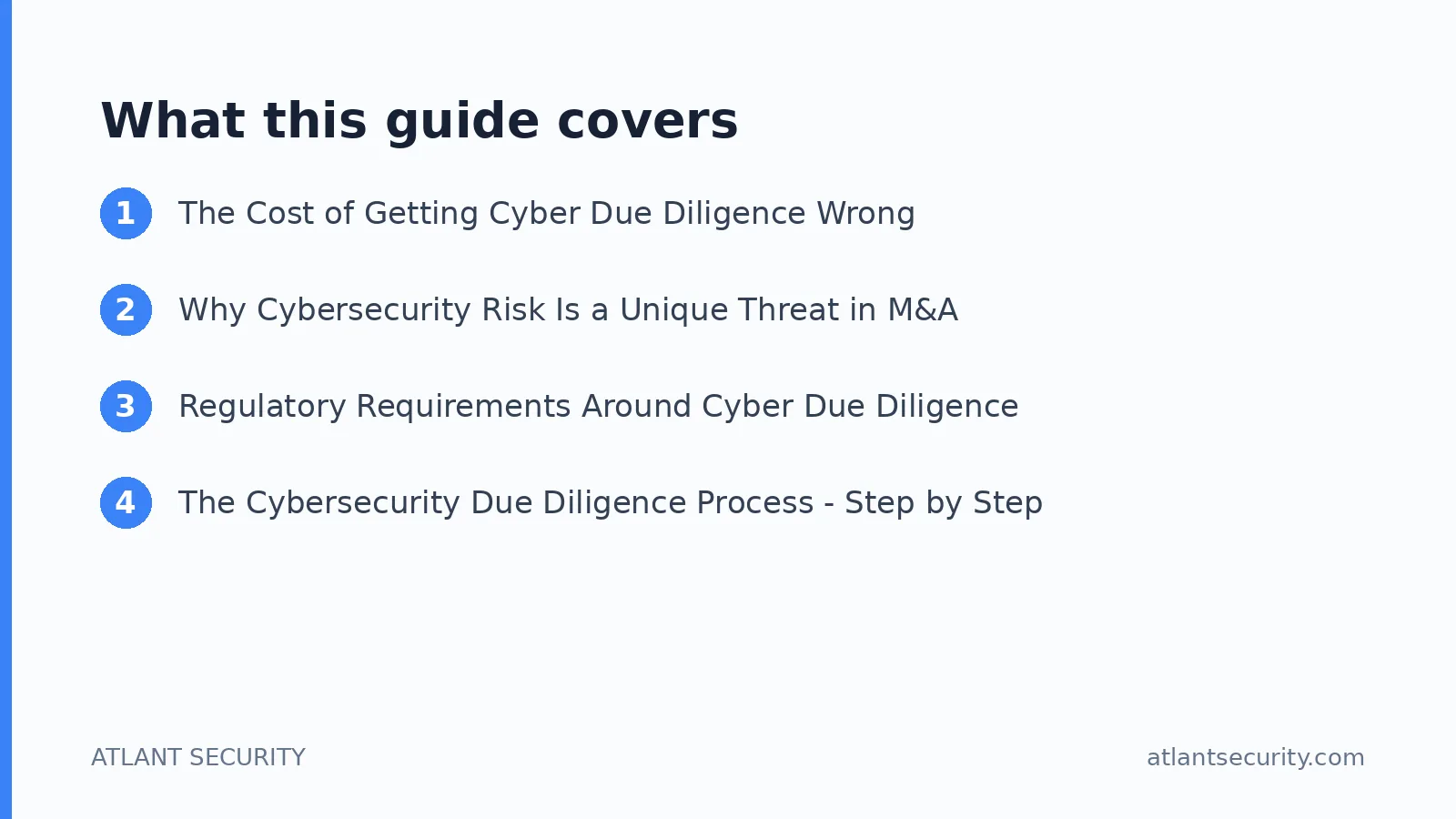
The Cost of Getting Cyber Due Diligence Wrong
-
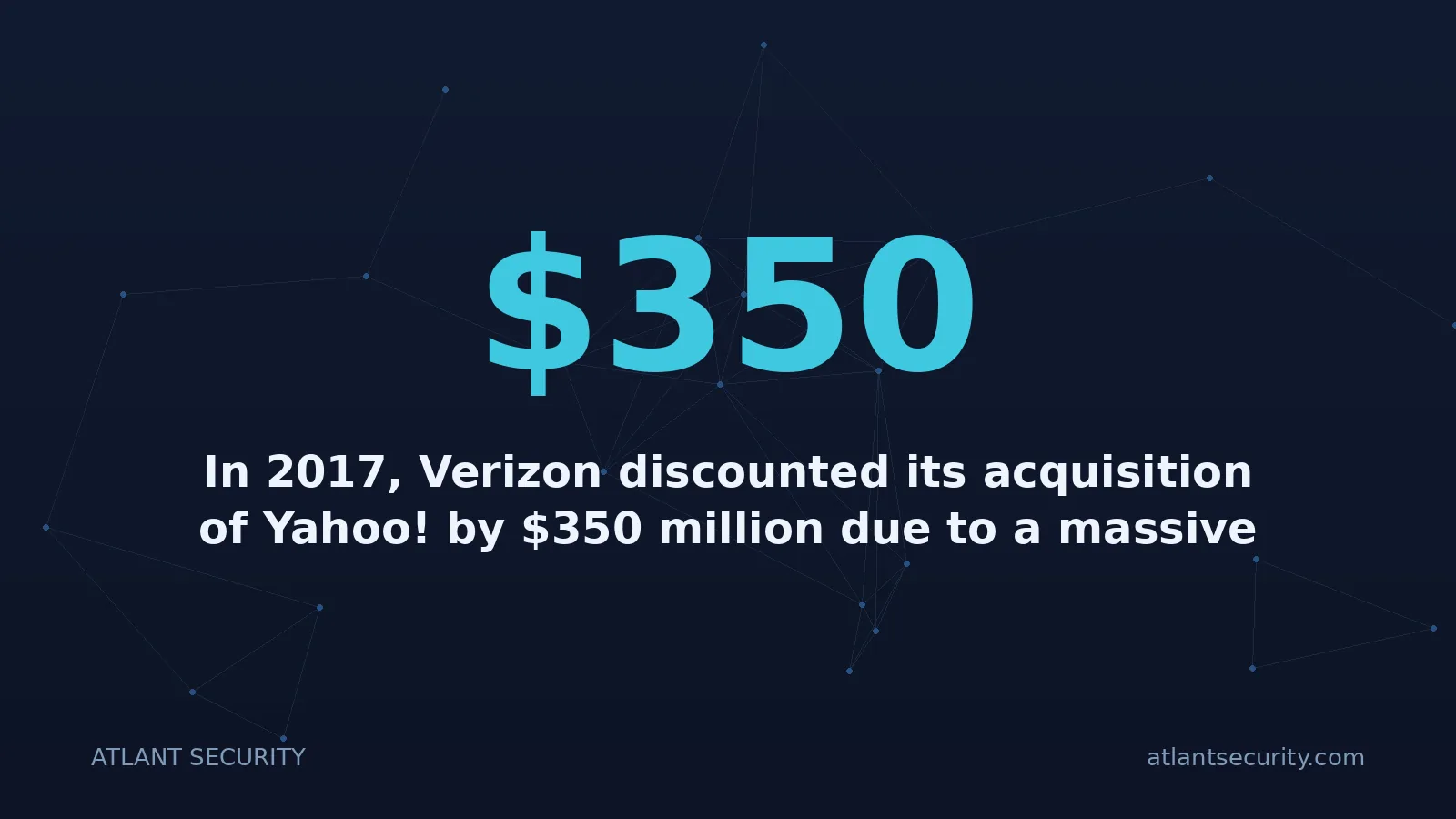
In 2017, Verizon discounted its acquisition of Yahoo! by $350 million due to a massive data breach discovered post-agreement.
-
Marriott's acquisition of Starwood brought with it a breach affecting 383 million guest records - undetected until 2 years later, leading to £18.4 million in GDPR fines.
-
In Australia, PageUp's breach after a merger triggered regulatory investigations and mass customer loss.
The real cost? Reputational damage, lawsuits, lost customers, and acquisition remorse.
Why Cybersecurity Risk Is a Unique Threat in M&A
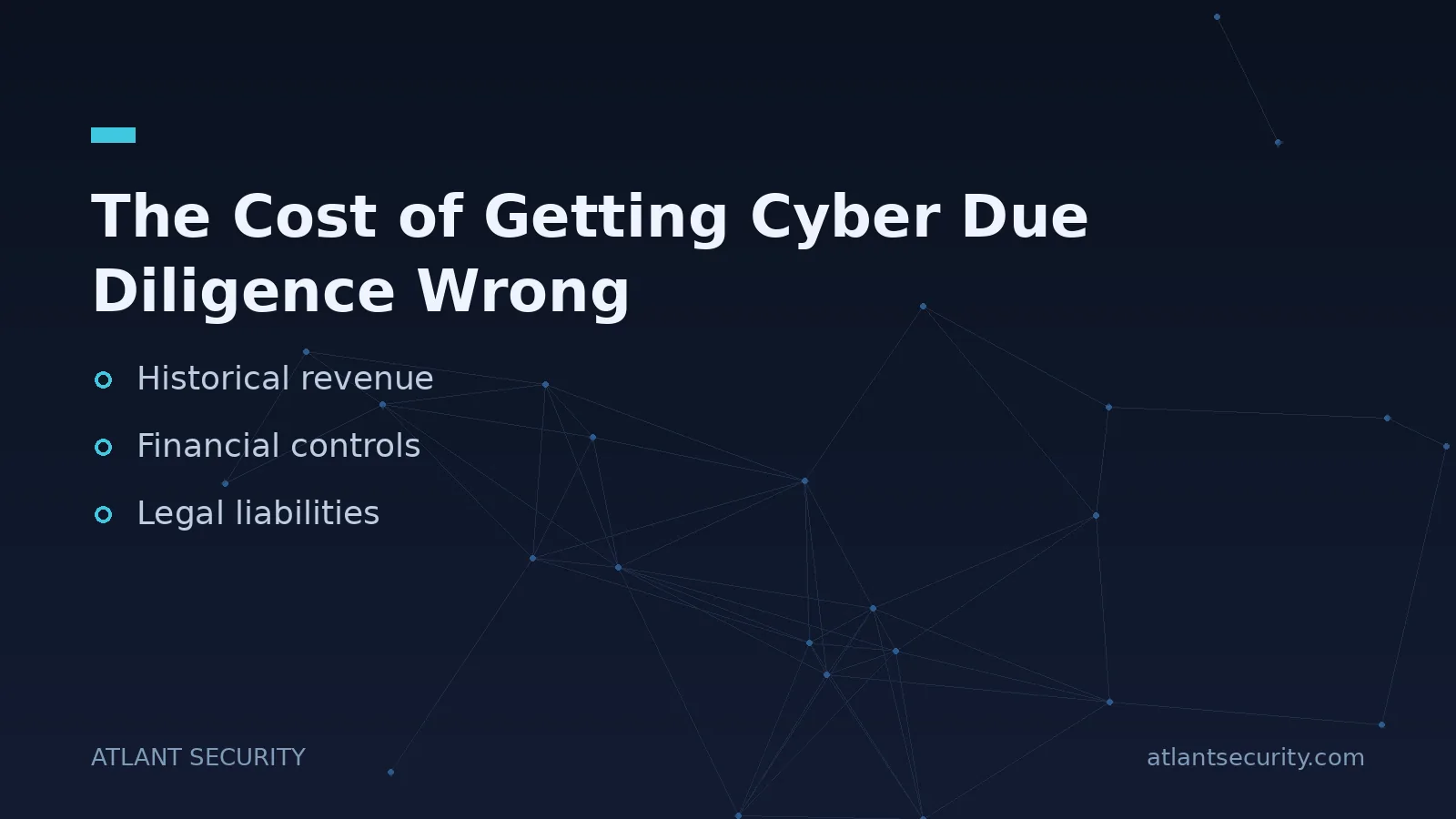
Most due diligence checks are backward-looking:
-
Historical revenue
-
Financial controls
-
Legal liabilities
Cyber risk is forward-facing. It asks:
-
"What could go wrong after the deal closes?"
-
"What unknown risks are already inside?"
-
"How might this target be a backdoor into my entire business?"
Common Cyber Threats in M&A Deals
| Threat Type | Description | Impact |
|---|---|---|
| Undetected Breaches | Target has been compromised but hasn't discovered it yet | Legal and financial exposure, PR fallout |
| Legacy Systems | Outdated or unsupported tech stack | Patch gaps, vulnerability to modern attacks |
| Credential Exposure | Passwords or tokens exposed on the dark web | Account takeovers post-close |
| Third-party Dependencies | Risky vendors, weak SaaS platforms | Supply chain breaches, reputational damage |
| Insecure DevOps Pipelines | Poor code security, no reviews, secrets in Git | IP theft, unauthorized deployments |
| Lack of MDR/XDR | No detection and response capability | Silent breaches go undetected for months |
Regulatory Requirements Around Cyber Due Diligence
Governments and regulators worldwide now expect acquirers to assess cybersecurity risk. Here are the jurisdiction-specific rules and expectations:
United States
SEC Cybersecurity Disclosure Rule (2023)
Public companies must disclose:
-
Cybersecurity risks and governance policies
-
Material incidents within 4 business days
-
How M&A affects their cyber risk posture
Federal Trade Commission (FTC) Guidance
Acquirers are responsible for known and unknown breaches of the target.
Failure to conduct cybersecurity due diligence could be viewed as negligent.
GLBA (Gramm-Leach-Bliley Act)
Applies to financial institutions. Security programs must assess vendor and acquisition risks.
European Union
GDPR (Article 32, 33, 35)
Requires:
-
Risk assessments for data processing and transfers
-
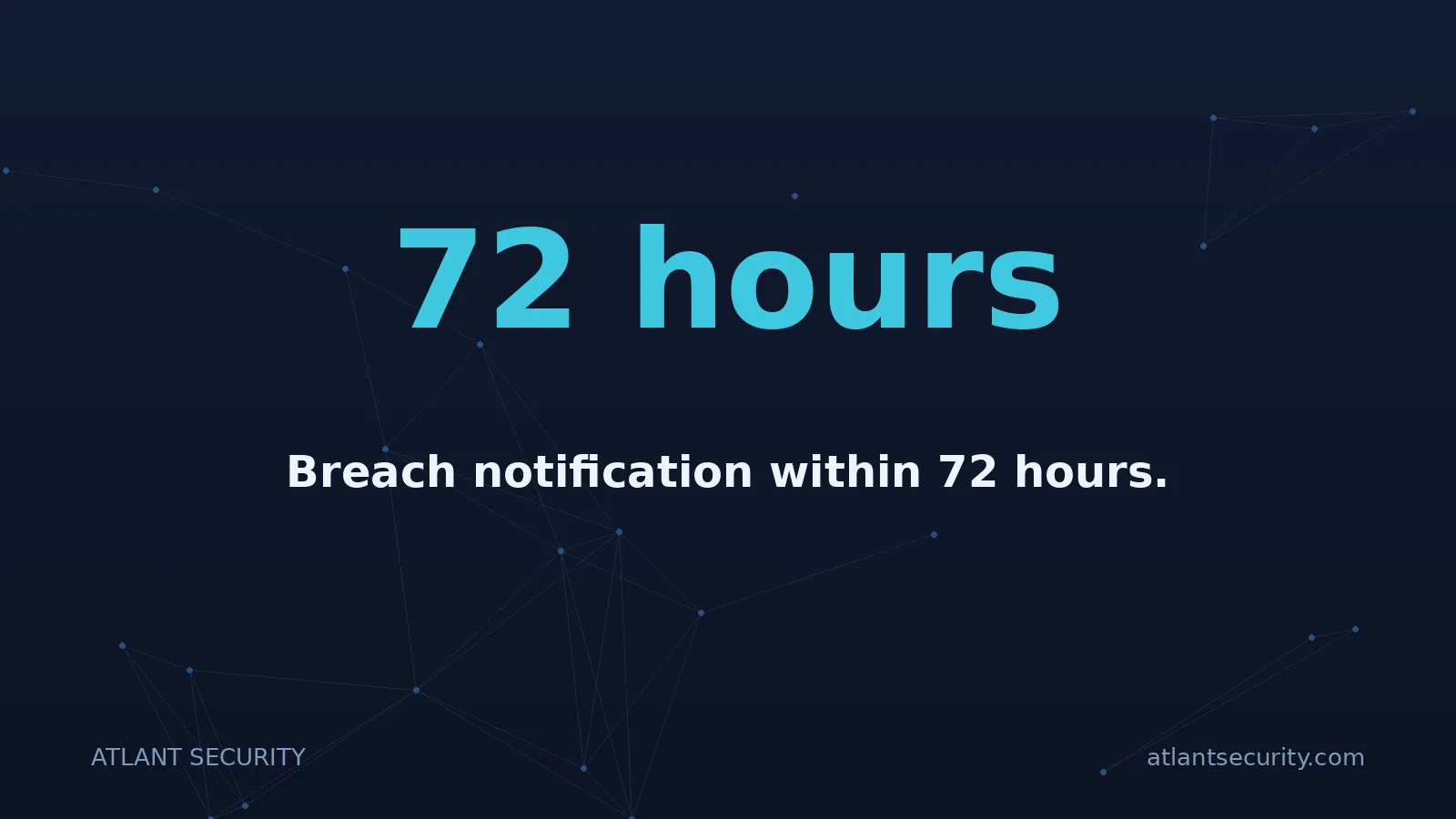
Breach notification within 72 hours
Figure 1. Five Findings That Kill M&A Deals. -
Accountability for data shared with third parties, including M&A deals
Acquirers inherit GDPR obligations of the target.
NIS2 Directive (2024)
Applies to critical sectors and digital service providers. Requires:
-
Supply chain security assessments
-
Mandatory cybersecurity controls and governance
-
Board-level accountability
United Kingdom
UK GDPR and DPA 2018
Mirrors EU GDPR. Companies must perform data risk assessments during corporate transactions.
National Cyber Security Centre (NCSC) Guidance
Recommends mandatory cyber risk assessments in M&A.
Buyers should validate that cyber risks are well-managed - not just assumed.
Australia
Privacy Act 1988 (Updated 2023)
-
Requires assessment of data handling practices before mergers
-
Includes new penalties: up to AUD $50 million for serious breaches
Australian Cyber Security Centre (ACSC)
Recommends using the Essential Eight maturity model to evaluate targets.
ACSC Guidance
Summary Table: Legal Expectations in M&A
| Jurisdiction | Key Regulations | Requirements |
|---|---|---|
| US | SEC Rule, GLBA, FTC | Mandatory risk disclosure, breach accountability |
| EU | GDPR, NIS2 | Data risk analysis, vendor and processing control |
| UK | UK GDPR, NCSC | Same as EU; added supply chain risk controls |
| Australia | Privacy Act, ACSC | Disclosure duty, Essential Eight compliance |
The Cybersecurity Due Diligence Process - Step by Step
Cyber due diligence is not about ticking boxes. It's about:
-
Finding hidden liabilities
-
Measuring breach risk
-
Assessing how a target will affect your post-acquisition security posture
Whether you're an M&A advisory firm, investor, or acquirer, this guide gives you a clear playbook for evaluating cybersecurity before signing the deal.
Who Should Run the Process?
Cybersecurity due diligence should be led by:
-
A CISO or security advisor with deep experience
-
A qualified third-party cybersecurity firm
-
In coordination with legal, IT, and compliance teams
Cybersecurity Due Diligence in 9 Key Phases
| Phase | Description |
|---|---|
| 1. Scoping | Define scope: assets, systems, cloud, SaaS, employees |
| 2. Initial Questionnaire | Send pre-deal information requests to the target |
| 3. Documentation Review | Examine policies, infrastructure, incidents |
| 4. Technical Review | Audit networks, codebases, cloud, and endpoints |
| 5. Vulnerability Testing | Optional external scan, red teaming, dark web exposure |
| 6. Risk Analysis | Evaluate findings against deal goals and legal impact |
| 7. Business Impact Mapping | Translate findings into financial, legal, and PR risk |
| 8. Remediation Planning | Build a roadmap to fix critical issues pre- or post-close |
| 9. Integration Assessment | Plan how the target will integrate into your security architecture |
What to Ask the Target Company
Here's what your cybersecurity questionnaire should request:
1. Governance & Compliance
-
Security policies, procedures, and ownership
-
Certifications: ISO 27001, SOC 2, PCI-DSS, HIPAA
-
Past audit reports or assessments
Figure 2. Surface-Level vs Real Cyber Due Diligence. -
Data protection officer (DPO) details
-
GDPR / CCPA / HIPAA compliance records
2. Incident & Breach History
-
Past breaches, security events, or ransomware attacks
-
Logs, forensic reports, notifications sent
-
Law enforcement contact history
-
Internal or external investigations
3. Technology Infrastructure
-
Asset inventory (on-prem, cloud, mobile, IoT)
-
Network diagrams and architecture
-
Endpoint detection & response (EDR) systems
-
Patch management processes
-
Backup and disaster recovery plans
4. Cloud & SaaS
-
CSPs used (AWS, Azure, GCP)
-
IAM configurations (e.g., MFA, role-based access)
-
Data residency and encryption practices
-
DevOps tools and access management
-
Third-party SaaS tools with sensitive data access
5. Identity and Access Control
-
Active Directory / IAM structure
-
Joiner/mover/leaver process
-
Privileged access policies
-
MFA implementation across systems
-
Shared account tracking
6. Vulnerability & Penetration Testing
-
Last 12-month vulnerability scan results
-
Last penetration test report
-
CVSS scores and remediation status
-
External audit coverage
7. Employee Training & Culture
-
Frequency and format of cybersecurity training
-
Social engineering test results
-
Security awareness program maturity
-
Phishing simulation performance
Figure 3. Cyber Due Diligence Engagement Phases.
Red Flags That Signal Deal Risk
If the target shows signs of these, proceed with caution - or not at all:
| Red Flag | Why It Matters |
|---|---|
| No documented security policies | Indicates immaturity or negligence |
| Undisclosed incidents found in external scans | Suggests poor logging or intentional hiding |
| Shared admin credentials | Catastrophic access control weakness |
| No EDR or centralized logging | Breaches likely undetected for months |
| No MFA on sensitive systems | Easy target for credential stuffing |
| Breach history with unclear response | Indicates poor incident management |
| Incomplete asset inventory | Means you don't know what you're buying |
Tools to Use During Due Diligence
| Tool | Purpose | Link |
|---|---|---|
| Shodan | Discover exposed assets | shodan.io |
| Have I Been Pwned | Check for credential leaks | haveibeenpwned.com |
| SecurityScorecard | Assess external cyber posture | securityscorecard.com |
| Nessus | Vulnerability scanning | tenable.com |
| Burp Suite | Web app security testing | portswigger.net |
| CrowdStrike / SentinelOne | Endpoint and threat hunting | crowdstrike.com / sentinelone.com |
Sample Cybersecurity Due Diligence Report Table
| Category | Key Findings | Risk Level | Recommendation |
|---|---|---|---|
| MFA Coverage | MFA only enabled for 3 of 12 apps | High | Enforce MFA on all systems |
| Vulnerability Management | Last scan 11 months ago | High | Full re-scan + patch backlog |
| Incident History | Ransomware attack in 2021, not disclosed | Critical | Forensic review, potential contract revision |
| Employee Awareness | No phishing tests in 2 years | Medium | Launch awareness training program |
| Data Compliance | GDPR violations under review | Critical | Legal review, possible deal re-pricing |
Quantifying Cyber Risk - And Using It to Negotiate the Deal
Cybersecurity risk is notoriously hard to quantify. But in the context of an acquisition, it must be translated into dollars, deadlines, and decisions.
Because if you can't assign a cost, you can't assign liability. And if you can't assign liability, you'll end up paying for someone else's mistakes - months or years after the ink dries.
The Financial Impact of Undisclosed or Unmitigated Cyber Risk
| Cyber Issue | Post-Deal Cost Exposure |
|---|---|
| Undetected ransomware implant | $200K-$1M (recovery, breach notification, downtime) |
| GDPR non-compliance | Up to €20M or 4% of global revenue |
| Lack of EDR/XDR | Weeks of dwell time deeper breach = higher fines |
| Credential leaks found post-deal | Legal costs, MFA rollout, client churn |
| API vulnerabilities | Service downtime, lost contracts, technical debt |
| Shadow IT / unknown SaaS | Data leakage risk, integration delays |
Risk-to-Value Mapping
This model translates a technical flaw into acquisition risk:
| Finding | Value Impact | Negotiation Option |
|---|---|---|
| MFA not deployed | Medium | Require fix before close |
| GDPR breach risk | High | Escrow or discount purchase price |
| Insecure AWS config | Medium | Post-close remediation clause |
| Shared admin accounts | High | Mandatory role-based redesign, liability clause |
| Historical breach not disclosed | Critical | Right to exit deal or legal penalty trigger |
Cyber Clauses for Purchase Agreements
Your legal team should consider embedding cybersecurity-specific protections in the sale agreement:
Common M&A Clause Types:
-
Warranties & Representations
-
Target affirms security policies, breach history, and controls
-
-
Indemnification
-
Acquirer can recover damages from seller if post-close risks emerge
-
-
Escrow or Holdback Provisions
-
Funds are retained for 6-12 months post-close in case of breach
-
-
Post-Close Covenants
-
Target agrees to perform security upgrades after acquisition
-
-
Material Adverse Change (MAC) Triggers
-
Breach between signing and closing gives buyer an exit option
-
How Cyber Risk Affects Valuation
Just like debt, legal exposure, or regulatory fines, cybersecurity flaws are deal-impacting variables.
Buyers can use findings to:
-
Negotiate price reductions (10-25% is common with unresolved risks)
-
Delay deal closure until remediation is complete
-
Shift breach liability to seller
-
Reserve post-deal budget for integration and uplift
A discovered SQL injection vulnerability in a customer-facing portal could justify a 7-figure discount if the app drives most of the company's revenue.
Investor and Board-Level Documentation
Investors, VCs, and board members must be briefed clearly and confidently. That includes:
| Document | Purpose |
|---|---|
| Cyber Risk Summary (Exec-Level) | Key vulnerabilities, costs, mitigation plan |
| Compliance Matrix | Target's standing with GDPR, HIPAA, PCI, ISO, etc. |
| Incident Summary Table | Historical breaches, response actions, current status |
| Post-Acquisition Roadmap | Who fixes what, when, and how it's funded |
| Escrow and Indemnity Terms | Legal backup for future discovery of flaws |
Planning Integration Post-Acquisition
Security integration is one of the most underestimated steps post-M&A. Most companies focus on HR, payroll, and branding - but fail to align security architectures.
Integration Areas to Prioritize:
1. Identity & Access Management
-
Merge AD/AzureAD or SSO platforms
-
Remove redundant users
-
Enforce uniform MFA and role-based access
2. Cloud Environments
-
Consolidate cloud vendors or federate identities
-
Standardize IAM policies
Figure 4. Six Domains in Cyber Due Diligence. -
Revoke stale API keys
3. Endpoint Security
-
Align on EDR/XDR agents (CrowdStrike, SentinelOne, etc.)
-
Normalize device policies (encryption, remote wipe)
-
Enroll devices into MDM where missing
4. Logging and Monitoring
-
Funnel logs into one SIEM
-
Normalize detection rules
-
Create shared playbooks for IR
5. Culture & Training
-
Harmonize security awareness programs
-
Re-run phishing tests for all users
-
Align policies on acceptable use, BYOD, password hygiene
In practice, thorough cyber due diligence often surfaces issues like missing security policies, leaked credentials, exposed cloud storage, or undisclosed past incidents - findings serious enough to pause a deal, adjust the price, require the seller to fund remediation, or hold part of the payment in escrow until the risks are resolved.
There is a middle option between an annual manual engagement and nothing at all. AI-driven pentesting automates the exhaustive part, the parameter-by-parameter work where human testers tire, and hands back proof-of-concept evidence with remediation steps.
Repeatable Playbooks, Maturity Models & Real-World Execution
Now that we've covered the legal, technical, and financial angles, let's focus on operationalizing cybersecurity due diligence. This section helps you build a scalable process, evaluate the maturity of any acquisition target, and apply your insights across multiple deals.
Cybersecurity Maturity Model for M&A Targets
Before making a final decision, every acquisition target should be placed on a maturity spectrum. This helps standardize comparisons across industries, regions, and growth stages.
| Maturity Level | Traits | Action |
|---|---|---|
| Level 1: Immature | No policies, no logs, no MFA, unknown incidents | High-risk - pause or discount deal |
| Level 2: Basic | Ad hoc security, no formal governance, legacy tools | Include in post-close uplift plan |
| Level 3: Intermediate | Policies + training + scanning + partial logging | Acceptable with remediation timeline |
| Level 4: Mature | Documented governance, regular pen tests, SIEM | Ideal for fast-close |
| Level 5: Optimized | ISO/SOC certified, tested IR plan, DevSecOps | Integrates smoothly with minimal risk |
Use this scale in your due diligence reports to support legal, financial, and executive decisions.
When Should You Start Cyber Due Diligence?
You don't need to wait until the final LOI (Letter of Intent). The earlier you start - even high-level assessments - the better your leverage.
Recommended Timeline:
| Stage | Cyber Due Diligence Activity |
|---|---|
| Pre-LOI | Light OSINT, external scans, dark web check |
| Post-LOI | Full questionnaire, interview IT/security leads |
| During Deal Negotiation | Red team simulation (if allowed), policy and IR review |
| Pre-Close | Confirm resolution of critical risks, validate controls |
| Post-Close (Day 0-90) | Launch integration, employee training, EDR alignment |
Cybersecurity M&A Playbook (Checklist)
Use this checklist to repeatably execute cybersecurity due diligence across every deal:
1. Discovery & Scoping
-
Define deal scope: assets, networks, users, cloud, SaaS
-
Identify applicable regulations (GDPR, HIPAA, PCI, etc.)
Figure 5. Cyber Diligence Maturity for Buyers. -
Assess public footprint (Shodan, Google dorks, Git leaks)
2. Information Request
-
Security policies and governance docs
-
Breach and incident history
-
Cloud architecture, IAM configuration
-
Last 2 pen test and scan reports
-
Compliance certifications and audit logs
3. Technical Evaluation
-
External vulnerability scan
-
Credential exposure check
-
Authentication review (MFA, SSO)
-
Role and privilege assessment
-
API security and third-party tool usage
4. Reporting & Risk Analysis
-
Risk heatmap: red, yellow, green findings
-
Business impact analysis (revenue, operations, compliance)
-
Recommended fixes: timeline + cost
-
Negotiation inputs: clause support, pricing justification
5. Integration & Remediation
-
IAM and directory sync
-
Endpoint security alignment
-
Cloud config standardization
-
Unified detection and response tooling
-
Launch security training program
Resources to Bookmark
| Topic | Resource |
|---|---|
| GDPR Impact on M&A | gdpr.eu |
| NIST Risk Framework | NIST 800-53 Controls |
| FTC M&A Security Tips | FTC Security Guidance |
| SEC Cyber Disclosure | SEC Rule Summary |
| NCSC M&A Cyber Guide | NCSC UK |
Final Thought: Security = Leverage
Cybersecurity is no longer the IT department's problem during M&A - it's a deal-maker or deal-breaker.
-
Know what you're buying.
-
Price what you're inheriting.
-
Protect what you've built.
-
And integrate before the breach - not after.
Every due diligence checklist should start with one question:
If we acquire this company today, how secure will we be tomorrow?
Call to Action
Ready to integrate cybersecurity due diligence into your M&A playbook?
We provide discreet, executive-friendly cyber assessments for acquirers, investors, and boards.
Schedule a pre-deal security review now: [Insert CTA link]
Or download the full M&A Cybersecurity Due Diligence Checklist to guide your team.
See also: CMMC Compliance Companies: Who Actually Gets You Audit-Ready?
Related services from Atlant Security: SaaS Security Audit, Cybersecurity Due Diligence, IT Security Audit. Book a discovery call to discuss your specific situation.
