Computer Security Services: Are You Paying for Protection or Just a False Sense of Security?
A
Alexander Sverdlov
Security Analyst
6/26/2026
Computer Security · Vendor Evaluation · June 2026
Most businesses pay for computer security services that look impressive on paper and then crumble under a real attack. Here is how to tell security theater from genuine protection, before the difference costs you everything.
💫 Key Takeaways
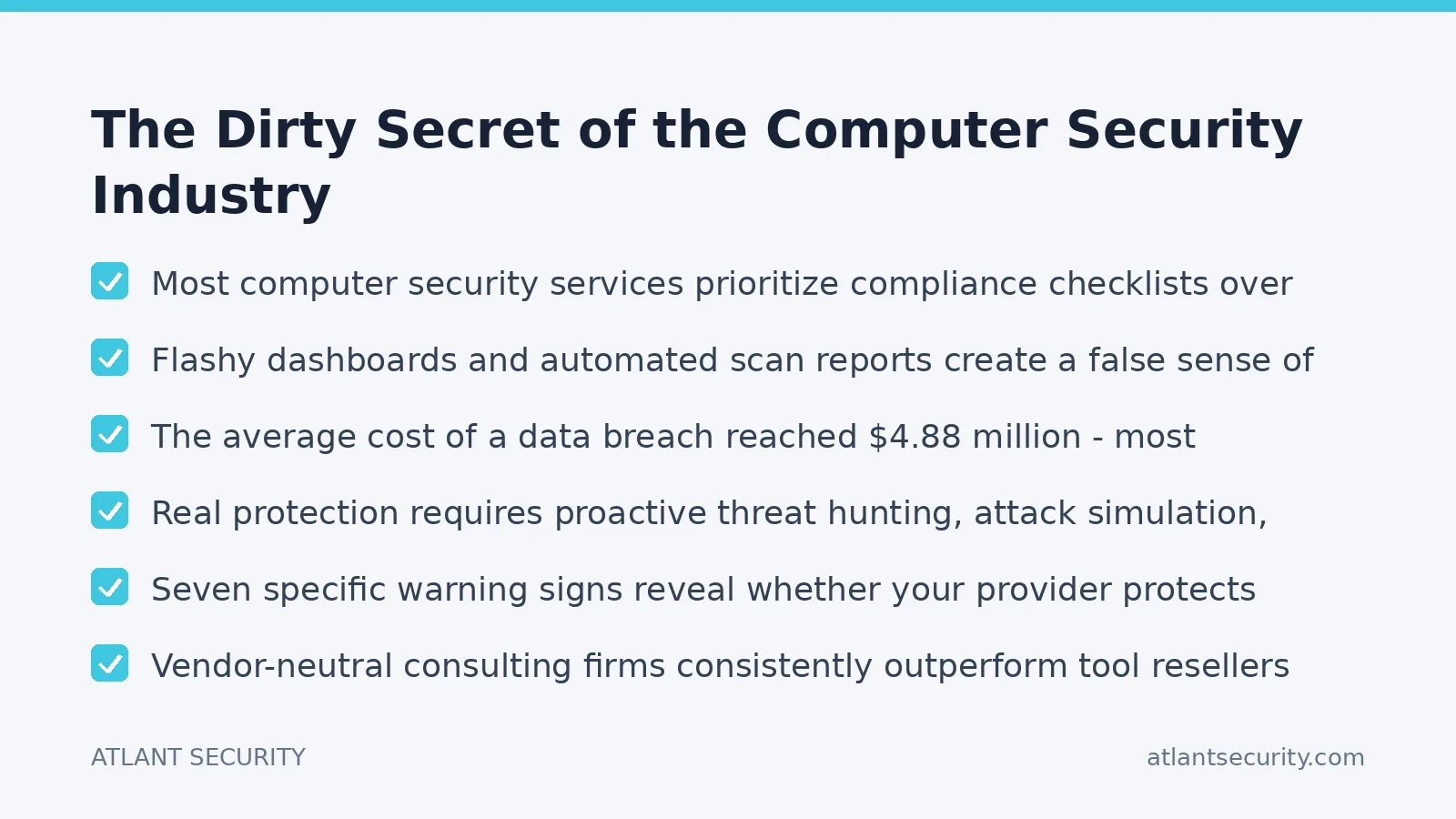
Most computer security services prioritize compliance checklists over real-world threat defense
Flashy dashboards and automated scan reports create a false sense of security that collapses during an actual breach
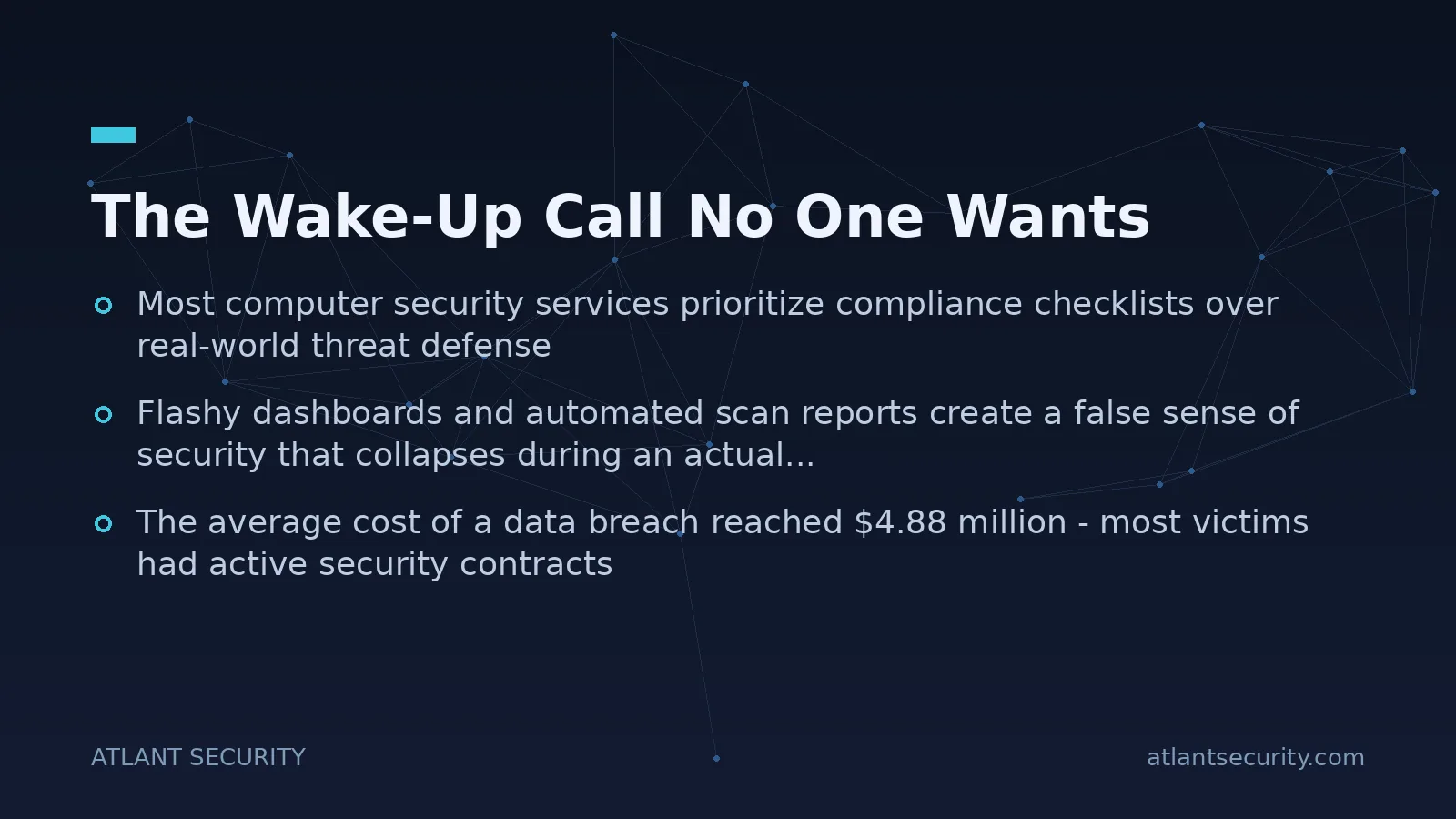
The average cost of a data breach reached $4.88 million - most victims had active security contracts
Real protection requires proactive threat hunting, attack simulation, and architecture-first design
Seven specific warning signs reveal whether your provider protects you or themselves
Vendor-neutral consulting firms consistently outperform tool resellers in measurable outcomes
⚠️
The Uncomfortable Truth
The Wake-Up Call No One Wants
Your business is running smoothly. Customers are happy, your team is productive, and everything seems under control. You have invested in computer security services, so you sleep well at night, confident that your data is safe.
Then it happens.
One morning, you log in to find your systems locked. A chilling message demands a ransom in Bitcoin. Your customer data is at risk, your operations are frozen, and your security provider is nowhere to be found. How did this happen? You paid for security.
The hard truth? Many businesses do not actually have cybersecurity - they have the illusion of it. And by the time they realize the difference, it is too late.
🚨 The Numbers Are Alarming
Figure 1. Five Signs Your Cyber Vendor Is Selling Facade.
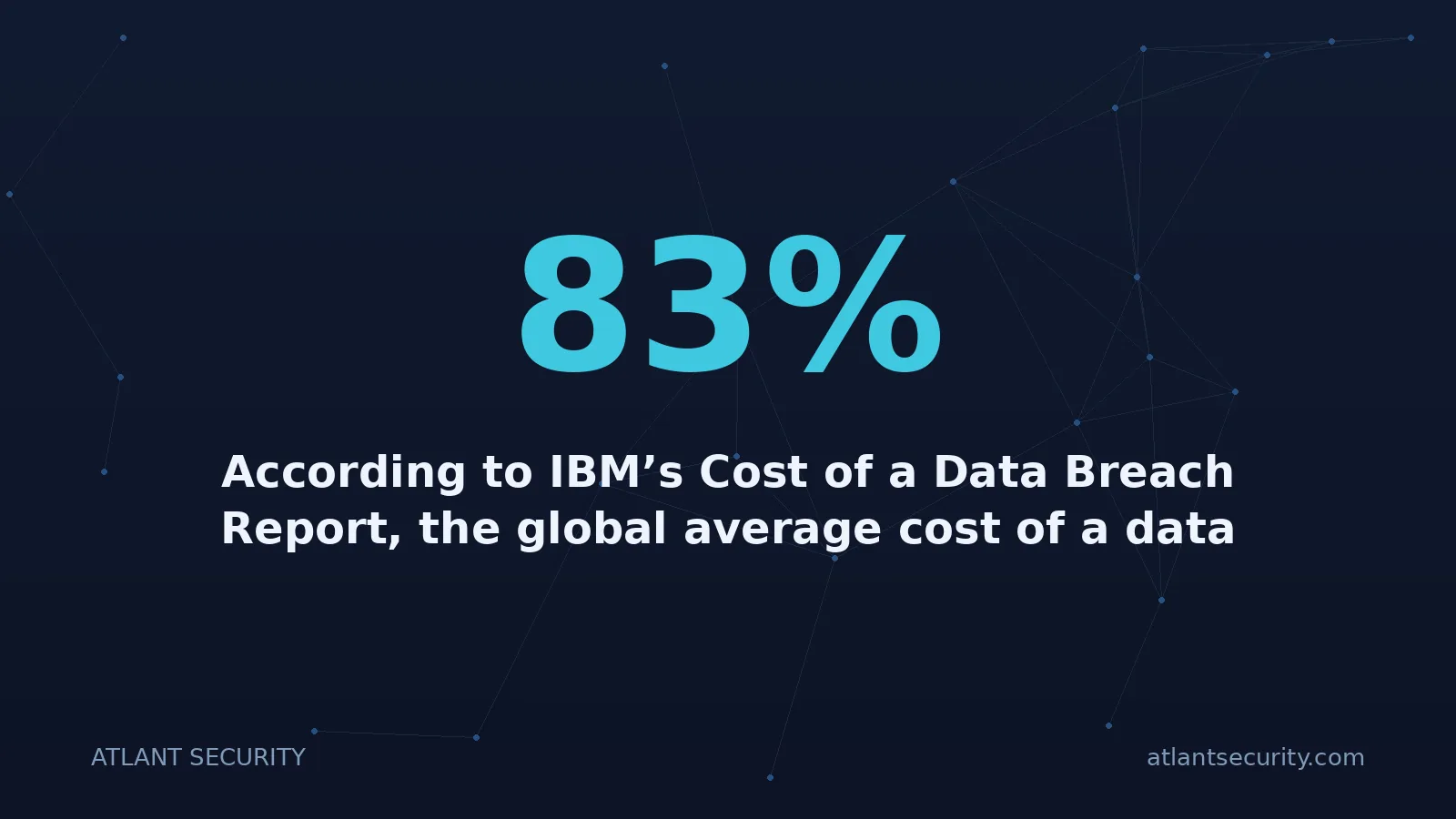
According to IBM’s Cost of a Data Breach Report, the global average cost of a data breach reached $4.88 million. Of breached organizations, 83% had experienced a previous breach, and the vast majority had active security vendor contracts at the time.
🕵️
Industry Problem
The Dirty Secret of the Computer Security Industry
The cybersecurity market is flooded with companies promising “complete protection,” but very few deliver. They rely on flashy dashboards, automated scans, and generic reports - all designed to make you feel secure rather than actually keeping you secure.
Most security providers focus on compliance rather than real-world threats. They check the boxes, provide a report, and call it a day. But hackers do not care about compliance. They exploit weak points that your security provider did not even think to check.
Here is how the typical engagement goes wrong:
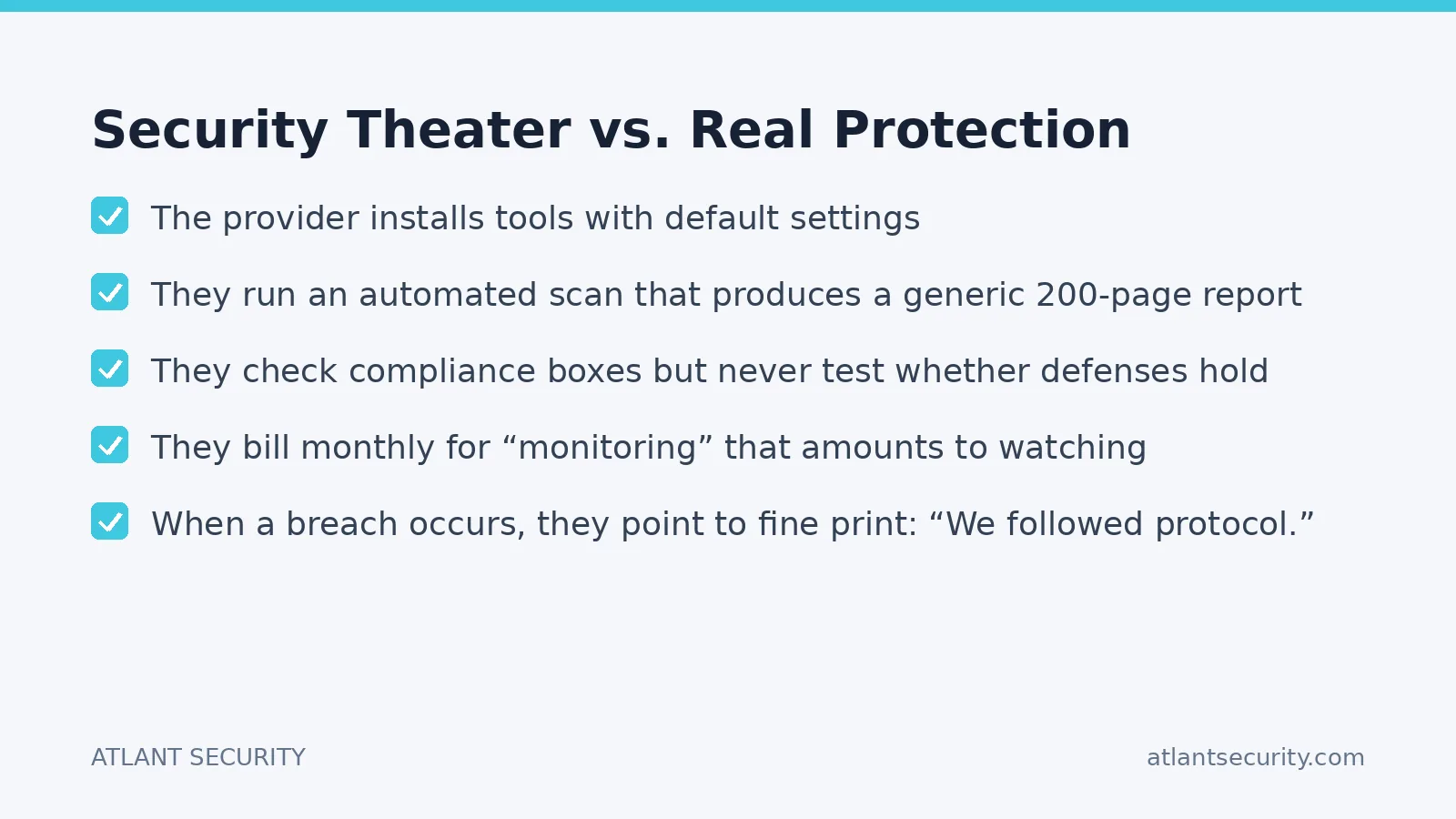
The provider installs tools with default settings
They run an automated scan that produces a generic 200-page report
They check compliance boxes but never test whether defenses hold under real attack
They bill monthly for “monitoring” that amounts to watching automated alerts
When a breach occurs, they point to fine print: “We followed protocol.”
🎭
The Comparison
Security Theater vs. Real Protection
Consider this: You install a state-of-the-art security system in your home - cameras, alarms, motion detectors. But you never lock the front door. That is exactly how many security providers operate.
Capability
Security Theater
Real Protection
Vulnerability Testing
Automated scans with generic reports
Manual penetration testing simulating real attacker behavior
Monitoring
Alert-based - reacts after damage
Proactive threat hunting with human analysts
Compliance
Checkbox exercise - policies on paper
Controls implemented, tested, and enforced
Incident Response
Email support with 24-48hr SLA
Dedicated IR team with containment in minutes
Remediation
PDF report - you figure out the rest
Hands-on fixing, hardening, and validation
Architecture Review
Not offered - tools bolted on
Security built into infrastructure by design
Vendor Independence
Resells tools for commission
Vendor-neutral consulting for your actual needs
If your security provider is not actively thinking like a hacker, you are paying for security theater, not actual security.
Figure 2. Real Protection vs Security Theater.
🚨
Red Flags
7 Warning Signs Your Security Service Is Failing You
1. They only run automated scans. Automated scanners miss the vulnerabilities that matter most - those requiring creative, human-driven exploitation.
2. They react instead of hunt. Waiting for alerts is like closing the barn door after the horse bolts. Real security means proactively searching for indicators of compromise.
3. They send reports without remediation. A 200-page PDF is worthless if no one helps you fix the findings.
4. They push tools you do not need. Providers earning commissions from software sales have biased recommendations.
5. They cannot explain risk in business terms. If they only speak jargon and cannot translate risk into revenue impact, they are not your strategic partner.
6. Their incident response is an email queue. Minutes matter during a breach. An email ticket system loses the race against attackers every time.
7. They have never reviewed your security architecture. Tools without architecture are like locks without walls.
Figure 3. How to Audit Your Current Cyber Vendor.
💰
Business Impact
The Real Cost of Inadequate Security Services
Businesses do not just lose money in cyberattacks - they lose everything they have built. Imagine the panic of discovering your customer data is for sale on the dark web.
Impact Category
Typical Cost / Consequence
Ransomware Payment
$200K-$5M+ (average demand rose 80% since 2023)
Operational Downtime
$9,000/minute for mid-market companies
Regulatory Fines
Up to 4% annual revenue (GDPR) or $2M+ per violation (HIPAA)
Customer Churn
31% of consumers stop doing business after a breach
Lost Enterprise Deals
$250K-$1M+ per failed security review
Reputational Damage
Brand recovery takes 2-3 years after public breach
Provider Liability: Read the Fine Print
Most security providers have contractual language that protects them. Firewall outdated? Not their problem. Employee fell for phishing? User error. Overlooked vulnerability? They followed protocol.
🛡️
The Right Approach
What Real Computer Security Services Look Like
Architecture-first thinking. Understanding how your systems, identities, data, and networks interconnect before recommending anything.
Constant attack simulation. Manual penetration testing, red teams, and social engineering campaigns.
Proactive threat hunting. Analysts actively search for indicators of compromise before alerts fire.
Hands-on remediation. They fix vulnerabilities, validate fixes, and document evidence.
Rapid incident response. A dedicated team ready to contain and investigate within minutes.
Vendor independence. No commissions, no bias - recommendations based on your needs.
Business-level communication. Risk translated into revenue impact, regulatory exposure, and competitive advantage.
✅ Evaluation Framework: 5 Questions to Ask
Do you conduct manual penetration testing, or only automated scans?
Do you actively hunt for threats, or only respond to alerts?
Will you remediate findings hands-on, or just deliver a report?
Do you take vendor commissions or resell any security tools?
Can you show measurable outcomes from past engagements?
🚀
A Different Model
How Atlant Security Delivers Real Protection
At Atlant Security, we are a vendor-neutral consulting firm - we never resell tools or take commissions. Every recommendation is based purely on what your business needs.
Figure 4. Six Questions to Ask Before Renewing Your Cyber Contract.
Clear picture of where you stand and what to change
Hands-on cloud and infrastructure hardening
Systems configured securely, not just documented
Virtual CISO services
Strategic security leadership without a full-time hire
Manual penetration testing and red teams
Real-world attack validation with actionable findings
Incident response planning
A tested playbook so your team knows what to do
“We thought we had security because we had tools. Atlant showed us we had tools without architecture - like locks without walls.”
- CTO, B2B SaaS company
❓
Common Questions
Frequently Asked Questions
What are computer security services?
Professional services to protect digital infrastructure, data, and users from cyber threats - including security audits, penetration testing, MDR, compliance readiness, cloud hardening, incident response, and virtual CISO advisory.
How do I know if my security provider is failing me?
Key warning signs: they only run automated scans, cannot show measurable outcomes, push tool purchases for commission, deliver reports without remediation, and respond to incidents via email rather than a dedicated response team.
What is the difference between compliance and real security?
Figure 5. Cyber Vendor Relationship Maturity.
Compliance means documented policies that satisfy a framework. Real security means those controls are implemented, tested against real attacks, and continuously maintained. You can be compliant and still be breached.
How much should a business spend on computer security?
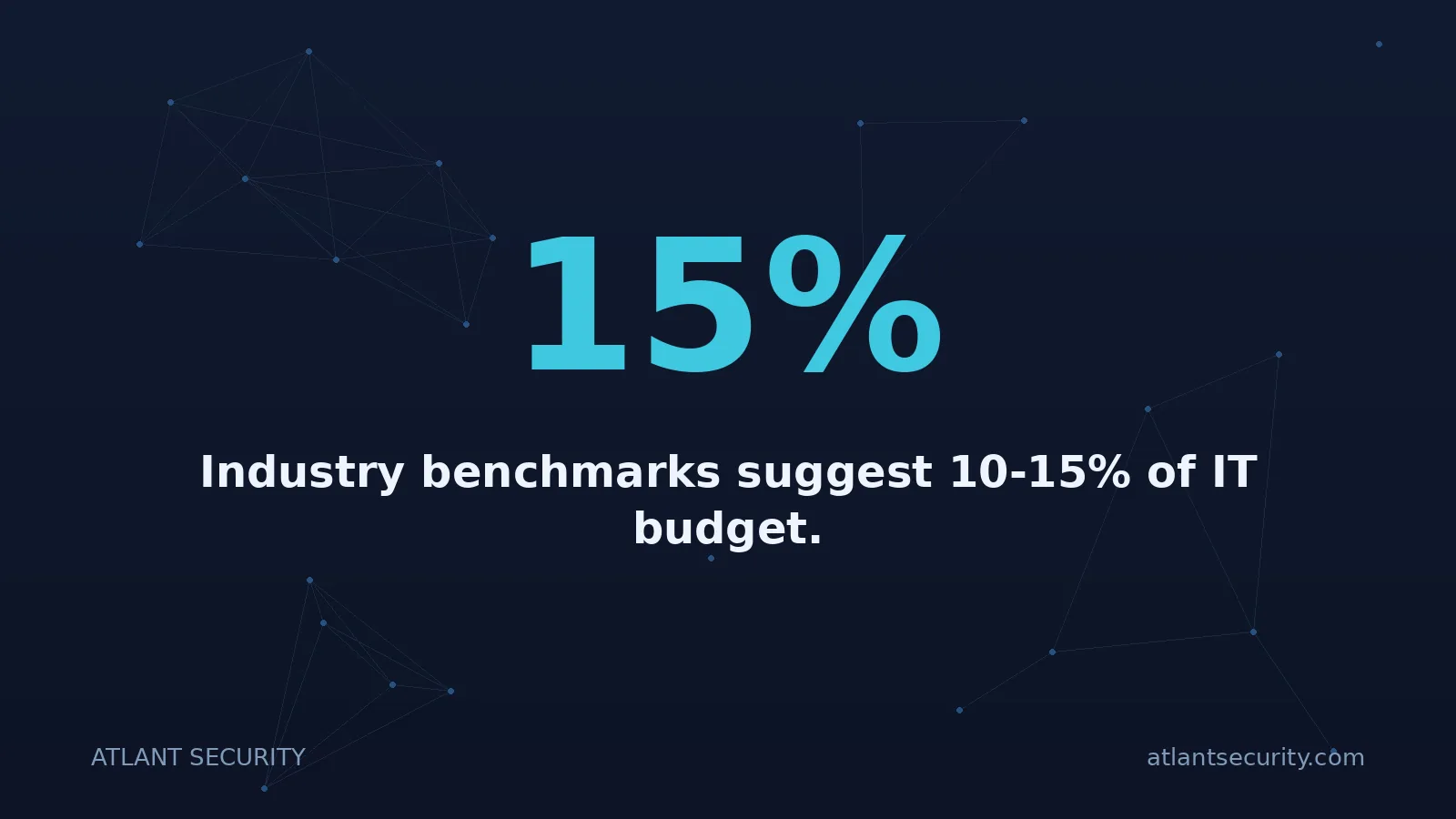
Industry benchmarks suggest 10-15% of IT budget. For a 200-person company, typically $100K-$300K annually. Compare that to the $4.88M average breach cost - proper security pays for itself many times over.
Why does vendor independence matter?
Providers earning commissions from tool sales have financial incentive to recommend products you may not need. Vendor-independent firms recommend based solely on your risk profile, leading to better outcomes and lower cost.
What should I expect from a first engagement?
A comprehensive security audit against an industry framework (SOC 2, NIST, ISO 27001), producing a prioritized remediation roadmap. The firm should then help implement fixes, validate them, and prepare evidence for auditors or investors.
Stop Paying for Security Theater
Get a clear, honest assessment of your security posture from a vendor-neutral team that has protected nuclear energy projects, fintechs, healthcare platforms, and SaaS companies across four continents.
Founder of Atlant Security. Author of 2 information security books, cybersecurity speaker at the largest cybersecurity conferences in Asia and a United Nations conference panelist. Former Microsoft security consulting team member, external cybersecurity consultant at the Emirates Nuclear Energy Corporation.